


- by wangfred
What Is Augmented Reality? Explain With Example? A Deep Dive Into The Digital Overlay
- by wangfred
Imagine a world where digital information doesn't just live on your screen but is seamlessly painted onto the fabric of your reality, enhancing everything you see, learn, and do. This isn't a glimpse into a distant sci-fi future; it's the rapidly evolving present of augmented reality (AR), a technology poised to revolutionize how we interact with the world around us. The potential is staggering, blurring the lines between the physical and the digital in ways that are as practical as they are magical.
At its simplest, augmented reality is a technology that superimposes a computer-generated image, video, or 3D model onto a user's view of the real world. Unlike Virtual Reality (VR), which creates a completely artificial, immersive digital environment that replaces reality, AR takes your existing reality and adds to it. The key differentiator is that AR allows you to see and interact with both the real world and the digital enhancements simultaneously. It acts as a dynamic, contextual layer of information on top of our physical surroundings.
For AR to function convincingly, it must solve a complex set of problems: it needs to understand the environment, track the user's position and perspective within it, and then render digital content that aligns perfectly with that perspective. This is achieved through a sophisticated combination of hardware and software components.
The primary input for any AR experience is a camera that captures the user's real-world environment. This visual data is then processed in real-time. Sophisticated sensors, including accelerometers, gyroscopes, and GPS, work in tandem. The accelerometer measures the velocity and orientation of the device, the gyroscope tracks rotation and angular movement, and GPS provides coarse location data. More advanced systems use depth sensors and LiDAR (Light Detection and Ranging) scanners to create a precise 3D map of the environment, understanding the exact distance between objects and surfaces.
The raw data from the sensors is fed into algorithms powered by computer vision, a field of artificial intelligence that enables computers to derive meaningful information from visual inputs. This is where the magic happens. Using a technique called SLAM (Simultaneous Localization and Mapping), the system both maps the environment and localizes the device within that map at the same time. It identifies unique features, points, and planes (like a tabletop or a wall) to understand the geometry of the space. This allows the digital object to be "locked" onto a specific point in the real world, so when you move around, the object appears to stay in place.
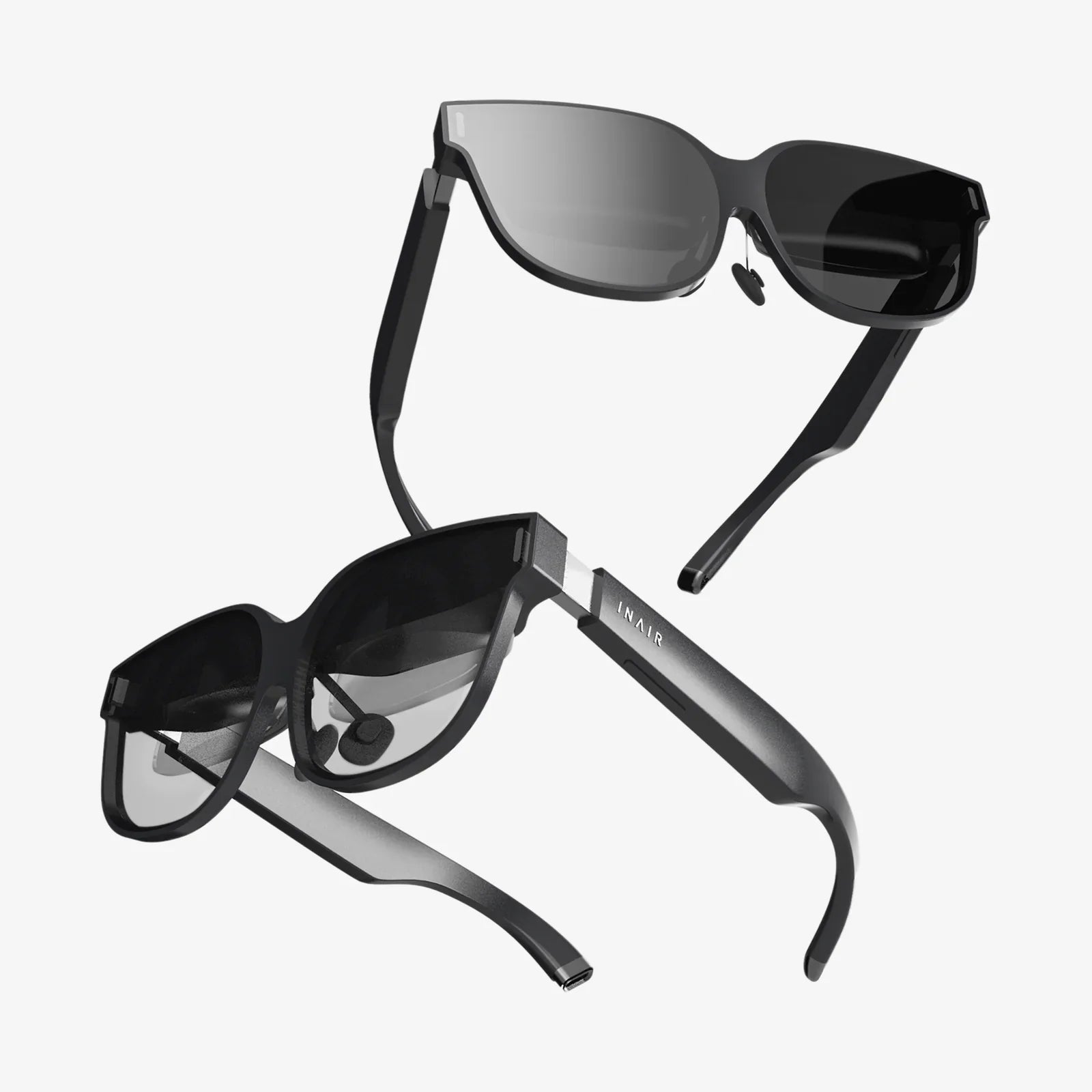
Once the digital content is properly aligned, it must be displayed to the user. This is done in several ways. The most common method is through the screen of a smartphone or tablet, which acts as a window into the blended world. For a more immersive, hands-free experience, head-mounted displays like smart glasses are used. Some advanced prototypes even use retinal projection, which beams light directly onto the user's retina, or spatial AR, which projects light onto physical surfaces themselves, turning any wall or table into a display.
The theoretical concepts of AR come to life through powerful, practical examples that are transforming entire sectors.
One of the most widespread and relatable applications of AR is in shopping. Imagine you're looking for a new sofa, but you're unsure how it will look in your living room or if it will fit through the door. With AR, you can simply point your device's camera at your room and virtually place a true-to-scale 3D model of the sofa right in front of you. You can walk around it, see how the fabric looks in your lighting, and even see if there's enough space to walk past it. This same technology applies to trying on glasses, seeing how a new shade of paint would look on your walls, or even visualizing a new kitchen cabinet configuration before making a costly purchase. It drastically reduces uncertainty and product returns, enhancing consumer confidence.
AR is turning static learning materials into interactive, engaging experiences. A student studying anatomy can point their device at a textbook image of the human heart and see a beating, interactive 3D model emerge from the page, which they can rotate, zoom into, and explore layer by layer. A mechanic-in-training can use AR glasses to look at a complex engine; the glasses can overlay animated repair instructions, highlight specific components, and display torque specifications directly onto the parts they are viewing. This on-demand, contextual information accelerates learning and improves retention by moving beyond abstract diagrams to concrete, hands-on visualization.
Forget looking down at a blue dot on a 2D map. The next generation of navigation uses AR to overlay directional arrows, street names, and points of interest directly onto the live video feed from your camera as you walk down the street. Look through your phone and an arrow appears on the pavement, showing you exactly which way to turn. This makes urban navigation incredibly intuitive. Furthermore, historical and cultural sites are using AR to bring the past to life. Tourists can point their devices at a ruin and see a digital reconstruction of how the building would have looked centuries ago, complete with animated figures, enriching the experience with deep context.
On factory floors and construction sites, AR is a powerful tool for efficiency and accuracy. A field service technician tasked with repairing a complex piece of machinery can use AR glasses to see a digital overlay of the internal wiring and components, along with a step-by-step guide specific to that model. The system can highlight the exact valve that needs to be turned or the specific circuit board that likely needs replacing, reducing errors and training time. Architects and engineers can project full-scale 3D models of their designs onto an empty construction site, allowing them to identify potential design clashes with the physical space before any concrete is poured, saving immense time and resources.
While the most famous example popularized AR for the masses, the applications extend far beyond catching digital creatures in your local park. AR gaming can turn your entire living room into a virtual battlefield, with characters hiding behind your actual furniture, or your tabletop into a miniature digital strategy board. In live sports broadcasts, AR is used extensively to draw virtual first-down lines on an American football field or to display racing statistics that hover over a Formula 1 car as it speeds around the track, providing viewers with information without obstructing the view of the game.
It's crucial to distinguish AR from its technological cousins. As established, AR augments your real world. Virtual Reality (VR), by contrast, is an entirely immersive experience that shuts out the physical world, transporting you to a fully digital one through a headset. Mixed Reality (MR) is a more advanced evolution of AR. While AR simply overlays digital content, MR allows that digital content to interact with the real world in a believable way. A virtual character in an MR experience could not only be placed on your coffee table but could also jump off and hide behind your real sofa, understanding and reacting to the physical geometry of your room.
The trajectory of AR points toward lighter, more powerful, and socially acceptable wearable technology, like standard-looking glasses. The convergence with 5G connectivity will enable complex processing to be done in the cloud, making the devices themselves lighter and more efficient. Furthermore, the development of the spatial web—an internet mapped onto the real world—will allow for persistent AR experiences that multiple people can interact with simultaneously, transforming public spaces into shared digital canvases.
The line between our digital and physical lives is not just blurring; it's being deliberately and intelligently woven together. Augmented reality is the loom, and it's creating a new fabric of interaction that is more intuitive, informative, and immersive than ever before. This isn't about escaping reality; it's about equipping ourselves with a new lens to see its hidden layers of potential, turning every space into an opportunity for discovery and every task into a more integrated experience.
Share:
Brands That Use Augmented Reality Are Redefining the Consumer Experience
Where Can I Buy VR Glasses - The Ultimate Buyer's Guide for 2024