


Imagine a world where the line between the digital and the physical isn't just blurred—it's elegantly erased. A world where informational signposts float above city streets, historical figures reenact battles on the very ground they were fought, and complex repair instructions are projected directly onto the machinery you're fixing. This is no longer the stuff of science fiction; it is the rapidly evolving reality being built by augmented reality technology. This transformative layer of intelligence is poised to change everything from how we work and learn to how we shop and play, creating a new, enhanced dimension of human experience.
The Core Concept: More Than Just a Filter
At its simplest, augmented reality (AR) is a technology that superimposes a computer-generated image, video, or 3D model onto a user's view of the real world. Unlike Virtual Reality (VR), which creates a completely artificial digital environment, AR uses the existing environment and simply adds new information or digital objects on top of it. The goal is not to replace reality but to supplement it, making it more interactive and meaningfully informative.
The magic of AR lies in its three fundamental components, which work in concert to create a convincing and useful experience:
1. Scene Capture and Real-World Understanding
This is the eyes of the operation. Using cameras and a suite of sensors—including accelerometers, gyroscopes, and GPS—the AR device captures the user's surroundings in real-time. Advanced computer vision algorithms then analyze this visual data to understand the environment. This involves:
- Object Recognition: Identifying specific objects, like a piece of industrial equipment or a product on a store shelf.
- Surface Detection: Distinguishing between horizontal planes (like floors and tables) and vertical planes (like walls) to serve as a canvas for digital content.
- Depth and Spatial Mapping: Creating a 3D map of the space to understand the geometry and distance of objects, allowing digital assets to interact with the real world in a physically believable way (e.g., a virtual ball rolling under a real couch).
- Light Estimation: Analyzing the ambient light in a room to cast shadows from digital objects that match the direction and softness of the real-world light source, crucial for achieving visual coherence.
2. Processing and Content Rendering
Once the environment is understood, the device's processor takes over. This is the brain. It decides what digital content to display based on the user's context, location, and the recognized scene. It then renders high-fidelity 2D or 3D graphics, audio, and haptic feedback. This processing can happen on the device itself (on-device processing) or be streamed from a powerful remote server (cloud processing), each with its own trade-offs between latency, graphical quality, and accessibility.
3. Display and User Interaction
This is the final, crucial step—projecting the composite image back to the user. This is achieved through various display technologies, each suited to different applications:
- Smartphone and Tablet Displays: The most common and accessible form of AR. The device's screen acts as a window, showing the real world through the camera's lens with digital elements overlaid. Interaction is primarily through touchscreen.
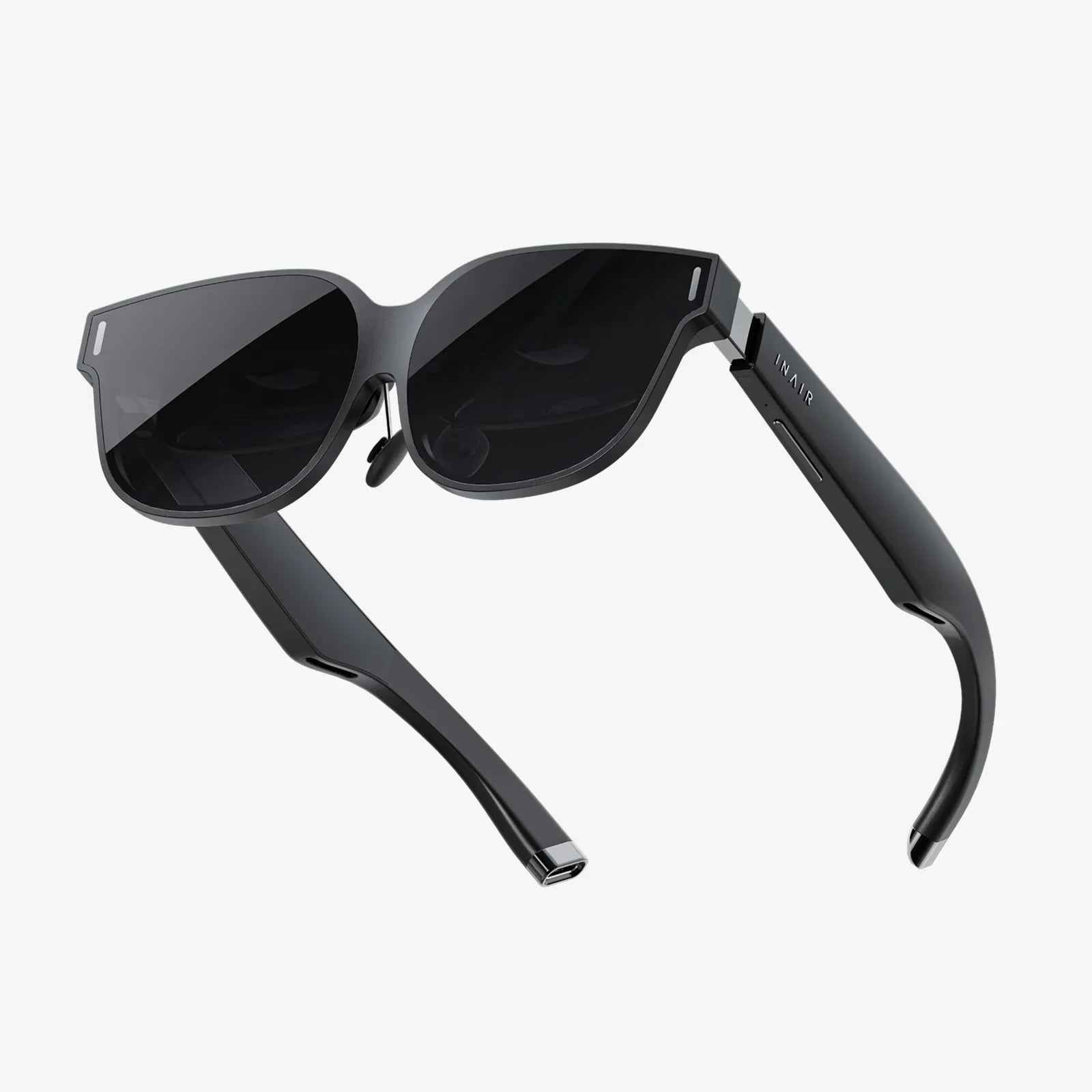
- Smart Glasses and Headsets: These wearable devices use optical projection systems to beam images directly onto the user's retina or onto a clear lens in front of their eye. This allows for a hands-free experience where digital content feels anchored in the user's natural field of view. Interaction shifts to voice commands, gesture control, and handheld controllers.
- Projection-Based AR: This method projects digital light directly onto physical surfaces, effectively "painting" them with interactive information. This can turn any wall into a touchscreen or provide visual cues for complex manual tasks without requiring the user to wear a headset.
A Spectrum of Augmentation: Marker-Based vs. Markerless AR
Not all AR experiences are created equal. They primarily fall into two categories based on how they anchor digital content to the real world.
Marker-Based AR
This is often considered the original form of AR. It relies on a specific visual trigger—a predefined image, QR code, or physical object—to activate and position the digital overlay. The device's camera scans this "marker," and the software uses its distinct pattern to calculate the position, orientation, and scale for the virtual object. This method is highly reliable and precise, making it ideal for targeted marketing campaigns, interactive print media, and educational toys. However, its limitation is its dependency on the marker; if the marker isn't present or visible, the experience doesn't work.
Markerless AR
This is the more advanced and increasingly prevalent form of AR. As the name suggests, it does not require a specific visual trigger. Instead, it uses the technologies mentioned earlier—GPS, accelerometers, and computer vision—to understand the environment and place digital content contextually. This includes:
- Location-Based AR: Content is tethered to a specific geographic coordinate. Think of a navigation app that shows directional arrows on the street in front of you or a historical tour app that resurrects ancient ruins when you point your phone at an empty field.
- Projection or Surface-Based AR: The device recognizes flat surfaces like tables or floors and allows you to place 3D models on them. This is widely used for previewing furniture in your home or playing a digital board game on your coffee table.
- Superimposition-Based AR: This method uses object recognition to replace the entire view of a real object with an augmented one. For instance, a medical app could superimpose a 3D model of a human skeleton over a person's body for educational purposes.
The Engine Room: Key Technologies Powering AR
The seamless magic of AR is powered by a complex convergence of several cutting-edge technologies.
Simultaneous Localization and Mapping (SLAM)
SLAM is arguably the most critical technology for advanced, markerless AR. It is the algorithmic process that allows a device to both map an unknown environment and simultaneously track its own location within that map in real-time. It's what allows digital content to stay locked in place as you move your phone or head around, creating a stable and believable illusion. Without SLAM, virtual objects would drift and float unrealistically.
Computer Vision
This field of artificial intelligence enables computers to interpret and understand visual information from the world. In AR, computer vision algorithms are responsible for the heavy lifting: identifying objects, detecting planes and edges, classifying images, and reading text. It is the foundational layer that allows the AR system to make sense of the chaotic and unstructured data of the real world.
Edge Computing and 5G
Rendering complex 3D graphics and processing immense amounts of visual data in real-time is computationally intensive. While on-device processors are becoming more powerful, offloading this processing to the cloud via high-speed, low-latency 5G networks is a game-changer. This fusion of edge computing and 5G allows for thinner, lighter AR glasses to deliver incredibly rich and complex experiences without being weighed down by bulky, overheating hardware.
Transforming Industries: The Practical Applications of AR
The potential of AR extends far beyond playful filters and games. It is already delivering tangible value across numerous sectors.
Revolutionizing Enterprise and Manufacturing
This is where AR is having its most immediate and profound impact. Enterprises are leveraging AR for:
- Remote Expert Guidance: A field technician stuck on a complex repair can wear AR glasses that allow an expert thousands of miles away to see their view and annotate the real world with arrows, circles, and notes, guiding them through the process step-by-step. This drastically reduces downtime, travel costs, and errors.
- Assembly and Quality Control: Digital work instructions can be projected directly onto assembly line components, showing workers exactly which part to install next and which torque setting to use. This improves accuracy, speeds up training for new employees, and ensures rigorous quality standards.
- Design and Prototyping: Engineers and designers can visualize and interact with full-scale 3D models of new products long before a physical prototype is built, enabling collaborative design reviews and rapid iterations.
- Warehouse Logistics: AR smart glasses can display optimal picking routes and item information directly in a warehouse worker's line of sight, streamlining the fulfillment process and dramatically improving efficiency.
Enhancing Healthcare and Medicine
In healthcare, AR is literally providing a new lens through which to see the human body and practice medicine.
- Enhanced Surgical Precision: Surgeons can use AR headsets to overlay critical information—such as CT scans, MRI data, or the location of blood vessels and tumors—directly onto the patient's body during an operation. This provides X-ray vision, improving precision and reducing surgical risk.
- Medical Training and Education: Students can practice procedures on interactive, augmented human models, and AR can transform textbooks into dynamic 3D models of organs and biological processes, deepening understanding.
- Patient Rehabilitation: AR games and exercises can make physical therapy more engaging, providing real-time feedback on a patient's movements and motivating them to complete their reps.
Redefining Retail and E-Commerce
AR is closing the gap between online shopping and the in-store experience.
- Virtual Try-On: Customers can see how glasses, makeup, or clothes will look on them from the comfort of their home.
- Preview Products in Your Space: The ability to place a virtual couch, lamp, or television in your actual living room to check for fit, style, and scale before purchasing has become a powerful tool for reducing product returns and increasing consumer confidence.
- Interactive In-Store Experiences: Pointing a phone at a product on a shelf could trigger reviews, demonstration videos, or show additional color options.
Enriching Education and Cultural Heritage
AR has the power to turn any location into an immersive classroom.
- Interactive Learning: Textbooks come alive with 3D models of planets, historical artifacts, or complex molecules that students can manipulate and explore from all angles.
- Museum and Historical Site Enhancement: Pointing a device at an ancient ruin can rebuild it to its former glory, or viewing a painting can reveal the story of its creation and the artist's techniques.
- Skills Training: From learning to play the piano with digital guides over the keys to practicing complex welding techniques, AR provides a safe, scalable, and effective training platform.
Navigating the Challenges and the Road Ahead
Despite its immense promise, the widespread adoption of AR faces several significant hurdles that technologists are actively working to overcome.
Technical and Social Hurdles
- Hardware Limitations: For wearable AR to become mainstream, devices need to become smaller, lighter, more powerful, and have all-day battery life. They must also solve the "vergence-accommodation conflict," a visual discomfort caused when your eyes are tricked into focusing on a digital object that isn't physically at the distance it appears.
- User Experience (UX) Design: Designing intuitive interfaces for a 3D, spatially-aware world is a new frontier. How do users interact with floating menus? How is information presented without causing overwhelming clutter or "augmented fatigue"?
- Social Acceptance and Privacy: The concept of people wearing cameras on their faces raises legitimate concerns about privacy and data security. Social norms around when and where it is appropriate to use such technology are still being formed.
The Future: Towards the Spatial Web and the AR Cloud
The next evolutionary leap for AR is the development of a persistent, shared digital layer over the physical world—often called the AR Cloud or the Spatial Web. Think of it as a universal, 3D copy of the real world that everyone can access and contribute to. This would allow for persistent AR experiences that multiple people can see and interact with simultaneously, regardless of when they arrive. A digital art installation in a park would be visible to everyone, or a virtual note left on a restaurant's door would be seen by all future visitors. This convergence of AR, 5G, AI, and IoT will ultimately lead us to a world where the internet breaks free from the confines of our screens and seamlessly merges with our reality.
The journey into this augmented age is just beginning. What is augmented reality technology? It is more than a set of hardware and algorithms; it is a fundamental shift in the human-computer interface, a new lens for perception, and a powerful tool for unlocking human potential. It promises a future where contextually relevant information is available exactly when and where we need it, enhancing our abilities, enriching our understanding, and deepening our connection to the world around us. The boundary between what is real and what is digital will not vanish, but will instead become a canvas for unprecedented creativity, productivity, and exploration, forever changing the fabric of our daily lives.
Share:
VR Glasses Windows Phone: The Untold Story of a Missed Mobile Revolution
Augmented Reality How to Make: A Comprehensive Guide to Building Your First AR Experience