


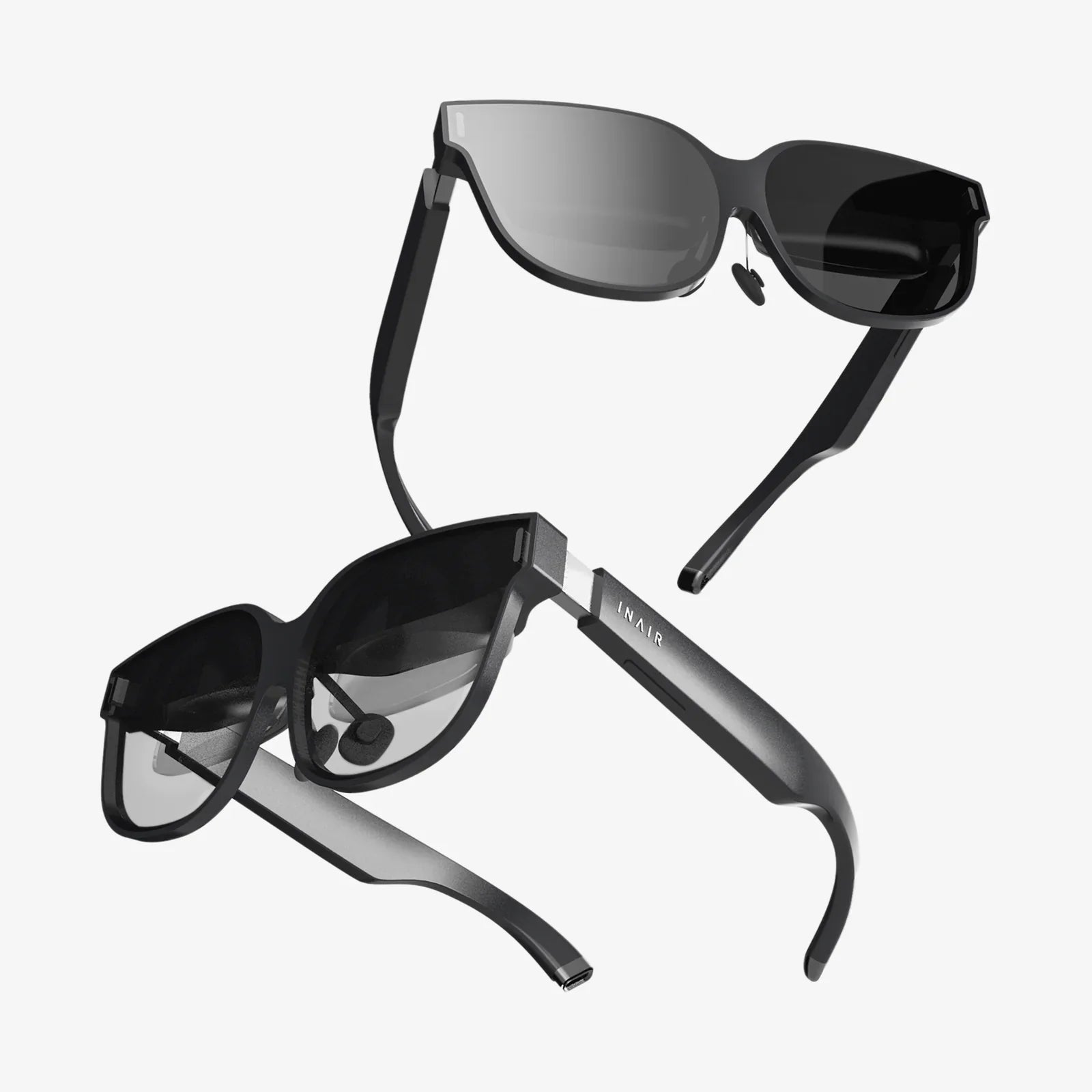
Imagine a world where digital information doesn't live on a screen in your hand, but is seamlessly woven into the fabric of your reality. Directions float on the road ahead of you, a recipe hovers beside your mixing bowl without a stained tablet, and a virtual colleague sits on your sofa for a meeting. This is the promise of augmented reality (AR), and it’s inching closer to mainstream adoption every day. But with this exciting technology comes a critical and complex question: what is the best AR headset? The answer, it turns out, is not a simple one. It’s a puzzle where the final piece is you—your lifestyle, your profession, and your budget. This definitive guide will cut through the hype and provide the framework you need to find the perfect AR companion for your journey into the augmented world.
Beyond the Hype: Defining Augmented Reality
Before we crown a champion, we must first understand the arena. Augmented reality is often confused with its close cousin, virtual reality (VR). While VR aims to replace your vision entirely, transporting you to a fully digital environment, AR seeks to enhance your real world by overlaying digital holograms, information, and interfaces onto it. You still see your living room, but now you might also see a life-sized digital sculpture you're designing or a large virtual screen for your laptop.
The magic of AR is achieved through a sophisticated blend of hardware:
- Displays: The windows to the digital layer. These can be micro-OLED screens, laser-based systems, or even waveguides that project light directly into your eyes.
- Sensors: The eyes and ears of the headset. A suite of cameras (RGB, depth, infrared), LiDAR scanners, accelerometers, and gyroscopes constantly map your environment and track your movements and gestures.
- Processor: The brain. This powerful chip fuses all the sensor data in real-time to understand the world and anchor digital objects persistently, so they don't drift or float away.
- Battery: The lifeblood. Often the biggest hurdle, battery life dictates whether the device is tethered to a power pack or can last a full workday.
The Contenders: A Spectrum of AR Experiences
The AR landscape isn't monolithic. Devices fall into several distinct categories, each with its own strengths and ideal user.
Smart Glasses: The Subtle Companion
These are the lightweight, often stylish cousins of full-featured headsets. Designed for all-day wear, they typically feature a small, monochromatic display in the corner of the lens that shows notifications, directions, or simple data. They excel at discreetly keeping you connected without pulling you out of the real world. They are the answer for someone who wants a constant, low-friction heads-up display for their digital life, prioritizing form factor and comfort over immersive experiences.
Standalone AR Headsets: The Untethered Powerhouse
This category represents the current cutting edge of consumer and prosumer AR. These are all-in-one devices with their own compute pack or integrated processing. They offer full-color, immersive passthrough AR, meaning they use outward-facing cameras to show you the world, overlaying rich digital content on top. This allows for incredibly convincing and stable holograms. They are powerful, self-contained computers for your face, ideal for developers, designers, and early adopters who want the most capable experience without wires.
Tethered AR Headsets: The Niche Professional
These devices act as high-resolution spatial displays that must be connected to a powerful external computer or console. They leverage the external device's immense processing power to deliver stunning graphical fidelity and complex simulations. Their use is primarily in enterprise, medical, and specialized design fields where extreme precision and power are non-negotiable, and mobility is a secondary concern.
The Crown Jewels: Key Features That Define the "Best"
To determine what is best for you, you must weigh these critical features, as they directly impact the quality and practicality of the experience.
Visual Fidelity: Seeing is Believing
The quality of the display is paramount. Key metrics include:
- Resolution & PPD: Look for a high resolution, but more importantly, a high Pixels-Per-Degree (PPD) count. This measures the sharpness of the image. A low PPD will make text look blurry and pixels visible (often called the "screen door effect").
- Field of View (FoV): This is the size of the digital window you're looking through. A narrow FoV feels like looking through a mailbox slot, while a wide FoV is more immersive, allowing digital objects to fill more of your vision.
- Passthrough Quality: For headsets that use cameras to show the real world, the quality of that video feed is critical. It needs to be high-resolution, low-latency (to prevent motion sickness), and have accurate color reproduction. Poor passthrough makes the real world feel alien and uncomfortable.
Comfort & Form Factor: The Forgotten Frontier
The most powerful headset is useless if you don't want to wear it. Weight distribution is more important than total weight. A well-designed headset will balance the load across your head and face, avoiding excessive pressure on your nose or cheeks. For all-day use, this is arguably the most important feature. The best device is the one that disappears on your face, allowing you to forget about the technology and focus on the task.
Tracking & Interaction: How You Touch the Digital
How do you interact with the holograms? The most advanced systems use a combination of:
- Inside-Out Tracking: The headset uses its own cameras to understand its position in the room without external sensors, enabling full freedom of movement.
- Hand Tracking: The ability to use your bare hands as controllers, pinching, dragging, and manipulating digital objects intuitively. This feels like magic and is the future of AR interaction.
- Voice Control: A natural complement to hand tracking, allowing you to issue commands without lifting a finger.
- Dedicated Controllers: Some headsets offer controllers for more precise input, akin to VR controllers, which can be better for certain games or design applications.
Software & Ecosystem: The World Within
Hardware is nothing without software. The "best" headset must have a robust and growing ecosystem. This includes a strong core user interface that feels natural, a dedicated app store with quality applications, and support for developers to create new experiences. A headset is a portal; you need compelling worlds to visit through it. The availability of apps for productivity, creativity, social connection, and entertainment is what truly gives a device long-term value.
Battery Life: Cutting the Cord
True mobility requires solid battery life. The best devices are moving towards all-day battery, either through efficient internal batteries or sleek, hot-swappable external battery packs. There's a constant trade-off between power, performance, and battery longevity that every manufacturer must navigate.
The Human Element: Matching the Headset to the User
Now, let's apply this framework. The "best" headset is entirely contextual.
The Enterprise Professional
For an engineer who needs to visualize complex machinery at scale or a surgeon overlaying patient data during a procedure, the "best" headset is defined by precision, power, and specialized software. Features like enterprise-grade support, top-tier graphical fidelity for CAD models, and ultra-stable tracking are non-negotiable. Battery life and a sleek design are secondary to raw, uncompromising performance.
The Developer & Creator
This user needs a powerful, standalone device with excellent developer tools and a vibrant ecosystem. They prioritize a high-quality passthrough experience, robust hand-tracking APIs, and a comfortable design for long coding and design sessions. They are building the future, so they need the most capable canvas available.
The Everyday Consumer & Tech Enthusiast
For someone looking to dip their toes into AR, the priorities shift dramatically. Comfort and style become critical for social acceptance. The device must offer clear, immediate value: great media consumption on a giant virtual screen, fun social filters, or useful navigation. Battery life, a low price point, and a simple, intuitive interface are the keys to winning this market. The best device here is the one that offers a compelling "wow" moment without being a burden.
Gazing into the Crystal Ball: The Future of AR
The technology is advancing at a breathtaking pace. The headsets of tomorrow will solve the fundamental challenges of today. We are moving towards:
- True Optical Passthrough: Eventually, we will move beyond camera-based video feeds to advanced waveguide and holographic optics that let you see the real world with your own eyes, simply with light projected on top. This will eliminate latency and resolution issues entirely.
- Slimmer Form Factors: The goal is a device that looks and feels like a regular pair of glasses. This requires massive breakthroughs in miniaturizing batteries, processors, and display technology.
- Contextual AI: Your AR headset will evolve into an AI companion that understands your context and proactively serves you information. It will remember where you left your keys, translate a menu automatically as you look at it, and whisper the name of a colleague you met once three years ago.
- The Spatial Internet: The web will evolve from pages on a screen to shared experiences in space. You'll visit a virtual storefront, collaborate on a 3D model with colleagues in real-time as if you were in the same room, and leave digital notes pinned to physical locations for friends to find.
So, what is the best AR headset? It’s the one that feels less like a piece of technology and more like a natural extension of your own capabilities. It’s the device that aligns perfectly with your specific needs, whether that’s designing skyscrapers, dominating your gaming backlog, or simply never missing a notification again. The journey to find it requires honest introspection about how you want to interact with the digital layer of our world. The perfect headset is out there, waiting to open your eyes to a reality enhanced, and the future has never looked brighter—or more interactive.
Share:
What Do You Connect a VR Headset To - A Complete Guide to VR Hardware Requirements
How Does a VR Headset Connect to PC: The Ultimate Setup and Troubleshooting Guide