


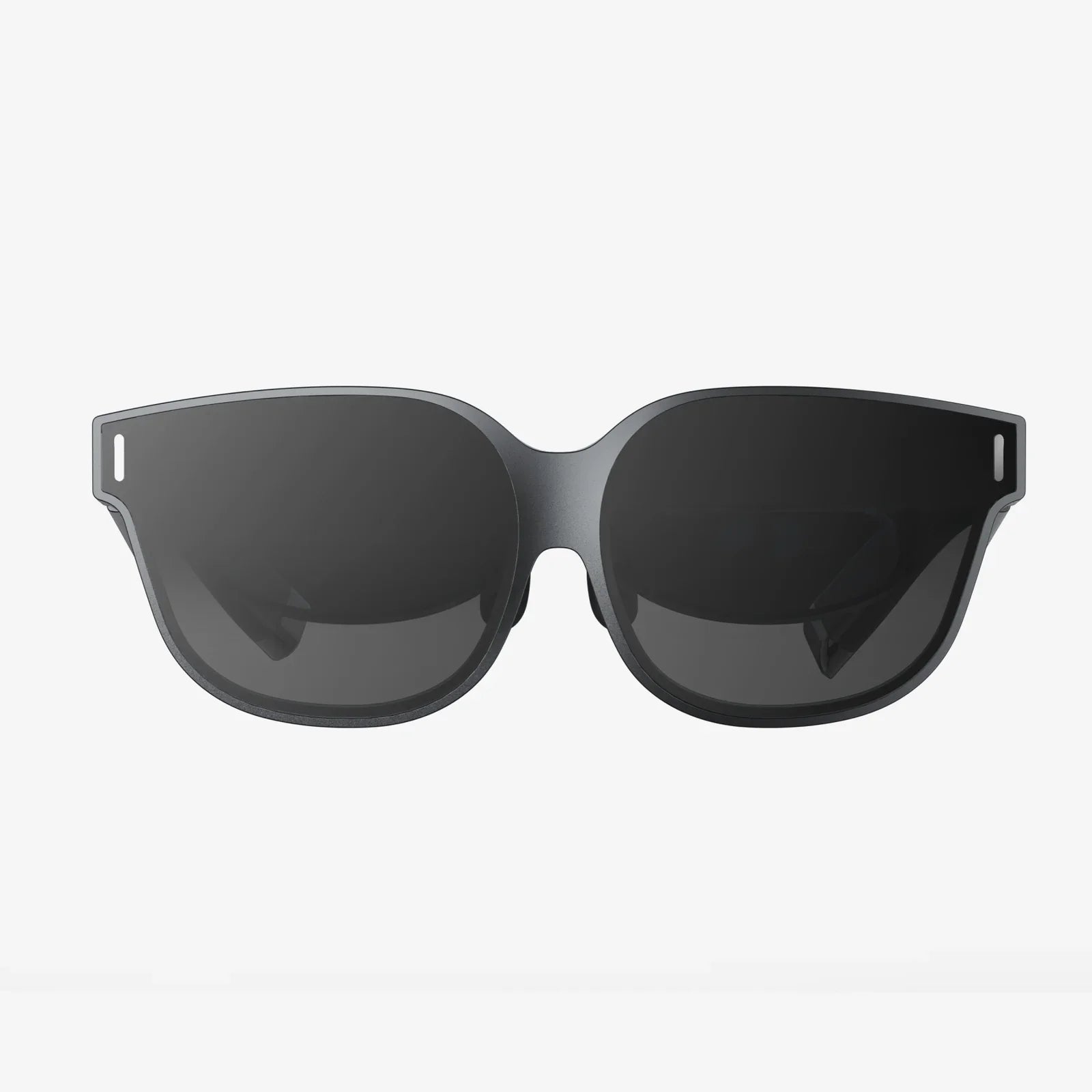
You've seen the breathtaking demos, heard the incredible stories, and now you're ready to take the plunge into virtual reality. But with so many options on the market, all promising unparalleled immersion, how do you possibly choose? The quest for the best quality VR headset isn't about finding a single perfect device, but rather identifying which premium system aligns perfectly with your expectations, your hardware, and your desired experiences. The definition of 'best' is deeply personal, shaped by a complex interplay of cutting-edge technology, ergonomic design, and software ecosystem. This comprehensive guide will dissect every element that constitutes a truly high-quality VR headset, empowering you to make an informed decision that transcends marketing hype and gets to the heart of what makes a VR experience genuinely exceptional.
Deconstructing Quality: The Pillars of a Premium VR Experience
Before comparing any specifications, it's crucial to understand what factors truly contribute to a high-fidelity VR experience. Quality is a multi-faceted concept, built upon several foundational pillars.
Visual Fidelity: The Window to Another World
The most immediate measure of quality for most users is what they see. Visual fidelity is determined by a combination of resolution, lens technology, and the display type itself.
Resolution and Pixel Density (PPI): Often the most advertised spec, resolution refers to the number of pixels on the display. However, pixel density—how many pixels are packed into each inch of the display (PPI)—is arguably more important, as it directly impacts the dreaded 'screen-door effect' (SDE), where users can see the faint lines between pixels, breaking immersion. The best quality headsets employ high-resolution, high-PPI displays that minimize or eliminate SDE entirely.
Lens Technology and Clarity: The lenses are what focus the display for your eyes. Fresnel lenses are common but can introduce god rays and glare in high-contrast scenes. Aspherical or pancake lenses, found in newer premium models, offer a significantly clearer image with a larger 'sweet spot' (the area of perfect focus) and drastically reduced visual artifacts, representing a major leap in optical quality.
Field of View (FoV): Measured diagonally in degrees, FoV determines how much of the virtual world you can see at once. A narrow FoV can feel like looking through binoculars, while a wide FoV (110 degrees or more) is far more immersive, making the headset itself 'disappear'.
Tracking Precision: Your Body in the Virtual Space
How the headset and controllers understand your movement is paramount. Flawed tracking shatters immersion instantly. There are two primary tracking paradigms, each with its own quality considerations.
Inside-Out Tracking: Cameras on the headset itself observe the environment and the controllers to determine their position. The quality of this system depends on the number, resolution, and placement of the cameras. Premium inside-out tracking offers robust, wide tracking volumes with minimal blind spots, requires no external hardware, and is generally easier to set up.
Outside-In Tracking (Base Stations): External sensors or 'base stations' placed around the room emit signals (usually lasers or infrared) that are picked up by sensors on the headset and controllers to calculate their precise position. This method is often considered the gold standard for absolute precision and low latency, especially critical for competitive gaming and professional applications. The trade-off is a more complex setup process and being tethered to a specific play space.
Comfort and Ergonomics: Forgetting You're Wearing a Headset
A headset can have the best specs in the world, but if it's unbearably uncomfortable after twenty minutes, its quality is severely diminished. Comfort is a holistic design challenge.
Weight Distribution: It's not just about overall weight, but how that weight is balanced. A front-heavy device puts immense strain on the cheeks and bridge of the nose. High-quality designs use counterweights, reinforced straps, and thoughtful engineering to distribute weight evenly across the head, often prioritizing a rear counter-balance.
Materials and Adjustability: Premium materials like breathable fabrics, memory foam facial interfaces, and rigid yet lightweight polymers are key. A quality headset should offer multiple points of adjustment: IPD (Interpupillary Distance) to match your eye spacing, a dial for tightening the headstrap, and often multiple options for facial interfaces to suit different face shapes.
Audio: The Unseen Half of Immersion
3D spatial audio is what sells the illusion that you are truly *in* a place. The sound of rain falling around you, or an enemy creeping up behind you, is as important as the visual cue. Quality headsets either integrate excellent, high-fidelity headphones or provide a dedicated audio jack and robust spatial audio software for your own preferred headphones.
Performance and Ecosystem: The Engine Behind the Experience
The headset itself is just a display. The quality of the experience is ultimately governed by the hardware powering it and the software available for it.
Platform Dependence: Some high-end headsets are tethered, requiring a powerful external computer to render the complex visuals. The quality here is limited only by the power of your computer. Others are standalone, with all the computing power built-in. The quality of a standalone experience is a direct result of the mobile chipset it uses, balancing graphical fidelity with battery life and heat.
Content Library and Software: A headset is a brick without great software. The quality of the platform's exclusive titles, its user interface (often called the 'dashboard'), and its social features are critical components of the overall package. A robust, curated store with a strong pipeline of upcoming content is a hallmark of a quality ecosystem.
The High-End Contenders: A Spectrum of Premium Choices
The market for premium VR is no longer a monolith. Different manufacturers have prioritized different aspects of quality, leading to a fascinating spectrum of top-tier options. It's important to note that the 'best' headset is the one that best serves your primary use case.
The All-in-One Powerhouse
This category represents the pinnacle of standalone VR. These devices focus on delivering a high-fidelity, untethered experience with the convenience of no external sensors or PC required. They boast high-resolution displays, advanced pancake lenses for a slimmer profile and better clarity, and robust inside-out tracking. Their quality is defined by their ability to deliver a console-like, accessible premium experience. The trade-off is that their graphical power, while impressive for mobile chips, cannot match a high-end gaming PC. They are the best quality option for users who value convenience, a large curated content library, and social features without being tied to a specific room.
The PC-VR Champion
For the purist who demands the absolute highest fidelity visuals and the most precise tracking available, this category remains king. These headsets act as a display for a powerful gaming computer, unlocking the full potential of VR graphics with detailed textures, advanced lighting, and high frame rates. They almost universally utilize the outside-in base station tracking method, which is still considered the most accurate and lowest latency solution for competitive gaming and professional simulators. The quality here is uncompromising, aimed at enthusiasts and professionals for whom visual artifacts and tracking jitter are unacceptable. The obvious trade-offs are a higher total cost (headset + capable PC), a more complex setup with external hardware, and being tethered by a cable, though wireless adapters can mitigate this for a price.
The Wireless Hybrid
A newer category that seeks to blend the best of both worlds. These headsets are primarily designed to be tethered to a PC to access the highest-quality content, but they also have a standalone mode for more casual, mobile experiences. This dual nature offers incredible flexibility. You can enjoy a graphically intensive PC title and then, without changing headsets, take it to another room for a standalone fitness app or media viewing. The quality proposition is versatility. You may not get the absolute peak of standalone performance or the absolute peak of PC performance in a single device, but you get legitimate access to both ecosystems, making it a fantastic 'do-everything' device for someone who wants it all.
Beyond the Spec Sheet: Intangible Factors of Quality
True quality extends beyond megapixels and degrees of freedom.
Build Quality and Longevity: Does the headset feel plasticky and cheap, or solid and durable? Are the controllers robust enough to survive an accidental impact with a wall? Premium materials and thoughtful construction indicate a product built to last.
After-Sales Support and Software Updates: A quality product is backed by a quality company. Responsive customer support, a good warranty, and a consistent track record of providing meaningful software updates that add new features and improve performance are invaluable. It shows a commitment to the product beyond its initial sale.
Controller Design and Haptics: Your hands in VR are the controllers. Their ergonomics, button layout, and the quality of their haptic feedback (from simple rumble to advanced finger tracking) are fundamental to immersion. The best controllers feel like a natural extension of your body.
Passthrough AR Capability: The ability to see your real-world environment through the headset's cameras is moving from a gimmick to a core feature. The quality of this passthrough—its resolution, latency, and how it's integrated into the software—is a key differentiator for productivity and mixed-reality applications.
Finding Your Best Fit: A Practical Guide
Now that you understand the facets of quality, how do you choose? Ask yourself these questions:
- What is your primary use case? (Gaming, fitness, social, productivity, media consumption?)
- What is your budget for the headset itself? Remember to factor in the cost of accessories, software, and, for PCVR, the computer itself.
- Do you own a powerful gaming PC? If not, a standalone or wireless hybrid headset is your only high-end option.
- How important is absolute graphical fidelity to you? Are you willing to trade convenience for it?
- Where will you use it? Do you have a dedicated, clear space for external sensors, or do you need the flexibility of inside-out tracking?
Your answers will naturally guide you toward one of the premium categories. There is no single 'best' headset for everyone, only the best headset for *you* based on your unique priorities and setup.
The journey to finding the best quality VR headset is a thrilling exploration of modern technology, one that forces you to balance raw power with elegant design, and uncompromising performance with everyday convenience. By looking beyond the marketing claims and focusing on the core pillars of immersion—crystal-clear visuals, flawless tracking, all-day comfort, and a rich software library—you can confidently invest in a system that doesn't just show you a new world, but makes you believe you're actually there. Your perfect gateway to virtual worlds is waiting.
Share:
Can You Do VR Without a Headset? Exploring Accessible Virtual Realities
Why Has Extended Reality Become the Next Frontier of Human Interaction?