


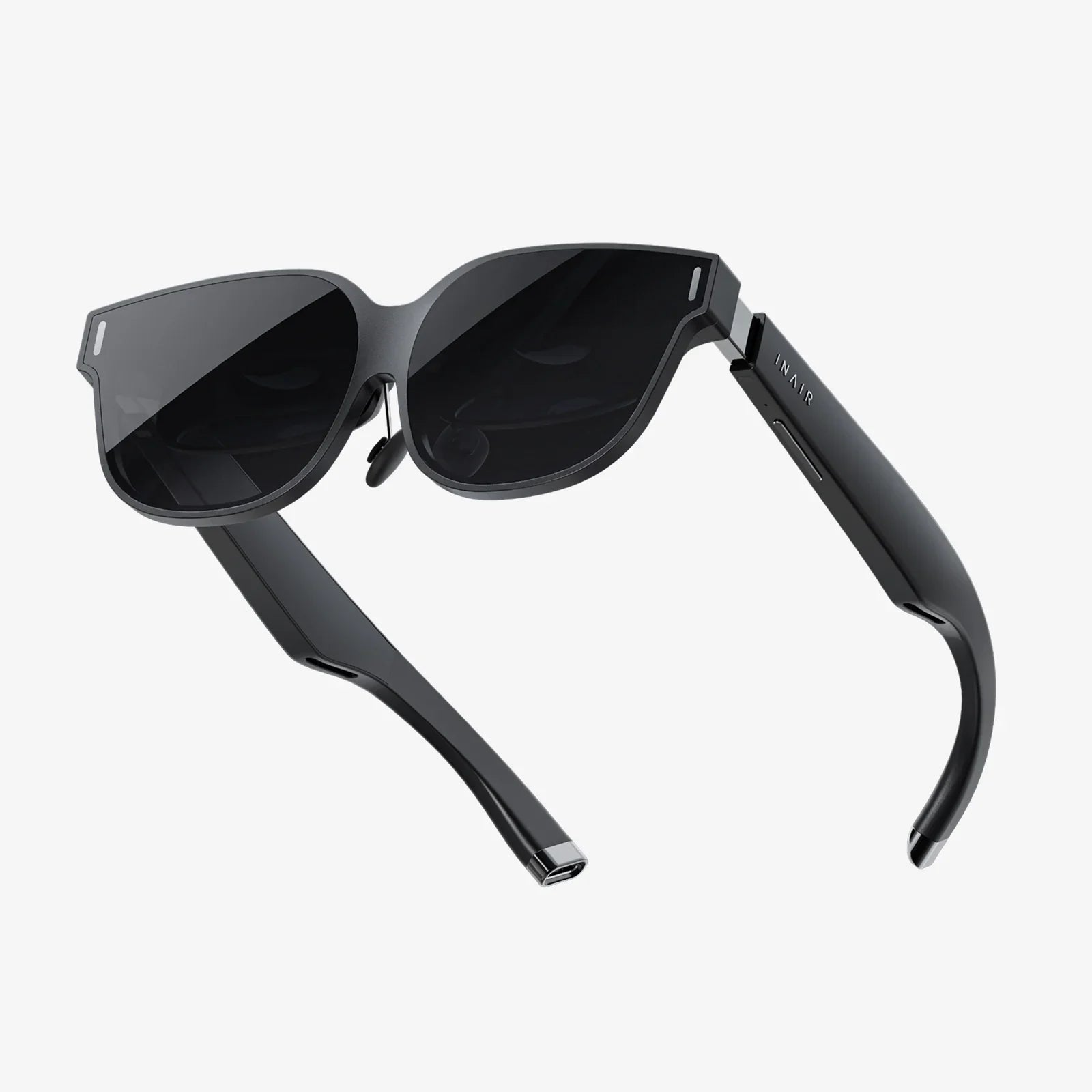
Imagine stepping into another world, a boundless digital realm where you are the protagonist, without a single wire holding you back. The dream of truly untethered virtual reality is no longer science fiction; it's a vibrant, competitive market with several stellar options vying for the crown. But with great freedom comes a great question: what is the best wireless VR headset? The answer, as you might suspect, is not a simple one. The 'best' headset is a deeply personal equation, a perfect alignment of your budget, your desired experiences, your technical tolerance, and your physical space. This definitive guide will cut through the marketing jargon and dive deep into the core technologies and experiences that separate a good wireless VR headset from a truly great one.
The Pillars of Wireless VR Greatness
To crown a 'best' headset, we must first establish the criteria for judgment. Wireless VR is a complex dance of hardware and software, where a weakness in one area can undermine strengths in another. We will evaluate contenders based on several key pillars.
Display and Visual Fidelity: The Window to Another World
The screen is your portal. Its quality dictates the immersion more than almost any other factor. Key considerations include:
- Resolution and Pixels-Per-Degree (PPD): Raw megapixel counts are less important than PPD, which measures how dense the pixels are within your field of view. A higher PPD means a sharper, clearer image with less visible 'screen door effect'.
- Lens Technology: Pancake lenses are a recent revolution. They are thinner and lighter than traditional Fresnel lenses and provide a much larger 'sweet spot'—the area where the image is perfectly in focus—and edge-to-edge clarity.
- Refresh Rate: Measured in Hertz (Hz), a higher refresh rate (90Hz, 120Hz, and beyond) leads to smoother motion, which is crucial for both immersion and reducing simulation sickness for some users.
Tracking and Controllers: Your Body in the Machine
How does the headset see you and the world? There are two primary methods:
- Inside-Out Tracking: Cameras on the headset itself track your movement and the position of the controllers. This is the standard for modern wireless VR, requiring no external sensors. Its accuracy is paramount.
- Controller Design: Ergonomic, well-balanced controllers that feel like an extension of your hand are essential. Features like haptic feedback and finger-tracking elevate interactions from simple button presses to nuanced gestures.
Performance and Processing Power: The Brain of the Operation
Wireless VR headsets generally fall into two camps:
- Standalone Headsets: These have all the necessary computing power built directly into the headset. They are completely self-contained, offering maximum freedom and ease of use. Performance is dictated by the mobile-grade chipset inside.
- PC-Streaming Headsets: These headsets act as a wireless display for a powerful gaming computer. They offload the intense processing to the PC, enabling breathtaking, high-fidelity graphics that standalone systems cannot yet match. The quality of the wireless connection is critical here.
Comfort and Design: Forgetting You're Wearing It
Immersion breaks the moment you notice a heavy, awkward weight on your face. A great headset must be designed for long sessions.
- Weight Distribution: A front-heavy design puts strain on your neck. Counter-balancing the weight with a well-designed strap system is key.
- Facial Interface: The material that touches your face should be soft, breathable, and easy to clean. It should also allow for a variety of interpupillary distance (IPD) adjustments to align with different users' eyes.
Content Library and Ecosystem: Worlds to Explore
The most powerful headset is a paperweight without great software. The backing ecosystem—the store, the exclusive titles, the social features, and the backward compatibility—is a huge part of the value proposition.
The Contenders and Their Philosophies
While we avoid brand names, we can categorize the dominant players in the wireless VR space by their approach to the technology.
The All-in-One Standalone Powerhouse
This category represents the most accessible form of wireless VR. The goal is simplicity and mass appeal. These devices require no computer, no wires, and minimal setup. You simply put on the headset and enter a curated universe of games, apps, and social spaces. The performance is solid for mobile-based VR, and the convenience is unmatched. They are often backed by a vast, walled-garden ecosystem designed to keep you within its universe, offering exclusive titles that are major system sellers. For the user who values plug-and-play freedom above all else and wants an all-inclusive package, this is often the most compelling choice.
The High-Fidelity PC Streaming Specialist
This category is for the enthusiast who refuses to compromise on graphical fidelity. These headsets are designed from the ground up to be the ultimate wireless portal to a high-end gaming PC. They leverage cutting-edge wireless technology to stream data from the PC to the headset with minimal latency and compression artifacts. The result is an experience that is visually indistinguishable from being wired, providing access to the vast library of PC-based VR content at its highest settings. The trade-off is a higher cost of entry (requiring both a premium headset and a powerful computer) and a slightly more complex setup process. For the VR purist who already owns a gaming rig, this is the path to the absolute best visual experience available wirelessly.
The Hybrid Innovator
This is a newer, fascinating category that seeks to offer the best of both worlds. The core idea is a standalone headset with enough processing power for mobile gaming and media consumption, but with the added ability to seamlessly connect to a gaming PC over a wireless network. This dual-brained approach provides incredible flexibility. You can enjoy the convenience of standalone play on the couch, then switch to a PC-streaming mode for a session of high-end simulation gaming. It removes the need to choose one ecosystem over the other, future-proofing the investment. This approach represents the most versatile and user-centric vision for the future of wireless VR.
Making Your Choice: A Buyer's Checklist
Armed with this knowledge, how do you decide? Ask yourself these questions:
- What is your budget? Consider the total cost: the headset, the mandatory accessories, and, if required, a VR-ready PC.
- What are your performance priorities? Is crystal-clear visual fidelity non-negotiable, or is a good-enough image with total convenience more your style?
- Where will you use it? Do you have a large, clear play space for room-scale games, or will you be primarily seated or stationary?
- What do you want to do in VR? Are you a hardcore gamer, a socializer, a fitness enthusiast, or someone who wants to consume media on a giant virtual screen?
- Who else will use it? If sharing with family, ease of use and a wide range of adjustable settings become more important.
The journey to find your perfect wireless VR headset is an exciting one. It's a field defined by rapid innovation, where each new release pushes the boundaries of what's possible without a tether. By looking beyond the specs and understanding the core philosophies behind the devices, you can make an informed decision that aligns with your digital lifestyle. The ultimate wireless VR experience isn't about the name on the box; it's about the feeling of pure, uninhibited presence it gives you. It's about that moment you forget the technology entirely and simply exist in another place. That is the true metric of the best.
Your perfect virtual playground awaits, utterly free from the tangled mess of cables that once defined this technology. The only thing left to do is take that first step into a world where your reality is limited only by your imagination. The search for the ultimate wireless headset is ultimately a search for the device that disappears on your face and transports your mind—so which world will you step into first?
Share:
Best PC Connected VR Headset - The Ultimate Guide to High-Fidelity Immersion
Best VR Headset for Watching TV: Your Ultimate Guide to a Personal Cinema