


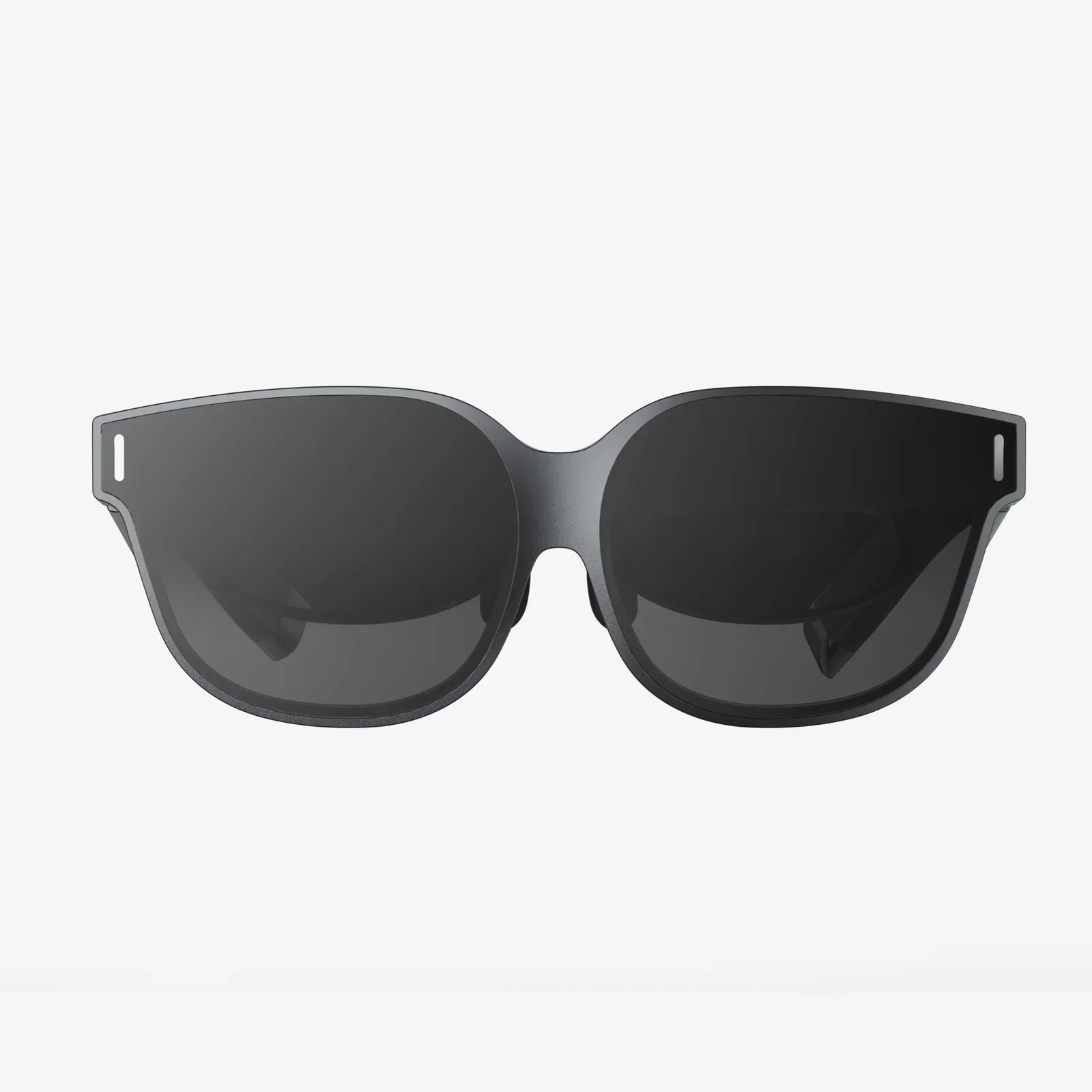
Imagine stepping into a new world, not through a screen, but with your entire being. This is the promise of virtual reality, a technology that has vaulted from the pages of speculative fiction into our living rooms, classrooms, and operating theaters. Its impact is not a distant future possibility; it is happening now, sending ripples across every facet of our society, redefining human experience in ways we are only beginning to comprehend. The headset is merely the portal; the true story is the seismic shift happening on the other side.
A Paradigm Shift in Human Experience and Perception
At its core, virtual reality's most fundamental impact is its ability to manipulate and redefine human perception. Unlike any medium that came before it, VR does not ask for our observation; it demands our immersion. It replaces our physical reality with a digitally constructed one, engaging our primary senses of sight and sound to create a powerful, neurological trick known as presence. Presence is the unequivocal feeling of "being there," the suspension of disbelief so complete that the brain reacts to virtual stimuli as if they were real. This phenomenon is the engine of VR's transformative power.
This shift from observation to experience has profound implications. It fosters empathy on an unprecedented scale. Where a documentary can tell you about a refugee crisis, a VR experience can place you in the middle of it, creating a visceral, emotional understanding that facts and figures alone cannot achieve. Conversely, it allows for incredible feats of imagination and exploration, letting an individual walk on Mars or swim through the human bloodstream. VR changes the user from a passive consumer of information into an active participant within it, fundamentally altering the dynamic between content and consciousness.
Revolutionizing Education and Professional Training
The realm of education and training is experiencing one of the most direct and positive impacts of virtual reality. The technology is dismantling the barriers of traditional learning, replacing theoretical memorization with experiential practice.
- Immersive Learning: Students are no longer limited to reading about ancient Rome; they can take a guided tour through a meticulously reconstructed Forum. Medical students can practice complex surgical procedures on virtual patients, making mistakes and learning critical skills without any risk to human life. This hands-on approach accelerates comprehension and retention of complex subjects.
- Skill Acquisition and Muscle Memory: VR is exceptional for training that requires spatial awareness and precise physical movement. From pilots practicing emergency procedures in a virtual cockpit to mechanics learning to assemble a complex engine, VR allows for repetitive, safe practice that builds real muscle memory, drastically reducing training costs and improving outcomes.
- Democratizing Access: A student in a remote village can have the same access to a virtual chemistry lab or a historical site as a student in a well-funded urban school. VR has the potential to level the educational playing field, providing high-quality experiential learning to anyone, anywhere.
Transforming Healthcare and Therapeutic Practices
In healthcare, VR is moving from a novel experiment to a validated therapeutic tool, creating impacts in both treatment and rehabilitation.
- Pain Management and Distraction Therapy: The immersive nature of VR is a powerful non-pharmacological tool for pain management. For patients undergoing painful wound care, burn therapy, or dental procedures, being immersed in a calming, engaging virtual world can significantly reduce perceived pain and anxiety by diverting the brain's attention.
- Exposure Therapy and Phobia Treatment: Mental health professionals are using VR to create controlled, safe environments for treating phobias (like fear of heights, flying, or public speaking) and post-traumatic stress disorder (PTSD). Patients can gradually confront their triggers within the virtual space, allowing them to process and overcome their anxieties in a manageable way.
- Physical Rehabilitation and Motor Skills: Stroke victims and individuals with physical disabilities are using VR games and simulations to aid their recovery. These exercises turn repetitive physical therapy into engaging tasks, improving patient motivation and adherence to treatment plans while providing therapists with precise data on patient progress.
- Surgical Planning and Medical Visualization: Surgeons are using VR to plan complex operations. By creating a 3D model of a patient's anatomy from MRI or CT scans, they can "walk through" a procedure beforehand, identifying potential challenges and optimizing their approach, which can lead to shorter operation times and improved patient safety.
Redefining Entertainment, Socialization, and the Metaverse
The entertainment industry was an early adopter of VR, but its impact goes far beyond more immersive video games. It is forging new art forms and redefining social connection.
- New Narrative Formats: Filmmakers and artists are exploring VR to tell stories in radically new ways. Instead of a fixed camera angle, the audience is placed within the scene, able to look around and choose where to focus their attention. This creates a deeply personal and non-linear form of storytelling.
- The Social Dimension: Social VR platforms allow people to meet, interact, and share experiences as embodied avatars in virtual spaces. Friends separated by oceans can feel like they are watching a movie together in the same virtual cinema or attending a live concert side-by-side. This has profound implications for reducing loneliness and creating new forms of community that are untethered from physical location.
- The Concept of the Metaverse: VR is the likely gateway to the metaverse—a persistent network of shared, virtual spaces. This evolution of the internet could transform how we work, socialize, shop, and play, creating a new digital economy and a parallel layer of human existence. The impact on commerce, real estate, and identity in such a world is immense and still largely uncharted.
Economic and Industrial Reshaping
Beyond consumer applications, VR is driving efficiency and innovation in numerous industries, changing how products are designed, built, and sold.
- Design and Prototyping: Architects, engineers, and product designers use VR to create and walk through prototypes long before physical models are built. This allows for early detection of design flaws, saves enormous amounts of time and resources, and enables clients to experience a space at a human scale before a single brick is laid.
- Remote Collaboration and Assistance: An expert engineer can be virtually "beamed" onto a factory floor anywhere in the world to guide a local technician through a complex repair, seeing what they see and annotating their real-world view. This reduces travel costs and downtime dramatically.
- Virtual Showrooms and Retail: Companies are creating virtual showrooms where customers can configure and explore products like cars, furniture, or homes in photorealistic detail. This enhances the shopping experience and provides valuable data on customer preferences.
Navigating the Ethical and Societal Challenges
Such a powerful technology does not arrive without significant challenges and risks. Its impact is a double-edged sword, demanding careful consideration and proactive governance.
- The Reality Gap and Psychological Effects: The intense realism of VR can lead to dissociation, known as the "reality gap," where users struggle to reacclimatize to the real world after prolonged use. The long-term psychological effects of regularly inhabiting a virtual body and world are not yet fully understood.
- Data Privacy and Surveillance: VR headsets are data collection powerhouses. They can track precise eye movement, body language, vocal inflections, and even physiological responses like pupil dilation. This data is incredibly valuable and deeply personal, raising severe concerns about privacy, profiling, and how this information could be used or exploited.
- The Potential for Addiction and Escapism: If a virtual world is more appealing, rewarding, or comfortable than real life, the risk of addiction and unhealthy escapism is high. This could exacerbate social isolation and mental health issues rather than alleviate them.
- Misinformation and Manipulation: The power of experiential learning cuts both ways. If VR can build empathy, it can also be used as the ultimate propaganda tool, creating hyper-realistic simulations of false events to manipulate beliefs and behaviors in a way that is far more convincing than a written article or video.
- Accessibility and the Digital Divide: High costs and technical requirements could create a new digital divide, separating those who can afford to experience and shape these new virtual worlds from those who cannot, potentially leading to new forms of social and economic inequality.
The Future Trajectory of an Evolving Technology
The VR we see today is merely the prototype. Its future impact will be amplified by convergence with other transformative technologies. The line between virtual and physical will further blur with advancements in haptic feedback, allowing users to feel virtual objects. The integration of artificial intelligence will create dynamic, responsive virtual worlds populated by intelligent agents. As brain-computer interfaces evolve, we may eventually move beyond headsets entirely, interfacing with virtual environments directly through our neural pathways. This trajectory suggests that VR's ultimate impact may be to challenge the very definition of reality and human connection, forcing us to continually re-evaluate the relationship between our physical selves and our digital existences.
The impact of virtual reality is not a single event to be measured, but an ongoing wave of transformation. It is a mirror reflecting our greatest aspirations for empathy, learning, and connection, while also revealing our deepest fears about privacy, manipulation, and the nature of reality itself. The virtual door is open, and there is no turning back; the only question that remains is how consciously and carefully we will choose to step through it and shape the worlds on the other side.
Share:
What Does XR Mean? Virtual Reality and the Spectrum of Immersive Technology
Virtual Reality (VR) Market Share: A Deep Dive into the Forces Shaping Our Digital Future