


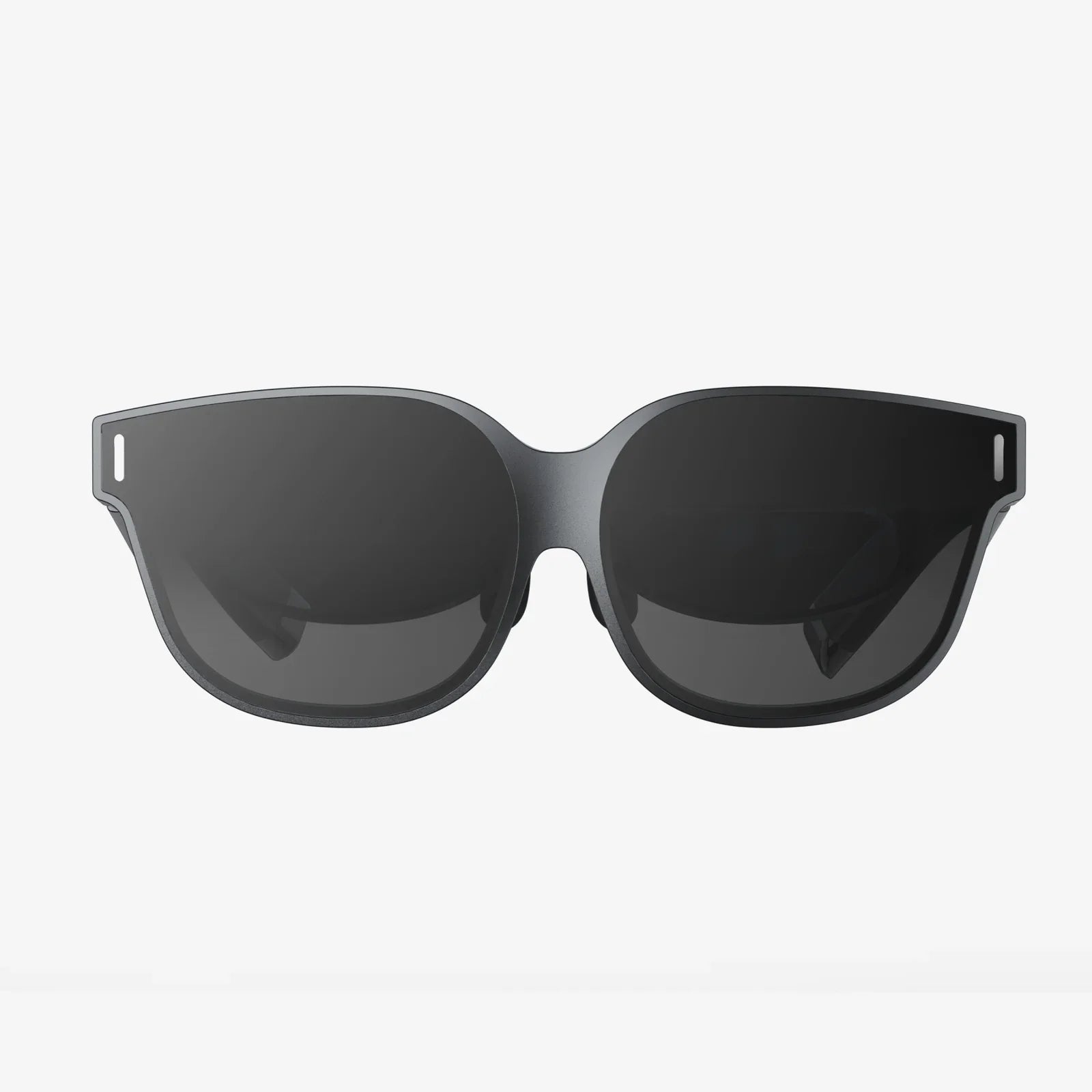
You've typed those five words into a search bar—'what is virtual reality short answer'—and you're expecting a simple definition. But what you're about to discover is a doorway, not just a description; a portal to understanding one of the most transformative technologies of our generation, a digital universe that is reshaping everything from how we play and learn to how we connect and heal. This isn't just about headsets and games; it's about the future of human experience itself.
Demystifying the Core Concept: More Than Just a Headset
At its most fundamental level, the short answer is this: Virtual Reality (VR) is a computer-generated simulation of a three-dimensional environment that users can interact with in a seemingly real or physical way using specialized electronic equipment, primarily a head-mounted display (HMD). It is an immersive, experiential technology that replaces your natural world with a digital one, tricking your brain into believing you are somewhere you are not.
However, this concise explanation merely scratches the surface. The true essence of VR lies in its pursuit of presence—the undeniable, visceral sensation of being physically present in a non-physical world. This is the holy grail of VR development. It's achieved through a sophisticated combination of hardware and software designed to hijack your senses, primarily sight and sound, and increasingly touch and even smell.
It is crucial to distinguish VR from its technological cousins. Augmented Reality (AR) overlays digital information onto the real world (think of navigation arrows on your car windshield), while Mixed Reality (MR) blends the physical and digital worlds, allowing for interaction between both. VR, by contrast, is all-encompassing; it is a destination you go to, leaving your physical surroundings behind.
A Journey Through Time: The Historical Roots of Virtual Reality
The dream of escaping into an artificial world is not new. While the technology is modern, the concept has fascinated humans for generations.
- The 19th Century: The stereoscope, invented in 1838, used twin mirrors to project a single 3D image, representing an early attempt to simulate reality for an individual viewer.
- The 1930s: Science fiction pulp stories began exploring ideas of artificial worlds, most notably in Stanley G. Weinbaum's Pygmalion's Spectacles, which described a pair of goggles that could provide a holographic, fictional world incorporating smell and touch.
- The 1950s & 1960s: Cinematographer Morton Heilig created the 'Sensorama' in 1962, a mechanical arcade-style cabinet that stimulated multiple senses with stereo sound, vibrating chairs, and even smell generators. He also patented the Telesphere Mask, the first head-mounted display, though it lacked motion tracking.
- The 1968 Landmark: Computer scientist Ivan Sutherland, with his student Bob Sproull, created The Sword of Damocles, widely considered the first head-mounted display system that offered true immersive reality. It was a primitive and intimidating apparatus that hung from the ceiling, but it laid the foundational blueprint for all VR to follow.
- The 1980s & 1990s: The term 'Virtual Reality' was popularized by Jaron Lanier, founder of VPL Research, who developed some of the first commercial goggles and datagloves. This era saw a wave of consumer interest, fueled by films like Lawnmower Man and early arcade VR experiences, but the technology was too crude and expensive to sustain itself, leading to a period of dormancy.
- The 2010s Renaissance: The modern VR revolution began with the Kickstarter campaign for the Oculus Rift in 2012, which demonstrated that high-quality, low-latency VR could be achieved at a accessible cost. This sparked a massive resurgence in investment and development, leading to the commercial consumer market we see today.
Deconstructing the Illusion: The Technology That Powers VR
Creating a convincing virtual experience is a complex ballet of engineering and software. Several key components work in perfect harmony to manufacture the feeling of presence.
The Head-Mounted Display (HMD): The Window to Another World
The HMD, or headset, is the primary interface. It contains two small high-resolution displays (one for each eye) that show slightly different perspectives of the 3D environment, creating stereoscopic vision and the crucial depth perception. These screens are placed behind lenses that focus and reshape the picture for each eye, creating a wide field of view that fills your periphery. Modern HMDs also feature high refresh rates (90Hz and above) to ensure smooth motion and prevent disorientation.
Tracking Systems: Knowing Where You Are
For the virtual world to respond to you, the system must track your movement with extreme precision. This is done through a combination of:
- Rotational Tracking: Achieved with an Inertial Measurement Unit (IMU) containing a gyroscope, accelerometer, and magnetometer to track the orientation of your head—yaw, pitch, and roll.
- Positional Tracking: This tracks the physical movement of your head through space. Outside-in tracking uses external sensors or cameras placed in the room to monitor LEDs on the headset. Inside-out tracking uses cameras mounted on the headset itself to look at the real-world environment and deduce its own position, making the system more self-contained and easier to set up.
Controllers and Haptics: Bringing Your Hands With You
VR controllers are your hands in the digital realm. They are motion-tracked devices, often with buttons, joysticks, and triggers. More advanced systems incorporate haptic feedback, using subtle vibrations and force feedback to simulate the sensation of touch—the recoil of a gun, the weight of an object, or the texture of a surface. This multi-sensory input dramatically enhances immersion.
Computational Power and Software: Building the Universe
Rendering two high-frame-rate, high-resolution images in perfect sync demands immense graphical processing power. This is typically handled by a powerful gaming computer or, in the case of standalone headsets, by sophisticated mobile chipsets optimized for this task. The software, built on game engines, creates the realistic physics, textures, lighting, and soundscapes that make the world believable.
Audio: The Forgotten Sense
3D spatial audio is arguably as important as visual fidelity for creating presence. By using head-related transfer functions (HRTFs), sounds in VR can be made to seem like they are coming from specific points in the 3D space around you—behind, above, or far away. The subtle audio cues of an environment are what complete the illusion.
Beyond Gaming: The Expansive Applications of Virtual Reality
While gaming is the most famous application, VR's potential extends far beyond entertainment, revolutionizing numerous fields.
Education and Training: Learning by Doing
VR offers unparalleled opportunities for experiential learning. Medical students can practice complex surgical procedures on virtual patients without risk. History students can walk through ancient Rome. Mechanics can train on virtual engines. This 'learning by doing' in a safe, repeatable, and cost-effective environment enhances retention and understanding dramatically.
Healthcare: A Tool for Treatment and Therapy
The healthcare industry is embracing VR for a variety of uses:
- Exposure Therapy: Treating phobias (fear of heights, flying, spiders) by gradually and safely exposing patients to their triggers within a controlled virtual environment.
- Pain Management: Immersive VR experiences have been shown to effectively distract patients from acute pain during wound care, physical therapy, and other procedures, reducing the need for medication.
- Rehabilitation: Motivating stroke and injury patients to complete repetitive physical therapy exercises by turning them into engaging VR games.
- Surgical Planning: Allowing surgeons to visualize and navigate a patient's unique anatomy in 3D before making an incision.
Enterprise and Design: Prototyping and Collaboration
Architects and engineers use VR to walk clients through unbuilt designs, identifying issues before construction begins. Car manufacturers design and test vehicles in VR, saving millions on physical prototypes. Global teams can meet in a shared virtual boardroom, interacting with 3D models as if they were physically present, collapsing geographical barriers.
Social Connection and Remote Work
The concept of the 'metaverse'—a persistent network of shared virtual spaces—is fundamentally social. VR platforms allow people to gather, socialize, attend concerts, and work together using personalized avatars. This offers a profound sense of shared presence that video calls cannot replicate, potentially redefining the future of remote collaboration and social interaction.
The Human and Societal Impact: Challenges and Considerations
As with any powerful technology, VR's ascent is not without its challenges and ethical questions.
- Privacy and Data Security: VR systems collect vast amounts of biometric data—eye tracking, hand movements, voice recordings, even gait analysis. This data is incredibly personal and valuable, raising serious concerns about how it is stored, used, and protected.
- Physical and Psychological Effects: 'VR sickness,' similar to motion sickness, can affect some users. There are also questions about the long-term psychological effects of prolonged immersion, potential for addiction, and the 'proteus effect'—where behavior shifts to align with one's avatar.
- Accessibility and the Digital Divide: High costs and technical requirements could limit access, potentially creating a new dimension of inequality between those who can afford to experience these new digital worlds and those who cannot.
- The Reality Blur: As experiences become hyper-realistic, the line between the virtual and the real may become increasingly blurred, posing philosophical questions about the nature of experience and reality itself.
Glimpsing the Horizon: The Future of Virtual Reality
The technology is advancing at a breathtaking pace. The near future promises:
- Enhanced Visual Fidelity: Displays with resolutions approaching retinal quality, eliminating the 'screen door effect.'
- Advanced Haptics: Full-body suits and gloves that provide realistic touch and force feedback, allowing users to feel the virtual world.
- Brain-Computer Interfaces (BCIs): Companies are already experimenting with systems that read neural signals, potentially allowing users to control VR experiences with their thoughts, creating the ultimate seamless interface.
- Artificial Intelligence Integration: AI will be used to generate dynamic, responsive environments and incredibly realistic digital humans for interaction.
So, the next time you or someone else seeks a 'what is virtual reality short answer,' remember that those five words open a conversation that spans decades of innovation, touches nearly every aspect of our lives, and points toward a future where the digital and physical are seamlessly intertwined. It’s a journey that is only just beginning, and its ultimate destination will be shaped by the choices we make today.
Imagine a world where your morning meeting is on a space station, your physical therapy feels like an epic quest, and your capacity to explore, create, and connect is limited only by your imagination. This is the promise held within that sleek headset—not an escape from our reality, but an expansion of it, offering new dimensions of human experience that we are only starting to comprehend. The door is open; all you have to do is take that first step through.
Share:
Is Virtual Reality Safe for Eyes? An In-Depth Look at the Visual Impacts of Immersive Technology
Positives and Negatives of Virtual Reality: A Deep Dive into the Digital Frontier