


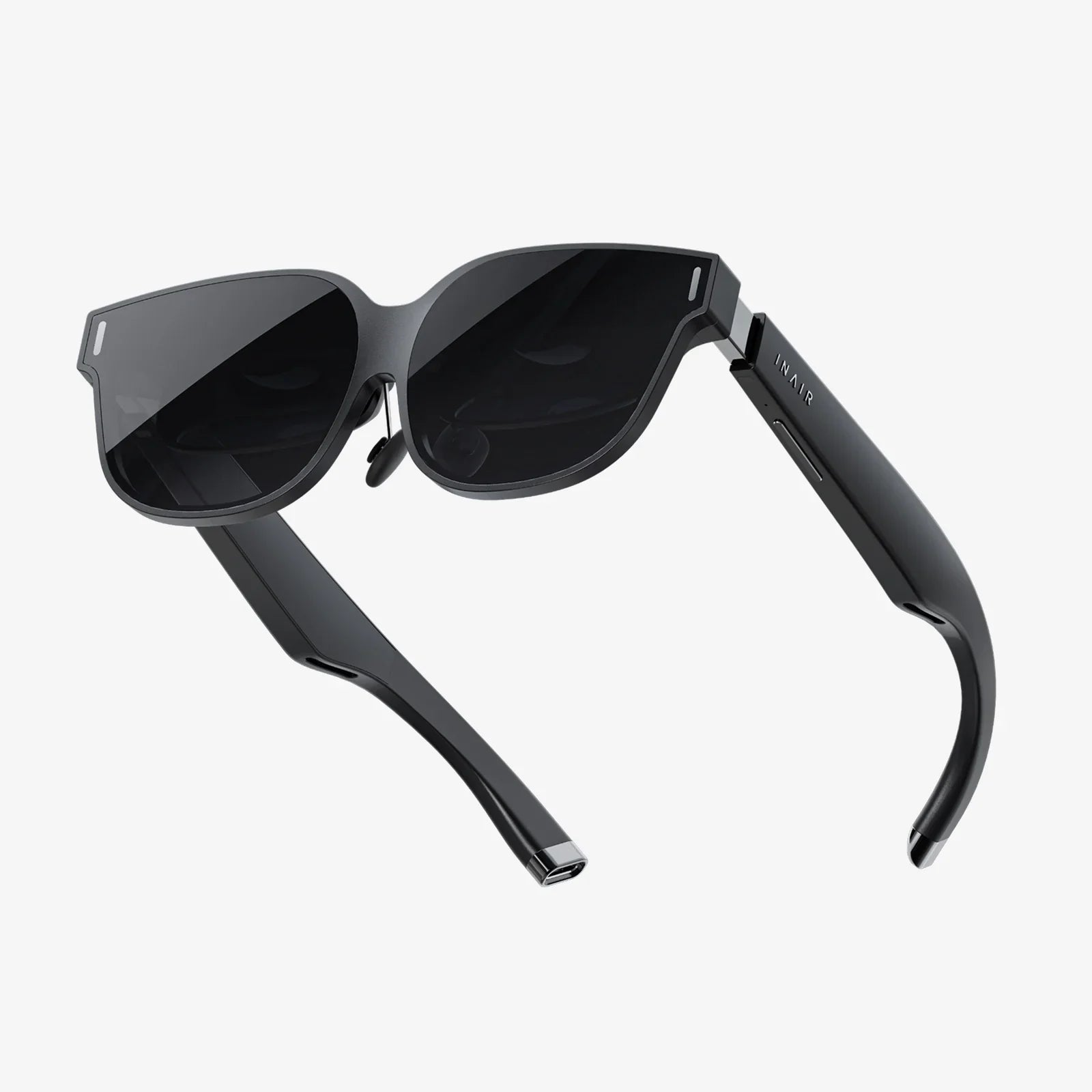
Imagine stepping inside the human body to witness the delicate dance of a heartbeat, practicing a complex surgical procedure on a digital patient that feels utterly real, or walking through a building that hasn't yet been built. This is the promise of virtual reality, a technology that has shattered the confines of science fiction to become one of the most powerful and versatile tools of the 21st century. While often associated with immersive gaming, the question of what virtual reality is used for today reveals a landscape far richer and more impactful, touching nearly every aspect of our professional and personal lives. The headset is no longer just a portal to fantasy worlds; it is a new lens for education, a safe haven for therapy, a collaborative workshop for engineers, and a revolutionary platform for connection. This deep dive will pull back the curtain on the real-world applications of VR that are quietly revolutionizing how we work, learn, heal, and play.
The Digital Operating Room: Revolutionizing Medicine and Therapy
The healthcare sector has embraced virtual reality with remarkable results, finding applications that improve patient outcomes, enhance medical training, and expand the boundaries of therapeutic treatment.
Surgical Training and Planning
For surgeons, practice is paramount, but practicing on live patients carries inherent risk. VR solves this dilemma by creating hyper-realistic, risk-free simulation environments. Trainee surgeons can perform intricate procedures—from laparoscopic surgeries to complex neurosurgery—on virtual anatomy. They can repeat steps, make mistakes, and learn from them without consequence. Beyond training, seasoned surgeons use VR to plan for specific, complex operations. By uploading a patient's medical scans (like CT or MRI), they can generate a precise 3D model of the patient's anatomy. This allows them to navigate the specific terrain of a tumor's location or a unique vascular structure before making a single incision, increasing precision and reducing operation time.
Pain Management and Physical Rehabilitation
VR has emerged as a powerful tool for non-pharmacological pain management. The concept of "distracted immersion" is key here. By immersing a patient, such as a burn victim undergoing painful wound care, in a calming and engaging virtual environment like a snowy landscape, VR can effectively divert the brain's attention away from processing pain signals. This can significantly reduce the perceived pain and anxiety associated with medical procedures. In physical rehabilitation, VR turns repetitive and often tedious exercises into engaging games. A patient recovering from a stroke or spinal cord injury might use VR to play a game that requires them to reach for virtual objects, effectively guiding them through their prescribed motor therapy in a way that feels less like work and more like play, thereby improving motivation and adherence to treatment plans.
Exposure Therapy for Mental Health
Psychologists and therapists are using VR to treat anxiety disorders, phobias, and PTSD through controlled exposure therapy. Instead of asking a patient with a fear of flying to imagine an airplane or visit an airport, a therapist can gradually and safely expose them to a virtual flight experience. The therapist can control every aspect of the environment—from sitting in a parked plane to experiencing takeoff and even turbulence—allowing the patient to confront and manage their fear in a secure, clinical setting. Similar protocols are used for fear of heights, public speaking, spiders, and for helping veterans process and manage PTSD triggers in a safe and controlled manner.
The Immersive Classroom: Transforming Education and Training
Education is being fundamentally reshaped by VR's ability to transport learners to any time, place, or scale, making abstract concepts tangible and unforgettable.
Historical and Cultural Exploration
Instead of simply reading about ancient Rome, students can take a guided virtual tour through a meticulously reconstructed Roman forum, listening to the sounds of the city and observing daily life. They can stand on the surface of the moon alongside the Apollo lander, walk through the streets of ancient civilizations, or explore world-class museums on the other side of the planet without leaving their classroom. This experiential learning fosters a deeper emotional and intellectual connection to the subject matter that textbooks cannot replicate.
Complex Conceptual Understanding
Subjects like astronomy, biology, and chemistry benefit enormously from VR's ability to visualize the incredibly large, small, or abstract. Students can shrink down to the molecular level to see how proteins fold and interact, or they can navigate our solar system, grasping the vast scales and relationships between celestial bodies. This hands-on, interactive exploration helps build intuitive understanding of complex systems that are otherwise difficult to conceptualize.
Vocational and Safety Training
From technical schools to corporate onboarding, VR is used for high-stakes training without high-stakes risk. Aspiring welders can practice their technique in a virtual environment that provides real-time feedback on angle and speed. Mechanics can learn to repair complex machinery by following interactive instructions overlaid on a virtual engine. Employees in manufacturing, construction, or emergency services can be trained on safety protocols by being placed in realistic but hazardous virtual scenarios—like a factory floor emergency or a fire—where they can learn to respond correctly without any actual danger.
The Virtual Workspace: Innovating Design, Engineering, and Retail
Industries reliant on design, prototyping, and spatial planning have found VR to be an indispensable tool for collaboration, iteration, and customer engagement.
Architecture, Engineering, and Construction (AEC)
For architects and clients alike, blueprints and 3D renders on a screen can be difficult to interpret in terms of real-world scale and space. VR changes this completely. Stakeholders can put on a headset and literally walk through a full-scale, photorealistic model of a building before the foundation is even poured. They can experience the flow of a room, the height of a ceiling, and the quality of light from the windows. This allows for design flaws to be identified and corrected early in the process, saving enormous amounts of time and money on costly changes during construction. Engineers use similar immersive models to inspect complex systems, plan installations, and collaborate with teams across the globe within the same virtual model.
Product Design and Prototyping
The automotive and aerospace industries were among the first to adopt VR for design. Instead of building numerous physical prototypes of a new car, which is incredibly expensive and time-consuming, designers and engineers can create a digital prototype. They can sit in the virtual driver's seat, assess sightlines, interact with the dashboard, and even simulate the experience of driving the vehicle to evaluate ergonomics and aesthetics. This rapid virtual prototyping accelerates the design cycle and fosters more creative experimentation.
Virtual Showrooms and Retail
The retail experience is being redefined by VR. Automotive companies offer virtual test drives and configurators. Furniture retailers allow customers to place true-to-scale 3D models of sofas, tables, and decor into a virtual replica of their own living room using a headset or even just a smartphone, helping them visualize how items will look and fit before purchasing. This not only enhances customer confidence but also reduces return rates.
New Realms of Storytelling, Entertainment, and Social Connection
While gaming is a well-known driver, VR's impact on narrative and social interaction is creating entirely new forms of art and community.
Cinematic Experiences and Interactive Narrative
Filmmakers and artists are exploring VR as a new medium for storytelling, often termed "cinematic VR" or "experiential storytelling." Unlike traditional film where the viewer is a passive observer of a framed screen, VR places the viewer inside the story. You are no longer watching a character navigate a environment; you are present in that environment. You can look anywhere, explore, and often interact with the narrative, making you an active participant. This creates a profound sense of empathy and connection to the story, being used for everything from documentaries that place you in the midst of historical events to animated shorts where you stand alongside the characters.
Live Events and Tourism
VR offers a front-row seat to world events for a global audience. You can attend a live concert from the best spot in the house, feel the energy of a major sporting event, or sit in a conference hall for a product keynote—all from your home. Travel companies and destinations are creating immersive previews that allow potential tourists to explore a hotel resort, walk through a city's streets, or experience a national park, helping them plan their trips and inspiring wanderlust.
Social Platforms and Remote Collaboration
Social VR platforms have evolved into vibrant virtual spaces where people can meet, play games, watch movies, and attend events together using personalized avatars. This provides a powerful sense of "co-presence"—the feeling of being with someone else—that video calls cannot match. This technology is also bleeding into enterprise as "virtual offices," where remote teams can collaborate on whiteboards, manipulate 3D models, and have meetings in a shared virtual space that feels more natural and engaging than a grid of video feeds, fostering better teamwork and creativity.
The Future is Immersive: Where Do We Go From Here?
The trajectory of VR points towards even deeper integration into our daily lives. The concept of the "metaverse," a persistent network of interconnected virtual spaces, suggests a future where our digital and physical realities are seamlessly blended. We can expect advancements in haptic technology to simulate touch, allowing a surgeon to feel the resistance of virtual tissue or a designer to feel the texture of a virtual fabric. Eye-tracking and brain-computer interfaces could allow us to navigate virtual worlds with our gaze or thoughts. As the technology becomes lighter, more affordable, and more powerful, its applications will only expand, moving from specialized professional tools to ubiquitous platforms for work, socializing, and creativity.
The true power of virtual reality lies not in its ability to help us escape our world, but in its profound capacity to enhance our understanding of it, to connect us more deeply with each other, and to solve real-world problems in ways previously confined to imagination. From healing minds and bodies to designing the future and preserving the past, VR is proving to be a foundational technology that is only just beginning to reveal its potential. The next time you see a headset, look beyond the game; see the classroom, the operating theater, the design studio, and the gateway to human experiences we are only now beginning to dream up.
Share:
Mixed Reality Design: The Ultimate Guide to Crafting the Future of Digital Interaction
XR Mixed Reality: The Seamless Fusion of Our Physical and Digital Worlds