


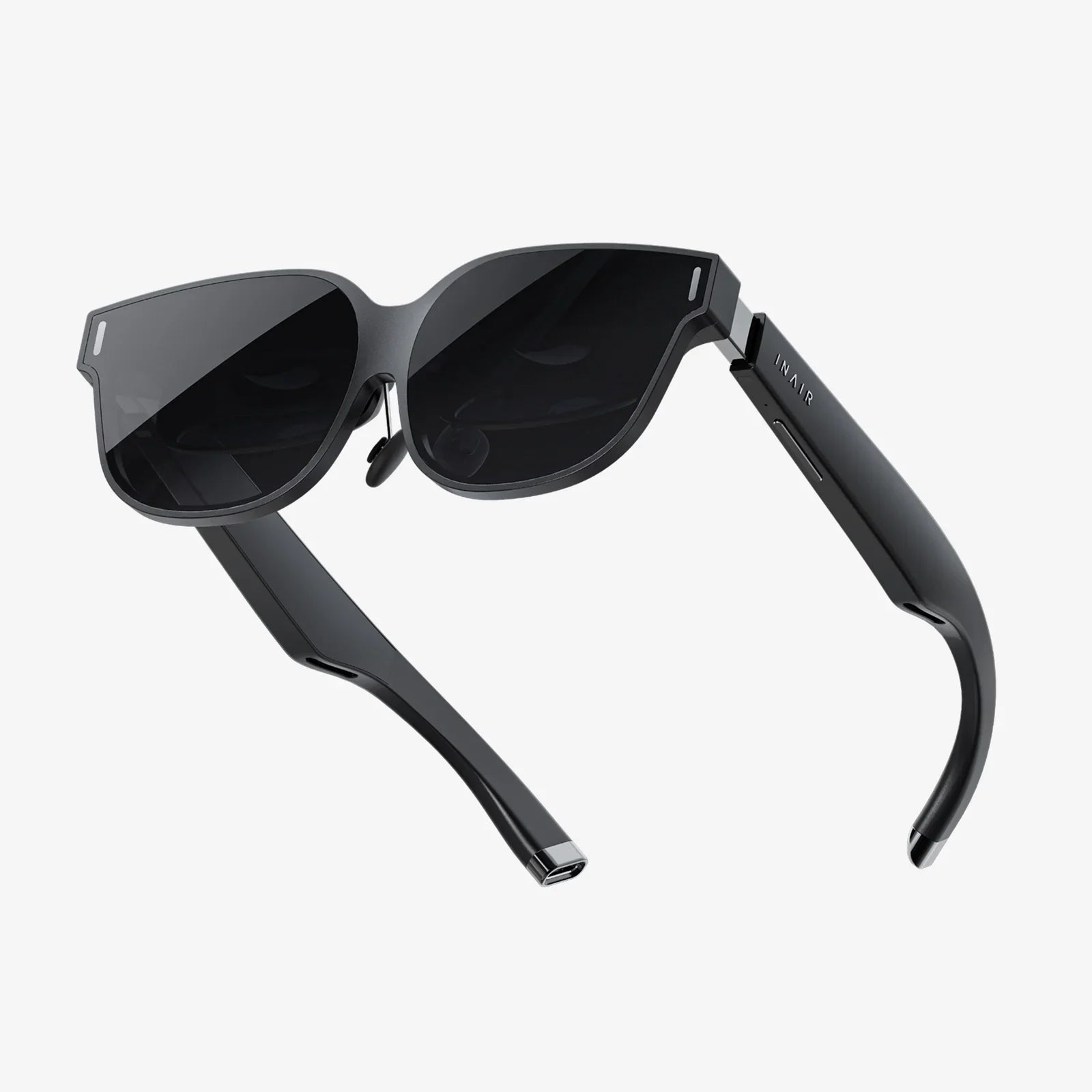
Imagine a world where your digital life doesn’t end at the edge of a screen but is woven into the very fabric of your physical reality. Where information, entertainment, and productivity are not confined to rectangles of glass but exist as persistent, interactive layers atop your living room, your workspace, and the world at large. This is the promise of mixed reality, a technological paradigm shift that is rapidly moving from science fiction to tangible reality. At the heart of this revolution lies a new and profoundly complex discipline: mixed reality design. It is the art and science of crafting experiences that don't just exist in a virtual world or augment our own, but which fluidly blend the two, creating a new hybrid environment where the boundaries between what is real and what is digital become beautifully, and intentionally, blurred.
The Spectrum of Reality: Understanding the Medium
To design for mixed reality, one must first understand its place on the spectrum of immersive technologies. This continuum, often visualized with the real world at one end and a fully virtual environment at the other, is the foundational canvas for all MR design.
On one end, we have the unadulterated physical reality we inhabit every day. Moving along the spectrum, we first encounter augmented reality (AR). AR overlays digital information—text, images, 3D models—onto the user's view of the real world. This overlay is typically contextual and does not interact with the environment in a spatially aware manner; think of navigation arrows projected onto a road through a smartphone screen.
Further along is augmented virtuality, a less common term describing primarily virtual worlds that incorporate elements of the user's real environment, such as a physical desk appearing inside a virtual meeting room.
At the far end lies virtual reality (VR), which immerses the user completely in a digitally rendered environment, occluding the physical world entirely.
True mixed reality exists in the nuanced space between AR and VR. It is characterized by its ability to not only overlay digital content but to have that content interact with the real world in a believable, persistent way. A digital character that hides behind your real sofa, casting a realistic shadow; a virtual window on your wall that looks out onto a simulated ocean, with the lighting adapting to your room's time of day; a holographic engine model that you can walk around and disassemble, with parts resting convincingly on your physical workbench—these are hallmarks of MR. The digital and the physical are not just coexisting; they are cohabiting and communicating.
Core Principles of Mixed Reality Design
Designing for this hybrid space requires a fundamental rethinking of established principles from graphic, web, and even game design. The rules change when your canvas is infinite, three-dimensional, and shared with the laws of physics.
Spatial Awareness and Environmental Understanding
The foremost principle of MR design is that the experience must respect and respond to the user's physical space. This begins with sophisticated environmental understanding. MR systems use sensors and cameras to map the geometry of a room, identifying floors, walls, ceilings, and key features. As a designer, you must leverage this data. Content should be placed logically: a virtual screen on a wall, a game on the floor, a decorative hologram on a table. It must occlude correctly—if a virtual ball rolls behind a real chair, it should disappear from view until it emerges on the other side. This creates the essential illusion of coexistence and grounds the experience in believability.
Human-Centric Interaction
With the demise of the mouse and keyboard as primary input devices, MR design returns to a more natural, human-centric form of interaction. We interact with the digital world through gaze, gesture, and voice.
- Gaze: Where a user is looking often serves as a primary pointer. It's a low-commitment way to indicate interest or select objects.
- Gesture: Hand and finger tracking allows for direct manipulation. Pinching to select, dragging to move, and using two hands to scale an object are intuitive actions that mimic how we interact with physical objects. Designers must create clear, ergonomic, and fatigue-free gestures that feel natural, not like a complex sequence of commands to be memorized.
- Voice: Voice commands provide a powerful and hands-free way to issue complex commands, summon interfaces, or trigger actions. Designing good voice interactions means anticipating user intent and providing clear feedback that the command was understood.
The magic of MR interaction lies in blending these modalities contextually. A user might gaze at a menu to highlight it, gesture to open it, and use voice to search within it.
Designing for Comfort and Safety
Unlike a 2D screen, an MR experience occupies a user's entire field of view and can have real-world physical consequences. User comfort and safety are not just best practices; they are ethical imperatives.
This involves mitigating simulator sickness, which can be caused by a disconnect between visual motion and physical stillness. Designers must avoid unnatural camera movements and provide stable frames of reference. It also means designing within a "comfort zone"—placing primary content within a cone of easy viewing to prevent excessive neck strain.
Safety involves creating "guardian" or boundary systems that warn users when they are about to step into a physical obstacle. Experiences should encourage users to be aware of their surroundings, not completely divorced from them. Clear visual and audio cues should indicate the transition between immersive states.
The Ethereal UI: Rethinking the Interface
The floating, translucent panels of science fiction are becoming a reality, but MR interfaces demand more nuance. The user interface must feel like a natural part of the environment, not a floating screen imported from a desktop.
This means embracing depth, scale, and spatial audio. Information can be distributed volumetrically around the user. A notification might appear as a subtle, distant glow, while a urgent alert could materialize directly in front of the user with an accompanying spatial sound cue. Buttons and sliders must be designed with gesture in mind, ensuring they have enough size and spacing for reliable finger tracking. The concept of "affordance"—how an object suggests its own use—is paramount. A virtual handle should look grabbable; a button should look pressable.
The Designer's Toolkit: Processes and Prototyping
The workflow for MR design is as unique as the medium itself. It moves beyond static mockups into dynamic, interactive prototypes.
It often begins with storyboarding and flow mapping, but in three dimensions. Designers must consider the user's journey through both physical and digital space. Low-fidelity prototyping is crucial. This can involve paper prototypes to map out UI layouts in physical space, or more commonly, using dedicated MR prototyping tools that allow designers to place and script interactive elements within a simulated environment without writing code.
These tools enable rapid iteration on core concepts like interaction patterns, object placement, and user flow. High-fidelity prototyping then takes over, testing the experience in the actual target hardware to refine performance, comfort, and the subtle "feel" of interactions. This iterative, hands-on process is essential—what looks good on a 2D monitor often feels completely different when experienced immersively.
Overcoming the Invisible Hurdles: Challenges in MR Design
The path to creating compelling MR experiences is fraught with unique challenges that designers must navigate.
- The "Blank Canvas" Problem: Unlike a website or an app, which has a defined frame, an MR experience begins with an empty physical space. This can be paralyzing for users. Good MR design must gently onboard users, teaching them the interaction language and providing clear entry points and anchors for the digital content.
- Contextual Relevance: Throwing irrelevant information into a user's field of view is the quickest way to create annoyance rather than value. MR content must be incredibly context-aware, leveraging data about the user's location, task, and environment to provide information that is genuinely useful at that precise moment.
- Social Acceptance: Designing for how these technologies integrate into social settings is a vast, unsolved challenge. How do you interact with a holographic interface while maintaining a conversation with a real person in the room? Experiences must be designed to be either private and subtle or collaborative and inclusive, with clear social cues.
- Accessibility: Ensuring MR experiences are accessible to people with a wide range of physical abilities is a critical and complex frontier. This includes designing for diverse ranges of motion, visual and auditory impairments, and cognitive differences, creating multiple input and output pathways to accomplish the same goal.
The Future Forged in Mixed Metal and Light
As the underlying technology advances—with lighter, more powerful hardware, better battery life, and more accurate sensors—the possibilities for mixed reality design will expand exponentially. We are moving towards a future of always-available contextual computing, where intelligent assistants reside in our field of view, and digital artifacts have the permanence and tangibility of physical objects.
The role of the MR designer will be to act as an architect of this new hybrid world. They will be the ones to establish the conventions, ethics, and aesthetic standards that determine whether this future is cluttered and distracting or magical and empowering. They will design the invisible frameworks that help us navigate, learn, work, and connect in ways we are only beginning to imagine. The challenge is immense, but the opportunity is to define the next fundamental layer of human experience, crafting a reality that is richer, more informed, and more wonderfully strange than anything we've known before.
The door between the digital and the physical is swinging open, and on the other side lies not a replacement for our world, but its enhancement. The tools to build this future are now in the hands of designers, waiting for the next great idea to be sketched not on a page, but into the very air we breathe.
Share:
Virtual Reality Best Practices: A Comprehensive Guide to Immersive Excellence
What Is Virtual Reality Used For: Beyond Gaming Into Our Future