


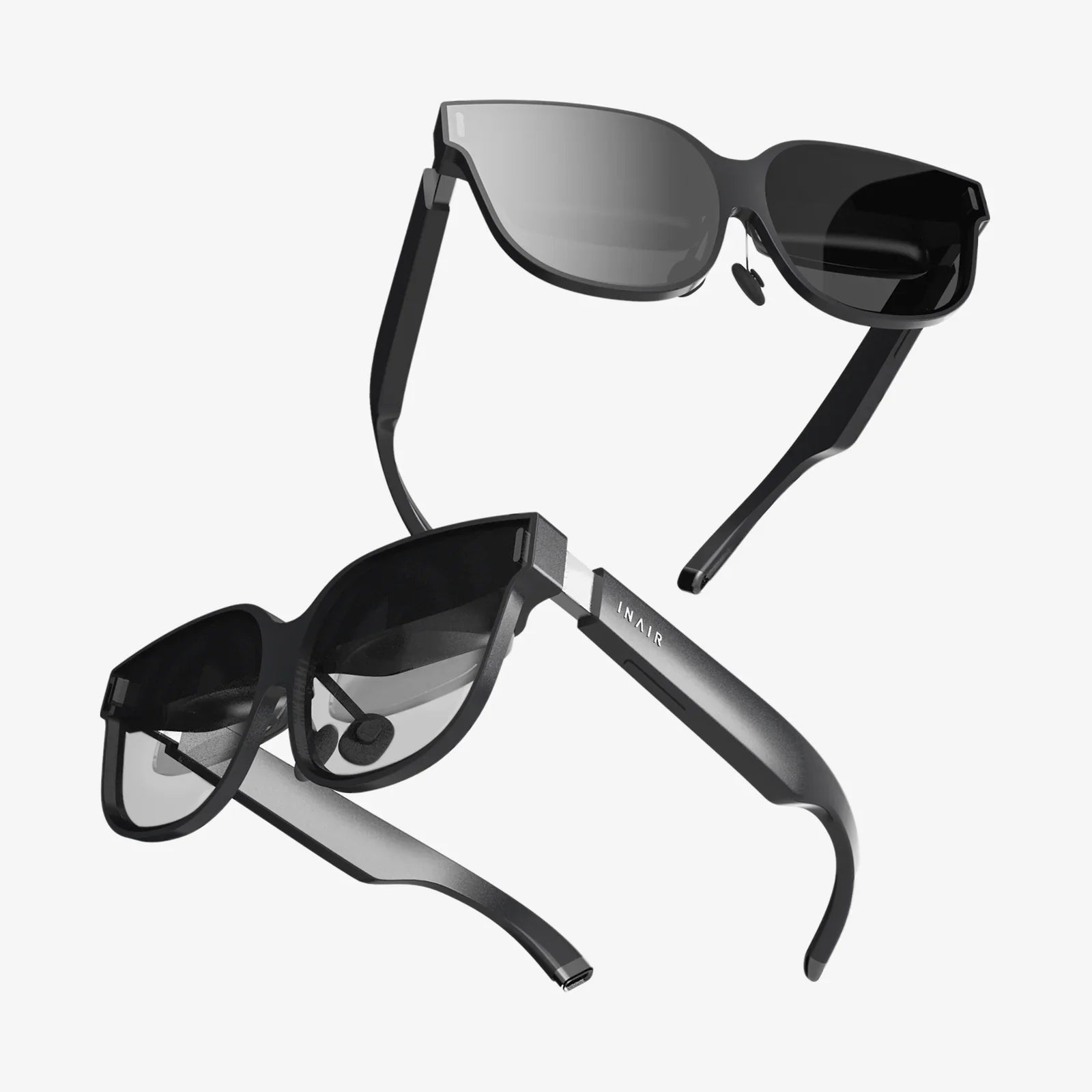
Imagine a world where digital information doesn't just live on a screen but is seamlessly woven into the fabric of your physical reality. This is the promise of Augmented Reality (AR), a technology rapidly moving from science fiction to everyday utility. But have you ever stopped to wonder what language AR technology speaks? What are the fundamental building blocks, the code and protocols, that allow a device to understand its environment and paint it with interactive, digital brushstrokes? The answer is not a single programming language but a fascinating symphony of code, frameworks, and spatial understanding that together are scripting the next chapter of human-computer interaction.
The Foundation: Core Programming Languages
At its heart, an AR application is still software, and like all software, it begins with a programming language. The choice of language is often dictated by the target platform—whether it's a mobile device, specialized glasses, or a web browser.
C#: The Engine of High-Fidelity Experiences
For developers building robust, high-performance AR applications, particularly for gaming and enterprise solutions, C# is a dominant force. This is primarily due to its deep integration with the Unity game engine, one of the most popular and powerful tools for creating 3D interactive content. Unity's comprehensive AR Foundation framework allows developers to write code once and deploy it across both iOS and Android, abstracting away the underlying platform complexities. C# provides the structure and performance needed to handle complex physics simulations, intricate object interactions, and real-time rendering, making it the language of choice for creating deeply immersive and graphically rich AR experiences.
Java and Kotlin: The Native Path for Android
For native Android AR development, the journey traditionally began with Java. However, Kotlin, now endorsed as the preferred language for Android, has taken the lead. Kotlin offers more modern, concise, and safer code, which is crucial for building the complex, sensor-driven applications that AR demands. Developers using these languages work directly with ARCore, the platform's AR development kit. They use these tools to access camera feeds, process motion sensor data, and utilize environmental understanding features like motion tracking, environmental light estimation, and depth API integration, crafting experiences that feel inherently part of the Android ecosystem.
Swift: The Native Path for iOS
On the Apple side, Swift is the unequivocal language for building native iOS AR applications. Designed by the company to be fast, modern, and safe, Swift is perfectly suited for leveraging the full power of ARKit. Apple's AR framework is deeply integrated into its hardware and operating system, allowing for exceptional performance and access to advanced features like LiDAR scanning for instant room mapping and incredibly accurate occlusion (where digital objects appear behind real-world ones). Writing AR apps in Swift ensures they can take full advantage of the tight hardware-software synergy that defines the Apple ecosystem.
JavaScript and Web Technologies: The Democratized Access Point
Perhaps the most revolutionary development in the "language" of AR is the rise of WebAR. This approach utilizes standard web technologies—HTML, CSS, and most importantly, JavaScript—along with WebGL and WebXR device API to deliver AR experiences directly through a web browser. This eliminates the need to download a dedicated app, creating a frictionless gateway for users. Frameworks and libraries built on JavaScript allow developers to create marker-based and markerless experiences that can be accessed by simply clicking a link. This dramatically lowers the barrier to entry for both developers and users, making AR accessible to a mass audience for marketing, quick previews, and educational content.
Beyond Code: The Frameworks and Libraries That Do the Heavy Lifting
While a programming language provides the syntax, it is the specialized software development kits (SDKs) and frameworks that give developers the true vocabulary of AR. These toolkits provide the pre-built functions and capabilities that are essential for spatial computing.
- ARKit (iOS) and ARCore (Android): These are the foundational SDKs provided by Apple and Google, respectively. They handle the complex computer vision tasks that are the bedrock of mobile AR: simultaneous localization and mapping (SLAM), plane detection (finding horizontal and vertical surfaces), light estimation, and anchor points. A developer's code, whether in Swift, Kotlin, or C#, primarily interacts with these APIs to request and use this spatial data.
- AR Foundation: This is a critical middleware framework that acts as an abstraction layer over ARKit and ARCore. For developers using Unity and C#, it allows them to build a single codebase that automatically uses the native capabilities of whichever device the app is running on, streamlining cross-platform development.
- WebXR and JS Libraries: On the web, the WebXR Device API is the emerging standard that allows web pages to render content onto AR and VR devices. Libraries like three.js, A-Frame, and 8th Wall then build upon this standard, providing JavaScript developers with easier-to-use tools for creating 3D and AR scenes without needing to be experts in low-level WebGL code.
The True Language of AR: Understanding the World
If we step back from syntax and frameworks, the most fundamental "language" that AR technology must learn is the language of the physical world itself. This is the realm of computer vision and spatial computing. The core vocabulary of this language consists of:
- Feature Points: Distinct, high-contrast points that the device's camera identifies to understand the geometry of a space.
- Plane Detection: The identification of flat surfaces like floors, tables, and walls to serve as a canvas for digital objects.
- Point Clouds: A set of data points in 3D space, often generated by a LiDAR scanner, that creates a detailed depth map of the environment.
- Anchors: A crucial concept that ties a digital object to a specific point or plane in the real world, ensuring it stays in place as the user moves.
- Occlusion: The ability for the software to understand when a real-world object is in front of a digital one, creating a believable sense of depth and integration.
Programming languages and frameworks are merely the tools used to instruct the device on how to interpret and speak this spatial language. The real magic happens in the algorithms that process camera and sensor data in real-time to construct a digital understanding of the room you're in.
The Evolution of Expression: From Simple Overlays to Semantic Understanding
The sophistication of this "world language" is evolving rapidly. Early AR was primarily about overlaying simple graphics onto a video feed. Today, it's moving towards true semantic understanding. This next generation of AR technology aims to not just see surfaces but to understand what objects are. Is that a chair? A coffee cup? A car engine? This requires a fusion of advanced computer vision models, often built with languages like Python and powered by machine learning, which can classify objects and their properties. This shift means the language of AR is expanding from geometric grammar to a more nuanced semantic vocabulary, enabling applications that can interact with the world in truly intelligent ways, such as offering repair instructions for a specific model of appliance or translating a menu by understanding it's text on a flat surface.
Speaking to the Future: The Impact on Industry and Society
The choice of development language and the advancing capabilities of AR frameworks are not just technical concerns; they directly influence how this technology transforms various sectors.
- Healthcare: Surgeons use AR guided by precise, native applications (often built with high-performance languages like C#) to visualize anatomy in 3D during procedures, overlaying CT scans directly onto the patient.
- Manufacturing & Repair: Technicians on the factory floor or in the field use AR glasses to see schematics and instructions overlaid on machinery. The robust, hands-free nature of these applications often relies on native development for stability and performance.
- Retail & E-commerce: Here, WebAR shines. The ability to "try on" glasses, place furniture in your room, or see a 3D model of a product directly from a website, all without an app download, is revolutionizing online shopping and is powered by accessible web technologies.
- Education & Training: From complex mechanical simulations in Unity to simple historical recreations accessible via a web link, the language of AR is creating a new, immersive dialect for learning and skill acquisition.
As the technology matures, the lines between these development paths will continue to blur. Cloud-based AR, powered by immense computing power and 5G connectivity, will handle the heavy processing, potentially simplifying the job of the device-side code. The ultimate goal is a seamless, ubiquitous AR where the technology fades into the background, and the digital enhancement of our world feels as natural and unremarkable as the world itself. The languages used to build it—whether C#, Swift, Kotlin, or JavaScript—are all converging towards that same silent, powerful fluency.
The next time you use an AR filter, preview a piece of furniture in your living room, or follow a navigation arrow painted onto the street, remember the intricate conversation happening in real-time. It's a dialogue between code and camera, between algorithms and environment, all speaking the complex and ever-evolving language of augmented reality. This conversation is quietly reshaping everything from how we shop and learn to how we heal and build, proving that the most powerful language isn't always the one we hear, but the one we see integrated into the world around us.
Share:
VR Goggles Black Friday: Your Ultimate Guide to the Year's Best Deals
PC VR Systems: The Ultimate Guide to High-Fidelity Virtual Reality