


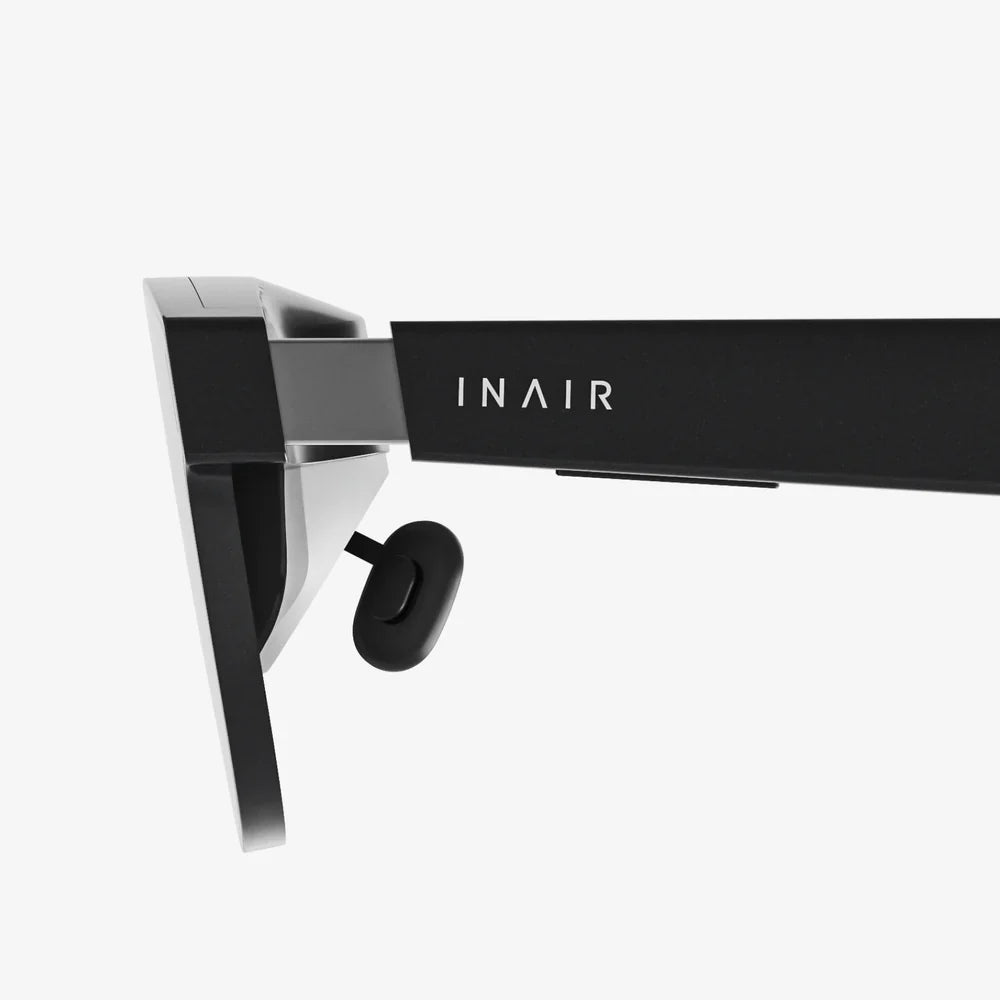
Imagine a world where the line between your physical surroundings and the digital universe blurs into irrelevance. Where you can learn complex surgery by practicing on a holographic patient, explore the surface of Mars from your living room, or collaborate with colleagues across the globe as if they were standing right beside you. This isn't a distant sci-fi fantasy; it's the emerging reality being built today through a transformative suite of technologies collectively known as Extended Reality. The journey to understand this new digital frontier starts with a single, fundamental question: what's extended reality, and why is it poised to change everything?
The Umbrella Term: Defining the XR Spectrum
At its core, Extended Reality, or XR, is an umbrella term that encompasses all combined real-and-virtual environments generated by computer technology and wearables. It represents the entire spectrum of immersive technologies, from those that are fully digital to those that blend the digital and physical worlds in varying degrees. XR is not a single technology but a continuum of experiences that includes its three primary pillars: Virtual Reality (VR), Augmented Reality (AR), and Mixed Reality (MR). Think of XR as the entire color wheel, while VR, AR, and MR are the primary colors within it. The goal of XR is to extend the reality we experience by either simulating a completely artificial environment or by overlaying digital information onto our real-world view, thereby enhancing our perception and interaction with the world around us.
Virtual Reality: The Complete Digital Immersion
On one far end of the XR spectrum lies Virtual Reality. VR is the technology that most effectively severs our connection to the physical world, transporting the user into a fully digital, computer-generated simulation. This immersion is typically achieved through a head-mounted display (HMD) that blocks out the external environment and replaces it with a 3D virtual world. Advanced systems incorporate motion tracking, handheld controllers, and sometimes even haptic feedback suits or omnidirectional treadmills to allow users to navigate and interact with the virtual environment in a natural and intuitive way. The user's head and hand movements are tracked and replicated within the simulation, creating a powerful sense of "presence"—the convincing feeling of being physically located in a non-physical space. This makes VR the ultimate tool for experiences that require complete focus and a controlled environment, from exploring fantastical game worlds to conducting high-stakes training simulations for pilots and surgeons.
Augmented Reality: The Digital Overlay on the Physical World
On the opposite end of the spectrum from VR is Augmented Reality. Rather than replacing the real world, AR enhances it by superimposing digital information—such as images, text, or 3D models—onto the user's view of their physical surroundings. The key differentiator of AR is that the real world remains the primary focus, while digital content is contextually integrated as a supplementary layer. This technology is most commonly experienced today through smartphone and tablet cameras, which use their screens as viewfinders to display the real world alongside digital elements. More advanced AR is delivered through specialized glasses or lenses that project information directly into the user's field of vision. This seamless blending makes AR exceptionally practical for everyday applications, from navigation arrows displayed on the road in front of you to trying on virtual furniture in your home before you buy it. It adds a layer of useful, interactive data onto the world we already inhabit.
Mixed Reality: The Seamless Fusion of Real and Virtual
Occupying the crucial middle ground between VR and AR is Mixed Reality. Often considered the most advanced and complex form of XR, MR doesn't just overlay digital content onto the real world; it anchors that content to the physical environment and allows for real-time interaction between the two. In a true MR experience, a virtual object can be placed behind a real-world couch, and if the user walks around the couch, the object will remain correctly occluded. Digital content is aware of and responsive to its surroundings. This is achieved through sophisticated sensors and cameras that continuously map the physical space, understanding its geometry, lighting, and surfaces. This allows virtual objects to behave like real ones—they can bounce on tables, cast shadows, and be obscured by physical objects. MR represents the pinnacle of blending, creating experiences where the virtual and real coexist and interact meaningfully, opening up profound possibilities for design, engineering, and remote collaboration.
The Technology Behind the Magic: How XR Works
The creation of convincing extended reality experiences is a feat of engineering that relies on a symphony of advanced technologies working in harmony. The primary interface is the display, which can range from a smartphone screen to high-resolution lenses inside a headset. These displays are paired with sophisticated tracking systems, including inside-out and outside-in tracking, which use cameras, gyroscopes, and accelerometers to precisely monitor the position and orientation of the user's head and hands. This data is processed in real-time to adjust the perspective of the virtual world, ensuring it remains stable and responsive to the user's movements, which is critical for preventing disorientation and simulator sickness. Furthermore, powerful processors render high-fidelity graphics at exceptionally high frame rates to maintain the illusion of reality. For MR and advanced AR, spatial mapping is essential, using depth-sensing cameras like structured light or time-of-flight sensors to create a 3D understanding of the room. Finally, input methods, from controllers to hand-tracking cameras and voice commands, allow the user to become an active participant rather than a passive observer within the experience.
Transforming Industries: The Practical Applications of XR
The potential applications for XR extend far beyond entertainment and gaming, penetrating the core of numerous professional fields. In healthcare, medical students use VR to practice complex surgical procedures in a risk-free environment, while surgeons use AR overlays during actual operations to view vital signs or see "through" tissue. In the industrial and manufacturing sectors, AR smart glasses provide remote experts with a first-person view of a technician's problem, allowing them to annotate the real world with instructions to guide repairs, drastically reducing downtime and travel costs. Architects and real estate agents use VR to conduct immersive walkthroughs of unbuilt properties, and designers use MR to visualize and interact with full-scale 3D prototypes. The education sector is being revolutionized, allowing students to take virtual field trips to historical sites or inside the human body. From retail and tourism to military training and mental health therapy, XR is providing more intuitive, efficient, and safe ways to work, learn, and connect.
The Human Factor: Social and Ethical Implications
As with any powerful technology, the rise of XR brings a host of social and ethical considerations that society must confront. The concept of presence is so potent that experiences in VR can feel genuinely real, raising questions about psychological impact, data privacy, and the potential for new forms of manipulation or addiction. The data collected by XR devices is incredibly intimate—it's not just what you search for, but how you move, what you look at, and how you react in a simulated environment. This biometric data is a privacy goldmine that requires robust ethical frameworks and regulations. Furthermore, the "reality inequality" gap could emerge, where access to high-quality immersive experiences becomes a new social divider. There are also profound questions about the nature of reality itself and how our constant exposure to blended realities might alter our perception of the physical world and our social interactions within it. Navigating these challenges is as important as developing the technology itself.
The Future is Extended: What Lies Ahead
The trajectory of XR points toward a future where immersive technology becomes increasingly seamless, powerful, and integrated into daily life. We are moving toward lighter, more comfortable, and more socially acceptable form factors, eventually converging on something akin to regular eyeglasses. Display technology will improve to retinal resolution, and advancements in haptics will allow us to not just see but also feel virtual objects. The development of the "metaverse," a persistent network of interconnected virtual spaces, will be largely built upon XR foundations, offering a new paradigm for social interaction and commerce. Most importantly, the lines between VR, AR, and MR will continue to blur, with future devices capable of sliding seamlessly across the entire spectrum of experiences, from full virtual immersion to subtle contextual information overlays, all based on the user's needs and context.
The door to a new layer of human experience is now open, and stepping through it reveals a landscape limited only by our collective imagination. What's extended reality? It is the next evolutionary step in our relationship with technology—a shift from looking at a screen to living inside a digital context that understands and enhances our world. The revolution is not coming; it has already begun, and it’s inviting you to reach out and interact with the future, today.
Share:
6.3 Inch VR Headset: The Unseen Revolution in Immersive Technology
Most Affordable VR Headset for PC: Your Ultimate Guide to Budget-Friendly Immersion