


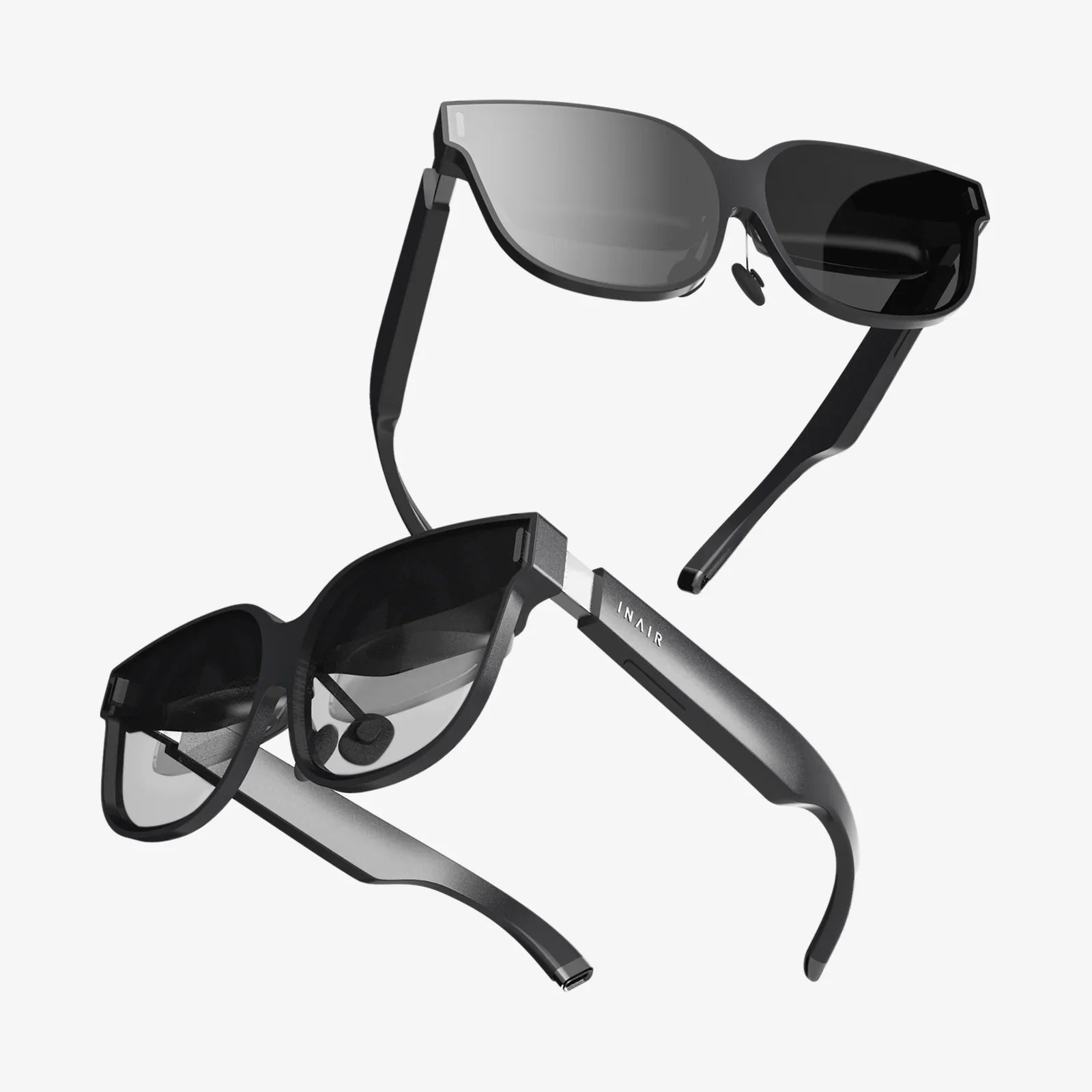
You’ve seen the futuristic demos and heard the buzzwords, but when the virtual and the real begin to merge, the line between science fiction and everyday technology starts to blur. Understanding the difference between Augmented Reality (AR) and Mixed Reality (MR) isn't just tech jargon—it's the key to unlocking how we will interact with information, our environment, and each other in the coming decade. This isn't just about filters on your phone; it's about a fundamental shift in our digital-physical interface.
Defining the Digital Spectrum: From Reality to Virtuality
To truly grasp AR and MR, we must first place them on the broader spectrum of immersive technologies, often visualized as the Virtuality Continuum. This concept, introduced by Paul Milgram and Fumio Kishino in 1994, describes a sliding scale between the completely real environment and the completely virtual one.
On one end, you have the Real Environment: the physical world as we perceive it with our senses. On the opposite end lies the Virtual Reality (VR) Environment: a fully digital, computer-generated world that completely immerses the user, typically through a headset that blocks out the physical world. VR replaces reality.
Between these two poles lies a vast and often misunderstood middle ground. This is where Augmented Reality and Mixed Reality reside. They do not seek to replace our world but to enhance it, to add a digital layer that provides new context, information, and experiences. The distinction lies in how they achieve this integration and the level of interactivity they enable between the real and the digital.
Augmented Reality (AR): The Digital Overlay
Augmented Reality is the more established and widely recognized of the two technologies. At its core, AR is about superimposing digital information—be it images, text, data, or 3D models—onto the user's view of the real world. The key characteristic of AR is that the digital content simply exists in the space; it does not intelligently interact with it.
How AR Works
AR typically relies on a camera-equipped device (like a smartphone, tablet, or set of smart glasses) to capture the real-world environment. Software then uses techniques like:
- Marker-based tracking: Using a predefined visual marker (a QR code or a specific image) to anchor and display the digital content.
- Markerless (or location-based) tracking: Using GPS, accelerometers, and digital compasses in a device to pin digital content to a specific physical location.
- Projection-based AR: Projecting artificial light onto real-world surfaces, sometimes allowing for limited interaction (e.g., a virtual keyboard projected onto a table).
The digital content is then rendered on the device's screen, appearing to coexist with the physical world behind it.
The Hallmarks of AR: Superimposition Without Interaction
The defining trait of pure AR is the lack of sophisticated environmental understanding. The digital object may be placed on a table, but if you move the table, the digital object won't move with it. It stays fixed to the screen coordinates where it was initially placed. It doesn't recognize the table as a table; it just uses the camera feed as a backdrop.
Common Examples of AR
- Smartphone Filters: The face filters on social media apps that add dog ears or sunglasses. They overlay digital art on your face but don't understand the deeper geometry of your room.
- Navigation Overlays: Apps that use your phone's camera to show arrows and directions painted onto the street in front of you.
- IKEA Place App: Allows you to see how a virtual piece of furniture would look in your room. It places the object convincingly but cannot, for example, simulate it being occluded by your real coffee table if you walk around it.
Mixed Reality (MR): The Digital Integration
If AR is a digital overlay, Mixed Reality is a digital integration. MR represents the next evolutionary step, blending the real and virtual worlds to create environments where physical and digital objects co-exist and interact in real-time. This is the critical difference: interactivity.
How MR Works
MR requires significantly more advanced hardware and software than most AR. It relies on dedicated headsets that often feature:
- Advanced Sensors: A suite of cameras, infrared sensors, and depth sensors to continuously scan and map the surrounding environment.
- Spatial Mapping: The device creates a precise, real-time 3D mesh of the room, understanding the geometry, surfaces, and boundaries of the physical world.
- Inside-Out Tracking: The headset tracks its own position within the mapped space without external markers.
This deep environmental understanding allows the MR system to place digital objects in a way that makes them seem physically present.
The Hallmarks of MR: Interaction and Occlusion
This is where the magic happens. In MR:
- Digital objects can be occluded: If a real-world chair is in front of a virtual robot, the robot will be hidden behind the chair, just as a real object would be.
- Digital objects interact with the real world: A virtual ball can bounce off a real wall. A virtual character can sit on your real sofa.
- You can interact with digital objects using natural gestures: You can reach out and "grab" a hologram, resize it, or push it away, with the system understanding your hand's position in space.
MR doesn't just put graphics into your world; it makes your world part of the experience.
Common Examples of MR
- Virtual Prototyping: An engineer examines a full-scale, holographic model of a car engine. They can walk around it, crouch down to see underneath, and even see the virtual components interacting with the physical engine block it's projected onto.
- Collaborative Design: Architects in different countries share the same MR space. They can all see and manipulate the same holographic building model, placing virtual walls within the context of a real, empty lot.
- Interactive Training: A medical student practices a procedure on a holographic patient that responds to their actions, with the tools and equipment anchored to the real surgical table.
The Blurred Line and The Spectrum of Experience
It's important to acknowledge that the line between high-end AR and MR is becoming increasingly blurred. Some advanced AR devices are beginning to incorporate limited environmental understanding, a concept sometimes called Markerless AR or Spatial AR. For instance, they can detect horizontal planes like floors and tables to more convincingly place objects.
Think of it not as a strict binary but as a spectrum of capabilities:
| Feature | Augmented Reality (AR) | Mixed Reality (MR) |
|---|---|---|
| Environmental Understanding | Limited or none (uses camera as backdrop) | Deep, real-time 3D mapping and understanding |
| Interaction | Digital content does not interact with the physical world | Digital and physical objects interact seamlessly |
| Occlusion | Rare; digital objects always appear in front | Yes; real objects can hide virtual ones |
| Device Examples | Smartphones, Tablets, Basic Smart Glasses | Advanced Standalone Headsets |
| User Experience | Observer of an enhanced view | Active participant in a blended world |
Choosing the Right Tool: Applications Shaping Our Future
The choice between AR and MR is less about which is "better" and more about which is the right tool for the job. Their applications are already transforming industries.
Where AR Excels
AR's strength lies in its accessibility and ability to deliver contextual information quickly and effectively.
- Consumer Retail: Trying on glasses or makeup virtually via a phone screen.
- Marketing & Entertainment: Interactive posters, museum exhibits, and engaging advertising campaigns.
- Basic Navigation & Information: Heads-up displays in vehicles or information overlays for tourists pointing out landmarks.
Where MR Is Revolutionary
MR unlocks possibilities that require a deeper, more immersive integration, particularly in professional and industrial settings.
- Manufacturing & Engineering: Providing factory workers with complex assembly instructions where virtual arrows point to exact bolts, or allowing remote experts to see a worker's field of view and draw holographic annotations directly onto malfunctioning equipment.
- Healthcare: Visualizing 3D patient scans (like MRI or CT) overlayed directly onto the patient's body for surgical planning or medical education.
- Remote Collaboration: Creating a true sense of presence where participants can gather around and manipulate a shared 3D hologram as if they were in the same room, regardless of physical location.
The Trajectory of Blended Realities
The evolution from AR to MR is a journey towards more natural and intuitive computing. We are moving away from screens and keyboards towards interfaces that understand our world and respond to our presence within it. While AR serves as a fantastic gateway, introducing millions to the concept of an enhanced reality, MR represents the fuller, more ambitious vision of a world where the digital and physical are inextricably linked.
Future advancements in areas like artificial intelligence, computer vision, and hardware miniaturization will continue to erode the technical barriers between these categories. We are heading towards a future where lightweight, powerful glasses will be able to deliver rich MR experiences seamlessly throughout our day, fundamentally changing how we work, learn, play, and connect. The device that can effortlessly blend your realities is the ultimate goal, and understanding the path there starts with knowing the difference between the overlay and the integration.
Imagine a world where your workspace is no longer confined to a desk and monitor, but extends throughout your room with responsive holograms. Envision learning complex anatomy by walking through a life-sized, beating heart, or redecorating your home by virtually tearing down walls and placing furniture that casts real shadows. This is the promise of mixed realities—a future not of replacement, but of harmonious and powerful augmentation, and it’s a future that is already beginning to take shape right before our eyes.
Share:
Can You Play VR Without a Headset? Exploring the Possibilities
What's a Good VR Headset for PC - The Ultimate 2024 Buyer's Guide