


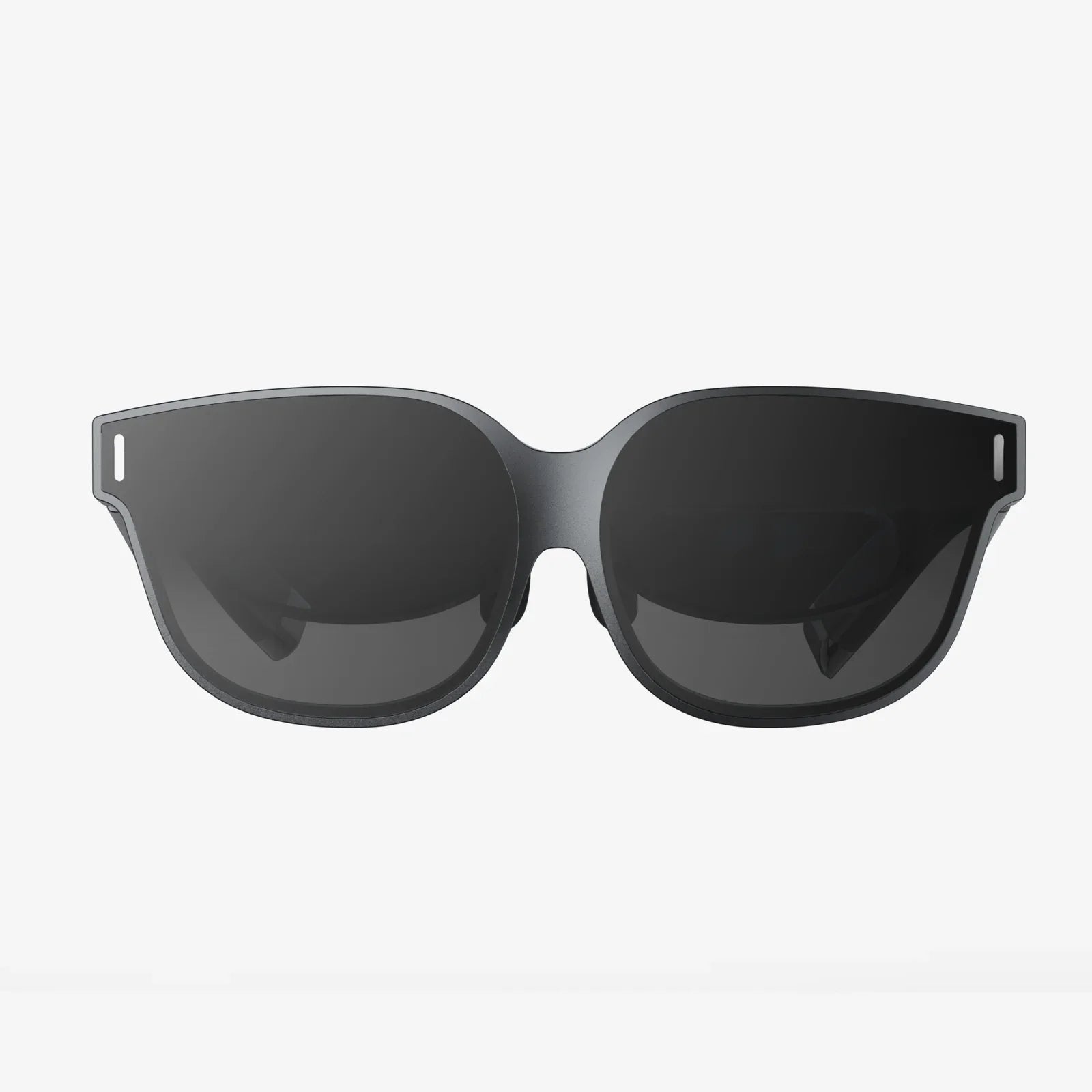
You’ve seen the headlines, watched the futuristic demos, and maybe even strapped on a headset yourself. The worlds of Augmented Reality (AR) and Virtual Reality (VR) are no longer the stuff of science fiction; they are rapidly becoming integral parts of our digital landscape, promising to revolutionize everything from how we work and learn to how we play and connect. But for many, these two technologies remain shrouded in a fog of confusion. They are often mentioned in the same breath, yet they offer profoundly different experiences. If you’ve ever found yourself wondering, "Aren't they basically the same thing?"—you're not alone. The line between them can seem blurry, but understanding their distinct identities is the key to unlocking the immense potential of immersive technology. This isn't just about gadgets; it's about fundamentally new ways of perceiving and interacting with information and with each other. Prepare to have your reality expanded as we dive deep into the captivating rift that separates the augmented from the virtual.
The Core Concept: Augmentation vs. Immersion
At its absolute simplest, the difference between AR and VR boils down to a single, powerful idea: one adds to your reality, while the other replaces it.
Imagine you're looking at your living room through your smartphone's camera. With AR, a digital cartoon character might appear to be sitting on your actual sofa, or a piece of virtual furniture could be placed in the corner to see how it fits. The real world remains your foundation; digital elements are simply overlaid onto it. You are still present in your environment, enhanced with a layer of interactive data. The goal of AR is to blend the digital and physical seamlessly, providing contextually relevant information exactly where you need it.
VR, on the other hand, operates on a principle of total immersion. When you put on a VR headset, your physical surroundings disappear, replaced entirely by a computer-generated simulation. You could be standing on your living room rug, but through the headset, you're walking on the surface of Mars, navigating a complex molecular structure, or sitting in a virtual conference room with colleagues from across the globe. The headset blocks out the real world, tracking your head and often your hand movements to make you feel truly present within a digital universe. The goal of VR is to transport you somewhere else entirely.
How the Technology Works: Seeing the World Differently
These differing philosophies necessitate distinct technological approaches. While both are feats of modern engineering, they solve different problems.
Augmented Reality Tech
AR technology is primarily concerned with understanding the real world to place digital objects within it convincingly. This happens through a process called simultaneous localization and mapping (SLAM). SLAM algorithms use data from cameras and sensors (like accelerometers and gyroscopes) to map the environment in real-time and understand the device's position within that space.
-
Display Methods: AR experiences can be delivered through several devices:
- Smartphones and Tablets: The most common gateway to AR. The device's camera captures the real world, and the screen displays it with digital overlays. It's accessible but holds the device between you and the experience.
- Smart Glasses and Headsets: These wearable devices project digital images onto transparent lenses (optical see-through) or use cameras to feed a video feed of the real world with overlays to the user's eyes (video see-through). This allows for hands-free interaction.
- Projection-Based AR: Less common, this method projects light onto physical surfaces to create interactive displays, turning any wall or table into a touchscreen.
- Sensors: Cameras are the primary sensor, but depth sensors (like LiDAR on modern tablets) are crucial for understanding the geometry of a space, allowing virtual objects to occlude or be occluded by real ones.
Virtual Reality Tech
VR technology is designed to create a convincing illusion of a different reality. The focus is on high-fidelity visuals, precise tracking, and immersive audio to trick the user's brain into accepting the virtual world.
-
Headsets: VR headsets are opaque, enclosing the user's field of view. They contain:
- High-Resolution Displays: One display per eye, often with a high refresh rate (90Hz or more) to prevent motion sickness and create smooth visuals.
- Lenses: Placed between the eyes and the displays, these lenses focus and reshape the image for a wide field of view.
-
Tracking Systems:
- Outside-In Tracking: External sensors or base stations placed around the room track the position of the headset and controllers with extreme precision.
- Inside-Out Tracking: Cameras and sensors on the headset itself look outward to map the environment and track its own movement. This is more convenient but can be slightly less accurate for complex motions.
- Controllers: Specialized motion-tracked controllers are essential for interacting with the virtual world. They allow you to reach out, grab, push, and manipulate objects naturally.
- Haptic Feedback: Both controllers and advanced haptic suits provide tactile feedback, letting you feel the sensation of a virtual object.
Real-World Applications: Solving Different Problems
The "why" behind these technologies is just as important as the "how." AR and VR are not competitors; they are tools suited for different tasks.
Augmented Reality Use Cases
AR excels at providing contextual information and enhancing real-world tasks.
- Retail and E-commerce: Visualize how a new sofa will look in your living room or how a pair of glasses will fit your face before you buy.
- Industrial Maintenance and Repair: Technicians can see schematics and instructions overlaid directly on the machinery they are fixing, improving accuracy and speed.
- Healthcare: Surgeons can have vital patient data and 3D scans visible during procedures. Medical students can practice on detailed anatomical models.
- Navigation: AR arrows and directions can be superimposed onto the real streets you're walking or driving down.
- Education: Bring textbooks to life—point a device at a diagram of the solar system to see planets orbit in 3D.
Virtual Reality Use Cases
VR is the ultimate tool for simulation, training, and deep immersion.
- Gaming and Entertainment: This is VR's most famous application. It places you inside the game world, making you the protagonist of the action.
- Training and Simulation: Pilots train in flight simulators, surgeons practice complex operations, and soldiers prepare for combat scenarios—all in risk-free virtual environments.
- Architecture and Design: Architects and clients can take a full-scale walkthrough of a building before the foundation is even poured.
- Virtual Tourism and Real Estate: Explore a hotel halfway across the world or take a guided tour of a museum's exhibits from your home.
- Therapy and Rehabilitation: VR is used to treat phobias (like fear of heights) through controlled exposure and to aid in physical rehabilitation by making exercises more engaging.
The User Experience: Interaction and Sensation
How you feel and interact within these environments is a study in contrasts.
An AR experience is typically more social and integrated. You can still see and talk to the people around you. Interaction is often through touchscreens, voice commands, or hand gestures. The sensation is one of empowerment and enhanced perception, like having a superpower that reveals hidden digital layers on the world.
A VR experience is inherently isolating by design—you are cut off from your physical environment. This is its greatest strength for immersion but also a limitation. Interaction is physical and embodied; you use your whole body to move, reach, and gesture. The sensation can be one of awe and presence, but it also carries the risk of disorientation and motion sickness for some users, a phenomenon known as simulator sickness.
The Blurring Lines and The Future: Mixed Reality
As technology evolves, the strict boundary between AR and VR is beginning to soften. The emerging frontier is Mixed Reality (MR). MR aims to combine the best of both worlds: the seamless integration of digital content with the real world of AR, and the immersive, interactive capabilities of VR.
Advanced MR headsets use passthrough cameras to show you a high-fidelity, real-time video feed of your surroundings. Then, they can anchor virtual objects within that space that behave like physical ones—a virtual character can sit on your real chair, and a virtual ball can bounce off your real wall. This represents a spectrum of experiences, from augmented reality to virtual reality, all within the same device. This convergence suggests that the future of computing may not be on a flat screen but in a 3D space around us, accessible through lightweight, powerful wearables.
Choosing the Right Tool
So, which one is right for you? The answer lies in the question you need to answer.
- Choose AR if you want to enhance your current reality with information, visualization, or guidance without losing connection to your surroundings. It's for productivity, contextual data, and social interaction.
- Choose VR if you want to escape your current reality entirely and be transported to a fully digital environment for training, simulation, exploration, or deep entertainment. It's for immersion, presence, and experiences that would be impossible, dangerous, or expensive in the real world.
One is not better than the other; they are simply different. Augmented Reality brings the digital world into ours, while Virtual Reality brings us into the digital world. One enhances our reality, the other defines a new one. This fundamental distinction shapes their technology, their applications, and their incredible potential to change our lives. The journey into these immersive realms is just beginning, and knowing the path you want to take—augmentation or immersion—is the first step.
Imagine a world where your workspace extends beyond the monitor, where learning is a 3D adventure, and where your next vacation is just a headset away. The race to define our next computing platform is on, and it’s happening not on our desks, but all around us. Whether you choose to augment your world or escape into another, one thing is certain: the way we interact with technology is on the verge of its most dramatic shift since the invention of the smartphone. The only question left is, which reality will you choose to explore first?
Share:
Define Augmented Reality: The Digital Layer Transforming Our World
AI Lens Glasses: The Invisible Revolution Reshaping Our Reality