


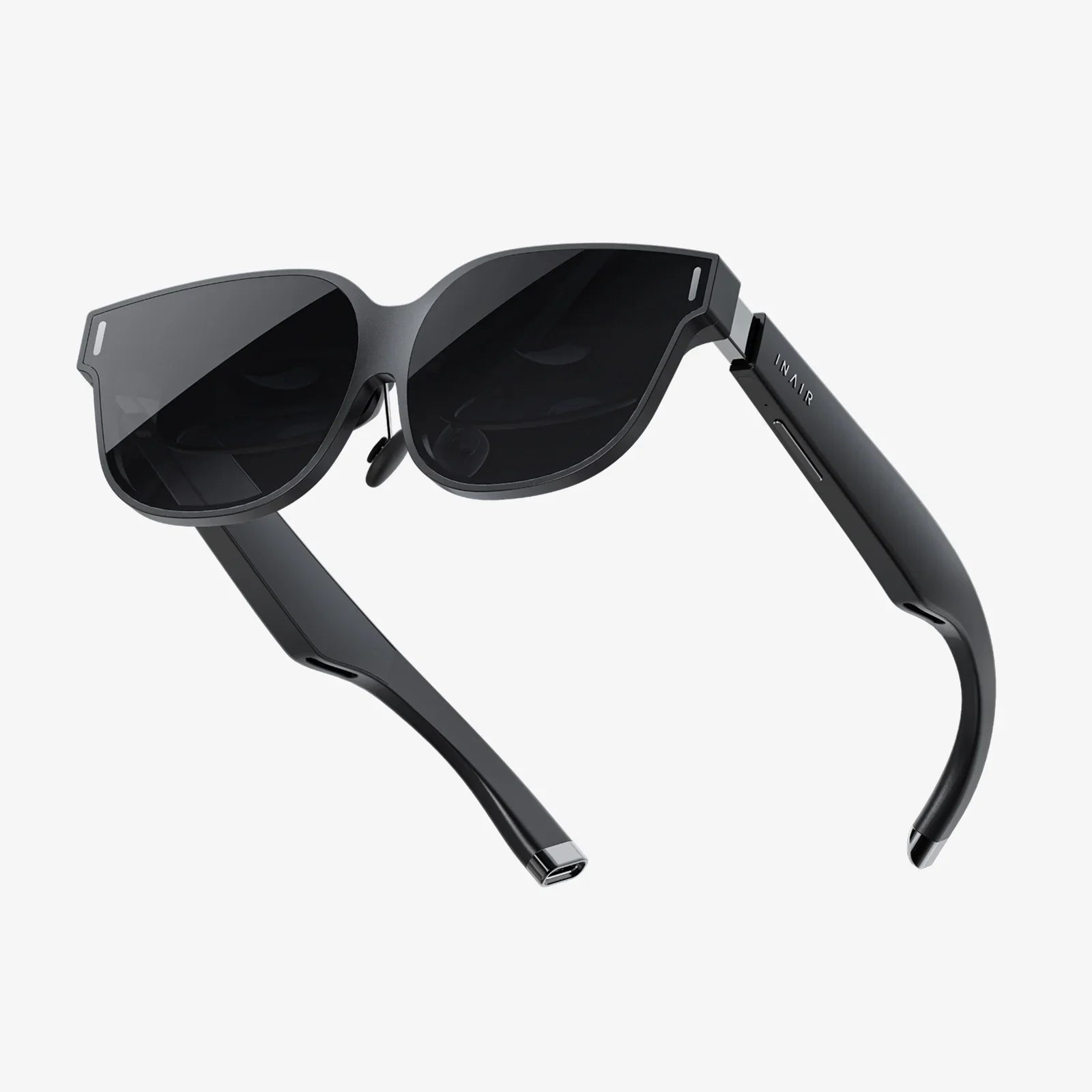
Imagine a world where digital information doesn’t just live on a screen but is seamlessly woven into the fabric of your physical reality. This is the promise and power of augmented reality, a technology rapidly moving from science fiction to an integral part of our daily lives and professional workflows. It’s not about escaping our world, but about enhancing it, and understanding its definition is the first step to unlocking its transformative potential.
The Core Principle: A Bridge Between Two Worlds
To define augmented reality (AR) is to describe a technology that superimposes a computer-generated perceptual layer of information—be it visual, auditory, haptic, or somatosensory—onto a user's view of the real world. Unlike Virtual Reality (VR), which creates a completely artificial digital environment, AR uses the existing environment and overlays new information on top of it. The key differentiator is that the user remains present and engaged with their real-world surroundings; the digital content simply augments it. This creates a unique, interactive experience where digital objects coexist and interact with the physical world in real-time.
How It Works: The Technology Behind the Magic
The seamless magic of AR is powered by a sophisticated symphony of hardware and software components working in concert.
Sensors and Cameras
These are the eyes of an AR system. Cameras capture the live view of the user's environment, while a suite of sensors—including accelerometers, gyroscopes, GPS, and LiDAR—work to understand the device's position, orientation, and movement in space. This data is crucial for accurately placing and anchoring digital content within the physical world.
Processing
The raw data from the sensors is fed into a processing unit, which can be a powerful smartphone processor or dedicated hardware within smart glasses. This unit performs the heavy computational lifting: it analyzes the camera feed to identify surfaces, planes, and objects (a process known as SLAM - Simultaneous Localization and Mapping), and then calculates the precise position and perspective to render the digital overlay.
Projection and Display
This is how the user sees the augmentation. There are several primary methods:
- Smartphone and Tablet Screens: The most common and accessible form, where the camera feed is shown on the screen with digital elements composited on top.
- Smart Glasses and Headsets: These wearable devices use miniature projectors and waveguides or semi-transparent mirrors to beam light directly into the user's eyes, creating the illusion that digital objects are part of the real world.
- Projection Mapping: Digital content is projected directly onto physical surfaces, effectively turning any wall, floor, or object into an interactive display.
Key Characteristics That Define the Experience
Not every digital overlay qualifies as true AR. A robust definition must include these core characteristics:
Real-Time Interaction
AR systems operate and respond without perceptible delay. The digital content must adjust and react to changes in the user's environment and perspective instantly to maintain the illusion of a cohesive reality.
Precise 3D Registration
Digital objects must be accurately "registered" or aligned with the physical world. This means a virtual dinosaur placed on a table should stay on that table, moving and shifting in perspective as the user walks around it, as if it were a real object.
Combination of Real and Virtual
This is the fundamental premise. The experience is a blend, not a replacement. The real world remains the primary canvas.
Spectrum of Augmentation: Marker-Based vs. Markerless AR
AR experiences are often categorized by how they anchor digital content to the real world.
Marker-Based AR (Image Recognition)
This method uses a predefined visual trigger, such as a QR code or a specific image, to activate and position the digital content. The camera identifies the unique pattern of the marker, and the software uses it as a fixed anchor point to display the augmentation. This is highly reliable and precise but requires pre-planning and specific triggers.
Markerless AR (Location-Based or Projection-Based)
This is a more advanced and flexible form of AR that uses GPS, digital compasses, and SLAM technology to understand the environment without a predefined marker. It allows digital content to be placed on any surface or at a specific geolocation. This is the technology behind popular mobile games and navigation apps that overlay directions onto city streets.
Beyond Entertainment: The Expansive Applications of AR
While playful filters and games brought AR to the masses, its most profound applications are found in enterprise and practical domains.
Revolutionizing Retail and E-Commerce
AR is dissolving the barrier between online and in-store shopping. Customers can use their smartphones to see how a new sofa would look in their living room, "try on" watches or makeup virtually, or see detailed product information overlaid on an item simply by pointing their camera at it. This reduces purchase uncertainty and enhances customer confidence.
Transforming Education and Training
Textbooks become interactive portals. Students can explore a 3D model of the human heart, watch historical battles unfold on their desk, or practice complex surgical procedures on virtual patients without any risk. AR provides immersive, hands-on learning that dramatically improves comprehension and retention.
Empowering Industrial and Field Service
This is where AR delivers immense value. Technicians wearing smart glasses can see schematics, instruction manuals, and expert guidance overlaid directly onto the machinery they are repairing. Remote experts can "see what they see" and annotate their field of view to guide them through complex procedures, reducing downtime and errors. Factory workers can receive real-time data about assembly lines and inventory.
Advancing Healthcare
Surgeons use AR projections to visualize anatomy, such as veins and tumors, directly on a patient's body before making an incision. Medical students can practice procedures on detailed holograms, and physical therapists can use AR guides to help patients perform rehabilitation exercises correctly at home.
The Future and Ethical Considerations
As AR technology evolves towards sleeker, more powerful wearable devices like true AR glasses, its integration into our lives will become more pervasive. This "permanent" digital layer, often referred to as the spatial web or the metaverse, raises important questions about data privacy, digital addiction, and reality blur. How do we manage the constant stream of data? Who owns the digital space around us? Defining the ethical boundaries of this enhanced reality is as crucial as defining its technology.
The line between what is real and what is digitally enhanced is not just blurring—it’s being intentionally and productively merged. To define augmented reality is to understand a fundamental shift in how we compute and interact with information, moving it off the page and screen and into the world around us. This isn’t a distant future; it’s a layer being painted over our present, and it’s waiting for you to look up and see it.
Share:
Buy VR Glasses: The Ultimate Guide to Entering the Virtual World
What's the Difference Between AR and VR? A Guide to Immersive Tech