


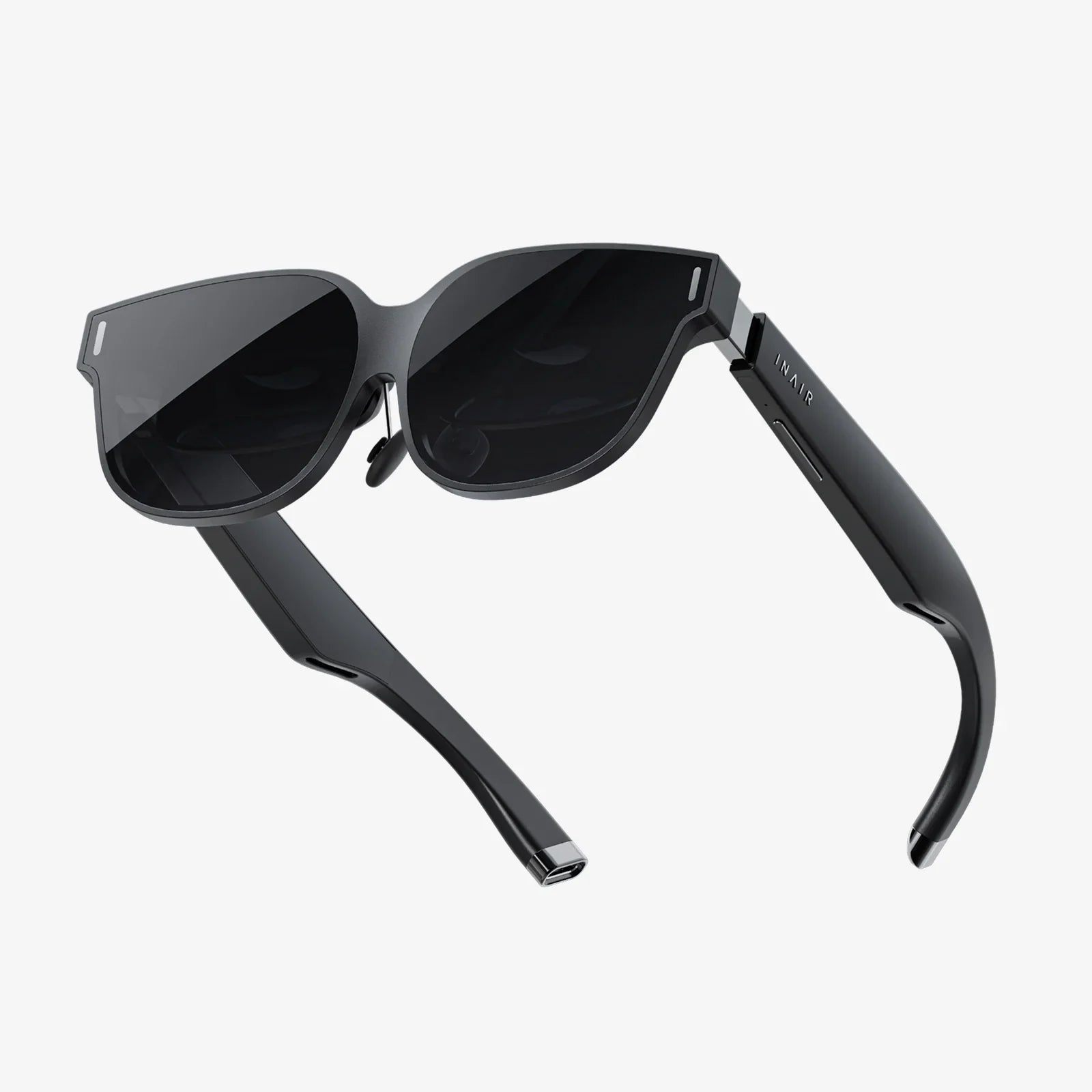
You’ve seen the headsets, heard the buzz, and maybe even experienced it for yourself—a fleeting moment in another world. But what's VR, truly? It’s more than just a gaming gadget; it’s a portal, a paradigm shift in how we interact with digital information and with each other. It’s a technology so potent it has the power to redefine industries, from medicine to education, and to challenge our very perception of reality itself. If you think you know what virtual reality is, prepare to have your mind expanded. This is not just about what you see; it's about what you feel, what you learn, and what you can become.
The Core Concept: Stepping Into the Digital
At its simplest, Virtual Reality (VR) is a computer-generated simulation of a three-dimensional environment that can be interacted with in a seemingly real or physical way by a person using special electronic equipment, primarily a head-mounted display (HMD). Unlike traditional user interfaces that place you in front of a screen, VR places you inside an experience. It is the ultimate form of escapism, not by ignoring the world around you, but by replacing it with a meticulously crafted digital one.
The ultimate goal of VR is to achieve a state of immersion—the sensation of being physically present in a non-physical world. This is accomplished by tricking the human brain into accepting the digital realm as real. This trickery is achieved through a combination of sophisticated hardware and software working in concert to create a convincing illusion.
The Magic Behind the Visor: Key Technologies Powering VR
To understand what's VR, you must look under the hood. The experience is built on several technological pillars that work together to create a seamless and believable virtual world.
1. The Head-Mounted Display (HMD)
The HMD, or headset, is the most recognizable piece of VR hardware. It’s the window into the virtual world. Modern HMDs contain:
- High-Resolution Displays: One display for each eye, providing a stereoscopic 3D effect that creates depth perception. The pursuit of higher resolutions and pixel density is constant, aiming to eliminate the "screen door effect" where users can see the lines between pixels.
- Lenses: Placed between the eyes and the screens, these lenses focus and reshape the image for each eye, creating a wide field of view (typically over 100 degrees) to mimic natural sight.
- Head Tracking: This is critical. Using a combination of sensors like gyroscopes, accelerometers, and magnetometers, the HMD tracks the rotation and orientation of your head—up, down, left, right, and everything in between. This ensures the world moves with you in perfect, low-latency synchronization.
2. Tracking Systems: Knowing Where You Are
While head tracking manages rotation, a full tracking system manages your position in space, known as positional tracking. This allows you to lean, crouch, walk, and dodge within the virtual environment. There are two primary methods:
- Outside-In Tracking: External sensors or cameras placed around the room monitor the position of the headset and controllers. This is known for high accuracy.
- Inside-Out Tracking: Cameras and sensors are built directly into the headset itself. These scan the surrounding environment to track its own position relative to the room, eliminating the need for external hardware. This method offers greater freedom and ease of setup.
3. Controllers and Haptics: The Sense of Touch
Immersion would be incomplete without interaction. VR controllers are ergonomic devices held in each hand, tracked by the system, that act as your virtual hands. They feature buttons, triggers, thumbsticks, and haptic feedback. Haptics use subtle vibrations and force feedback to simulate touch—the feeling of grabbing an object, the recoil of a weapon, or the brush of a tree branch.
The frontier of interaction is moving towards hand tracking, where cameras on the headset see your actual hands and fingers, allowing you to manipulate the virtual world with natural gestures, no controllers required. Further still, full-body tracking suits and advanced haptic vests are emerging to provide tactile feedback across the entire body, deepening the immersion exponentially.
4. Audio: The Forgotten Half of the Experience
Sound is arguably half of the VR illusion. 3D spatial audio is a technology that mimics how sound waves interact with the human head and ears. In a VR environment, a sound doesn’t just come from "the left speaker"; it comes from a specific point in 3D space. If a virtual bird chirps behind you and to your right, you will hear it as such. This auditory cue is incredibly powerful for selling the reality of a scene and is essential for presence.
More Than Just Games: The Expansive Applications of VR
While gaming is the most famous and lucrative application, asking "what's VR?" only in the context of play is a dramatic undersell. The technology is a tool, and its utility spans countless fields.
Revolutionizing Education and Training
VR transforms learning from a passive to an active experience. Instead of reading about ancient Rome, students can take a guided tour through a historically accurate reconstruction. Medical students can practice complex surgical procedures on virtual patients, making mistakes without consequences. Astronauts, pilots, and soldiers have used high-fidelity VR simulators for decades to train for scenarios too dangerous, expensive, or rare to practice in the real world. This "learning by doing" in a safe, controlled environment dramatically improves retention and skill acquisition.
Transforming Healthcare and Therapy
The therapeutic potential of VR is staggering. It is used for:
- Exposure Therapy: Helping patients with phobias (like fear of heights, flying, or spiders) by gradually and safely exposing them to their triggers in a controllable virtual setting.
- Pain Management: Immersive VR experiences have been proven to distract burn victims during wound care, significantly reducing their perceived pain levels.
- Physical Rehabilitation: Guiding patients through physical therapy exercises with gamified VR programs increases motivation and provides precise motion tracking for clinicians.
- Surgical Planning: Surgeons can use VR to explore a 3D model of a patient's unique anatomy from within, planning a complex operation before making a single incision.
Redefining Design and Architecture
Architects and interior designers are using VR to walk clients through unbuilt homes and spaces. This allows for changes to be made before construction even begins, saving vast amounts of time and money. Engineers can step inside a full-scale 3D model of a new engine design to identify potential issues long before a physical prototype is made.
Enabling New Forms of Social Connection and Entertainment
Social VR platforms are emerging as new digital town squares. Here, people from across the globe can meet, talk, play games, and watch movies together as if they were in the same room, represented by personalized avatars. This offers a profound sense of shared presence that video calls cannot match. In entertainment, filmmakers are experimenting with immersive 360-degree films, placing the viewer directly in the center of the narrative.
The Human Experience: Presence, Empathy, and the Future of Storytelling
The true power of VR lies not in its technical specifications, but in its psychological impact. The ultimate goal is to evoke presence—the undeniable feeling of "being there." When presence is achieved, the brain reacts to the virtual world as if it were real. This has profound implications.
It enables empathy on an unprecedented scale. Documentarians are using VR to transport viewers into the lives of others—a refugee camp, a protest, the home of someone living in poverty. This visceral, first-person experience can foster a deeper understanding and compassion than any news report ever could. It’s the difference between hearing about a story and living it, if only for a few minutes.
This makes VR the next great medium for storytelling. It moves from telling a story to an audience to placing an audience inside a story. The narrative becomes something you explore and discover, not just observe.
Challenges and Considerations on the Road Ahead
For all its promise, VR is not without its hurdles. The technology still faces challenges related to cost, accessibility, and technical limitations like achieving perfect visual fidelity and eliminating motion sickness for all users. There are also important ethical and social questions to grapple with: issues of data privacy in immersive environments, the psychological effects of long-term use, and the potential for reality blurring or addiction.
Furthermore, creating high-quality VR content remains complex and expensive, acting as a barrier to widespread adoption. The industry is actively working on all these fronts, driving innovation to make the hardware more comfortable, affordable, and powerful, while developing standards and best practices for ethical development.
The Future is Virtual: What Lies Beyond the Horizon
The journey of VR is just beginning. We are moving towards lighter, wireless, higher-resolution headsets that will be as comfortable as a pair of sunglasses. The concepts of the "metaverse"—a persistent, shared, virtual space—are being built on the backbone of VR technology.
The line between the virtual and the real will continue to blur with advancements in haptic technology, brain-computer interfaces (BCI), and photorealistic graphics. We may eventually reach a point where virtual experiences are indistinguishable from physical ones, not just visually, but through touch, smell, and taste.
This technology will become deeply integrated into our daily lives. We will use it for work in virtual offices, for socializing with friends and family across vast distances, for exploring places we could never physically go, and for experiencing art and stories in ways we cannot yet fully imagine.
So, what's VR? It is the next great computing platform, a empathy machine, a revolutionary training tool, and an unparalleled canvas for human creativity. It is a doorway to infinite worlds, limited only by our imagination. The headset is not just a device; it is a key. And it’s waiting for you to turn it.
Share:
Best Adjustable Eyeglasses: The Ultimate Guide to Customizable Vision
Computer Sunglasses for Men: The Ultimate Guide to Digital Eye Strain Relief