


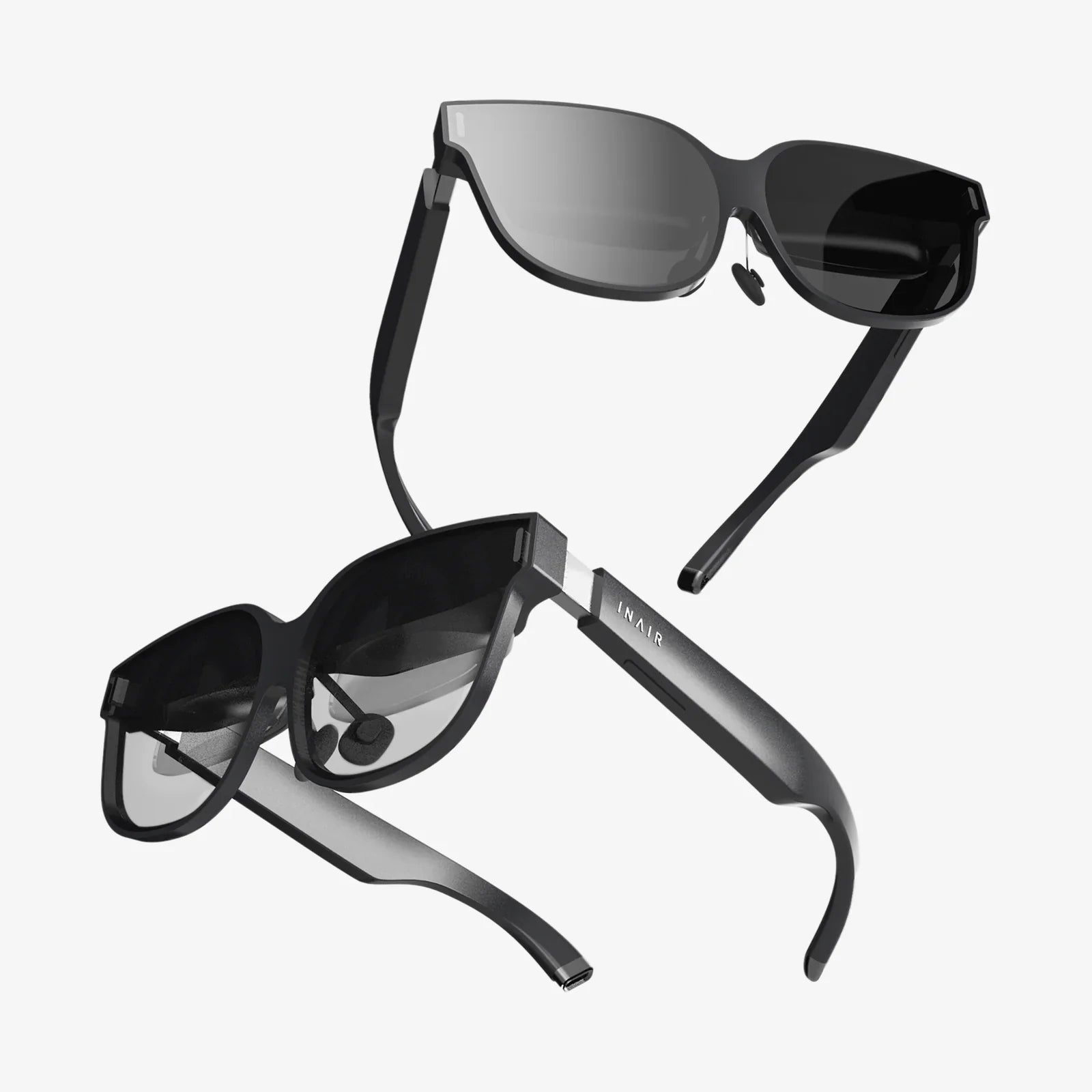
You’ve seen them in movies, read about them in cyberpunk novels, and perhaps even dreamed of a world where digital information seamlessly overlays your physical reality. The concept of intelligent eyewear has captivated our collective imagination for generations, but the burning question remains: when did AI glasses actually come out? The answer is far more fascinating and complex than a simple date on a calendar. It’s a story of iterative innovation, spectacular failures, and a relentless pursuit of a future that is now, finally, coming into focus. The journey to modern AI glasses is a tapestry woven with threads of ambition, technology, and a fundamental reimagining of how we interact with the world.
The Genesis: Before "AI," There Was "Display"
To understand the arrival of AI glasses, we must first look at their ancestors. The true origin point for head-mounted visual technology stretches back much further than most realize. In 1968, computer scientist Ivan Sutherland and his student Bob Sproull created what is widely considered the first head-mounted display system, nicknamed "The Sword of Damocles." This monstrous apparatus was so heavy it had to be suspended from the ceiling. It displayed simple, wireframe graphics that were overlaid onto the user's physical environment, establishing the core principle of augmented reality. It was primitive, terrifying, and utterly revolutionary. It contained no AI, of course, but it provided the foundational canvas upon which future intelligence would be painted.
The 1980s and 1990s saw the concept refined, primarily in military, aviation, and industrial contexts. Pilots used helmet-mounted sights and displays for targeting information, and factory workers experimented with wearable systems for complex assembly tasks. These were specialized tools for specialized jobs, built for function over form, and were far from being consumer-facing "AI glasses." The technology was incubating in labs and high-cost environments, waiting for the rest of the world to catch up.
The 2010s: The Spark of Consumer Ambition
The modern chapter of our story begins in the early 2010s. This era was defined by a crucial convergence: smartphones had miniaturized powerful processors, cameras, and sensors, making the core components for smart glasses smaller and more affordable than ever before. The term "AI" was beginning to shift from an academic concept to a tangible feature, thanks to improvements in machine learning and neural networks.
In 2013, the world received its first major, mass-market answer to the question of smart glasses. A much-hyped, secretive project was unveiled, offering a camera, a small prism-based display, and voice control. While not "AI glasses" in the complex sense we think of today, they were a bold and early attempt to create a consumer-facing wearable computer for your face. They promised a futuristic way to take photos, get directions, and send messages hands-free. However, they were met with a firestorm of criticism over their design, their high price, and, most significantly, massive public concern over privacy due to their inconspicuous camera. The product was ultimately shelved, widely deemed a failure. Yet, its impact was profound. It served as a massive, public beta test. It demonstrated the public's appetite for the concept while also providing a brutal lesson in the social and privacy hurdles such technology must overcome. It wasn't the answer, but it was a critical, albeit painful, step in the journey.
The Quiet Evolution: Specialized AI Finds Its Focus
Following the high-profile setback, the industry's approach changed. Instead of aiming for a general-purpose consumer device, development splintered into specialized verticals where the value of AI-powered glasses was immediately clear. This period of quiet refinement, from the mid-2010s onward, is where AI truly began to integrate with eyewear.
- Enterprise and Logistics: Warehouses and factories became the perfect testing ground. Companies developed rugged glasses with integrated AI-powered vision systems. Workers could scan barcocks hands-free, receive real-time picking instructions overlaid on their vision, and access remote expert assistance through live video feeds. The AI here was focused on object recognition, process optimization, and real-time data retrieval, dramatically increasing efficiency and accuracy.
- Accessibility Tech: Perhaps the most heartening application emerged for the visually impaired. Glasses equipped with cameras could use sophisticated AI to describe scenes, read text aloud, identify currency, and recognize faces, narrating the visual world to the user. This wasn't a gadget; it was a powerful assistive tool that leveraged AI for profound human benefit.
- Language Translation: Another powerful application came in the form of near-real-time translation. Glasses with a display could use AI to translate spoken conversation or written text (like a menu or a sign) and project the translation into the user's line of sight, effectively acting as a universal translator and breaking down language barriers.
During this time, the underlying technologies were advancing at a breakneck pace. Micro-displays became sharper and brighter. Computer vision algorithms, powered by deep learning, became vastly more accurate at recognizing objects, text, and people. Natural language processing allowed for more fluid voice interactions. And crucially, the development of advanced waveguide optics allowed for sleek, glasses-like form factors that could project bright, full-color images onto the lenses without bulky components.
The Renaissance: The Arrival of True AI Glasses
By the early 2020s, the pieces began to fall into place for a return to the consumer market. The failure of the past had been learned from, and the successes in enterprise had proven the technology's utility. The defining characteristic of this new generation is the shift from glasses that display information to glasses that understand the context around them.
Modern AI glasses are characterized by a always-on suite of sensors—cameras, microphones, and inertial measurement units (IMUs)—continuously feeding data to onboard or cloud-based AI models. This AI acts as a contextual genius, processing the world in real time. It's not just about showing a notification; it's about knowing which notification is important right now, based on what you're doing.
This era saw the launch of a new category of device from major tech players. These frames, often developed in partnership with renowned eyewear brands, prioritized a normal, fashionable design. They embedded speakers and microphones for audio-based interactions and, in some cases, featured a small, discreet LED display to project information like notifications, directions, or incoming calls only the wearer can see. Their AI is deeply integrated with a smartphone's digital assistant, creating a seamless, ambient computing experience. You can get spoken answers to questions, translate a conversation, or identify a landmark just by looking at it and asking.
Concurrently, the field of Augmented Reality (AR) has exploded. While true, full-field-of-vision AR glasses for consumers are still on the horizon, the development is feverish. These prototypes represent the ultimate culmination of the AI glasses journey: spatially aware computers that can place persistent digital objects into your environment, powered by AI that understands the geometry and semantics of your world.
So, When Did They *Really* Come Out?
Therefore, pinning down a single release date for AI glasses is impossible. Their "coming out" was not an event, but a process.
- The Conceptual Birth (1968): With Sutherland's invention, the idea was born.
- The Cautionary Tale (2013): A bold, flawed, and public attempt that proved the consumer market existed while highlighting the challenges.
- The Specialized Era (2015-2020): AI glasses officially "came out" for enterprise, logistics, and accessibility, where they proved their immense practical value.
- The Consumer Renaissance (Early 2020s): The successful reintroduction of contextually aware, audio-first AI glasses to the consumer market, blending utility with acceptable design.
The technology is still evolving. Battery life, display technology, social acceptance, and the sheer computational power required for full AR remain challenges. But the foundation is solid. We are no longer asking if AI glasses will become a mainstream reality, but how they will reshape our lives.
Imagine a world where your glasses are your most trusted assistant. They remind you of a person's name as you greet them, guided by facial recognition. They overlay historical facts onto the monument you're viewing. They help you navigate a complex recipe in the kitchen by projecting the next steps onto your countertop. They translate the world in real time, making every country feel like home. They give the gift of sight to those without it. This is the future being built today. The journey that started with a ceiling-suspended monster is now yielding elegant, intelligent companions that promise to enhance human capability in ways we are only beginning to imagine. The age of AI glasses isn't coming; it's already here, and it's putting the future squarely in our field of view.
Share:
Augmented Reality Experiences for Marketing: The Ultimate Guide to Immersive Engagement
Real Augmented Reality: Bridging the Digital and Physical Worlds