


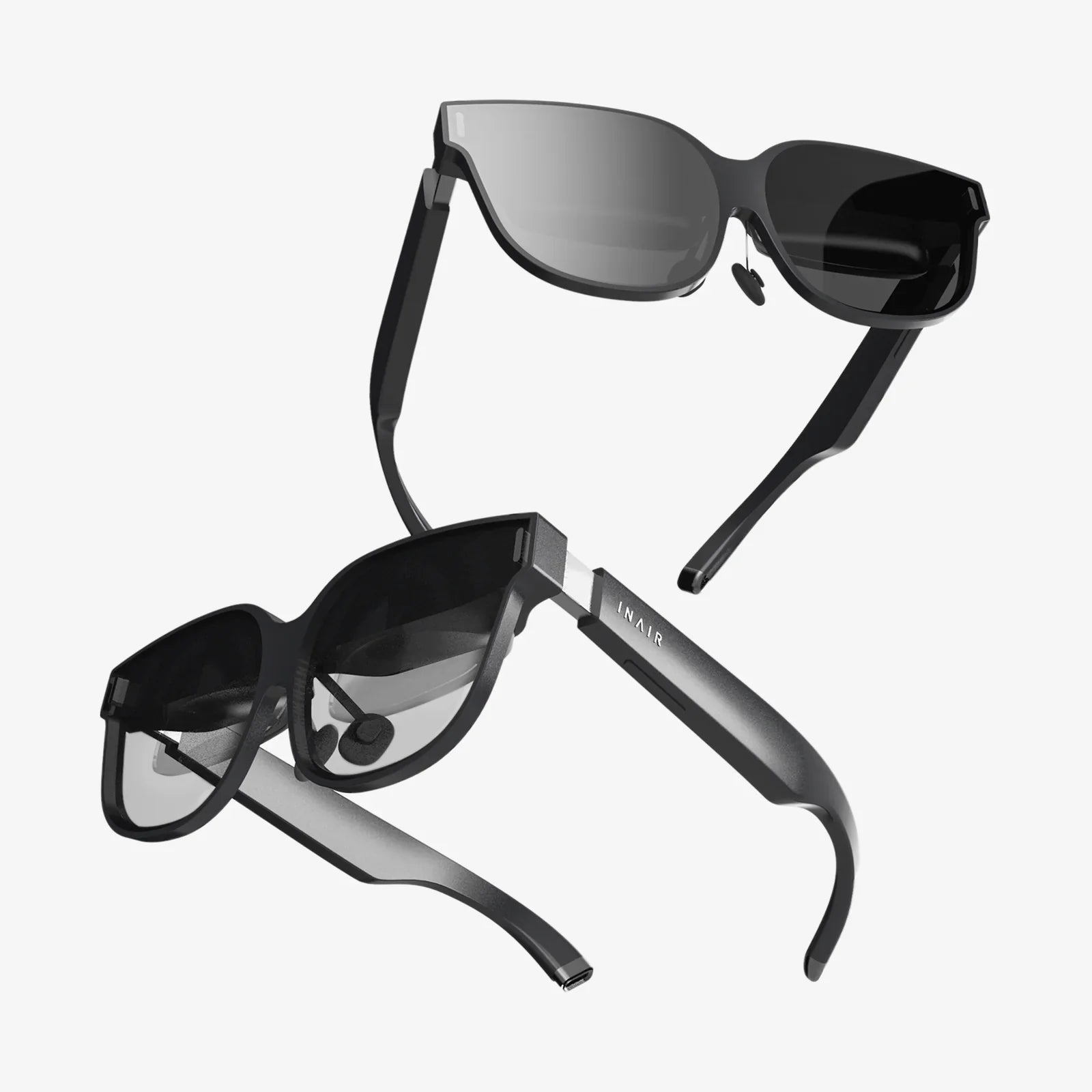
You strap on a sleek device, and suddenly, your living room vanishes. You're standing on the surface of Mars, conducting a virtual experiment, or sitting courtside at a sold-out game, all from the comfort of your home. This is the promise of modern virtual reality, a technology that feels both futuristic and suddenly accessible. But the dream of escaping into a digital world is far from new. The path to today's lightweight, high-resolution headsets is a winding one, paved with clunky prototypes, visionary ideas, and decades of incremental innovation. To truly appreciate the powerful device we have today, we must journey back to its improbable beginnings and answer a fundamental question: when was the VR headset invented? The answer is not a single date but a story of several key breakthroughs that collectively brought a science fiction fantasy to life.
The Seeds of an Idea: Early Precursors and Science Fiction
Long before silicon chips and LCD screens, the conceptual foundation for virtual reality was being laid. In the 1930s, a visionary science fiction writer named Stanley G. Weinbaum published a short story, Pygmalion's Spectacles. In it, the protagonist wears a pair of goggles that transport him into a fictional world that engages all his senses, a remarkably prescient description of a holistic VR experience. This work of fiction planted the seed in the minds of inventors and dreamers, suggesting that such an experience might one day be possible.
Beyond literature, practical inventions were also hinting at the future. The Link Trainer, developed in 1929, was an electromechanical flight simulator that used pumps and bellows to mimic the movement of an aircraft. While it lacked a visual component, it was the first functional attempt to simulate a physical experience for training purposes, establishing the crucial link between simulation and practical application that would drive much of VR's early development.
The Birth of Immersion: Sensorama and the Telesphere Mask
While many were thinking about the concept, the first true ancestor of the modern VR headset was created by a man named Morton Heilig. A cinematographer by trade, Heilig was a passionate believer in what he called "Experience Theater," an idea that films should engage the viewer completely, beyond just sight and sound. In the mid-1950s, he developed a design for a single-user console called the Sensorama, which he patented in 1962.
The Sensorama Machine was a bulky arcade-style cabinet that aimed to stimulate all the senses. It featured a stereoscopic 3D display, fans to simulate wind, stereo speakers, a vibrating chair, and even devices to produce odors relevant to the film. It was a monumental, if commercially unsuccessful, effort to create total cinema immersion. More critically, in 1960, Heilig patented a device called the Telesphere Mask. This head-mounted apparatus provided stereoscopic 3D vision and wide peripheral viewing, alongside stereo sound. It lacked head-tracking and computer-generated graphics, instead relying on pre-recorded film, but its design—a headset meant to provide an immersive audiovisual experience—makes it the undeniable, direct progenitor of the VR headset. Therefore, if we must pinpoint an invention date for the concept of a head-mounted display for virtual experiences, 1960 is a strong candidate.
The Father of VR: The Ultimate Display and the Sword of Damocles
The next monumental leap came from computer scientist Ivan Sutherland. In 1965, he published a seminal essay titled The Ultimate Display, which laid out the vision for virtual reality as we understand it. He envisioned a world inside the computer where the user could interact with objects and where the virtual world was indistinguishable from reality. This paper became the philosophical blueprint for decades of VR research.
By 1968, with the help of his student Bob Sproull, Sutherland turned theory into a terrifying, functional reality. Their creation was called The Sword of Damocles. This was the first head-mounted display (HMD) that was connected to a computer, not a camera. It used wireframe graphics to render simple, computable 3D shapes that users could interact with. Crucially, it featured a mechanical tracking system, suspended from the ceiling, that updated the display based on where the user looked, making it the first true augmented reality (AR) and VR system. It was primitive—the graphics were rudimentary, and the headset was so heavy it had to be counterbalanced from the ceiling—but it was undeniably the first functional VR/AR headset. This establishes 1968 as the birth year of interactive, computer-driven head-mounted virtual reality.
The 1980s and 1990s: The Name is Coined and The First Commercial Push
The 1980s saw the technology begin to escape the lab, albeit in a limited way. NASA adopted VR technology for astronaut training, developing a project using a sophisticated HMD with head-tracking for simulating extravehicular activities. Meanwhile, in the entertainment industry, companies began experimenting with VR arcade machines, though they remained a niche novelty.
This era also gave the technology its name. Jaron Lanier, founder of the company VPL Research, is widely credited with popularizing the term "virtual reality" in the late 1980s. VPL Research was instrumental in commercializing VR gear, developing and selling the first commercially available VR peripherals, including the DataGlove, which allowed for hand tracking, and the EyePhone HMD. This marked the first time a full VR suite was available for purchase, though its exorbitant price kept it firmly in the domain of high-end research labs and corporations.
The 1990s promised to be the decade VR entered the mainstream. The technology became a staple of science fiction films, stoking public excitement. Gaming companies saw the potential and began developing consumer-grade hardware. Several notable headsets were released for home consoles and PCs. These devices captured the public's imagination but were ultimately a commercial failure. The technology of the time was simply not ready. The headsets suffered from low resolution, significant lag causing nausea (latency), a lack of compelling software, and extremely high costs. The public's first taste of VR was underwhelming, and the technology entered a long period of dormancy and slow, steady refinement within academic and industrial contexts.
The Modern Renaissance: Smartphones and a New Dawn
The VR winter began to thaw in the early 2010s, thanks to an unlikely hero: the smartphone industry. The massive production of smartphones led to the rapid advancement and cost reduction of the very components a VR headset needs: high-density small screens, motion sensors (gyroscopes, accelerometers), and powerful, compact processors.
A pivotal moment came in 2012 with a Kickstarter campaign for a new headset called the Oculus Rift. Its creator, Palmer Luckey, demonstrated that by leveraging affordable smartphone components, it was possible to create a low-latency, wide field-of-view headset that provided a high-quality experience at a fraction of the previous cost. This campaign reignited industry and consumer interest overnight. The technology was acquired by a major social media company in 2014, which invested heavily in its development.
This kickstarted a new arms race. Tech giants entered the fray, launching their own platforms. The market quickly segmented into three distinct tiers: powerful PC-connected headsets for the high-end experience, all-in-one standalone headsets that offered wireless freedom and accessibility, and simple smartphone-based holders that provided a low-cost entry point. This period also saw the parallel development of augmented reality, with devices overlaying digital information onto the real world.
Looking Ahead: The Future of Immersive Technology
Today, VR technology is advancing at a breathtaking pace. The focus has shifted from simply achieving presence to refining the experience. Key areas of development include:
- Visual Fidelity: Displays are moving towards mini-LED and OLED with ever-increasing resolutions and refresh rates to eliminate the screen-door effect and reduce eye strain.
- Eye and Face Tracking: This technology allows for more intuitive interaction and more realistic avatars in social spaces, as the headset can render where you are looking and replicate your facial expressions.
- Inside-Out Tracking: Modern headsets use onboard cameras to track controller and hand position, eliminating the need for external external sensors and making setup seamless.
- Haptic Feedback: Development of advanced controllers and even full haptic suits aim to provide a sense of touch, further deepening immersion.
The potential applications continue to expand far beyond gaming. VR is now a critical tool in fields like medicine for surgical training and patient rehabilitation, in architecture and design for virtual walkthroughs, in education for immersive historical and scientific lessons, and in enterprise for remote collaboration and virtual prototyping.
So, when was the VR headset invented? The journey began with Morton Heilig's Telesphere Mask in 1960, which established the form factor. It truly came to life with Ivan Sutherland's interactive, computer-driven Sword of Damocles in 1968. It was named and commercialized by pioneers like Jaron Lanier in the late 1980s, and after a long period of refinement, it was reborn through smartphone technology in the 2010s. The story of VR is not one of a single eureka moment but a long chain of ingenuity, failure, and perseverance. It’s a history still being written, with each new headset adding another chapter to this incredible technological saga, bringing us closer to that ultimate goal of stepping effortlessly into another world.
Share:
What Do You Need for a VR Headset to Work: The Complete Setup Guide
What Do You Need to Use a VR Headset - The Ultimate Setup Guide