


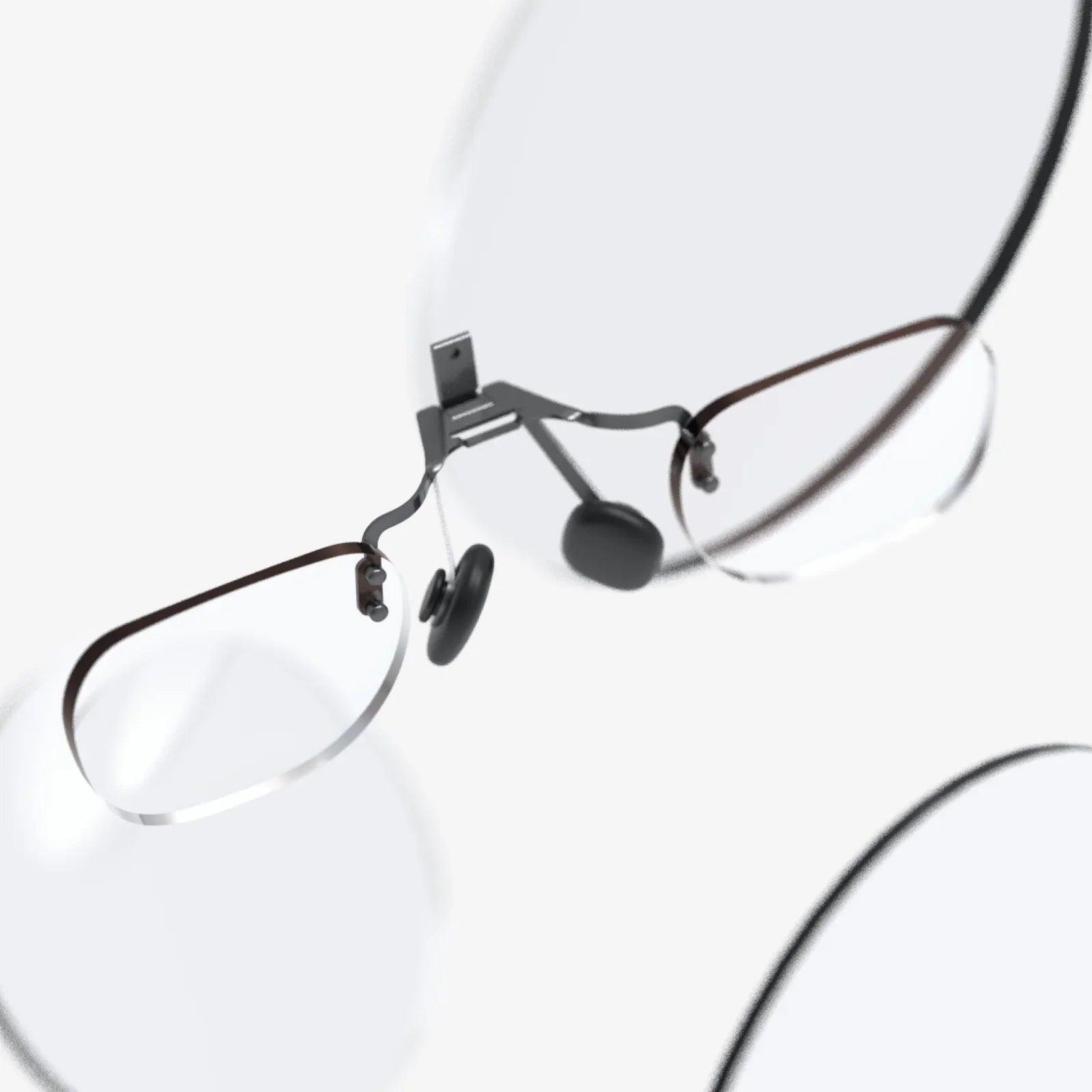
Imagine a world where digital information doesn't just live on a screen in your hand but is seamlessly woven into the fabric of your reality. This is the promise of augmented reality glasses, a technology poised to revolutionize how we work, play, and connect. The question on everyone's mind isn't just about if they will become mainstream, but specifically, which AR glasses are the best? The answer is far more complex and exciting than a simple product name. The 'best' is a moving target, defined not by a single feature but by how well a device aligns with your individual vision for the future.
Defining the Dream: What Are AR Glasses?
Before we can crown a champion, we must first understand the playing field. Augmented Reality (AR) glasses are wearable computers that overlay digital information—images, text, 3D models, and interfaces—onto the user's view of the physical world. Unlike Virtual Reality (VR), which creates a fully immersive digital environment, AR enhances your existing reality. Think of it as having a persistent, intelligent heads-up display for life. The ultimate goal is a pair of glasses that are as lightweight and socially acceptable as regular eyewear but powerful enough to serve as your primary computer, phone, and personal assistant.
The Contenders: A Spectrum of Experiences
The current market is not a monolithic category but a spectrum of devices, each offering a different balance of capabilities and compromises. There is no one-size-fits-all solution, and the 'best' device for a developer is vastly different from the best for a factory worker or a casual consumer.
1. The Everyday Consumer Glasses
These devices prioritize form factor and comfort above all else. They often resemble stylish sunglasses or standard eyeglasses, aiming for social acceptance. Their processing power might be more limited, often relying on a tether to a smartphone or a small companion computer. Their primary use cases are notifications, basic navigation, hands-free calls, and recording photos and video from a first-person perspective. The best in this category are those you forget you're wearing until you need them.
2. The Enterprise and Industrial Powerhouses
On the other end of the spectrum are devices built for functionality, durability, and power in specific professional environments. These are often bulkier, with more pronounced sensors and a design focused on withstanding harsh conditions like factories, construction sites, or surgical rooms. They feature powerful processors, high-resolution displays for reading complex manuals or schematics, and advanced tracking for precise digital overlays on machinery. The best here is defined by ruggedness, battery life, and the accuracy of its augmentations.
3. The Spatial Computing Visionaries
This emerging category represents the bleeding edge, aiming to fulfill the ultimate promise of AR as a spatial computing platform. These devices are not just about overlaying information but about understanding and interacting with the world in a fundamentally new way. They feature advanced depth sensors, LiDAR scanners, high-fidelity passthrough cameras, and powerful onboard AI to map environments in real-time. They are designed for developers, creators, and early adopters who are building the next generation of AR applications. The best in this class offers the most immersive, responsive, and intuitive blend of the digital and physical realms.
The Battlefield: Key Features to Judge the Best
To determine which AR glasses are the best for any given purpose, you must become a critic of several critical technological pillars. A weakness in one can be a deal-breaker, regardless of strengths elsewhere.
Display Technology: The Window to Your Digital World
How digital light is projected into your eyes is the core magic of AR. Different technologies offer different trade-offs between field of view (FOV), brightness, resolution, and form factor.
- Waveguide: A common method in sleek consumer glasses. Light is bounced through a thin piece of glass or plastic, allowing for a relatively normal glasses design. However, it can sometimes struggle with brightness and a limited FOV.
- Birdbath Optics: Uses a partially reflective combiner to fold the image from a micro-display into the user's eye. It can offer good FOV and brightness but often results in a slightly deeper form factor.
- MicroLED with Freeform Optics: An advanced and promising technology. MicroLEDs are incredibly bright and efficient, allowing for see-through displays that work well even in direct sunlight, a traditional challenge for AR.
The 'best' display is one you don't notice—it's bright enough for any environment, has a wide enough FOV to feel natural, and a high enough resolution that text is crisp and graphics are smooth.
Field of View (FOV): How Much Can You See?
FOV is arguably one of the most important and challenging specs. It's the angular extent of the virtual world that you can see at any given moment, measured diagonally like a TV. A small FOV feels like looking through a small window or a postage stamp floating in your vision, which can break immersion. A large FOV allows digital objects to exist at scale in your periphery, creating a much more believable and engaging experience. The best devices are pushing FOV boundaries without making the glasses enormous.
Processing Power: The Brain Behind the Beauty
AR involves immense computational tasks: tracking your head and eyes precisely, mapping the room in 3D, understanding surfaces, and rendering complex graphics in real-time. This can be handled in three ways:
- Standalone: All processing is done on the device itself. This offers maximum freedom but requires balancing power with heat and battery life.
- Tethered: The glasses act as a display, offloading processing to a powerful external computer or game console. This enables incredibly high-fidelity experiences but sacrifices mobility.
- Smartphone-Driven: The phone in your pocket becomes the computer, streaming content to simpler, lighter glasses. This is a common path for consumer devices.
The best processing solution depends on your need for mobility versus performance.
Tracking and Sensors: Mapping Your Reality
For digital objects to feel locked in place in the real world, the glasses need to understand their environment with incredible precision. This is achieved through a suite of sensors:
- Cameras: For tracking positional movement (inside-out tracking) and for computer vision tasks like hand tracking.
- IMUs (Inertial Measurement Units): Accelerometers and gyroscopes that provide rapid, low-latency data on head movement.
- Depth Sensors: LiDAR or time-of-flight sensors that actively scan the environment to create a detailed 3D mesh, understanding the shape and distance of objects around you.
The best AR glasses have sensor fusion—seamlessly combining all this data for rock-solid, low-latency tracking that prevents digital objects from jittering or drifting.
Battery Life: Cutting the Cord
All this technology is power-hungry. Battery life remains a significant constraint. The best devices offer a practical balance, often through innovative power management, hot-swappable batteries, or a companion battery pack that can be stored in a pocket, ensuring all-day use for enterprise applications.
Audio: The Forgotten Sense
Immersive AR isn't just visual. Spatial audio is crucial—the ability for sounds to feel like they are coming from specific points in your environment. The best devices integrate discreet, high-quality speakers that deliver private audio without headphones, further blending the digital and physical soundscapes.
The Software Ecosystem: The Soul of the Device
The hardware is nothing without the software that brings it to life. The operating system and application ecosystem are what truly define the user experience.
- Intuitive OS: How do you interact with the interface? The best systems use a combination of voice commands, hand gestures, and subtle controller input to create a fluid and natural feeling of control.
- App Library: A device can have groundbreaking hardware, but if no one is building apps for it, it becomes a expensive paperweight. The 'best' platforms have strong developer support and a vibrant, growing library of useful and entertaining applications.
- Developer Tools: For spatial computing devices, robust SDKs (Software Development Kits) that make it easy for developers to create experiences are paramount to long-term success.
The Human Factor: Comfort, Style, and Your Face
Technology specs are meaningless if the device is uncomfortable to wear or too socially awkward to use in public. The human factors are critical.
- Ergonomics: Weight distribution, adjustability, and pressure points on the nose and ears. Can you wear them for hours without fatigue?
- Prescription Support: For the vast majority of the population who need vision correction, the ability to use custom prescription lenses is non-negotiable. The best solutions offer seamless integration.
- Aesthetics: Do they look like something you'd be willing to wear on the street, or do they scream 'cyborg'? Social acceptance is a huge hurdle, and the best consumer devices are those that look good.
Privacy and Security: The World Is Watching
AR glasses, by their nature, involve cameras and microphones that are always pointing at the world around you. This raises profound questions about privacy, data collection, and security. The best devices and platforms are those that are transparent about their data policies, offer clear physical indicators when recording, and give users granular control over their privacy. Building trust is as important as building technology.
The Verdict: So, Which AR Glasses Are the Best?
As you can see, the search for the 'best' is a personal journey. There is no single winner. The best AR glasses for a surgeon guiding a complex procedure are not the best for a tourist wanting translation overlays, which are not the best for a gamer wanting to turn their living room into a digital battlefield.
The champion is the device that excels in the categories most important to you. It's the one with the right balance of display quality, comfort, battery life, and software for your specific use case. It's the one that feels less like a piece of technology and more like a natural extension of your own capabilities. The true 'best' AR glasses are the ones that you put on and, after a few minutes, forget are there—because the digital world they present feels just as real and intuitive as the physical one. This isn't about finding a product on a shelf today; it's about understanding the trajectory of a technology that is fundamentally redefining human-computer interaction, and choosing the vehicle that will take you where you want to go.
Forget the spec sheets and marketing hype for a moment and ask yourself the real question: what do you want to see when you look at the world? The device that can best answer that, that can unlock new ways to create, connect, and explore, is waiting—and the competition to build it is only just heating up. The future is not just something we will watch; it's something we will wear.
Share:
How a Smart Board Works: The Ultimate Guide to Interactive Classroom Technology
Best Wireless Virtual Reality Headset - A Guide to Untethered Immersion