


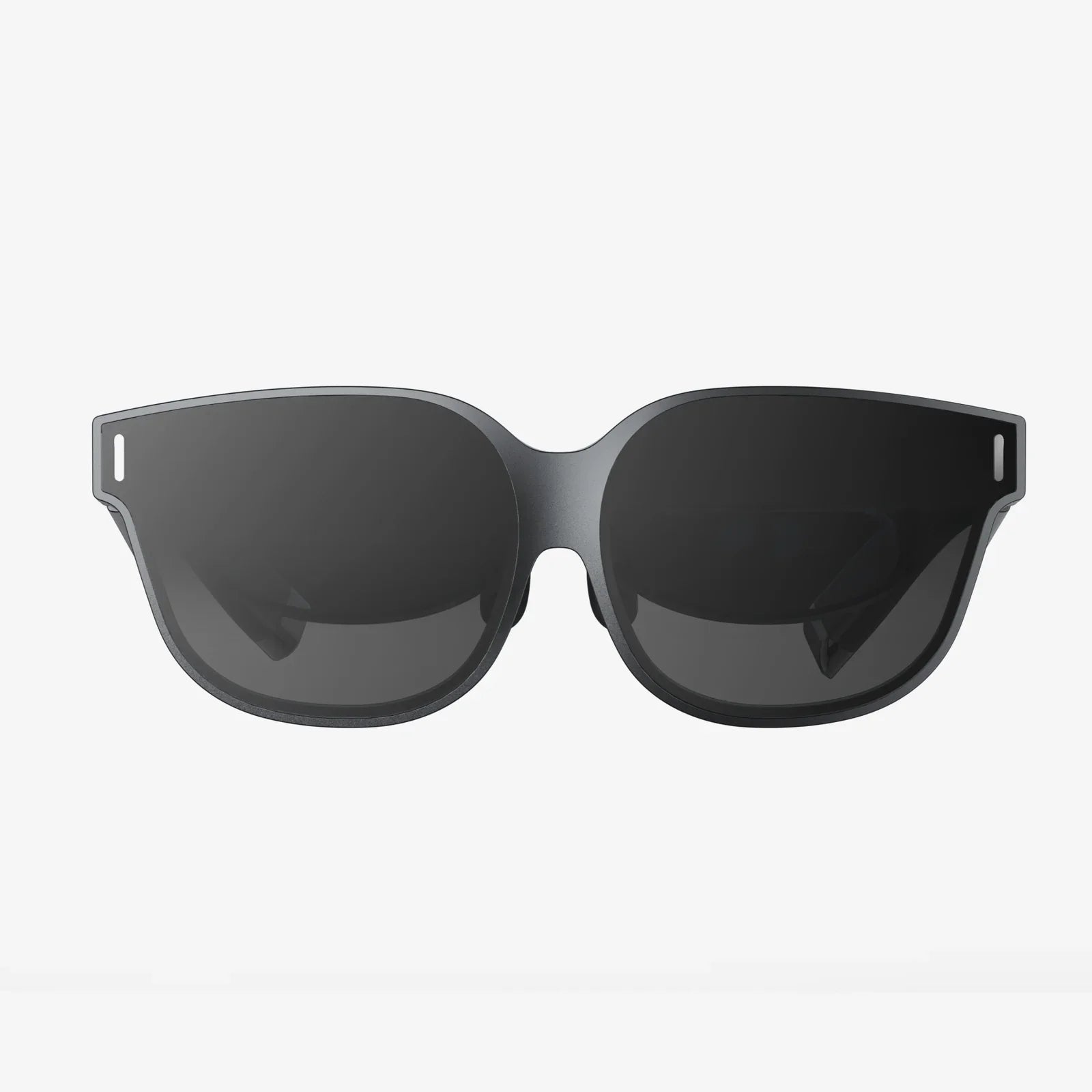
You've heard the term, seen the viral filters, and maybe even used a navigation app that paints directions onto the street in front of you. But when pressed to define it, the question emerges: which definition best fits augmented reality? Is it a gimmick, a gaming platform, or something far more profound? The answer is not as simple as it seems, lying at the intersection of perception, technology, and human-computer interaction. Unpacking the true meaning of AR is essential to understanding its staggering potential to reshape everything from how we work and learn to how we see the world itself.
Beyond the Buzzword: The Quest for a Core Definition
At its most fundamental level, numerous tech glossaries and introductory textbooks offer a definition similar to: "Augmented reality is a technology that superimposes a computer-generated image on a user's view of the real world, thus providing a composite view." This is a good starting point—it's accurate, concise, and highlights the key action of "superimposition." However, this definition, while correct, feels increasingly narrow. It focuses heavily on the visual component, potentially excluding other sensory enhancements like audio or haptic feedback. It also describes the what but not the why or the how.
A more holistic definition might be: "Augmented reality is an interactive experience that enhances the real world by seamlessly blending digital information and objects with the physical environment in real-time." This version introduces critical additional layers: interactivity and real-time operation. It's not just a static overlay; it's a dynamic layer that responds to the user and their environment. This begins to capture the magic of AR—it's a dialogue between the user, the digital realm, and the physical space.
The Technological Pillars: What Makes AR Possible?
To truly understand which definition fits best, we must examine the technology that powers it. AR isn't magic; it's a sophisticated symphony of hardware and software working in concert.
Sensing and Perception
An AR system must first understand the world it's augmenting. This is achieved through a suite of sensors:
- Cameras: Act as the digital eyes, continuously capturing the user's surroundings.
- GPS, GLONASS, etc.: Provide macro-level location data, useful for geolocated AR experiences.
- Inertial Measurement Units (IMUs): Including accelerometers and gyroscopes, they track the orientation and movement of the device or headset.
- LiDAR, Depth Sensors, and RGB Cameras: Work together for Simultaneous Localization and Mapping (SLAM). This is the true genius behind modern AR. SLAM algorithms allow a device to, in real-time, map an unknown environment while simultaneously tracking its own location within that map. This creates a digital understanding of the room's geometry, allowing virtual objects to sit convincingly on real surfaces.
Processing and Projection
Once the environment is sensed, the device must process this data and generate the appropriate augmentation.
- Processing Power: The complex math behind SLAM, object recognition, and rendering requires significant computational resources, now packed into mobile chipsets and dedicated wearables.
- Rendering Engines: The same technology used to create video games generates high-fidelity 3D models and animations that are composited onto the real-world view.
- Display Technologies: This is how the digital is presented to the user. Methods range from smartphone screens and video pass-through on headsets to more advanced optical see-through displays in smart glasses, which use waveguides or holographic optical elements to project light directly into the user's eyes.
Spectrum of Experience: From Assisted Reality to Mixed Reality
One reason the definition of AR can be fuzzy is because it exists on a spectrum, often referred to as the Reality-Virtuality Continuum. On one end is our unadulterated physical reality, and on the other is a fully immersive Virtual Reality (VR). AR occupies a vast middle ground.
- Assisted Reality (a subset of AR): This involves data presented on a screen within the user's field of view, but it is not spatially anchored to the environment. Think of a technician wearing a monocular display that shows a equipment manual. The manual isn't pinned to a machine part; it's just a floating screen. It provides information alongside reality, not integrated onto it.
- "True" Augmented Reality: This is where digital objects are spatially registered and persistent in the real world. A virtual dinosaur appears to stand on your living room rug, and you can walk around it. IKEA's furniture app allows you to place a virtual chair in your actual kitchen, where it stays, respecting occlusions and perspective.
- Mixed Reality (MR - an advanced form of AR): MR represents the far end of the AR spectrum, where the digital and physical worlds don't just coexist but interact. A virtual character might jump onto your real sofa, and the cushions would digitally deform. Or a real-world ball could be thrown to knock over a virtual vase. This requires a deep understanding of the environment's physics and geometry, going beyond simple overlay to create a believable fusion.
This spectrum shows that the definition of AR can be broad or narrow. A purist might reserve "AR" for spatially-aware experiences, while a generalist might include any digital overlay on a real-world view.
Application as Definition: What Does AR Do?
Sometimes, a technology is best defined by its use cases. The applications of AR reveal its core purpose and capabilities far more eloquently than any textbook sentence.
- Retail and E-commerce: Try on watches, see how a new sofa fits in your space, or visualize a new coat of paint on your walls. Here, AR is a decision-support tool, reducing uncertainty and bridging the gap between online and physical shopping.
- Industrial and Manufacturing: Assembly line workers see digital instructions overlaid directly on the machinery they are repairing. Warehouse pickers have optimal routes and item locations highlighted in their vision. Here, AR is an efficiency and accuracy amplifier, providing hands-free, contextual information.
- Healthcare: Medical students can explore detailed, interactive 3D models of the human body. Surgeons can visualize MRI data and critical metrics superimposed on their field of view during an operation. Nurses can find veins more easily with an AR overlay. Here, AR is a visualization and precision tool, making the invisible visible and the complex comprehensible.
- Education and Training: History lessons come alive as students point their devices at ruins to see them rebuilt. Mechanics-in-training can practice complex procedures on virtual engines overlaid on real physical tools. Here, AR is an immersive learning portal, transforming abstract concepts into tangible experiences.
- Navigation: Giant arrows painted on the road guide you to your destination. Points of interest are highlighted as you look around a city through your phone. Here, AR is a contextual guide, integrating direction seamlessly into the environment.
Across these fields, a common thread emerges: AR serves as a powerful layer of contextual information, enhancing human capability and understanding.
So, Which Definition Best Fits Augmented Reality?
After dissecting its technology, its spectrum of experiences, and its real-world impact, we can synthesize a definition that is both comprehensive and precise.
The best definition of augmented reality is not a single sentence but a layered concept:
Augmented reality is a dynamic, interactive technology platform that utilizes real-time sensor data to seamlessly and persistently blend digital information into a user's perception of the physical world, with the primary purpose of enhancing human comprehension, decision-making, and interaction with their environment.
This definition encompasses the key elements:
- Dynamic & Interactive: It moves beyond a static image.
- Real-time sensor data: It acknowledges the crucial role of SLAM, GPS, and computer vision.
- Seamlessly & Persistently: It speaks to the spatial anchoring and registration that defines high-quality AR.
- Perception of the physical world: It allows for visual, auditory, and even haptic enhancements.
- Purpose: It defines the "why"—to enhance human ability.
This definition excludes simple heads-up displays that aren't environmentally aware ( Assisted Reality) and distinguishes itself from fully immersive VR. It positions AR not as a mere toy or novelty but as a serious platform for amplifying human potential.
The Future is Augmented: The Evolving Definition
The definition of AR is not set in stone. As technology evolves, so will our understanding of it. The future points toward lightweight, socially acceptable smart glasses with all-day battery life, powered by even more sophisticated AI that understands the context and intent of our surroundings. The line between what is "digital" and what is "real" will continue to blur. The ultimate definition of AR may one day be the invisible, ubiquitous interface through which we effortlessly access the world's information, layered directly over the world itself. It will cease to be a technology we think about and simply become a part of how we see.
Imagine a world where your entire field of vision becomes an intuitive interface—where learning, working, and connecting happens not on a screen, but woven into the very fabric of your reality. The journey to discover the ultimate definition of augmented reality is just beginning, and it’s a journey that will redefine our own senses and capabilities along the way.
Share:
Social Interaction in Augmented Reality: The Dawn of a New Digital Proximity
Augmented Reality 4K: The Unprecedented Clarity Revolutionizing Our Digital and Physical Worlds