


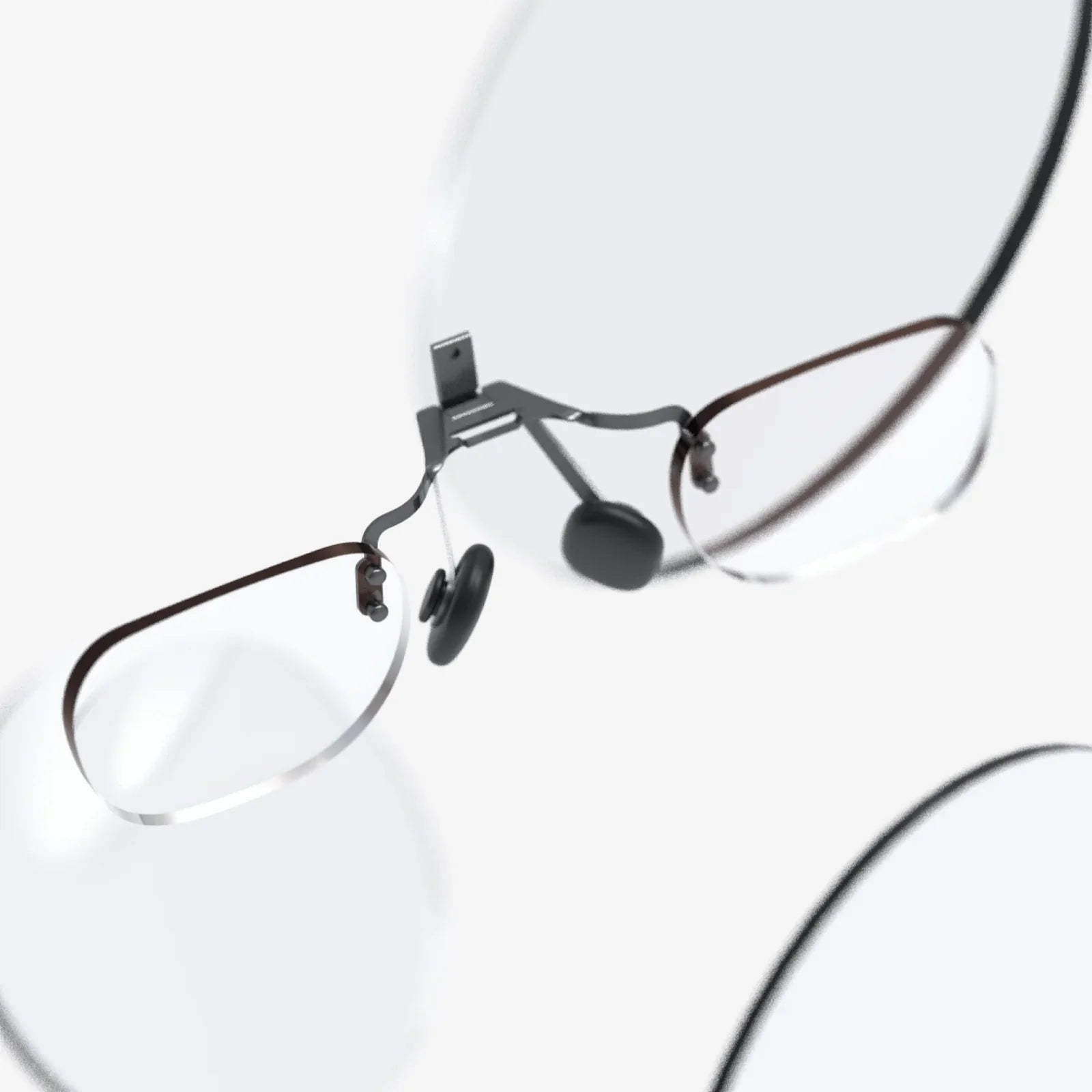
Imagine a world where the digital and the physical are not just connected, but indistinguishable, where high-fidelity holograms inhabit your living room with such stunning clarity that you reach out to touch them, and where the information you need to navigate, learn, or repair something is painted onto reality itself with breathtaking precision. This is no longer the stuff of science fiction; it is the imminent future being unlocked by the powerful convergence of Augmented Reality and 4K resolution display technology. This fusion is poised to revolutionize every facet of our lives, from how we work and play to how we connect with the world around us, by finally delivering the visual fidelity required for truly seamless immersion.
The Foundation: Understanding the Synergy
To appreciate the transformative potential of 4K in Augmented Reality, one must first understand the components individually and then grasp the powerful synergy they create.
What is Augmented Reality, Truly?
At its core, Augmented Reality (AR) is a technology that superimposes computer-generated perceptual information—be it images, sounds, or haptic feedback—onto the user's view of the real world. Unlike Virtual Reality (VR), which creates a completely artificial environment, AR enhances the existing reality, allowing digital content to interact with the physical environment in real-time. The goal has always been to make this digital overlay so convincing and contextually relevant that the user accepts it as part of their natural surroundings. Early AR experiences, often viewed through smartphone screens or low-resolution headsets, were groundbreaking but ultimately limited. The digital objects frequently appeared pixelated, unstable, and visually disconnected from their real-world setting, breaking the fragile illusion of immersion. The "magic" was often spoiled by technological constraints.
The 4K Resolution Standard
4K resolution, also known as Ultra High Definition (UHD), refers to a horizontal display resolution of approximately 4,000 pixels. The standard consumer 4K specification is 3840 x 2160 pixels, which offers four times the total pixel count of the previous Full HD (1080p) standard. This massive increase in pixel density is the key to its clarity. On a television or monitor, 4K eliminates the visible pixel structure, creating incredibly sharp, detailed, and lifelike images. When this level of detail is applied to a display technology that sits mere centimeters from the user's eyes, such as AR glasses, the effect is nothing short of revolutionary. It means that the digital text, textures, and three-dimensional models overlaid onto the world are rendered with a crispness that matches or even exceeds human visual acuity.
The Critical Synergy
The marriage of AR and 4K is not merely an incremental upgrade; it is a fundamental enabler. High-resolution display solves the single greatest visual barrier to widespread AR adoption: the screen-door effect and a lack of visual fidelity. The screen-door effect, where users can see fine lines between pixels, is completely eradicated by 4K density. This allows digital objects to possess intricate textures, subtle gradients, and fine edges that anchor them convincingly in the real world. A 4K AR display can render text so sharp it appears printed on a physical surface, and a digital sculpture can show every intended groove and detail. This unprecedented clarity is the final piece of the puzzle for achieving true perceptual fusion, where the brain stops distinguishing between what is real and what is digitally augmented.
Technical Challenges and Breakthroughs
Delivering a 4K AR experience is a monumental engineering challenge that extends far beyond simply installing high-resolution micro-displays into a headset.
The Processing Power Dilemma
Rendering complex 3D graphics at a stable 60 frames per second (or higher) for two eyes at 4K resolution requires immense computational power. It is a task that can bring even high-end desktop graphics processing units to their knees. For untethered, wearable AR devices, this creates a critical conflict between performance, heat generation, and battery life. Engineers are tackling this through a combination of advanced chip design, cloud streaming, and sophisticated rendering techniques. Dedicated AR processors with onboard AI accelerators are being developed to handle the specific workloads of spatial computing and high-resolution passthrough video efficiently. Furthermore, techniques like foveated rendering—which uses eye-tracking to render only the user's central focal point in full 4K detail while reducing the resolution in the peripheral vision—dramatically reduce the processing load without any perceptible loss in quality.
Optical Systems and Waveguides
Getting a 4K image from a tiny micro-display into the user's eye is a feat of physics. Traditional optical systems are bulky and cannot deliver the required field of view and clarity. The industry standard is moving towards advanced waveguide technology. These are thin, transparent glass or plastic substrates that use diffraction gratings to bend and direct light from the projectors into the eye. Developing waveguides that can efficiently transmit a full 4K signal without introducing artifacts, color distortion, or a narrow field of view is one of the most significant hurdles. New materials and nanofabrication techniques are enabling multilayer waveguides that can handle different colors and the increased data density of 4K, all while keeping the form factor of the glasses sleek and socially acceptable.
Latency and Tracking
For immersion to hold, the digital overlay must be perfectly locked to the physical world. Any lag or jitter between the user's head movement and the movement of the digital content causes discomfort and breaks the illusion. 4K exacerbates this challenge because any misalignment is even more visible due to the heightened clarity. This demands incredibly fast and precise inside-out tracking systems that use a combination of cameras, inertial measurement units (IMUs), and LiDAR scanners to understand the environment and the user's position within it dozens of times per second. The entire pipeline—from tracking to rendering to display—must operate with milliseconds of latency to create a comfortable and convincing experience.
Transformative Applications Across Industries
The impact of 4K AR will be felt far beyond gaming and entertainment. Its clarity makes it a serious tool for enterprise, science, and medicine.
Precision in Medicine and Surgery
In the medical field, margin for error is zero. 4K AR can overlay a patient's CT or MRI scans directly onto their body during surgical planning or in the operating room. With 4K clarity, a surgeon can see beneath the skin with astonishing detail, identifying tumors, blood vessels, and critical structures with a precision previously impossible. They can navigate complex procedures with guided visual cues, reducing risk and improving outcomes. Medical students can practice on hyper-realistic 4K holographic models, dissecting virtual anatomy that displays every nerve and muscle fiber in perfect detail, revolutionizing medical education.
Revolutionizing Enterprise and Manufacturing
On the factory floor, technicians wearing 4K AR glasses can see schematics, instructions, and animated repair guides overlaid directly onto the complex machinery they are servicing. The clarity of 4K means that even the smallest serial number, the most intricate wiring diagram, or a subtle animation showing the torque required for a bolt is perfectly legible and visually integrated. Designers and architects can collaborate around a full-scale 4K holographic model of a new product or building, examining materials and finishes in detail and making changes in real-time, saving millions in prototyping costs and accelerating time to market.
The Future of Entertainment and Social Connection
Entertainment will be utterly transformed. Imagine watching a live sports game with real-time stats and player information hovering over the action, all in crystal-clear 4K. Or transforming your living room into a virtual cinema with a screen that appears as sharp and vivid as the best commercial theater. Social interactions will become deeply immersive. Instead of flat video calls, you could share a virtual space with a photorealistic 3D avatar of a friend or family member, rendered in 4K, making it feel as if they are truly present with you, capable of making eye contact and sharing expressions with lifelike fidelity.
Enhancing Education and Cultural Preservation
Education will shift from passive learning to active exploration. History students won't just read about ancient Rome; they will walk through a meticulously reconstructed 4K holographic forum, examining architecture and daily life in stunning detail. Biology students will interact with life-sized, beating 4K hearts. Furthermore, cultural heritage sites eroding from time and climate change can be preserved as perfect digital twins. Through 4K AR, anyone could visit these sites and experience them in their original glory, with every crack in the stone and hue in the painting faithfully reproduced.
The Road Ahead: Towards a Hyper-Realistic Future
The journey towards ubiquitous 4K Augmented Reality is still in its early chapters. The current focus is on overcoming the hardware challenges to create devices that are powerful, affordable, and comfortable enough for all-day wear. The next evolution will likely involve even higher resolutions, such as 8K, and the integration of other senses like touch and smell for full multimodal immersion. As 5G and eventual 6G networks provide the high-bandwidth, low-latency connectivity required for cloud-based rendering, the processing burden will shift away from the device itself, enabling even more stunning and complex experiences. The line between the digital and the physical will not just blur; it will dissolve, creating a new layer of reality enriched with information, beauty, and connection.
We stand on the precipice of a new visual era, where the once-clear boundary between our digital creations and our physical reality is about to vanish forever. The combination of Augmented Reality and 4K resolution is the key that unlocks this door, promising a world not of distracting graphics, but of enhanced understanding, effortless productivity, and magical experiences woven directly into the fabric of our everyday lives. The future will not be viewed on a screen; it will be seen through one, with a clarity that makes the digital world finally feel real.
Share:
Which Definition Best Fits Augmented Reality: A Deep Dive into Digital Overlays
How to Set Up Augmented Reality: A Comprehensive Guide for Developers and Creators