


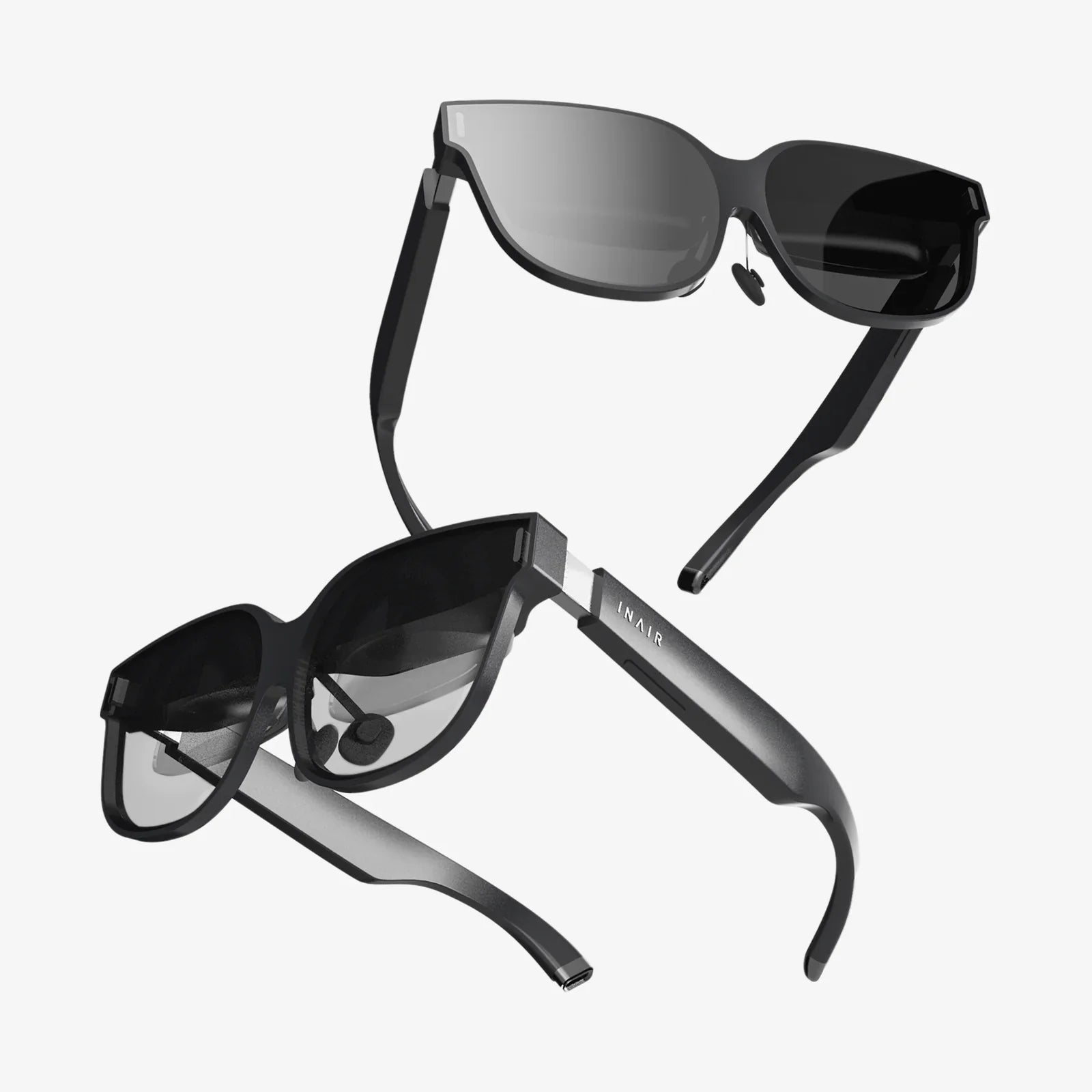
Imagine a world where the digital and the physical are no longer separate realms, viewed through the awkward lens of a smartphone screen or a clunky headset. Instead, information simply exists where it is most useful, hovering over a malfunctioning machine to guide a repair, annotating a patient’s anatomy during a delicate surgery, or translating a street sign the moment you look at it. This isn't science fiction; it's the promise of White AR, a technological philosophy that prioritizes subtlety, context, and human-centric design to create an invisible interface between us and the data we need. This revolution is quietly brewing, poised to change everything from how we work and learn to how we connect with the world around us, and it all starts with stripping away the noise to focus on what truly matters: seamless enhancement.
Defining the Spectrum: From Black AR to White AR
To understand White AR, it's first crucial to recognize its antithesis, often referred to in industry parlance as "Black AR." This is the augmented reality most people are familiar with—the kind that dominates the user's field of view with opaque, often garish digital overlays. Think of popular social media filters that plaster cartoonish dog ears and rainbows across your face, or early-generation navigation apps that superimposed blocky, obstructive arrows onto the live street view. Black AR is characterized by its high opacity, high contrast, and blatant artificiality. It doesn't try to blend in; it seeks to dominate the visual experience.
White AR, in stark contrast, is defined by its ethos of minimalism and integration. The "white" does not refer to the color, but to the concept of negative space—of allowing the real world to remain the primary focus. The digital augmentations in a White AR system are subtle, transparent, and contextually aware. They provide information without obstruction, guide without commanding, and enhance without distracting. Key characteristics include:
- Low Opacity and High Transparency: Information appears as a faint overlay, like a ghost image or a semi-transparent hint, ensuring the user never loses sight of their physical environment.
- Contextual Relevance: Data only appears when and where it is needed. A mechanic doesn't see a full engine schematic at all times; it only materializes when they look at a specific component.
- Minimalist Design: Visual elements are clean, simple, and devoid of unnecessary UI clutter. Think simple lines, subtle highlights, and concise text labels.
- User Control: The experience is often user-driven, with information expanding in detail only upon a specific gaze, gesture, or voice command.
This shift from a dominating digital layer (Black AR) to a supportive digital whisper (White AR) represents a maturation of the technology, moving from spectacle to tool.
The Technological Pillars Enabling the White AR Vision
The seamless experience of White AR is not possible without significant advancements across several fields of technology. It is the convergence of these pillars that makes the invisible interface a reality.
Spatial Mapping and Computer Vision
At the heart of any AR system is its ability to understand the world. Advanced algorithms now allow devices to not just see a room but to comprehend it. They can create a precise 3D mesh of the environment in real-time, identifying surfaces, edges, objects, and their spatial relationships. This is what allows a digital annotation to stick perfectly to a real-world object even as the user moves their head. For White AR, this mapping must be incredibly precise to ensure digital elements feel truly anchored in reality, not floating arbitrarily.
Advanced Display Optics: Waveguides and Beyond
How do you project a digital image that appears to be part of the real world? Early headsets used simple projection or screens that were easily visible. The leap toward White AR is being powered by sophisticated optics like waveguides and holographic lenses. These technologies pipe light into the user's eye, allowing digital images to be focused at various depths, making them appear as part of the natural landscape. The goal is to achieve a wide field of view with high resolution and brightness that can compete with natural light, all while maintaining a small, socially acceptable form factor like a standard pair of glasses.
Powerful, Efficient Processing and AI
Interpreting the world in real-time is a computationally intensive task. The miniaturization of powerful processors, often with dedicated AI cores for machine learning tasks, is crucial. These chips must handle simultaneous localization and mapping (SLAM), object recognition, and rendering complex graphics, all without overheating or draining a small battery quickly. Artificial Intelligence, particularly machine learning models, is the brain that gives White AR its contextual intelligence. It's the AI that recognizes a specific machine part, understands a user's intent from their gaze, and retrieves the correct information to display.
Transforming Industries: The Practical Applications of White AR
While consumer entertainment often grabs headlines, the most profound immediate impact of White AR is happening in enterprise and specialized fields.
Precision Medicine and Surgery
In the operating room, precision is everything. White AR is revolutionizing surgical planning and execution. Surgeons can now don headsets that overlay a patient's CAT or MRI scans directly onto their body during a procedure. A faint, transparent outline of a tumor, a major blood vessel, or a precise incision path can be projected onto the patient, acting as a GPS for the human body. This reduces the need to look away at secondary screens, minimizes risk, and shortens operation times. Medical students can also use White AR to practice procedures on realistic holographic patients, receiving subtle visual feedback on their technique.
Industrial Manufacturing and Maintenance
Complex assembly and repair tasks are being demystified. A factory worker wearing White AR glasses can see digital work instructions superimposed directly onto the assembly line. A numbered arrow might point to the exact bolt that needs tightening next, or a warning highlight might appear over a potentially miswired component. For field technicians, this is even more powerful. When repairing a complex piece of machinery, the technician can see internal parts made visible, with animated instructions guiding each step. This drastically reduces errors, training time, and downtime for expensive equipment.
Architecture, Engineering, and Construction (AEC)
The ability to visualize a 3D model at a 1:1 scale on the actual building site is a game-changer. Architects and clients can walk through a life-size, transparent hologram of a building before a single foundation is poured, making design changes in real-time. On the construction site, workers can see where hidden conduits, pipes, and structural beams are located within walls, preventing costly mistakes and rework. The digital blueprint becomes a living, breathing layer atop the physical world.
The Human Factor: Design Philosophy and Social Acceptance
The success of White AR hinges entirely on its adoption by people, and this requires a thoughtful approach to design and social integration.
The Imperative of Human-Centered Design
White AR is not just a technical challenge; it is a design challenge. The interface must be intuitive and require minimal conscious effort to use. Designers must adhere to principles of minimalism, ensuring that every digital element serves a clear purpose. Information hierarchy is critical—the most important data should be the most prominent, while secondary information remains available but out of the way. The system must be predictable and reliable; a flickering or misaligned overlay is not just an annoyance, it can break the illusion of integration and render the tool useless or even dangerous.
Navigating the Social Hurdle
The specter of Google Glass's failure looms large, primarily due to its poor social reception. People were uncomfortable being recorded and the device was seen as obtrusive and dystopian. White AR learns from this. The form factor must trend toward normalcy—looking like ordinary eyeglasses. Furthermore, the principle of White AR includes social cues. A subtle, dimmable LED light could indicate to others when the device is recording, and the design should prioritize shared experiences, allowing multiple users to see and interact with the same digital objects, fostering collaboration rather than isolation.
Gazing into the Crystal Ball: The Future Shaped by White AR
As the technology continues to mature, the line between the digital and physical will blur into irrelevance. We are moving toward a world where accessing information will be as natural as looking and speaking.
The ultimate endpoint of White AR is the concept of the "Mirrorworld" or the "Spatial Web"—a one-to-one digital twin of our entire reality, constantly updated with real-time data. In this future, every place, object, and person could have a digital history and capabilities accessible through a White AR interface. You could walk through a city and see its history layered over its present, with reviews hovering over restaurants and public transit schedules pinned to bus stops. This persistent digital layer will become a new utility, as essential as the electricity grid or the internet itself.
This future will be built on a foundation of incredibly powerful, miniaturized, and power-efficient hardware, paired with AI that understands our needs almost before we do. The devices themselves will fade into the background, becoming an unnoticeable part of our daily wear, and the interactions will become more natural, moving beyond gestures to brain-computer interfaces that allow us to control the digital layer with a thought.
The path forward is not without its challenges, from significant technical hurdles in display and battery technology to profound ethical questions about data privacy, digital addiction, and the very nature of reality and human attention. Regulating this new digital-physical hybrid space will require careful thought and proactive policy-making.
The age of staring down at a handheld rectangle is drawing to a close. White AR is quietly building the next great platform, not as a flashy destination to escape to, but as an intelligent, almost imperceptible layer that enhances our own world. It promises a future where technology doesn't demand our attention but earns it, providing wisdom exactly when and where we need it, leaving us free to look up and engage more deeply with the reality—both physical and augmented—that surrounds us.
Share:
How to Keep VR Goggles From Fogging Up - The Ultimate Anti-Fog Guide
Intelligent Electronic Devices Market: A Deep Dive into the Connected Future