


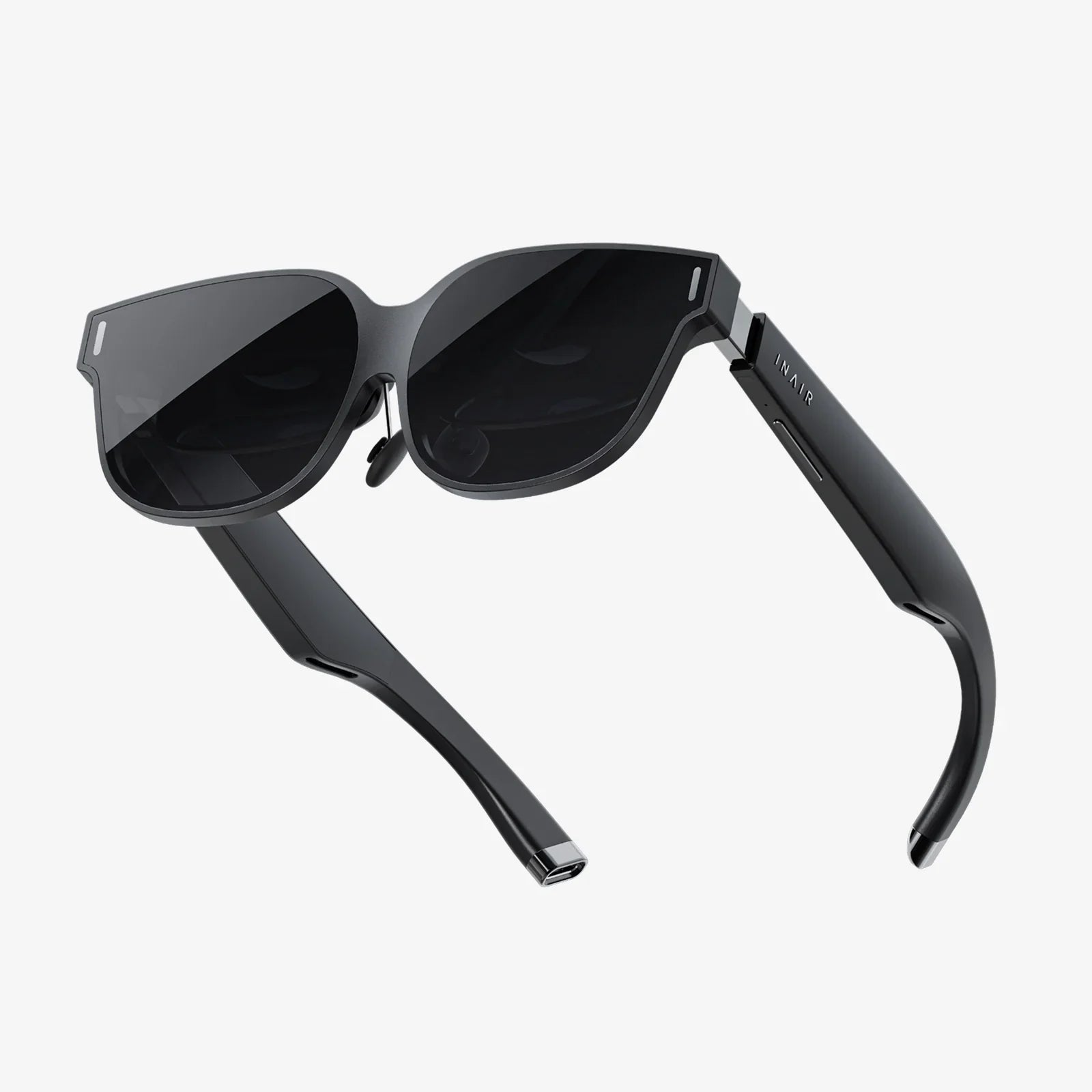
Have you ever held up your phone to see a digital dinosaur stomping through your local park or used a navigation app that paints directions onto the street in front of you? These modern marvels of augmented reality (AR) feel like magic, but they are the culmination of a technological quest that began not with a smartphone, but with a clunky head-mounted display in a university laboratory. The question of who created the first augmented reality system is not a simple one; it’s a fascinating puzzle that involves a spectrum of inventors, each adding a critical piece to the foundational technology we use today. The answer is less about a single eureka moment and more about a series of interconnected breakthroughs spanning over half a century.
The Philosophical and Fictional Precursors
Long before the technology existed to realize it, the concept of augmenting our reality with machine-generated information had already captured the human imagination. In 1901, L. Frank Baum, the author of The Wonderful Wizard of Oz, wrote a series of short stories featuring a character called The Master Key. In these tales, a young boy is given a pair of enchanted spectacles that could reveal hidden markers on people, indicating their character traits—whether they were evil, kind, wise, or a fool. This was a primitive, magical form of augmented reality, overlaying data onto a person's perception of the world. Science fiction continued to explore this theme, most notably in the 1980s with William Gibson's Neuromancer and other cyberpunk works that envisioned data constantly streaming across the visual field of enhanced individuals. These ideas, while fictional, provided a crucial blueprint and a cultural appetite for the technologists who would later try to build the real thing.
The Sensorama: A Multisensory Prelude
Any discussion of immersive technology must include the work of Morton Heilig, a cinematographer and inventor often called the "Father of Virtual Reality." In 1962, he created the Sensorama, a large mechanical cabinet into which a single user would sit. It was designed to stimulate all the senses, not just sight and sound. It featured stereo speakers, a stereoscopic 3D display, fans to simulate wind, smell generators, and a vibrating chair. While filming a short movie specifically for the device, Heilig mounted a camera to the front of a motorcycle and rode through Brooklyn, capturing the bumps, sounds, and smells of the journey. The Sensorama was not true AR, as it presented a completely mediated, pre-filmed reality rather than overlaying information onto the user's live environment. However, its philosophy was directly aligned with AR's core goal: to use technology to enhance a human experience by blending the real and the artificial. Heilig's passion for experiential technology laid crucial groundwork, proving that the pursuit of enhanced reality was a viable, if ambitious, engineering challenge.
The Ultimate Display: Ivan Sutherland's Revolutionary Vision
The true genesis of both virtual and augmented reality as we understand them today began with the work of computer scientist Ivan Sutherland. In 1965, he published a seminal essay titled "The Ultimate Display." In it, he envisioned a future where a computer could control the existence of matter, creating a world within which a user could interact. He famously wrote, "The ultimate display would, of course, be a room within which the computer can control the existence of matter. A chair displayed in such a room would be good enough to sit in. Handcuffs displayed in such a room would be confining, and a bullet displayed in such a room would be fatal." This concept of an immersive, interactive digital world was the philosophical catalyst for everything that followed.
The Sword of Damocles: The First Head-Mounted Display
By 1968, with the help of his student Bob Sproull, Sutherland turned his vision into a terrifying, magnificent reality. They created the first head-mounted display (HMD) system. This device is universally acknowledged as the first true step into both VR and AR. The system was nicknamed "The Sword of Damocles" for good reason: the headset was so heavy it had to be suspended from the ceiling with a mechanical arm, literally looming over the user's head like the fabled sword.
But what did it do? The system did not use a camera to see the real world. Instead, it employed a combination of ultrasonic and mechanical tracking to align simple, computer-generated wireframe graphics—floating cubes, 3D line drawings—with the user's physical perspective. When the user moved their head, the graphics would change perspective accordingly, creating the illusion that these simple virtual objects existed in the real space of the room. This was the birth of see-through, augmented reality. The user's reality was their empty laboratory; the augmentation was the virtual cube hovering in the center of it. Sutherland and Sproull had created the fundamental technology that made AR possible: a head-tracked, see-through HMD that merged digital information with a user's perception of real space.
Defining the Term and the Modern Framework
While Sutherland created the hardware prototype, the term "Augmented Reality" itself had not yet been coined. That credit goes to another pivotal figure: Thomas P. Caudell. In 1990, Caudell, a researcher at a large aerospace company, was working on a project to simplify the complex process of assembling aircraft. The existing method involved using large, full-scale physical diagrams and molds, which were expensive and inflexible. Caudell and his colleague David Mizell proposed a revolutionary alternative: a head-mounted display that would project digital, animated wiring diagrams and instructions directly onto the specific locations where workers needed to assemble the aircraft. In his notes, he needed a term to describe this concept of digitally augmenting the real-world view of the worker. He called it "Augmented Reality." This was the first documented use of the term to describe the technology we know today. Caudell and Mizell's work was crucial because it moved AR from a university lab demo into a practical, industrial application, defining its core value proposition.
The Software Foundation: The First Functional AR Framework
Hardware and a name are critical, but a system requires software to function. The first truly functional, real-time augmented reality system is widely credited to the work of Louis Rosenberg in 1992. While working for the U.S. Air Force, Rosenberg created Virtual Fixtures. This was not a see-through system like Sutherland's. Instead, it used an exoskeletal robotic arm and a head-mounted display that showed a live video feed of the real world. Into this video feed, the system could render virtual objects, known as "fixtures," that a user could interact with. The primary application was to guide and enhance human performance in complex manual tasks. For example, a user might be asked to insert a peg into a hole, and a virtual guide would appear in their display, helping them align their movements with superhuman precision. Rosenberg's system was the first to demonstrate complex overlays that interacted with the real world in real-time, the first to prove significant human performance increases using AR, and the first full AR system to be used in a practical setting. It was a complete, functional AR system as we would define it now.
So, Who Was the True Creator?
The journey to answer "who created the first augmented reality system?" reveals that creation is a process, not a single act. If we define the system by its core component—the head-mounted, tracked display—then Ivan Sutherland and Bob Sproull are the undeniable parents of the technology with their 1968 "Sword of Damocles." They built the primordial device that proved the concept was possible.
If we require the coining of the modern term, then Thomas P. Caudell takes that honor in 1990, giving the technology its identity and a clear industrial purpose.
And if we are looking for the first complete, functional, and practical AR system that integrated all the components we recognize today, then Louis Rosenberg's 1992 "Virtual Fixtures" platform stands as a monumental milestone. It was the first system to fully realize the potential of AR as an interactive tool.
Each of these pioneers, from the fictional visions of Baum to the mechanical immersion of Heilig, and finally to the digital breakthroughs of Sutherland, Caudell, and Rosenberg, contributed an essential chapter to the story. They were not working in isolation but were building upon the ideas and failures of those who came before, a tradition that continues in AR labs and startups today.
The magic of seeing a digital creature in your living room is the result of a 60-year relay race of innovation. It started with a sword hanging from a ceiling, a vision of making the invisible visible, and a relentless drive to enhance our human experience through the power of the computer. The next time your world is augmented, remember the weight of the Sword of Damocles and the long line of dreamers who made that lightweight magic possible.
Share:
What Are the Features of Augmented Reality - A Deep Dive Into Its Core Capabilities
Where Is Augmented Reality Being Used: The Ultimate Guide to AR's Impact Across Industries