


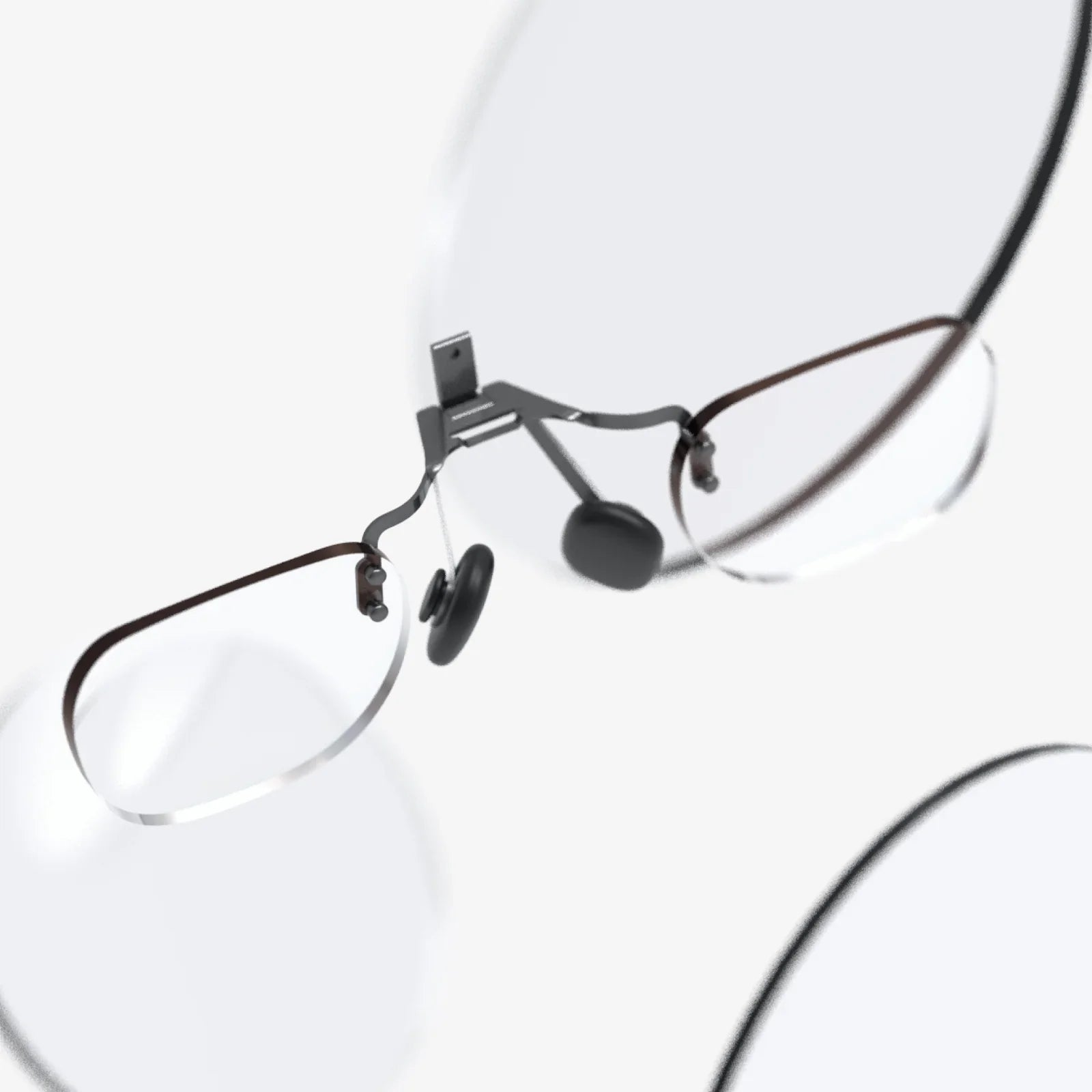
The sleek, futuristic frames perched on a face, projecting a hidden world of data onto the lenses—this is the enduring promise of smart glasses. For years, they have captured the public imagination, symbolizing the pinnacle of wearable technology. But when a consumer picks up a pair of 'Vital Smart Glasses' or any other brand, the question rarely asked is: who truly is the maker? The answer is not a single company name etched on the frame. It is a complex, interconnected web of technological titans, specialized manufacturers, software architects, and visionary designers, all collaborating to turn science fiction into a functional reality. Unraveling this web reveals the fascinating and multifaceted ecosystem responsible for bringing these advanced devices to your eyes.
The Illusion of a Single Maker: Beyond the Brand Name
In the traditional consumer goods market, the name on the product typically signifies the company that designed, engineered, and manufactured it. A smartphone might be designed in one location and assembled in another, but the brand owner maintains tight control over the entire process. Smart glasses shatter this model. The extreme miniaturization of components, the integration of cutting-edge optics, and the development of novel human-computer interfaces demand a level of specialization that no single entity can master alone. The company whose brand is on the temple piece is often the 'system integrator' or the 'original design manufacturer' (ODM). They are the architects who source the best-in-class components, define the user experience, and write the software that brings the hardware to life. They are the face of the product, but the brain, nerves, and senses come from a diverse consortium of experts.
The Titans of Tech: Providing the Foundational Brains
At the core of most smart glasses lies a processing unit, and for this, many brands turn to established giants in the semiconductor industry. These companies don't sell finished glasses, but they provide the system-on-chips (SoCs) that are the computational heart of the device. These chips are marvels of engineering, packing a central processing unit (CPU), graphics processing unit (GPU), image signal processor (ISP), and often a dedicated AI accelerator into a package smaller than a fingernail. This integration is crucial for handling the immense tasks of overlaying digital information onto the real world, processing camera feeds for augmented reality, and understanding voice commands, all while sipping battery power to ensure all-day wearability. The choice of SoC dictates much of the device's performance, power efficiency, and capability, making these silicon giants silent but fundamental partners in the creation of any pair of smart glasses.
The Optical Magicians: Crafting the Windows to a Digital World
If the SoC is the brain, then the optical system is the soul of smart glasses. This is where the magic of augmented reality truly happens. Creating a bright, clear, and immersive digital display that floats in front of the user's field of view, all within the constraints of a standard eyeglass form factor, is perhaps the greatest technical challenge. Specialized optical technology companies are the true makers of this experience. They develop the waveguides, micro-LED arrays, and laser beam scanning systems that project images onto the lenses. Some companies specialize in diffractive waveguides, which use microscopic gratings to bend light into the eye. Others champion reflective waveguides or holographic techniques. These firms often operate behind the scenes, licensing their proprietary technology to integrators. Their innovations determine critical factors like the field of view, brightness, resolution, and ultimately, whether the digital overlay feels like a natural part of the world or a distracting ghost image.
The Hardware Ecosystem: Sensors, Batteries, and Cameras
A smart glasses platform is a symphony of miniaturized components, each playing a critical role. Invisible to the user are a suite of sophisticated sensors that make contextual awareness possible. Inertial Measurement Units (IMUs), including accelerometers and gyroscopes, track head movement with incredible precision. Magnetometers act as a digital compass. For more advanced spatial mapping, time-of-flight (ToF) sensors or specialized depth cameras scan the environment to understand the geometry of the room, allowing digital objects to occlude behind real-world furniture. The miniature cameras that enable first-person perspective photography and video are feats of engineering in themselves. Furthermore, the battery technology, often custom-shaped to fit into the arms of the glasses, represents a significant partnership with advanced battery firms. Each of these components is sourced from a leader in its specific field, assembled into a cohesive whole by the integrator.
The Software Architects: Building the Digital Experience
Hardware is nothing without software. The operating system is the personality of the device, governing everything from the user interface to developer accessibility. Some brands opt for a heavily forked version of a mobile operating system, tailoring it for a hands-free, glanceable experience. Others build proprietary, lightweight OSes from the ground up specifically for the constraints of wearable optics. This software layer is responsible for low-latency sensor fusion, combining data from all the sensors to understand exactly where the user is looking and how they are moving. It manages the power-hungry components to optimize battery life. Crucially, it also provides the software development kit (SDK) that allows third-party developers to create applications, from navigation and fitness to enterprise repair manuals and remote assistance tools. The creation of this software ecosystem is a monumental task that often defines the success or failure of a product more than the hardware itself.
The Manufacturing Partners: Bringing the Design to Life
Once the design is finalized and the components are sourced, the physical assembly of smart glasses is a task for world-class manufacturing partners, often located in regions with deep expertise in consumer electronics production. These factories are not simple assembly lines; they are equipped with clean rooms and precision tooling required to align nano-scale optical components with micron-level accuracy. They handle the complex process of injecting plastic or metal around delicate electronics, ensuring structural integrity without damaging the fragile internals. They also manage the global supply chain, procuring all the individual components and bringing them together for final assembly, testing, and quality assurance. The choice of manufacturing partner is critical, as they must balance high precision with the ability to scale production to meet market demand.
The Open-Source Revolution: A Community of Makers
Beyond the corporate world, a vibrant community of open-source developers and hardware hackers are also answering the question of 'who makes vital smart glasses.' Utilizing development boards, open-source software libraries for computer vision, and off-the-shelf components like miniature displays from consumer electronics, these innovators are building functional prototypes and niche products. While their creations may lack the polish of a commercial product, they serve as vital incubators for novel ideas and applications. They demonstrate a democratization of the technology, proving that the 'maker' can be an individual or a small team passionate about the potential of augmented vision. Their contributions to open-source software often feed back into the broader ecosystem, pushing the entire industry forward.
The Future of Creation: Emerging Trends and Technologies
The ecosystem of 'who makes' smart glasses is not static; it is constantly evolving. We are seeing the emergence of new optical technologies like metasurfaces that could eventually replace bulkier waveguide systems. Developments in micro-LED production promise displays that are brighter and more efficient. Furthermore, the industry is grappling with and innovating around significant challenges. Privacy concerns regarding always-on cameras are being addressed through hardware solutions like physical shutter switches and indicator lights. Battery life remains a holy grail, with research into alternative energy sources like solar charging integrated into the frames or kinetic energy harvesting from movement. Each breakthrough from a specialized research lab or a materials science company will introduce new players into the manufacturing chain, further diversifying the answer to our central question.
Beyond Consumer Faces: The Enterprise Engine
It is also crucial to understand that the primary market driving innovation and volume for smart glasses is not the consumer space, but enterprise and industrial applications. In factories, warehouses, and field service operations, smart glasses are proving their value by providing workers with hands-free access to information, remote expert guidance, and step-by-step digital instructions overlaid on machinery. This enterprise focus significantly influences 'who makes' them. The requirements are different: durability, long battery life, and specific software applications for workflow management take precedence over sleek consumer design. This has led to a segment of the market dominated by specialized enterprise technology firms who develop ruggedized devices and the sophisticated software platforms that power them, often partnering with large industrial companies to create tailored solutions.
So, the next time you see or consider a pair of smart glasses, see them not as a product from a single company, but as a nexus of human ingenuity. They are a physical manifestation of global collaboration, where expertise in optics, silicon, software, sensors, and manufacturing converge into a device that fits on your face. The question 'who makes vital smart glasses' has a beautiful, complex answer: everyone and no one. It is the entire technological ecosystem, constantly evolving and striving, that is truly responsible for building the future, one pair of glasses at a time. This collaborative spirit is what will finally deliver the seamless, powerful, and intuitive augmented reality experience we've long been promised.
Share:
Viture Smart Glasses Specs: A Deep Dive into the Future of Wearable Display Technology
AR Technology: Bridging Our Digital and Physical Realities