


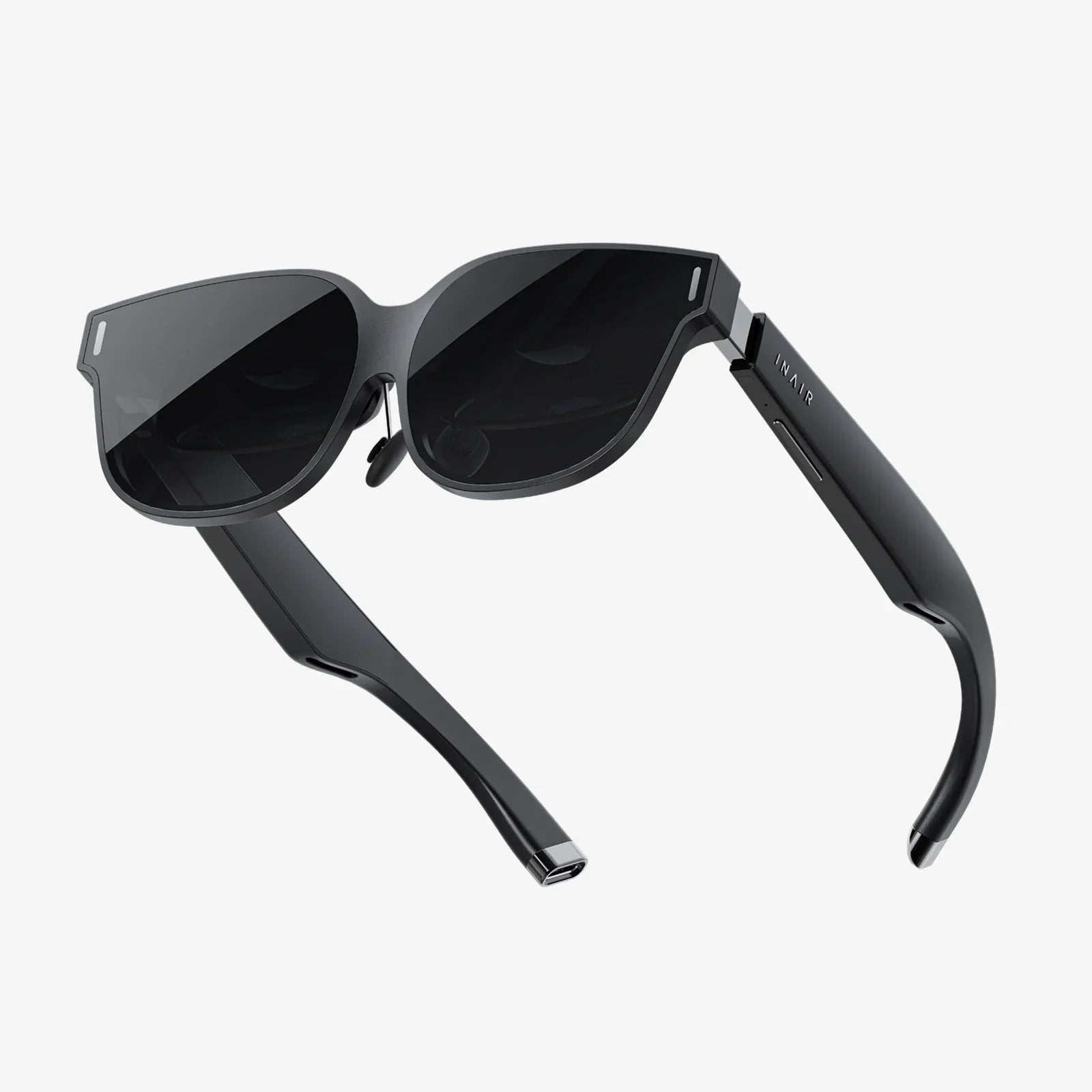
Imagine a world where the only limit is your imagination, where you can climb Everest before breakfast, attend a concert on Mars in the afternoon, and sit face-to-face with a historical figure in the evening. This is not a distant sci-fi fantasy; it is the burgeoning promise of Virtual Reality, a technology that is rapidly moving from niche novelty to mainstream desire. The question isn't just about what VR can do, but why we, as humans, are so intrinsically drawn to it. The allure is deeper than high-resolution displays and sophisticated headsets; it taps into fundamental aspects of human psychology, our yearning for more, and our eternal quest to push beyond the boundaries of our physical reality.
The Primal Urge for Escape and Transformation
At its core, one of the most powerful drivers behind the desire for Virtual Reality is the ancient human need for escape. Life, for all its beauty, is often punctuated by stress, monotony, and limitation. VR offers a portal—a guaranteed exit from the daily grind. This isn't about mere avoidance; it's about active transformation. It allows an individual to shed their everyday identity and, for a time, become someone else entirely: a hero, an artist, an explorer, or simply a version of themselves unshackled by physical or social constraints.
This transformative power is rooted in the concept of presence, the psychological state where the user's subjective experience is of being in a place other than their true physical location. When presence is achieved, the brain, to a significant degree, accepts the virtual world as real. The chair in your living room vanishes, replaced by the edge of a virtual canyon. This neurological trickery is what separates VR from every other medium that came before it. A movie can show you a canyon; a book can describe it beautifully. But only VR can make you feel, on a visceral level, that you are truly standing on its edge, your heart pounding with a mix of fear and awe. This is escapism evolved from passive observation to active participation, fulfilling a deep-seated craving for experiences that are otherwise impossible, impractical, or prohibitively expensive.
The Deepening of Human Connection
Paradoxically, a technology often criticized for isolating individuals also holds immense potential to connect us in profoundly new ways. Traditional digital communication—text messages, video calls—are efficient but inherently flat. They transmit data, not presence. You see a person on a screen, but you don't feel like you are in the same room with them.
Virtual Reality promises to bridge that emotional gap through social presence. In a shared virtual space, avatars allow for non-verbal communication—a nod, a gesture, a step back, shared eye contact—that forms the bedrock of human interaction. Imagine a family scattered across continents not just seeing each other on a grid of screens, but sharing a virtual living room, playing a board game together around a single table, or touring a museum exhibit side-by-side. The desire for VR is, in part, a desire to collapse the vast distances between us, to create a sense of shared space and togetherness that current technology cannot provide. It is the yearning to not just hear a loved one's voice, but to feel their presence.
The Unquenchable Thirst for Knowledge and Experience
Humanity is built on a foundation of curiosity. We have an innate drive to learn, to understand, and to experience the world around us. Virtual Reality is arguably the most powerful empathy and education machine ever conceived. It transforms learning from a passive activity into an active, embodied experience.
This is known as experiential learning. Instead of reading about the Roman Empire, students can walk through a faithfully reconstructed Forum. Instead of watching a documentary on marine biology, they can descend into the depths in a submersible and come face-to-face with a whale. Medical students can practice complex procedures on virtual patients without risk. Architects can walk clients through unbuilt designs at a 1:1 scale. The desire for VR is fueled by this potential to democratize experience. It makes the inaccessible accessible, allowing anyone to gain a first-person perspective on history, science, culture, and complex social issues in a way that fosters deeper understanding and retention than any textbook or lecture ever could.
Revolutionizing Industries and Enhancing Capabilities
Beyond personal desire, the push for Virtual Reality is massively accelerated by its transformative potential across professional fields. The value proposition is too significant to ignore. In enterprise and industry, VR is not a want; it is a rapidly growing need for efficiency, safety, and innovation.
- Design and Prototyping: Automotive and aerospace engineers use VR to prototype and test new vehicle designs in a collaborative virtual environment long before a physical model is built, saving millions of dollars and countless hours.
- Training and Simulation: From surgeons rehearsing operations to firefighters training for dangerous scenarios, VR provides a safe, controlled, and repeatable environment to practice high-stakes skills. The muscle memory and cognitive pathways developed in VR translate directly to the real world.
- Remote Work and Collaboration: The concept of the metaverse for business envisions virtual offices where teams from around the globe can collaborate on 3D models, data visualizations, and presentations as if they were standing in front of a physical whiteboard together.
- Therapy and Rehabilitation: VR is proving highly effective in exposure therapy for phobias and PTSD, allowing patients to confront their fears in a gradual, controlled manner. It's also used in physical rehabilitation, turning repetitive exercises into engaging games that improve patient motivation and outcomes.
This professional adoption creates a feedback loop. As the technology improves to meet these demanding use cases, it becomes more powerful, affordable, and compelling for consumers, further fueling the public's desire.
The Allure of Storytelling and Creative Expression
We are a species that tells stories. Every new medium, from the written word to cinema, has revolutionized how we tell and consume narratives. Virtual Reality represents the next great frontier for storytelling. It shifts the paradigm from telling a story to allowing someone to live inside it.
Traditional narratives have a fixed frame and a linear path. In VR, the user has agency. They can look anywhere, move around, and often interact with the environment. This creates a deeply personal and emotionally resonant connection to the narrative. Filmmakers, artists, and game developers are drawn to VR because it is the ultimate tool for creating empathy and immersion. The desire to experience these stories is a desire to be more than a spectator; it is to become a participant, to have your choices and perspective shape the experience in a unique way. Furthermore, VR empowers entirely new forms of creative expression, allowing users to paint in 3D space, sculpt with virtual clay, or compose music in an interactive environment, fulfilling a basic human need to create and share.
The Inevitable March of Technological Progress
Finally, part of the desire for Virtual Reality is simply because it is there. Humanity has a long history of pursuing technological advancement for its own sake. We are driven to build, innovate, and see what is around the next corner. VR represents a fundamental leap in how we interface with digital information, moving from looking at a world behind a window (a screen) to stepping through that window into the world itself.
This pursuit is about overcoming the last great barrier in computing: the two-dimensional display. The mouse and keyboard, and even the touchscreen, are intermediaries. VR, along with its sibling technology Augmented Reality (AR), aims to make the digital world intuitive and spatially aware, blending it seamlessly with our physical reality. The desire is for a more natural, human-centric form of computing, one that leverages our innate abilities to navigate 3D space and understand the world through our bodies and senses. It is the next logical step in a journey that began with punch cards, and its potential is so vast that it captures the imagination of innovators and early adopters alike.
The yearning for Virtual Reality is a complex tapestry woven from threads of ancient human desires and modern technological ambition. It is a tool for escape, a bridge for connection, a vessel for education, an engine for industry, a canvas for creation, and a milestone in our technological evolution. It promises not just new games or apps, but a fundamental expansion of human experience, offering a glimpse into a future where our reality is not a fixed condition, but a flexible landscape limited only by our collective imagination. This isn't just about putting on a headset; it's about stepping into a new era of human potential, and that is a future too compelling to ignore.
Share:
How Does Virtual Reality Affect Your Brain: The Neuroscience of Immersion
Business Uses of Virtual Reality: Transforming Industries from Training to Retail