


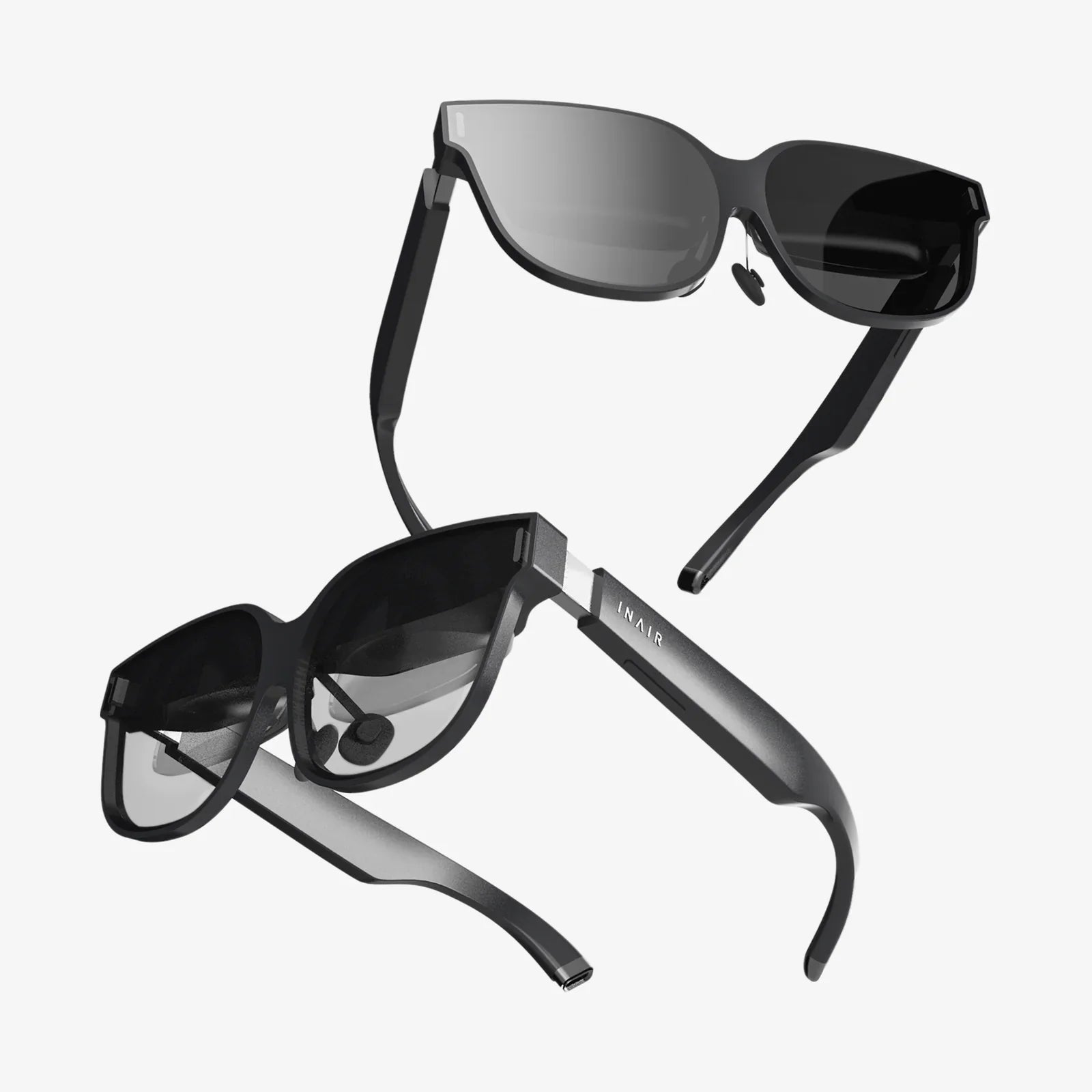
Imagine standing on the surface of Mars, your boots crunching on the rust-colored regolith as you gaze at the thin, hazy atmosphere. Now, picture yourself sitting in a classroom of the 1800s, witnessing a history lesson unfold around you. Or consider the possibility of conquering a crippling phobia from the safety of your own home. This is not the stuff of distant science fiction; it is the palpable, present-day promise of virtual reality. Once a niche fantasy, VR has rapidly evolved into a powerful medium with the potential to address some of society's most entrenched challenges, forging new paths in how we learn, heal, connect, and understand our world. Its importance stretches far beyond entertainment, seeding a revolution that is quietly reshaping the very fabric of human experience.
The Empathy Machine: Walking in Another's Shoes
Perhaps one of the most profound societal contributions of virtual reality is its unique capacity to foster empathy and human connection on an unprecedented scale. Traditional media—books, films, articles—ask us to observe and sympathize with the experiences of others. VR, by its very nature, asks us to embody and empathize. By placing an individual inside a meticulously constructed digital environment, VR can dissolve the barriers of distance, circumstance, and prejudice.
Journalists and documentarians are leveraging this power to create immersive stories that transport viewers directly into the heart of a crisis. Instead of watching a news report on the plight of refugees, a person can spend minutes in a virtual camp, hearing the stories of inhabitants and experiencing a sliver of their reality. Non-profit organizations use VR experiences to drive donations and awareness for causes by making abstract statistics painfully human and immediate. In the realm of corporate training, VR is being used to combat unconscious bias by allowing employees to experience scenarios from the perspective of a colleague of a different gender, race, or background. This first-person, visceral understanding has the potential to bridge divides, challenge preconceived notions, and build a more compassionate and interconnected global society, making empathy not just an abstract concept, but a felt experience.
Revolutionizing the Halls of Learning and Training
The educational potential of virtual reality represents a paradigm shift from passive learning to active, experiential discovery. For generations, students have learned about the human heart from textbooks and diagrams. With VR, they can don a headset and become miniaturized, traveling through the chambers of a beating heart, watching valves open and close, and understanding blood flow from the inside out. This level of immersion transforms abstract concepts into tangible, unforgettable experiences.
This application extends far beyond biology. History students can walk through ancient Rome, witnessing the construction of the Colosseum. Astronomy classes can become interstellar journeys, with students navigating the solar system. Apprentice mechanics can practice complex procedures on virtual engines, and aspiring surgeons can perform intricate operations on virtual patients, gaining invaluable muscle memory and procedural knowledge without any risk. This hands-on approach caters to diverse learning styles, increases knowledge retention, and democratizes access to experiences that would be too expensive, dangerous, or simply impossible to replicate in the real world. It equips the next generation with a deeper, more intuitive understanding of complex subjects, fundamentally changing the trajectory of education.
A New Frontier in Healthcare and Therapy
The impact of virtual reality on healthcare is nothing short of revolutionary, offering new hope and innovative treatment pathways for both mental and physical ailments. In the domain of mental health, VR-based exposure therapy has emerged as a highly effective tool for treating conditions like post-traumatic stress disorder (PTSD), anxiety disorders, and phobias. Therapists can create controlled, safe virtual environments where patients can gradually confront and process their triggers—fear of heights, fear of flying, social anxiety—allowing them to build resilience and coping mechanisms in a manageable way.
For physical rehabilitation, VR turns repetitive and often tedious exercises into engaging games and activities. Patients recovering from a stroke or a major injury can practice motor skills in a virtual world, where tasks are designed to be motivating and rewarding. This "gamification" of therapy significantly improves patient adherence and outcomes. Furthermore, VR is being used for pain management, providing immersive distractions for patients undergoing painful procedures or suffering from chronic pain. It is also a powerful tool for training medical professionals, allowing them to simulate rare surgical scenarios or practice emergency response protocols in a risk-free environment, ultimately leading to better-prepared practitioners and safer patient care.
Redefining the Workplace and Global Collaboration
The concept of the office and the nature of remote work are being fundamentally reimagined through virtual reality. The video conferencing grids of today could soon be replaced by persistent virtual workspaces where colleagues from across the globe can meet as lifelike avatars. They can collaborate on 3D models, manipulate virtual whiteboards, and share body language and spatial cues that are lost in 2D communication. This sense of "co-presence"—the feeling of being in a room with someone—can rebuild the social cohesion and spontaneous creativity that remote work often lacks.
In fields like architecture and engineering, teams can walk clients through virtual prototypes of buildings and products long before ground is broken or a physical prototype is built, saving immense time and resources. For dangerous professions, from firefighting to offshore oil rig maintenance, VR provides a platform for ultra-realistic safety training, preparing workers for high-risk scenarios without ever exposing them to danger. This evolution of the workplace promises to break down geographical barriers, create more inclusive and flexible employment opportunities, and foster a new era of global, collaborative innovation.
Unlocking Creativity and Preserving Cultural Heritage
Virtual reality is the ultimate canvas for artistic expression, providing a new medium that is limited only by the creator's imagination. Artists are no longer confined to a flat canvas or a screen; they can sculpt in 3D space, create immersive narrative experiences, and design entire worlds for audiences to explore. Musicians can perform live concerts in virtual venues for a global audience, and filmmakers can tell stories where the viewer is an active participant within the scene.
Equally important is VR's role as a digital time capsule for cultural heritage. Organizations are using photogrammetry and 3D scanning to create perfect digital replicas of endangered historical sites, ancient artifacts, and even entire ecosystems. These virtual preserves allow anyone, anywhere in the world, to visit and study these treasures, ensuring they are not lost to time, war, climate change, or neglect. It democratizes access to culture and history, allowing future generations to experience the wonders of the past in a deeply personal way, ensuring that our shared human story is preserved and celebrated.
Navigating the Ethical and Societal Challenges
With such transformative power comes significant responsibility and a host of ethical considerations that society must proactively address. The intense immersion of VR raises questions about data privacy, as headsets can potentially track incredibly intimate data—eye movement, physiological responses, even brainwave patterns. Robust regulations and ethical frameworks are needed to prevent misuse and protect user privacy.
The potential for addiction and the blurring of lines between the virtual and the real is another concern. As virtual worlds become more compelling and rewarding than real life for some, we must understand the psychological impacts and promote healthy usage patterns. Furthermore, the issue of accessibility and the digital divide is paramount; we must ensure that this powerful technology does not become a tool that exacerbates existing social and economic inequalities. By confronting these challenges head-on, we can guide the development of VR toward a future that is equitable, ethical, and beneficial for all of society, not just a privileged few.
The true significance of virtual reality lies not in the headset itself, but in the human experiences it unlocks and the global problems it helps solve. It is a gateway to uncharted realms of understanding, a tool for healing, a catalyst for empathy, and a platform for a new kind of global citizenship. We are standing at the precipice of a new dimension of human experience, one where our physical limitations are no longer the boundary of our potential. The virtual worlds we create will inevitably reflect our values, our ambitions, and our flaws—making the conscious, thoughtful development of this technology one of the most critical societal projects of our time. The journey into the virtual is, ultimately, a journey deeper into what it means to be human.
Share:
When Was Virtual Reality Made? The Surprising, Centuries-Long Journey to the Modern Metaverse
Virtual Reality Gaming Headset: The Ultimate Portal to Uncharted Digital Worlds