


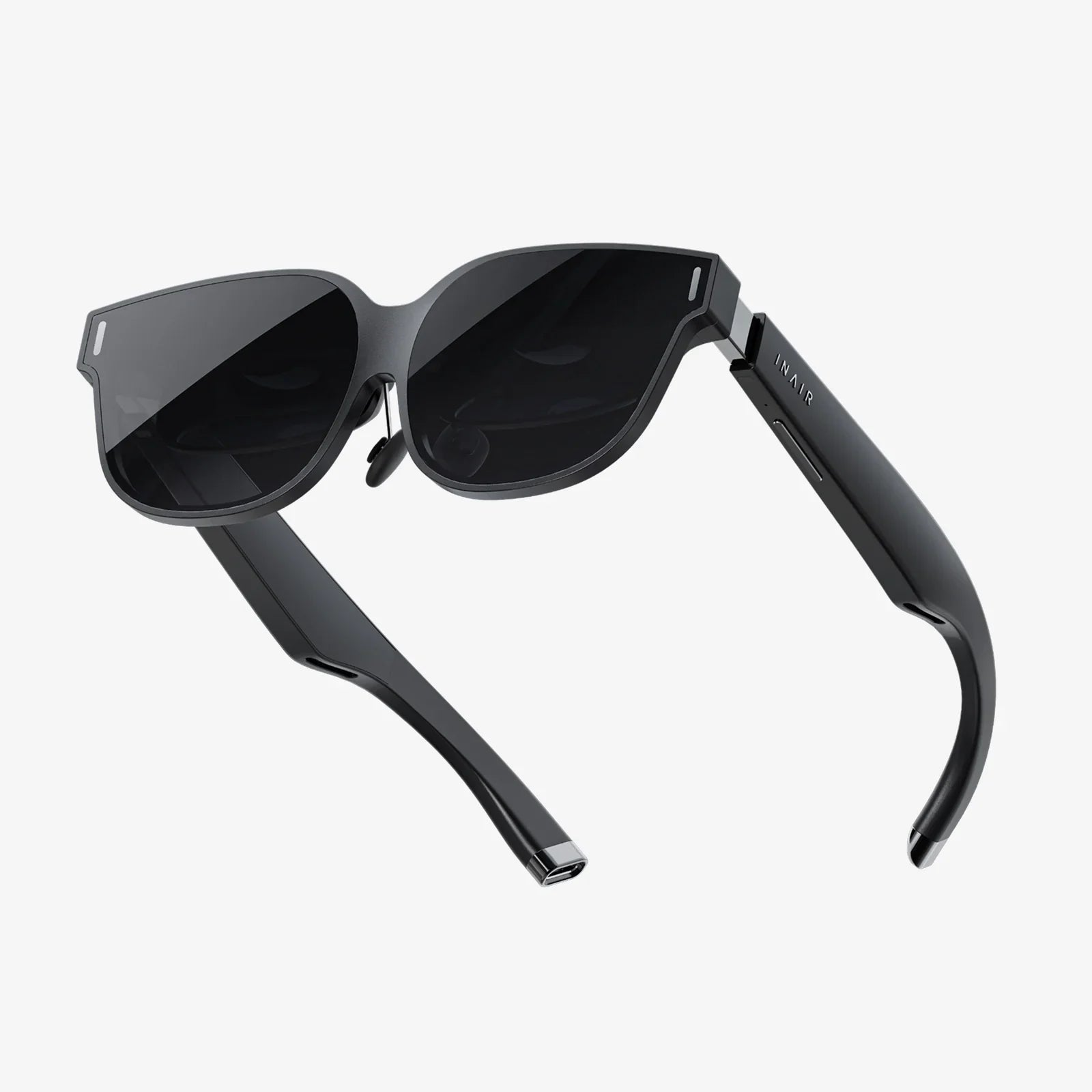
Close your eyes and imagine standing on the surface of Mars, the rust-colored dust swirling around your boots as you gaze at the pale sun in a pinkish sky. Now, picture yourself shrinking down to the size of a blood cell, navigating the intricate canals of a human artery. Or perhaps, you’d prefer to step into a famous painting, walking amidst its brushstrokes and shadows. These are not scenes from a distant science fiction novel; they are accessible, tangible experiences available today through the fascinating lens of virtual reality. The question isn't just what VR is, but why is virtual reality so profoundly interesting? It captivates us not merely as a piece of technology, but as a gateway to the impossible, a machine for empathy, and a canvas for the next era of human creativity.
The Ultimate Illusion: Presence and Embodiment
At the heart of VR's allure is a concept known as "presence." This is the seminal, magical ingredient that separates VR from every other medium that has come before it. Watching a movie on a screen, no matter how large or high-definition, is a passive observation. You are an audience member looking into a world. Playing a video game with a controller is an act of remote control; you direct a character on a screen. Virtual reality shatters this barrier. Presence is the undeniable, subconscious feeling that you are there, inside the digital environment. Your brain, tricked by the stereoscopic 3D view, responsive head-tracking, and immersive spatial audio, accepts the simulation as reality.
This illusion is powerfully compounded by embodiment. In well-crafted VR experiences, you are given a virtual body—hands, and sometimes a full avatar. When you look down and see your own hands moving in perfect sync with your real-world motions, the cognitive leap is extraordinary. Your brain maps itself onto this digital form. This is why a sudden drop in a VR rollercoaster can trigger a genuine vertigo response, or why an encounter with a virtual dinosaur can send a real jolt of adrenaline through your system. The intellectual understanding that "this is not real" is overridden by the primal, physiological response screaming that "this is happening to me." This direct, visceral engagement is what makes VR so uniquely interesting; it doesn't just show you a story, it makes you a participant within it.
A Machine for Empathy and Perspective
Perhaps the most profound and socially significant aspect of VR's interest factor is its capacity to foster empathy. Film and literature have long been tools for building understanding, but VR can accelerate this process exponentially through what is often called "embodied cognition." It allows you to literally step into someone else's shoes and see the world through their eyes.
Journalistic organizations have created experiences that transport users to the heart of a Syrian refugee camp, not as a observer watching a news report, but as a person navigating the makeshift shelters. Medical students use VR to experience the world through the blurred, distorted vision of a patient with macular degeneration, creating a deeper, more intuitive understanding of their patient's challenges. Corporations use it for diversity and inclusion training, allowing employees to experience subtle forms of bias or discrimination from a first-person perspective.
This power to shift perspective is revolutionary. It moves learning from an intellectual exercise to an emotional one. You don't just learn about a situation; you feel a echo of its emotional weight. This application of VR suggests a future where the technology is less about escapism and more about connection—a tool to bridge vast cultural, social, and personal divides by allowing us to share experiences directly, bypassing the filters of language and preconception.
Revolutionizing Learning and Skill Acquisition
The old adage "see one, do one, teach one" takes on a new, powerful meaning in virtual reality. The interest in VR within educational and professional training fields is exploding because it offers a safe, scalable, and incredibly effective platform for experiential learning. The ability to practice a complex or dangerous task in a consequence-free environment is a game-changer.
Surgeons can rehearse intricate procedures on virtual patients, making their first incision on a real person far less fraught with risk. Astronauts have used VR for decades to simulate extravehicular activities and spacecraft docking procedures. Mechanics can learn the intricacies of a new engine model by taking it apart and reassembling it virtually, without needing physical parts or tools. Soldiers can train for urban combat scenarios in hyper-realistic digital recreations of cities.
This works because VR engages multiple learning pathways simultaneously: visual, auditory, and, most importantly, kinesthetic. The act of physically performing a task—reaching out, grabbing a virtual tool, and manipulating it—creates stronger neural pathways than reading a manual or watching a video ever could. It is learning by doing, without the real-world stakes. This transforms dry, abstract information into muscle memory and practical knowledge, making the acquisition of complex skills faster, safer, and far more interesting.
The New Social Frontier
In an era of text-based messaging and flattened video calls, VR introduces a startlingly human element to digital communication. Social VR platforms are emerging as fascinating new spaces where interaction is not based on usernames and profile pictures, but on avatars and spatial presence. The interest here lies in the restoration of body language and shared space to our online interactions.
In these virtual spaces, you can meet friends from across the globe and feel as if you are sitting next to them on a virtual beach, watching a movie together in a digital cinema, or playing a game of chess at a virtual table. The communication is richer because it’s not just about words. You can make eye contact, see someone nod in agreement, use hand gestures to emphasize a point, or even share a virtual high-five. This sense of "being together," even when physically apart, is a powerful antidote to the isolation that can sometimes accompany digital life.
These platforms are also becoming hubs for creativity and collaboration. Artists sculpt together in 3D space, architects walk clients through unbuilt designs, and musicians perform live concerts for avatars in the crowd. This social layer adds a deeply compelling, communal aspect to VR, positioning it not as an isolating technology, but as a potential new venue for community and shared experience.
Unleashing Creative Expression
For creators, VR is less a medium and more of an entire new dimension to explore. It represents the evolution of the canvas from a flat, rectangular surface to an infinite, immersive sphere. The interest for artists, filmmakers, and designers is boundless. VR painting and sculpting applications allow artists to create in three dimensions, walking around and through their own creations as they bring them to life. They are no longer painting a picture of a landscape; they are building the landscape itself.
For storytellers, VR introduces a radical shift from narrative to experience. Traditional film guides the viewer's gaze with cuts and camera angles. In VR, the viewer has agency; they control where they look. The storyteller's craft becomes one of environmental design, soundscaping, and subtle guidance rather than forced direction. This creates a more personal and impactful connection to the story, as each user's journey through the narrative is slightly unique.
This new palette of creative tools is democratizing experiences that were once the sole domain of massive studios with multi-million dollar budgets. An independent developer can build a world as compelling as a major studio. A lone artist can create a sculpture of impossible scale and physics. This unleashing of creative potential ensures that the content within VR will be as diverse, weird, and wonderful as humanity itself, providing a constant source of novelty and interest.
The Thrill of the Impossible and the Future of Play
At its core, one of the most fundamental reasons why virtual reality is interesting is because it fulfills a deep-seated human desire: to experience the impossible. It is the ultimate playground for the imagination. You can defy gravity, manipulate time, and break the laws of physics. You can fly like a superhero, battle mythical beasts, or explore fantasy worlds that have only existed in books.
This is the pure, unadulterated joy of play, reimagined for the digital age. VR gaming is often the first entry point for many people, and for good reason. It takes the familiar mechanics of games and supercharges them with physicality and presence. Instead of pressing a button to swing a sword, you physically swing your arm. Instead of moving a joystick to peek around a corner, you lean your actual body. This deep physical engagement makes play more exhausting, but also more rewarding and emotionally resonant.
The potential for future applications is even more intriguing. As haptic technology evolves to simulate touch and resistance, and as brain-computer interfaces develop, the line between the virtual and the real will continue to blur. We are moving towards a future where virtual experiences could engage all of our senses, offering not just visual and auditory escape, but tactile, olfactory, and even gustatory immersion. The journey has only just begun.
The true fascination of virtual reality lies not in the headset itself, but in its unparalleled ability to collapse the vast distance between imagination and experience. It is a passport to empathy, a safe harbor for dangerous practice, a blank canvas for a new art form, and a gathering place for a digitally scattered world. It challenges our very definitions of reality and interaction, offering a glimpse into a future where our digital and physical lives are not separate, but seamlessly intertwined. This isn’t just another tech trend; it’s the dawn of a new way to be human, to connect, and to explore, and that is an story everyone will want to be a part of.
Share:
Virtual Reality VR Background: The Unseen Engine Powering Immersive Digital Worlds
How Is Virtual Reality Changing the World: A Deep Dive into the Digital Metamorphosis