


- by wangfred
Why Virtual Reality Technology is the Next Frontier in Human Experience
- by wangfred
Imagine stepping through your screen, not just scrolling past it. Imagine not watching a concert on a flat rectangle but feeling the thrum of the bass in your chest as you stand front row, turning to see the ecstatic face of the fan next to you. Imagine not reading about ancient Rome but walking its cobbled streets, gazing up at the towering, newly painted Colosseum. This is the promise, the siren's call, of virtual reality technology. It’s not just another gadget; it’s a portal, and it’s poised to fundamentally reshape every facet of our lives, from how we work and learn to how we connect and heal. The question isn't if it will become integral to our future, but why it holds such transformative power. The journey to understand its significance starts not in a lab, but in the very essence of human experience.
At the heart of virtual reality's power lies a concept known as "presence." This is the pivotal why. It’s a state of consciousness, the undeniable, often startling, feeling of being there. Unlike traditional media, which we observe from a distance, VR is an environment we psychologically inhabit.
This phenomenon is achieved through a sophisticated orchestration of technology that hijacks our primary senses:
This combination creates a powerful cognitive loop: we act, the world reacts, and our brain accepts the reality of the experience. This state of presence is the foundational magic trick that makes all other applications of VR not just possible, but potent.
Beyond the initial "wow" factor, the practical applications of this immersive power are staggering. One of the most compelling answers to why virtual reality technology matters lies in its ability to democratize and revolutionize training and education.
Consider high-stakes professions where mistakes are costly or dangerous. Surgeons can practice complex procedures on detailed virtual anatomies, making their first incision on a real patient far less daunting. Astronauts can train for spacewalks, engineers can walk through unbuilt machinery, and firefighters can navigate burning buildings—all within a safe, repeatable, and cost-effective simulation. The muscle memory and spatial knowledge gained are profoundly more effective than textbook learning or watching a video.
In education, VR shatters the walls of the classroom. History students don't just read about the pyramids; they explore their narrow passageways. Biology students don't look at a diagram of a cell; they shrink down to float amongst its mitochondria and nucleus. This experiential learning fosters deeper empathy and a more intuitive understanding of complex subjects. It caters to different learning styles and makes education an adventure, not a chore.
In the corporate world, remote collaboration is evolving from flat video calls into shared virtual workspaces. Colleagues from across the globe can don headsets and stand around a 3D model of a new product design, examining it from every angle, making notes in mid-air, and feeling the collaborative energy of a physical meeting without the carbon footprint of travel. This is the future of a distributed global workforce.
Perhaps the most profound why for virtual reality is its potential to redefine human connection. Social VR platforms are emerging as new digital town squares. Here, your avatar—a representation you choose—can converse, play games, watch movies, or simply hang out with the avatars of friends or strangers.
This goes far beyond a video game. The sense of shared presence, of occupying the same digital space and reading body language (through avatar movements), creates a layer of intimacy and empathy that traditional social media, with its likes and comments, utterly lacks. It can combat the loneliness of physical distance, allowing families separated by oceans to feel like they are sharing a living room, or giving individuals with social anxieties a more controlled environment to connect.
Furthermore, VR is birthing a new art form: immersive storytelling. filmmakers are no longer confined to a rectangular frame. A narrative can unfold all around the viewer. You might choose to follow the hero or turn and watch the reaction of a side character. You are not a passive observer but an active participant within the story's environment. This creates a powerful, first-person empathy that can be harnessed for journalism, allowing people to experience the world from another's perspective, fostering understanding in a way a news report never could.
The ability to craft controlled, immersive worlds has found a powerful calling in the field of therapy and rehabilitation. This application alone provides a deeply human answer to why virtual reality technology is so much more than entertainment.
Psychologists are using VR for exposure therapy with remarkable success. Patients grappling with phobias—fear of heights, flying, public speaking, or spiders—can be gradually and safely exposed to their triggers within a virtual environment. A therapist can control the intensity of the experience, helping the patient build resilience and coping mechanisms in a way that feels real but is entirely safe. This is also being used to treat PTSD, allowing veterans to process trauma in a controlled setting.
In physical rehabilitation, VR turns tedious, repetitive exercises into engaging games. A patient recovering from a stroke might be tasked with virtually slicing flying fruit to regain arm mobility, or navigating a virtual obstacle course to improve balance and coordination. This "gamification" of therapy increases patient motivation and adherence to treatment plans, leading to better and faster outcomes.
VR also offers escape and pain management. For patients undergoing painful medical procedures or suffering from chronic pain, being transported to a serene beach or a tranquil forest can significantly reduce perceived pain levels and anxiety, providing a non-pharmacological tool for relief.
Of course, a technology this powerful does not come without significant challenges and ethical questions. The very immersion that makes VR so potent also raises concerns about addiction, reality blurring, and escapism. If a virtual world becomes more appealing than the real one, what are the societal consequences?
Data privacy takes on a new dimension. VR headsets can collect a staggering amount of biometric data: eye-tracking, movement patterns, even pupil dilation in response to stimuli. This data is incredibly valuable and incredibly personal. Who owns it? How is it used? Could it be used for manipulation?
There are also risks of new forms of harassment in social VR spaces and the need to establish digital ethics and conduct codes. Furthermore, the "empathy machine" label is a double-edged sword; the same technology used to foster understanding could also be used for propaganda, placing individuals inside powerfully persuasive, biased narratives.
Addressing these challenges requires proactive dialogue among developers, policymakers, ethicists, and users. The goal must be to build these immersive worlds with a foundation of ethical design, prioritizing user well-being and agency.
For all its promise, VR technology still faces barriers to universal adoption. The hardware, while advancing rapidly, must continue to improve. The ideal headset would be visually indistinguishable from reality, wireless, lightweight, comfortable for all-day wear, and affordable. We are not there yet, but the trajectory is clear.
Issues like motion sickness, caused by a lag between a user's movement and the visual response, still affect a portion of the population, though advancements in display refresh rates and tracking precision are steadily mitigating this. The development of more intuitive user interfaces and input methods is also crucial to moving beyond the early-adopter phase.
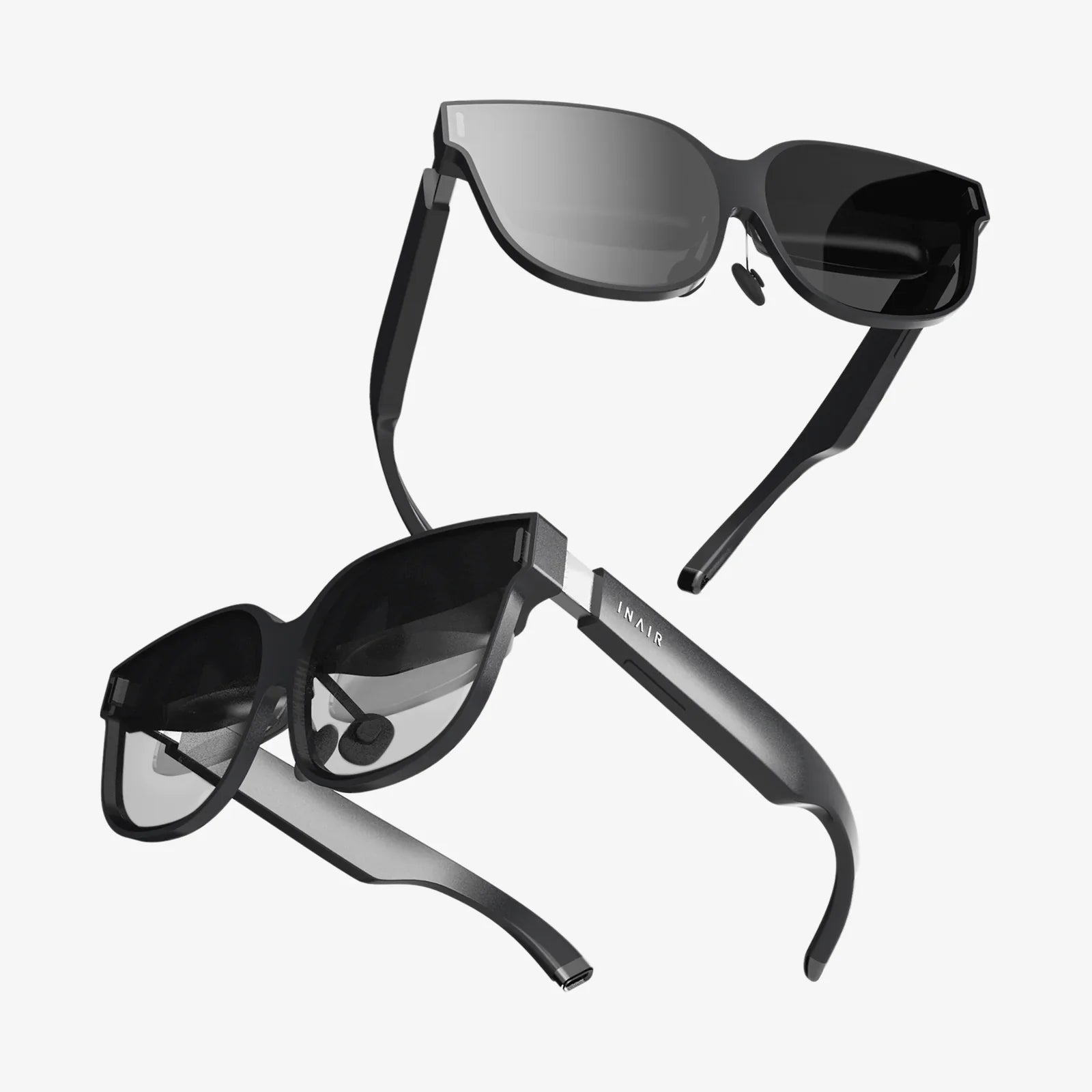
The true tipping point will come when the hardware becomes a seamless, almost invisible portal—a pair of stylish glasses rather than a bulky headset—and when the software and experiences become so compelling that they are considered daily essentials, not niche novelties.
The door to entirely new realities is now open, and it cannot be closed. This is not about rejecting our physical world but about expanding the canvas of human experience. It’s a tool for unparalleled empathy, a engine for scientific discovery, a stage for boundless creativity, and a bridge across vast distances. The journey into the virtual is, ultimately, a deeper journey into ourselves, challenging us to build worlds that reflect our highest aspirations, not our deepest fears. The next chapter of our story will be written not just in words, but in spaces we can step into and truly feel.