


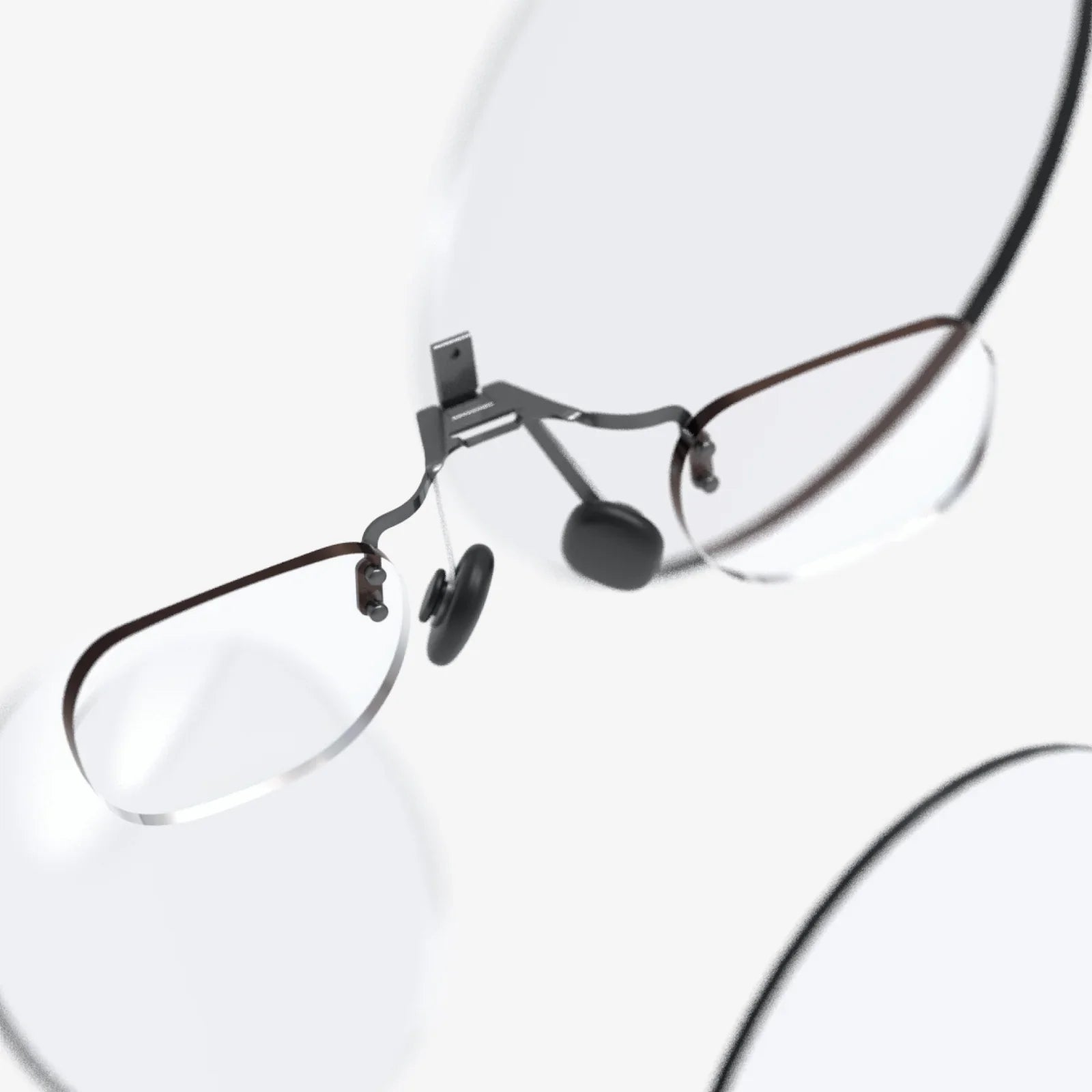
Imagine a world where digital information doesn’t live on a screen in your hand or on your desk, but is seamlessly woven into the very fabric of your reality. Directions float on the sidewalk before you, the history of a monument unfolds before your eyes as you gaze upon it, and a colleague from across the globe stands in your living room as a photorealistic hologram, all without a single wire tethering you to a machine. This is not a distant science fiction fantasy; it is the imminent future being unlocked by the rapid, relentless advancement of the wireless augmented reality headset. This technology represents a fundamental shift in our relationship with computing, promising to liberate us from the confines of the two-dimensional screen and usher in an era of spatial, contextual, and intuitive interaction with the digital universe.
The Architectural Pillars of Wireless AR
The magic of a wireless AR headset is not a single innovation but a symphony of cutting-edge technologies working in perfect harmony. Understanding these core components is key to appreciating the marvel of this device.
Untethered Freedom: The Power of Wireless Connectivity
The most obvious and liberating feature is the absence of cables. This freedom is primarily enabled by high-bandwidth, low-latency wireless protocols. These advanced communication standards are the lifeline, transmitting vast amounts of data to and from a processing unit or directly to the cloud with imperceptible delay. This near-instantaneous data transfer is the critical factor that prevents the digital overlays from lagging behind the real world, a phenomenon that would quickly induce nausea and break the sense of immersion. The move to wireless also necessitates sophisticated onboard power management, driving innovation in battery technology and energy-efficient components to ensure usable session times without becoming an uncomfortable burden.
Perceiving the World: The Sensor Suite
For digital content to interact convincingly with the physical environment, the headset must first understand that environment in exquisite detail. This is the task of a sophisticated array of sensors. High-resolution cameras continuously scan the surroundings, while depth sensors, such as those utilizing LiDAR or structured light, project invisible patterns to map the geometry of a room, the contours of a table, or the shape of a tool. Simultaneous Localization and Mapping (SLAM) algorithms process this sensor data in real-time to create a persistent 3D map of the space and precisely track the user's position and orientation within it. This complex dance of sensing and processing allows a virtual character to convincingly hide behind your real-world sofa or for a digital instruction manual to be pinned to a physical engine block.
Building the Illusion: Optics and Displays
The ultimate goal is to blend light from the real world with light from the digital one. This is achieved through advanced optical systems. Many modern devices use waveguide technology, where light from micro-displays is channeled through transparent glass or plastic lenses into the user's eye. This allows for sleek, glasses-like form factors while projecting bright, vibrant images that appear to exist at various depths in the real world. The challenge lies in achieving a wide field of view, high resolution, and sufficient brightness for outdoor use, all while maintaining a small, socially acceptable form factor—a challenge that continues to drive optical innovation.
The Brain of the Operation: Processing Power
Coordinating the sensor input, running the complex environmental understanding algorithms, rendering high-fidelity 3D graphics, and managing wireless communication requires immense computational power. This processing can be handled in two primary ways: onboard or offloaded. Onboard processing utilizes a system-on-a-chip (SoC) designed for extreme efficiency and performance, packing the capabilities of a modern smartphone into a fraction of the space and power envelope. Alternatively, some systems leverage the growing power of cloud computing and edge networks, offloading heavy processing to remote servers and streaming the results back to the headset. This hybrid approach promises to keep the headset lightweight while accessing virtually unlimited computational resources, though it is heavily dependent on ultra-reliable, high-speed wireless networks.
Transforming Industries: The Practical Applications
While the consumer applications are thrilling, the near-term impact of wireless AR headsets is already being felt profoundly across numerous professional sectors.
Revolutionizing the Factory Floor and Worksite
In industrial settings, the value proposition is immediate and immense. Technicians performing complex repairs can have schematic diagrams, torque specifications, and step-by-step instructions overlaid directly onto the machinery they are working on, freeing their hands and drastically reducing errors and training time. Designers and architects can walk through full-scale 3D holographic models of their creations before a single physical resource is expended, enabling rapid iteration and collaboration. Warehouse workers can receive picking instructions visually guided to the exact shelf and bin, optimizing logistics and streamlining fulfillment processes. The wireless nature of the device is paramount here, as professionals need to move freely around large, often hazardous environments without the risk of snagging cables.
Redefining Healthcare and Medicine
The medical field stands to benefit enormously. Surgeons can have vital patient statistics, ultrasound data, or 3D anatomical guides visible within their field of view during procedures, improving precision and outcomes. Medical students can practice complex surgeries on detailed holographic patients, and practitioners in remote locations can receive real-time guidance from specialists elsewhere in the world, who can see what they see and annotate their view. This has the potential to democratize access to expert medical knowledge and training on a global scale.
The Future of Education and Training
Education will transition from passive learning to active experiencing. Instead of reading about ancient Rome, students can walk through a digitally reconstructed Forum. Mechanics-in-training can learn to assemble and disassemble complex engines with virtual tools and parts. The ability to manipulate 3D models of molecules, historical artifacts, or geological formations provides a deeper, more intuitive understanding that is simply impossible with textbooks or 2D screens. Wireless AR turns any space into a potential classroom, museum, or laboratory.
A New Paradigm for Remote Collaboration
Wireless AR headsets are poised to become the ultimate tool for remote collaboration, moving far beyond the video call. Teams spread across different countries can meet in a shared virtual space, interacting with 3D models as if they were in the same room. An expert can guide a field technician through a repair by literally drawing circles and arrows in the technician's real-world view. This creates a powerful sense of presence and shared context, collapsing geographical barriers and fostering a new level of teamwork that feels tangibly real.
Navigating the Challenges: The Path to Ubiquity
Despite the breathtaking potential, the path to mainstream adoption is not without significant hurdles that engineers and designers are racing to overcome.
The Form Factor Conundrum
For users to wear these devices all day, they must be as comfortable and socially acceptable as a pair of eyeglasses. Current generations, while improving, are often still too bulky, too heavy, or too visually conspicuous for widespread all-day use. The holy grail is a device that is indistinguishable from regular eyewear, which requires monumental advancements in miniaturizing batteries, optics, and processing components. This is arguably the single biggest barrier to consumer adoption.
Powering the Experience
High-resolution displays, constant sensor data processing, and wireless data transmission are incredibly power-intensive. Battery life remains a primary constraint, often limiting continuous use to a few hours. Innovations in battery chemistry, power management software, and low-power component design are essential. Some concepts explore alternative solutions like swappable batteries or even offloading processing to a small, pocketable compute pack to extend usage time.
The Privacy Imperative
A device that has always-on cameras and microphones, mapping the world around it, raises profound privacy and security questions. Where is this incredibly detailed spatial and visual data being stored? Who has access to it? How do we prevent unauthorized surveillance? Establishing clear, transparent, and robust data governance frameworks is not just a technical challenge but a societal and ethical one. Users must have absolute confidence and control over their personal data for this technology to be embraced.
Designing the Interface to Reality
We are still in the early days of designing intuitive user interfaces for a 3D world. How do we interact with and manipulate holograms without physical controllers? Voice commands, hand tracking, and eye tracking are emerging as the primary modes of input, but creating interfaces that feel natural, effortless, and free of fatigue is an ongoing area of intense research and development. The goal is an interface that feels like an extension of our own body, not a tool we have to learn.
The Horizon: What Lies Beyond the Next Decade
The evolution of the wireless AR headset is accelerating at a breathtaking pace. In the coming years, we can expect these devices to become progressively lighter, more powerful, and more integrated into our daily lives. They will evolve from being a separate device we ‘put on’ to a constant companion, perhaps eventually integrating directly into standard prescription eyewear. As artificial intelligence becomes more deeply embedded, these headsets will transition from passive tools to proactive assistants, anticipating our needs and surfacing information contextually without us even asking. The line between the digital and the physical will not just be blurred; it will be erased, giving rise to new forms of art, storytelling, social connection, and human expression that we are only beginning to imagine.
The true promise of the wireless AR headset lies not in the technology itself, but in its potential to augment the most powerful processor we know: the human mind. By overlaying useful information onto our world, it promises to make us more knowledgeable, more efficient, and more connected to both the digital universe and the physical one we inhabit. It is a key that will unlock new dimensions of human potential, turning every blank space into a canvas and every moment into an opportunity to learn, create, and connect. The revolution isn't coming; it's already here, waiting for you to put it on and see the world, quite literally, in a new light.
Share:
New Wireless VR Headset: Cutting the Cord for an Unprecedented Virtual Reality Experience
What Is The Recommended Age For VR Headset? A Guide For Concerned Parents