


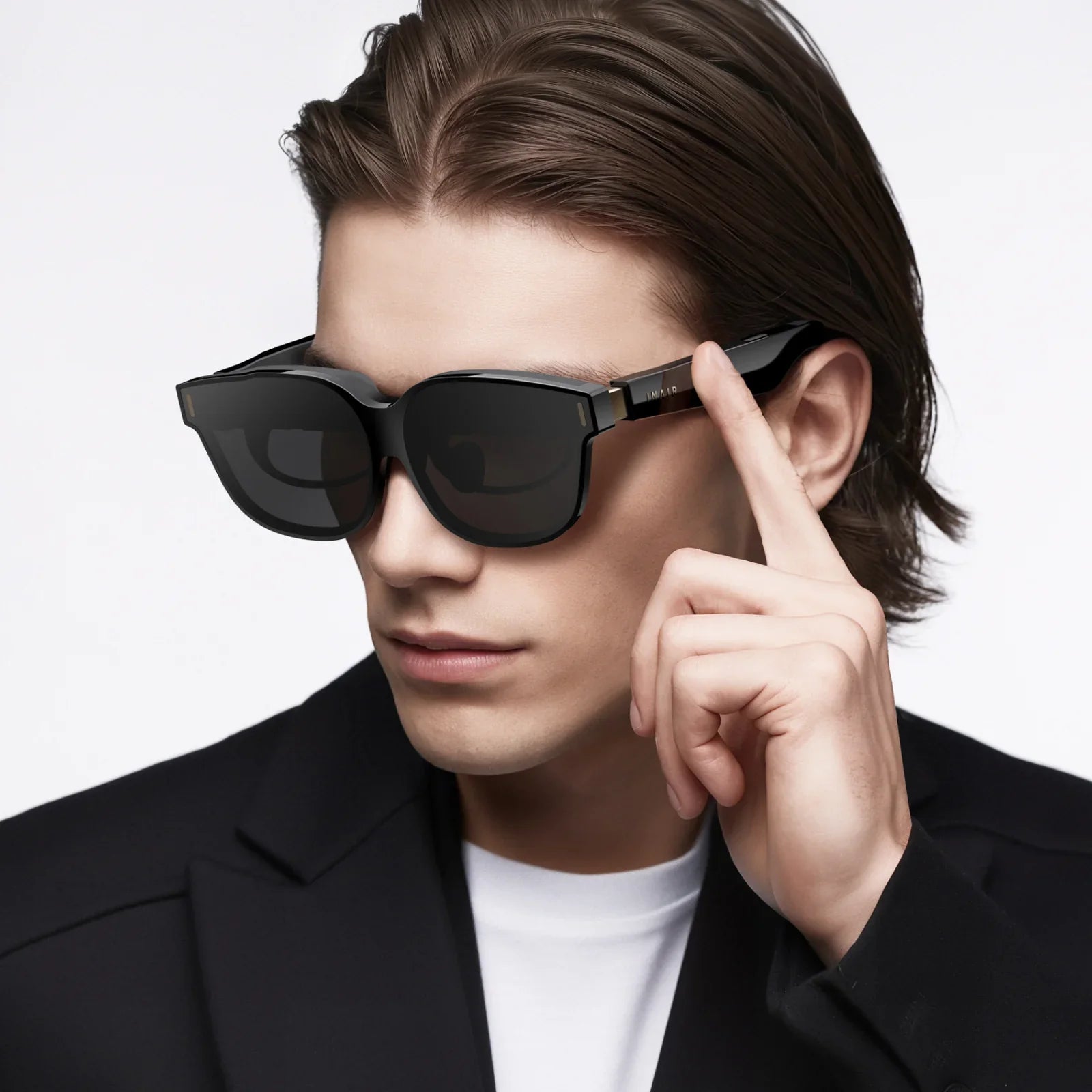
Imagine a world where digital information doesn't live on a screen in your hand or on your desk, but is seamlessly woven into the fabric of your physical reality. This is the promise of Extended Reality (XR) glasses, a technology poised to revolutionize everything from how we work and play to how we connect with others. The buzz is electric, the potential is staggering, and the market is flooding with options, leaving many eager early adopters asking one burning question: how do I find the XR glasses best buy for me? This isn't just about purchasing a gadget; it's about making an informed investment into a new way of seeing and interacting with the world. Forget the hype and the confusing jargon; this ultimate guide is designed to be your compass, navigating the core features, critical considerations, and real-world applications to help you pinpoint the perfect pair of XR glasses that truly represents a best buy for your needs and budget.
Demystifying the XR Spectrum: More Than Just a Buzzword
Before diving into specifications, it's crucial to understand what we're actually talking about. "XR" or Extended Reality is an umbrella term that encompasses a spectrum of immersive technologies.
Augmented Reality (AR) glasses overlay digital information—images, text, animations—onto your view of the real world. Think of navigation arrows painted onto the street in front of you or a recipe floating next to your mixing bowl. The primary goal is enhancement, not replacement.
Virtual Reality (VR) headsets are fully immersive, blocking out the physical world and transporting you to a completely digital environment. These are typically used for gaming, simulation, and deep virtual experiences.
Mixed Reality (MR) is a more advanced subset of AR where digital objects can interact with and be anchored to the real world. A virtual character might sit on your real couch, or a digital tennis ball could bounce off your actual wall. True MR requires sophisticated sensors to understand the geometry of your environment.
When people search for "XR glasses best buy," they are most often referring to AR or MR glasses—wearable, often glasses-like devices that keep you present in your surroundings while adding a digital layer. This guide focuses primarily on these see-through experiences.
The Anatomy of a Best Buy: Key Features to Scrutinize
Not all XR glasses are created equal. The difference between a gimmick and a groundbreaking tool lies in its components. Here are the critical hardware features that define a quality product and separate a true best buy from a mere impulse purchase.
1. Display Technology: The Window to Your Digital World
This is arguably the most important aspect. How digital content is projected into your eyes dictates the quality of the entire experience.
- Waveguides: Tiny, transparent lenses or plates that guide light from a micro-display into your eye. They allow for sleek, glasses-like designs. Quality varies greatly—look for those that offer bright, clear images with a wide field of view (FOV).
- Birdbath Optics: Uses a half-mirror to reflect light from a display into your eye. This can often offer richer colors and higher contrast but may result in a slightly bulkier design.
- Micro-OLED vs. LCoS: These are the tiny screens that generate the image. Micro-OLEDs are renowned for their deep blacks, high contrast, and fast response times, making them a premium choice for high-end devices.
Key Metrics:
Field of View (FOV): Measured in degrees, this is how much of your vision the digital image occupies. A larger FOV (e.g., 50°+) feels more immersive, while a narrow FOV can feel like looking through a small window.
Resolution: Higher resolution (e.g., 1920x1080 per eye or better) means sharper text and images, reducing the "screen door effect."
Brightness (Nits): Crucial for use in well-lit environments like outdoors or a sunny office. Dim displays will wash out and become unusable.
2. Processing Power: The Brain of the Operation
How do the glasses work? There are two main approaches:
- Standalone (All-in-One): The glasses contain their own processor, battery, and operating system. This offers maximum freedom and mobility—no wires, no tethers. This convenience often comes at the cost of increased weight, heat on the face, and a higher price tag.
- Tethered/Smartphone-Powered: These glasses act as a display, leveraging the processing power of another device—typically a smartphone, computer, or a dedicated processing puck. This leads to a lighter, more comfortable form factor and often a lower price, but it sacrifices some mobility and ties you to another device.
A true best buy will have a processing solution that matches your intended use case. For on-the-go productivity, standalone might be key. For media consumption at home, a tethered solution could be ideal.
3. Tracking and Sensors: Mapping Your Reality
For digital content to feel like it's truly part of your world, the glasses need to understand your environment and your movements.
- 6DoF Tracking (Six Degrees of Freedom): This is non-negotiable for a best-buy MR experience. It means the glasses track not just your head's rotation (pitch, yaw, roll) but also its position in space (moving forward/back, up/down, left/right). This allows you to walk around a virtual object and have it stay anchored in place.
- Cameras and Sensors: A suite of cameras (RGB, depth-sensing, infrared) is used for SLAM (Simultaneous Localization and Mapping), hand-tracking, and gesture recognition. The more sophisticated the sensor array, the more robust and reliable the interaction with the digital world will be.
4. Audio and Input: Interacting with the Immersive World
How do you hear the sound, and how do you tell the glasses what to do?
- Spatial Audio: High-quality speakers or ear buds that make sounds seem like they're coming from specific points in your environment are essential for immersion.
- Input Methods: The best devices offer multiple ways to interact: precise hand-tracking for natural gestures, voice commands for quick actions, and optional controllers for traditional input, especially for gaming.
5. Design and Comfort: The Forgotten Frontier
The most powerful glasses are useless if you don't want to wear them. A best buy must be comfortable for extended periods.
- Weight Distribution: Is the weight balanced across the head, or does it press heavily on the nose and cheeks?
- Prescription Solutions: Do they offer magnetic inserts for prescription lenses, or must you wear contacts?
- Field of View: A wider FOV is more immersive but can sometimes lead to a bulkier design. It's a constant trade-off.
Defining Your "Best Buy": It's All About the Use Case
The perfect XR glasses for a hardcore gamer are not the same as the perfect pair for a remote architect or a frequent traveler. Your personal best buy is defined by how you intend to use them.
For the Productivity Power User and Remote Worker
Your best buy prioritizes clarity, multitasking, and integration. You need glasses that can replace your physical monitors with vast, pin-sharp virtual screens for coding, writing, or analyzing data. Key features include:
- Very high resolution for reading text all day.
- Seamless integration with your computer and productivity apps.
- Comfort for wearing through an 8-hour workday.
- Effective pass-through video for seeing your keyboard and coffee mug.
For you, a tethered model that leverages a powerful computer might be the best buy, offering superior processing for multiple high-res displays.
For the Media Enthusiast and Home Entertainer
Your best buy is a personal theater. You want an immersive, cinematic experience for watching movies, shows, and sports on a giant virtual screen, anywhere. Prioritize:
- High contrast and rich colors (Micro-OLED is king here).
- Excellent spatial audio that feels like a surround sound system.
- A comfortable form factor for leaning back on the couch.
- Good content library and app support from major streaming services.
A lighter, tethered model designed primarily for media consumption could be your ideal best buy, offering a fantastic experience without the premium cost of a full standalone system.
For the Explorer and Tech Early Adopter
You live on the cutting edge. Your best buy is about experiencing the full potential of the technology—the "wow" factor. You want to experiment with new apps, play immersive MR games, and be the first to try new forms of content. Look for:
- Full 6DoF tracking for immersive games and experiences.
- Advanced hand-tracking and gesture controls.
- A robust and growing ecosystem of apps and developer support.
- A standalone design to take these experiences anywhere.
You'll likely be looking at the higher end of the market, where the most advanced features reside.
Navigating the Purchase: Your Pre-Buy Checklist
Armed with knowledge of features and use cases, use this practical checklist before you click "add to cart."
- Ecosystem Compatibility: Do the glasses work with your existing devices? Are they tied to a specific phone brand or computer operating system? Ensure they integrate smoothly into your tech life.
- Software and App Library: Hardware is nothing without software. Research the available apps. Is there a killer app for your specific need? Is the platform supported by major developers?
- Battery Life: For standalone models, battery life is paramount. Check real-world reviews. How long do they last under heavy use? Is the battery swappable?
- Privacy Policy: XR glasses have cameras and microphones that perceive your environment. It is critical to understand what data is collected, how it is processed (on-device vs. in the cloud), and how it is used. Read the privacy policy carefully.
- Try Before You Buy: If possible, find a way to try them on. Comfort and visual quality are highly subjective. A demo in a store can instantly tell you if a model is right for you.
- Future-Proofing: This technology is evolving rapidly. While you can't future-proof completely, consider the company's track record for software updates and its roadmap for the platform.
The Horizon: What's Next for XR Glasses?
The quest for the ultimate best buy is a moving target. The technology is advancing at a breakneck pace. In the near future, we can expect:
- Smaller, Lighter Form Factors: Advancements in micro-displays and waveguides will lead to glasses that look and feel almost identical to regular sunglasses.
- Retina-Level Resolution: Displays so sharp you won't be able to distinguish pixels from reality.
- Advanced AI Integration: On-device AI assistants that can see what you see and provide contextually relevant information in real-time.
- Broader Adoption: As prices drop and use cases expand, XR glasses will transition from niche gadgets to mainstream computing platforms.
The journey to find your XR glasses best buy is an exciting one, filled with incredible technological potential. It requires looking beyond marketing claims and focusing on the core pillars of display quality, processing, tracking, and, most importantly, how it fits into your life. By understanding the technology, honestly assessing your needs, and carefully scrutinizing the options, you can move from being a curious bystander to an active participant in the next computing revolution. The future is not something we merely watch; it's something we will actively shape and interact with, right before our eyes.
Share:
History Augmented Reality: The Long Road from Sci-Fi Fantasy to Modern Marvel
AI Glasses vs VR Headsets Differences: A Comprehensive Guide to the Future on Your Face