


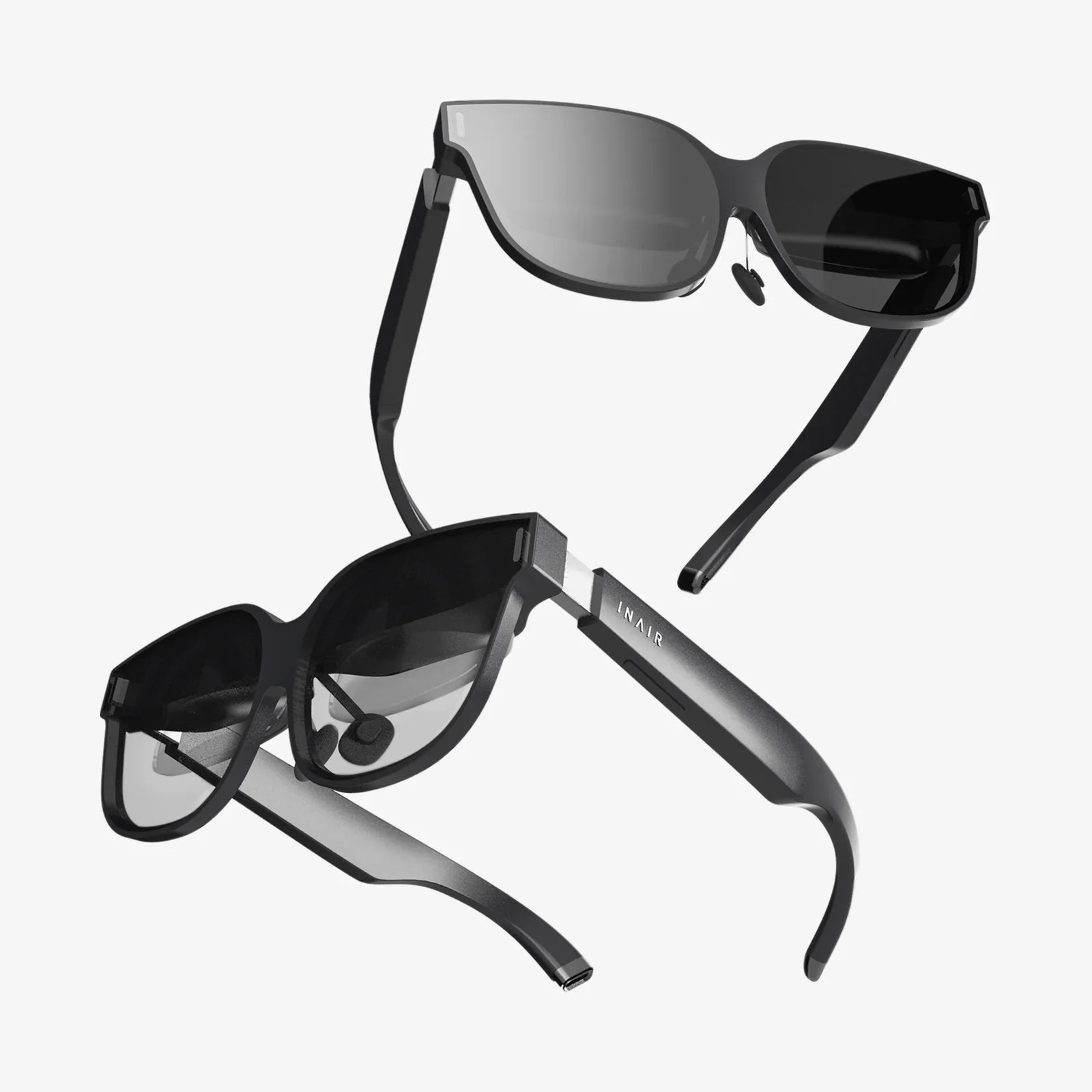
Imagine your entire digital life—your sprawling desktop, your favorite games, your collaborative projects—floating seamlessly in the space around you, no longer confined to a flat, rectangular pane of glass. This is no longer a scene from science fiction; it's the tangible reality offered by the latest generation of XR glasses for PC. This technology is poised to fundamentally alter our relationship with computers, transitioning from a tool we look at to an environment we exist within. This comprehensive guide dives deep into the world of PC-connected extended reality, exploring its transformative potential, the underlying technology, and what you need to know to step into this expansive new digital frontier.
The Spectrum of Reality: Defining XR
Before delving into the specifics of PC-connected hardware, it's crucial to understand the umbrella term "XR" or Extended Reality. XR encompasses a spectrum of technologies that blend the physical and digital worlds:
- Virtual Reality (VR): A fully immersive, digital experience that completely replaces your real-world environment. Users are transported to a computer-generated simulation, typically experienced through a fully opaque headset.
- Augmented Reality (AR): overlays digital information and objects onto your real-world view. Think of navigation arrows painted onto the road in front of you or a virtual pet resting on your actual sofa. The real world remains the primary backdrop.
- Mixed Reality (MR): A more advanced form of AR where digital objects not only coexist with the real world but can interact with it. A virtual ball can bounce off your real table, and a digital character can hide behind your physical couch, understanding and respecting the geometry of your environment.
Modern "XR glasses" often lean towards the AR/MR end of the spectrum. They are typically passthrough devices, using cameras to feed a video feed of your surroundings to high-resolution displays inside the glasses, upon which digital content is then composited. This approach allows for a incredibly versatile experience, from a fully virtual workspace to a lightly augmented living room.
Why Connect XR Glasses to a PC?
The personal computer remains a powerhouse of processing and rendering capability. While standalone XR headsets exist with their own mobile processors, tethering—either physically via a cable or wirelessly through a high-bandwidth connection—to a PC unlocks a world of possibilities that mobile chips simply cannot yet deliver.
- Unmatched Graphical Fidelity: A high-end graphics card can render incredibly complex, detailed, and vast virtual environments. For immersive gaming, professional 3D design, and architectural visualization, this raw power is non-negotiable for a truly compelling experience.
- Seamless Workflow Integration: Your PC is your central hub for work and creativity. XR glasses connected to it act as a spatial extension of your Windows or macOS environment. You can access all your native applications, files, and tools without the need for specialized ports or cloud synchronization.
- Low Latency and High Performance: A direct connection, particularly a physical cable, ensures minimal latency (lag) between your movements and the response in the virtual world. This is critical for comfort and essential for precision tasks and competitive gaming.
- Access to a Vast Library of Content: Connecting to a PC grants immediate access to a massive existing library of VR games and applications on platforms like SteamVR and others, alongside new native MR software.
Unlocking New Dimensions of Productivity
The most immediate and profound impact of PC-connected XR glasses may be in the realm of productivity. They promise to solve a problem that has plagued knowledge workers for decades: screen real estate is limited and expensive.
The Infinite Workspace
With XR glasses, your workspace is limited only by the physical space you have to move around and your computer's rendering power. Imagine:
- Spreading your entire development environment across multiple virtual monitors while keeping your code editor, documentation browser, and live preview visible simultaneously.
- A financial analyst surrounding themselves with live market data streams, charts, and news feeds, seeing correlations and trends in a way a single monitor could never allow.
- A researcher pinning dozens of academic papers, notes, and data visualizations around a virtual room, walking through their research like a detective solving a case on a giant evidence board.
This is the concept of spatial computing, where information exists in 3D space, leveraging human spatial memory for better organization and recall.
Remote Collaboration Reimagined
Video conferencing, while useful, is still a poor substitute for being in the same room. XR collaboration tools connected to powerful PCs enable a shared virtual space where participants, represented by avatars, can interact with 3D models, diagrams, and virtual whiteboards as if they were physical objects. An engineering team spread across the globe can collectively examine a full-scale 3D prototype of a new engine, making annotations in real-time. This shared presence fosters a level of understanding and ideation that flat screens cannot match.
Revolutionizing Entertainment and Gaming
While productivity is a strong driver, the entertainment potential is staggering. PC-powered XR glasses offer the ultimate big-screen experience.
The Ultimate Personal Theater
Imagine a virtual cinema screen, seemingly 100 feet wide, placed perfectly in your environment. You can watch movies, stream shows, or enjoy YouTube in a private, immersive theater with stunning visual quality, all while lying in bed or sitting on your balcony. The glasses effectively become a portable, ultra-high-resolution monitor that can be used anywhere with privacy.
Next-Generation Gaming
Gaming is transformed in two distinct ways:
- Immersive VR/MR Gaming: This is the most obvious application. Play dedicated VR titles that place you inside the game world, from epic adventures to heart-pounding horror experiences. With PC power, these worlds are richly detailed and incredibly vast.
- Flat Gaming on a Giant Screen: For traditional PC games not designed for VR, you can play them on a massive, virtual screen. The sense of scale and immersion when playing a strategy game or a first-person shooter on a screen that fills your entire field of view is a game-changer in itself, offering a new way to enjoy existing libraries.
Key Hardware Considerations
Stepping into this world requires an understanding of the key components that define the experience.
Visual Fidelity: Resolution, FOV, and Clarity
The quality of the displays is paramount. Key terms include:
- Resolution: Measured per eye, higher resolutions (e.g., 4K per eye) drastically reduce the "screen door effect" and make text sharp and readable, which is critical for productivity.
- Field of View (FoV): How much of your vision the virtual image occupies. A wider FoV is more immersive but technically challenging and computationally expensive.
- Passthrough Quality: The resolution, latency, and color accuracy of the camera feed that shows you your real environment. High-quality passthrough is essential for comfortable mixed reality, allowing you to see your hands, keyboard, and surroundings clearly.
Tracking and Interaction
How do you interact with this digital world?
- Inside-Out Tracking: Modern glasses use built-in cameras to track their own position in the room and the movement of controllers (or your hands) without external sensors. This makes for a much simpler setup process.
- Hand Tracking: The ability to use your bare hands as controllers. This allows for intuitive gestures like pinching to select, dragging windows, and manipulating virtual objects, creating a more natural and frictionless interface.
- Controller Tracking: Dedicated motion controllers offer haptic feedback and precise input for gaming and specific applications, often complementing hand-tracking capabilities.
Connectivity and Comfort
How the glasses connect to the PC is a major design choice.
- Wired (Tethered): Offers the highest bandwidth, ensuring zero compression artifacts and the lowest possible latency for the best performance. The obvious trade-off is a physical cable that can limit movement.
- Wireless: Using technologies like Wi-Fi 6E or dedicated wireless adapters, this option provides unparalleled freedom of movement. The experience depends heavily on signal strength and can involve some compression of the video stream.
- Comfort and Form Factor: This is perhaps the most important factor for long-term adoption. Glasses need to be lightweight, well-balanced, and comfortable for extended wearing sessions. The industry is rapidly moving towards smaller, lighter designs that resemble large sunglasses rather than bulky helmets.
The Software Ecosystem: The Operating System for Reality
Hardware is nothing without software. The operating environment provided by the glasses manufacturer is the stage upon which everything happens. These platforms provide:
- The home environment or "lobby" where you start your session.
- The core interface for launching apps, adjusting settings, and managing virtual monitors.
- App stores and compatibility layers to run existing VR/XR content.
- Critical features like boundary system (guardian) setup to avoid walking into walls and intuitive window management.
The maturity and usability of this software layer are just as important as the hardware specs in determining whether the device feels like a futuristic tool or a frustrating tech demo.
Challenges and The Road Ahead
Despite the exciting progress, the technology is not without its hurdles.
- Battery Life: Processing high-resolution passthrough video and running multiple spatial applications is power-intensive. Balancing performance with all-day battery life remains a key challenge, especially for wireless models.
- Visual Artefacts: Even the best passthrough video can have minor latency, motion blur, or low-light noise, reminding you that you are looking at a screen, not the real world. Display technology continues to improve to minimize these issues.
- Social Acceptance: Wearing technology on your face in public or in meetings is still a social barrier for some, though designs are becoming increasingly normalized.
- Content Development: While the platform for "spatial apps" is growing, it needs more developers to create killer applications that are purpose-built for this medium, moving beyond mere adaptations of 2D apps.
The future is bright. We are moving towards even smaller form factors, perhaps eventually resembling standard eyeglasses. Advancements in micro-OLED displays, pancake lenses, and computer vision will continue to enhance visual fidelity and comfort. The line between the physical and digital will continue to blur until the fusion is complete and indispensable.
The era of being chained to a desk, hunched over a finite rectangle of light, is drawing to a close. XR glasses for PC are not just another peripheral; they are a gateway, a lens through which we will redefine creativity, collaboration, and play. They promise a future where our digital potential is limited not by the size of our monitors, but only by the breadth of our imagination. The question is no longer if you will use this technology, but when you will choose to unbind your desktop and step into your own limitless, personal universe.
Share:
Augmented Reality vs Machine Learning: The Silent War for the Future of Experience
Glasses with AI in Them: The Dawn of a Seamless Augmented Reality