


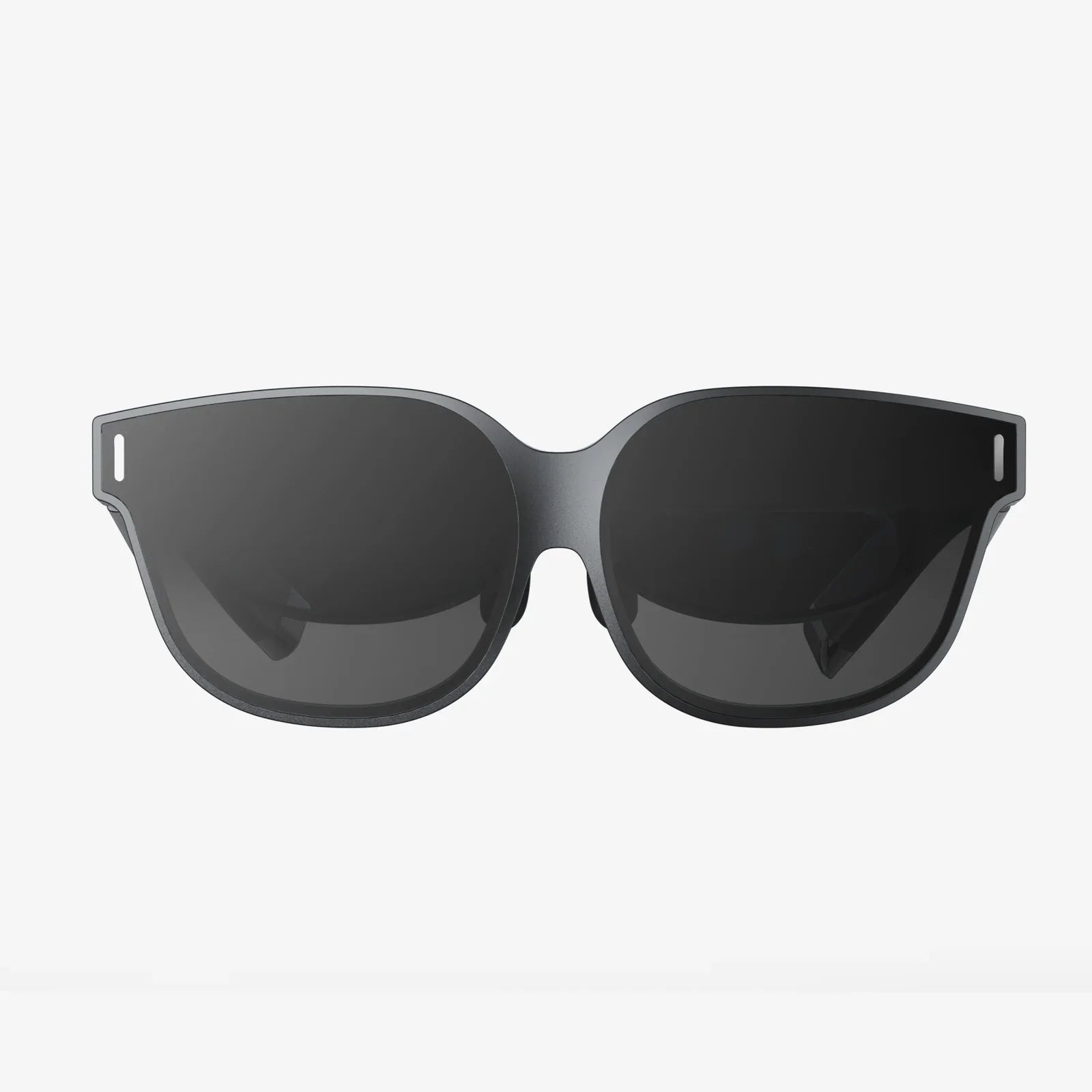
Imagine a world where the digital and physical seamlessly intertwine, where you can learn complex surgery by practicing on a holographic heart, collaborate with colleagues across the globe as if they were in the same room, or walk through ancient ruins rebuilt to their former glory right before your eyes. This is not a distant science fiction fantasy; this is the promise and the rapidly unfolding reality of XR today. We stand at the precipice of a fundamental shift in how we interact with information, with each other, and with reality itself, powered by the convergent evolution of Augmented, Virtual, and Mixed Reality technologies.
The Foundational Trinity: Understanding AR, VR, and MR
To comprehend the vast landscape of XR today, one must first understand its core components. While often used interchangeably, Augmented Reality (AR), Virtual Reality (VR), and Mixed Reality (MR) represent distinct points on a spectrum of immersion.
Virtual Reality is the most immersive of the three, a fully digital experience that transports the user into a computer-generated environment. By wearing a headset that completely occludes the physical world, users are plunged into a simulated reality. This technology is the engine behind deeply engaging gaming experiences, allowing players to not just control a character but to become the character within a fantastical world. Beyond entertainment, VR's power lies in its ability to create controlled, repeatable, and safe simulations for training, from practicing emergency procedures on an aircraft flight deck to desensitizing patients in therapeutic environments.
In stark contrast, Augmented Reality overlays digital information onto the user's view of the real world. Instead of replacing reality, it enhances it. This is most commonly experienced through smartphone screens—witness the viral phenomenon of placing cartoon creatures in your living room via a mobile game. However, the true potential of AR is unlocked through specialized glasses or headsets that project holograms and data directly into the user's field of vision. A mechanic wearing AR glasses could see wiring diagrams superimposed onto an engine block. An architect could walk a client through a full-scale 3D model of a building on the empty plot of land where it will be constructed. AR acts as a contextual visual aid, blending the infinite potential of the digital with the tangibility of the physical.
Mixed Reality sits at the intersection of AR and VR, representing the most advanced and interactive point on the spectrum. MR not only overlays digital objects but anchors them to the physical world, allowing for genuine interaction. A digital character in MR can hide behind your real-world sofa. You can use your hands to manipulate a holographic engine model, taking it apart and putting it back together. MR understands the geometry of your environment, enabling digital content to behave as if it has a physical presence, obeying the laws of physics and interacting with real-world objects. This creates a seamless blend where the line between what is real and what is digital becomes almost indistinguishable.
Beyond Novelty: The Enterprise Revolution
While consumer applications often grab headlines, the most significant and impactful adoption of XR today is occurring within the enterprise sector. Companies across the globe are leveraging these technologies to solve real-world problems, drive efficiency, reduce costs, and enhance safety.
Transforming Training and Education
The field of training and education has been utterly revolutionized. Consider the high-stakes world of medicine. Medical students can now step inside a detailed human body, walking through the circulatory system or practicing intricate surgical procedures on virtual patients without any risk to human life. This "see one, simulate one, do one" methodology drastically reduces the learning curve and improves competency.
This principle applies to countless other industries. Technicians can learn to repair complex machinery through step-by-step AR instructions superimposed on the equipment. Factory workers can be trained on safety protocols within a virtual replica of their hazardous work environment. By enabling experiential learning, XR improves knowledge retention, boosts confidence, and eliminates the risks and costs associated with training on physical equipment.
Redefining Remote Collaboration and Design
The global shift toward remote work has highlighted the limitations of traditional video conferencing. XR today offers a powerful alternative: the concept of the "virtual workspace." Instead of looking at a grid of faces on a screen, engineers from different continents can meet inside a 1:1 scale 3D model of a new product prototype. They can examine it from every angle, make annotations in mid-air, and manipulate components in real-time, collaborating with a sense of shared presence that flat screens cannot provide.
In architecture, engineering, and construction (AEC), stakeholders can conduct virtual walkthroughs of buildings long before ground is broken. This allows for design validation, clash detection, and client presentations that are infinitely more intuitive than blueprints or 3D renders on a monitor. Errors can be caught early, saving millions in costly rework and ensuring the final product meets exact specifications.
Powering Frontline Workers and Field Service
Perhaps the most immediate value is being delivered to frontline workers. A field service technician dispatched to repair a malfunctioning wind turbine no longer needs to be an expert on that specific model. By wearing AR glasses, they can have a remote expert see exactly what they see. This expert can then draw arrows and circles directly into the technician's field of view, guiding them through the repair process. This "see-what-I-see" remote assistance slashes resolution times, reduces the need for specialist travel, and empowers less experienced workers to perform complex tasks.
The Social and Creative Fabric of XR
The implications of XR extend far beyond corporate balance sheets. It is poised to redefine social interaction, storytelling, and artistic expression.
The Emergence of the Social Metaverse
The concept of the metaverse—a persistent network of shared, virtual spaces—is intrinsically linked to XR. While today's metaverse experiences are often accessed through traditional screens, the endgame is a world where we step into these spaces through VR and MR headsets. This promises new forms of social connection where physical distance becomes irrelevant. Concerts, movie nights, museum tours, and casual hangouts can take on a new dimension when you feel like you are truly there with others, represented by expressive avatars. The potential for fostering connection, especially for those who are isolated or geographically dispersed, is immense.
A New Canvas for Artists and Storytellers
XR is not just a consumption medium; it is a revolutionary creative tool. Artists are using VR to paint and sculpt in three-dimensional space, creating works that are impossible to replicate on a flat canvas. Filmmakers are exploring immersive storytelling, placing the viewer inside the narrative rather than as a passive observer. This creates a profound sense of empathy and presence, allowing audiences to experience stories from a first-person perspective. The very definitions of art and narrative are being expanded by the capabilities of immersive technology.
Navigating the Challenges: The Path to Ubiquity
Despite its rapid progress, the journey of XR is not without significant hurdles that must be overcome to achieve mass adoption.
The Hardware Conundrum: Form Factor and Accessibility
For XR to become as ubiquitous as the smartphone, the hardware must evolve. Current generations of high-end headsets, while powerful, can be bulky, expensive, and tethered to powerful computers. The holy grail is a device that is socially acceptable to wear, all-day comfortable, visually indistinguishable from regular glasses, and possesses enough processing power and battery life to deliver compelling experiences. Advances in optics (like pancake lenses), micro-displays, and battery technology are steadily pushing us toward this future, but it remains a key barrier to mainstream consumer use.
The Imperative of User Experience and Comfort
Closely tied to hardware is the user experience. Issues like simulator sickness, caused by a lag between a user's movement and the visual response, can be a major deterrent. Furthermore, creating intuitive user interfaces that leverage hand tracking, eye tracking, and voice commands—moving beyond game controllers—is critical for making the technology accessible to a non-technical audience. Comfort, both physical and psychological, is paramount.
The Ethical Dimension: Privacy and Security
XR technology, by its very nature, is incredibly data-intensive. Headsets with inside-out tracking and eye-tcing cameras are constantly mapping our physical surroundings—our homes, offices, and every detail within them. They can collect biometric data like our gaze, pupil dilation, and even emotional responses. This raises profound questions about data ownership, privacy, and security. Who has access to this intimate data? How is it stored and used? Establishing robust ethical frameworks and regulations is essential to building the trust required for people to welcome these devices into their daily lives.
The Future is Immersive: What Lies Ahead
The trajectory of XR points toward a future of increasingly seamless integration into our lives. We are moving toward hyper-realistic visuals powered by evermore powerful graphics and AI, and miniaturized hardware that will eventually become indistinguishable from standard eyewear. The concept of "spatial computing" will become mainstream, where digital information is not confined to rectangles but is woven into the fabric of our environment, accessible through a glance or a gesture.
This will fundamentally change computing, shifting the paradigm from one where we look at technology to one where we are surrounded by it. It will redefine communication, making remote interaction feel as natural as being present. It will unlock new levels of human productivity and creativity, allowing us to manipulate digital matter as easily as physical matter.
The door to a new layer of reality is now open, and the transformation has already begun. From the operating room to the factory floor, from the classroom to the living room, XR is ceasing to be a speculative technology and is instead becoming an integral, practical, and powerful tool for progress. The question is no longer if this immersive future will arrive, but how quickly we will adapt to its possibilities and shape its responsible development. The next era of human-computer interaction is being written not on screens, but in the space all around us, and it invites every one of us to step inside and participate.
Share:
International Journal of Human-Computer Interaction: Shaping Our Digital Future
Best Rated VR System: The Ultimate Guide to Unmatched Immersive Experiences