


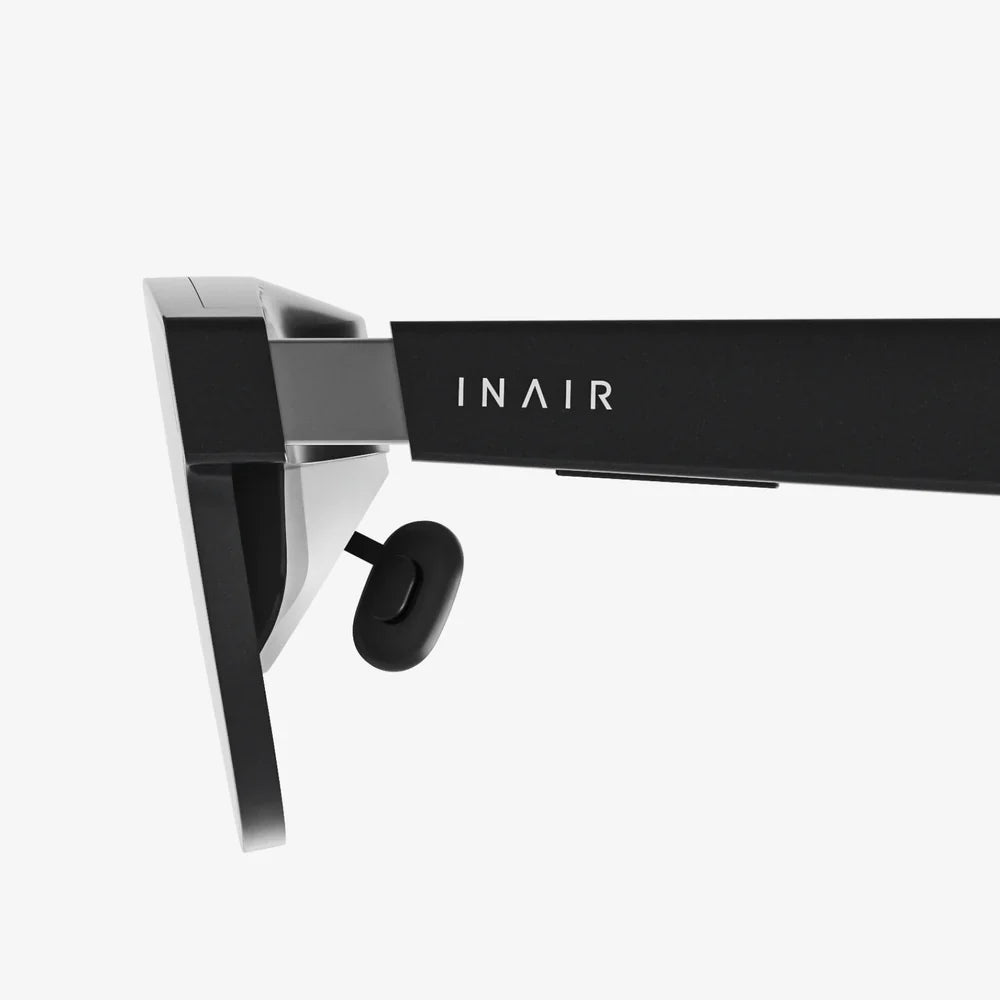
Imagine a world where your digital life isn't confined to a screen in your hand or on your desk, but is instead seamlessly overlaid onto the reality in front of you. Information appears exactly when and where you need it, from navigation arrows painted onto the street to a colleague's name floating above their head at a networking event. This is the promise of 1080p smart glasses, a technological leap that is finally making wearable, augmented computing not just possible, but genuinely compelling. The era of squinting at pixelated projections is over; the age of high-definition, always-available augmented reality is here.
The Resolution Revolution: Why 1080p is the Magic Number
For years, the concept of smart glasses was hampered by a fundamental limitation: display technology. Early iterations suffered from low-resolution displays that were more distracting than helpful, often described as looking through a screen door or watching a heavily pixelated video. Text was difficult to read, and virtual objects lacked the detail needed to feel authentic and integrated into the real world. The jump to 1080p resolution—that's 1920 x 1080 pixels—represents a critical threshold in visual fidelity.
This level of detail is crucial for several reasons. Firstly, text legibility becomes a non-issue. Reading emails, messages, documents, or subtitles is as crisp and clear as looking at a high-quality smartphone screen. Secondly, virtual object integration improves dramatically. A 1080p display can render complex 3D models, intricate UI elements, and video content with enough detail to make them appear solid and believable within your environment. It eliminates the "jaggies" and blur that break immersion, making the digital overlay feel like a natural part of your world rather than a distracting graphic slapped on top.
This shift is akin to the move from standard definition to high-definition television. It's not merely an incremental improvement; it's a transformative experience that changes the entire utility of the device. When the digital layer is this sharp, you stop consciously processing it as a separate display and start accepting it as part of your reality.
Beyond the Screen: A New Paradigm for Human-Computer Interaction
The true power of 1080p smart glasses lies not in replicating the smartphone experience on your face, but in creating an entirely new paradigm for how we interact with technology. This is often referred to as ambient computing or spatial computing.
- Contextual Information: Instead of pulling out your phone to check the weather, a subtle icon indicating sun or rain appears in the corner of your vision. Glancing at a restaurant could trigger reviews and its menu to appear next to the entrance. The information you need is presented contextually, within the space it is relevant.
- Hands-Free Operation: This is a game-changer for productivity and safety. Technicians can view schematics while keeping their hands on complex equipment. Surgeons can monitor vital signs without looking away from the operating table. Cooks can follow a recipe without touching a device with flour-covered hands. Navigation directions are projected onto the road ahead, allowing cyclists and pedestrians to keep their eyes up and aware of their surroundings.
- Persistent Digital Objects: Imagine placing a virtual sticky note on your physical refrigerator that only you can see, or having a large, virtual monitor appear on any empty wall you choose. 1080p resolution ensures these objects are sharp and usable, creating a persistent digital workspace that exists in your environment.
Architecture of Clarity: The Tech Inside the Frames
Packing a full 1080p display system into a form factor that resembles everyday eyewear is a monumental feat of engineering. It requires a sophisticated and miniaturized symphony of components working in perfect harmony.
The most critical component is the waveguide display or micro-optical system. This technology uses tiny projectors, often based on LCoS (Liquid Crystal on Silicon) or advanced MicroLED arrays, to beam light onto a specially engineered piece of glass or plastic in the lens. This waveguide then directs this light into the user's eye, painting the high-resolution image onto their retina while allowing ambient light to pass through for a clear view of the real world. Advancements in nanotechnology and precision manufacturing have been essential to creating waveguides that can cleanly deliver 1080p resolution without excessive bulk or visual artifacts.
Supporting this visual engine is a potent suite of hardware:
- Processing Unit: A miniaturized system-on-a-chip (SoC) that rivals the power of a modern smartphone, capable of rendering complex graphics and running machine learning algorithms in real-time.
- Sensor Array: A suite of sensors including high-resolution cameras, depth sensors, inertial measurement units (IMUs), and microphones. These act as the "eyes and ears" of the glasses, constantly scanning the environment to understand surfaces, track hand gestures, and map the world in 3D.
- Audio System: Advanced bone conduction or miniature directional speakers provide private, spatial audio without blocking out ambient sound, allowing for discreet calls and immersive media without isolating the user.
- Connectivity: High-speed 5G and Wi-Fi 6/6E ensure a constant, low-latency connection to the cloud, offloading heavy processing tasks and enabling real-time data streaming.
Transforming Industries: Professional Applications Today
While consumer applications are thrilling, the most immediate and impactful use cases for 1080p smart glasses are emerging in enterprise and industrial settings, where the hands-free, high-resolution interface provides a tangible return on investment.
- Manufacturing & Field Service: Technicians can access digital work orders, complex assembly diagrams, or receive remote expert guidance through a live video feed, all overlaid directly on the machinery they are repairing. The clarity of 1080p is essential for reading tiny serial numbers or following intricate wiring diagrams.
- Healthcare: Surgeons can monitor patient vitals and view imaging data like MRI scans in their direct line of sight. Medical students can observe procedures from the surgeon's point of view, with annotations highlighting critical steps. The ability to see fine detail is obviously paramount in this field.
- Logistics & Warehousing: Workers fulfilling orders can have picking routes and item information displayed in their vision, dramatically increasing speed and accuracy by eliminating the need to constantly consult a handheld scanner or clipboard.
- Design & Architecture: Architects and engineers can walk through full-scale, immersive 3D models of their designs, making adjustments and visualizing spatial relationships with an unprecedented level of detail and realism.
The Everyday Evolution: Consumer Life Enhanced
Beyond the factory floor and operating room, 1080p smart glasses are poised to subtly but profoundly enhance our daily routines. This is not about replacing reality, but enriching it.
- Navigation Reimagined: Turn-by-turn directions are painted onto the sidewalk and streets, with arrows guiding your path. Landmarks can be highlighted, and public transit information can appear at bus stops.
- Social & Learning Augmentation: At a conference or large meeting, name tags and professional details could appear above people's heads as you look at them, helping you remember names and network effectively. While traveling, real-time translations of street signs and menus could be overlaid onto the real text.
- Immersive Entertainment: Watch a movie on a virtual 100-inch screen from anywhere—on a plane, in a waiting room, or lying in bed. The 1080p resolution ensures a cinema-quality experience. Play games that transform your living room into an alien planet or a fantasy battlefield, with characters and objects rendered in stunning detail.
- Accessibility: For individuals with visual or hearing impairments, this technology can provide real-time captioning of conversations, amplify sounds, or highlight obstacles and enhance contrast in their environment.
Navigating the New Frontier: Challenges and Considerations
The path forward is not without its hurdles. For 1080p smart glasses to achieve mass adoption, several significant challenges must be addressed.
Battery Life: Driving high-resolution displays and powerful processors is energy-intensive. Innovations in low-power components and efficient software are critical to achieving all-day battery life without uncomfortable weight or heat.
Social Acceptance & Design: The "glasshole" stigma from earlier attempts lingers. The design must be fashionable, lightweight, and indistinguishable from regular glasses to many people. This is a major hurdle for manufacturers to clear.
Privacy & Ethics: Devices with always-on cameras and microphones understandably raise privacy concerns. Robust, transparent controls are essential. Users must have clear, physical indicators when recording and absolute control over their data. A strong ethical framework needs to be established to prevent misuse.
Digital Wellness: With a persistent digital layer, the risk of information overload and a new form of digital addiction is real. Developers must prioritize user-wellbeing, designing interfaces that are helpful, not overwhelming, and that know when to disappear.
The journey of 1080p smart glasses is just beginning. We are standing at the precipice of a fundamental shift, moving from looking at our devices to looking through them. The barrier of poor visual quality has been shattered, unlocking a future where our digital and physical realities can finally blend in a seamless, useful, and truly magical way. The world is about to get a major upgrade, and it will be visible in stunning high definition.
Share:
Smart Device Development: Navigating the New Frontier of Interconnected Technology
Smart Glasses HUD News: The Invisible Revolution Reshaping Reality