


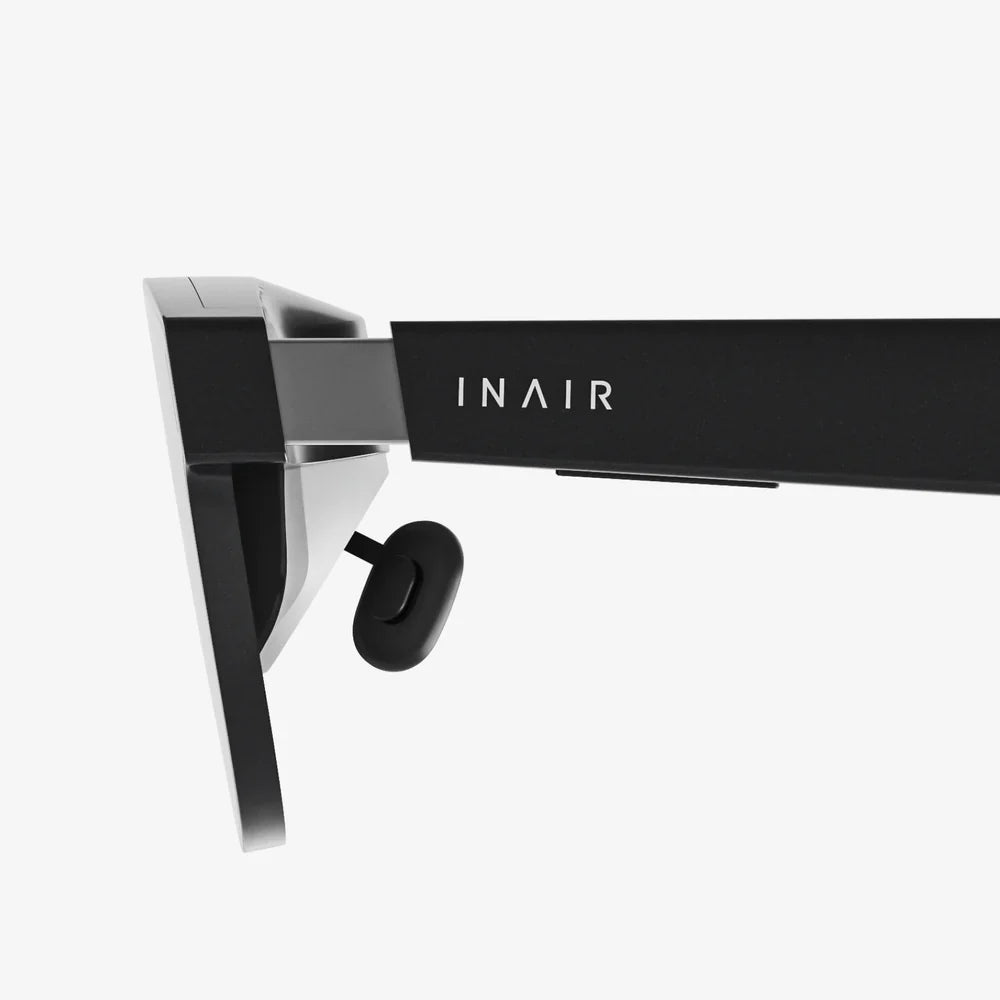
Imagine a world where information doesn’t live on a screen in your hand but is seamlessly woven into the very fabric of your reality. Where directions appear as floating arrows on the sidewalk, a colleague’s name and project role materialize above their head during a meeting, and the nutritional facts of your lunch are instantly visible beside your plate. This isn’t science fiction; it’s the imminent future being built today, and the latest smart glasses HUD news suggests this future is closer than ever before. The race to perfect this technology is heating up, promising an invisible revolution that will fundamentally alter how we interact with the world and with each other.
The Core Technology: More Than Meets the Eye
At the heart of every pair of advanced smart glasses is the Heads-Up Display, or HUD. This is the technological marvel that projects digital information onto a transparent lens, allowing the user to see that information overlaid on their physical environment. Recent news highlights significant evolution in two primary display methodologies.
Waveguide Technology: This is the current frontrunner for consumer-grade and enterprise smart glasses. It involves etching or embedding microscopic patterns onto a transparent glass or plastic substrate. Light from a micro-projector is channeled through this "waveguide," bouncing along its internal structures until it is directed into the user’s eye. The latest iterations have made massive strides in reducing light loss, increasing field of view (FOV), and improving color fidelity and brightness, making the virtual images vibrant even in direct sunlight.
MicroLED Arrays: For a more immersive and brighter experience, some developers are pioneering the use of incredibly small, ultra-bright MicroLEDs projected directly onto the lens. While historically more power-intensive, recent breakthroughs in efficiency and miniaturization are making this a compelling option for high-fidelity applications, from complex engineering schematics to rich media content.
Beyond the display itself, the supporting cast of technology is equally impressive. Advanced spatial audio systems provide directional sound that feels like it’s coming from the environment itself. A suite of sensors, including high-resolution cameras, depth sensors, accelerometers, and gyroscopes, work in concert to understand the world in real-time. This allows the device to precisely anchor digital objects to physical spaces—a concept known as persistent AR. Finally, the entire experience is powered by increasingly sophisticated on-device AI processors capable of understanding voice commands, recognizing objects and scenes, and processing vast amounts of visual data without a constant cloud connection, ensuring user privacy and low latency.
Enterprise and Industrial Applications: Where the Revolution is Already Here
While consumer applications capture the imagination, the most impactful and established smart glasses HUD news originates from the enterprise sector. Here, the value proposition is clear: increased efficiency, enhanced safety, and reduced errors.
- Field Service and Repair: A technician repairing a complex piece of machinery can have the schematic, torque specifications, and a live video feed from a remote expert superimposed directly onto the equipment. This allows for hands-free operation, drastically reducing repair times and minimizing mistakes. Major players in aviation, automotive, and industrial manufacturing are already deploying these at scale.
- Logistics and Warehousing: In massive distribution centers, workers equipped with smart glasses receive order-picking information directly in their line of sight. Digital arrows guide them along the optimal picking path, and item verification happens through augmented reality highlights, skyrockicking picking accuracy and speed while reducing training time for new employees.
- Healthcare and Medicine: Surgeons can visualize patient vitals, 3D scans of anatomy, or guidance systems without looking away from the operating field. Medical students can learn anatomy through interactive 3D models. The potential for remote diagnosis and collaboration is also immense, allowing a specialist to guide a general practitioner through a procedure from thousands of miles away.
- Design and Architecture: Architects and interior designers can walk clients through a full-scale, virtual model of a building before a single foundation is poured. Engineers can visualize and interact with 3D prototypes, making design iterations in real-time.
The news from this sector is one of relentless refinement: lighter, more durable form factors, longer battery life, and software platforms that are becoming more intuitive and powerful by the month.
The Consumer Horizon: From Niche to Mainstream
The journey to consumer-ready smart glasses has been a rollercoaster of hype and disappointment. Early attempts were often bulky, socially awkward, and offered limited functionality. However, recent news and prototype reveals indicate a turning point. The focus has shifted from standalone marvels to a more pragmatic philosophy: the smartphone as a companion.
The emerging paradigm is a sleek, glasses-like form factor that leverages the immense processing power and connectivity of your phone. The glasses themselves handle the display, audio, and sensing, while the phone acts as the brain and modem. This approach keeps the glasses light, affordable, and stylish, overcoming two of the biggest historical barriers to adoption: aesthetics and cost.
Envision these daily use cases:
- Navigation: Turn-by-turn directions are mapped onto the streets ahead, making city exploration intuitive and eliminating the need to constantly glance down at a phone.
- Social and Contextual Awareness: At a conference or large gathering, you could optionally see the names and relevant details of people you’ve met before, pulled from your digital contacts and social networks.
- Live Translation: Look at a foreign menu, and the text instantly translates to your native language, appearing as an overlay. Have a conversation with someone speaking another language, and see near-real-time subtitles.
- Content and Media Consumption: Watch a video or view notifications in a floating window that doesn’t obstruct your view, allowing you to stay connected while being present in the real world.
The key to consumer success lies in contextual and ambient computing—technology that provides information only when you need it, and otherwise fades into the background, enhancing your life without distracting from it.
Navigating the Inevitable Challenges: Privacy, Security, and the Social Contract
As with any transformative technology, the path forward is not without significant hurdles. The most recent smart glasses HUD news often includes serious discussions around ethics and societal impact.
Privacy: A device that sees what you see and hears what you hear is inherently privacy-invasive. The potential for unauthorized recording and data collection is a major concern. The solution will require a multi-faceted approach: robust hardware controls like physical camera shutters, transparent user controls over data collection, on-device processing for sensitive information, and clear, enforceable laws that protect individuals from surveillance.
Social Acceptance: The "glasshole" stigma from earlier failures lingers. Wearing technology on your face in social situations is a new frontier of etiquette. When is it appropriate to use them? Is recording a conversation with someone without their explicit consent acceptable? These social norms will need to be negotiated over time. The design of the devices themselves—making them look as normal as possible—will be crucial for widespread adoption.
Digital Divide and Accessibility: This technology has the potential to be incredibly empowering for people with disabilities, offering real-time auditory descriptions of the world for the visually impaired or transcription services for the hearing impaired. However, ensuring it is developed with accessibility as a core principle, not an afterthought, and that it remains affordable, is critical to prevent a new technological divide.
The Future Lens: What’s Next on the Horizon?
Looking beyond the immediate news cycle, the trajectory of smart glasses HUD technology points toward even more profound integration. We are moving toward a future where the distinction between the digital and physical worlds becomes increasingly blurred.
The next leap will likely be toward photorealistic augmented reality, where digital objects are indistinguishable from real ones, casting accurate shadows and interacting with real-world lighting. This will be powered by neural radiance fields (NeRFs) and other advanced AI-driven rendering techniques.
Further out, the concept of the "metaverse" may find its most natural gateway not through virtual reality headsets that isolate us, but through AR glasses that augment our shared reality. Persistent digital artifacts, shared experiences anchored to specific locations, and new forms of collaborative work and play could all become commonplace.
The ultimate goal is invisible computing. The technology will recede entirely, leaving only the benefit. The glasses will become as lightweight and unremarkable as a standard pair of spectacles, and the interface will move beyond screens and into gestures, voice, and eventually, direct neural input. The information will simply be there when we need it, as if by thought.
The latest smart glasses HUD news isn't just about a new gadget; it's a weekly dispatch from the front lines of a fundamental shift in human-computer interaction. From the factory floor to the living room, this technology is quietly maturing, solving real-world problems, and inching its way toward our faces. The revolution won't arrive with a bang, but with a whisper—a sleek, comfortable, and incredibly powerful pair of glasses that will change not just what we look at, but how we see everything.
Share:
Smart Device Development: Navigating the New Frontier of Interconnected Technology
1080p Smart Glasses: The Invisible Computer Revolutionizing Your World