


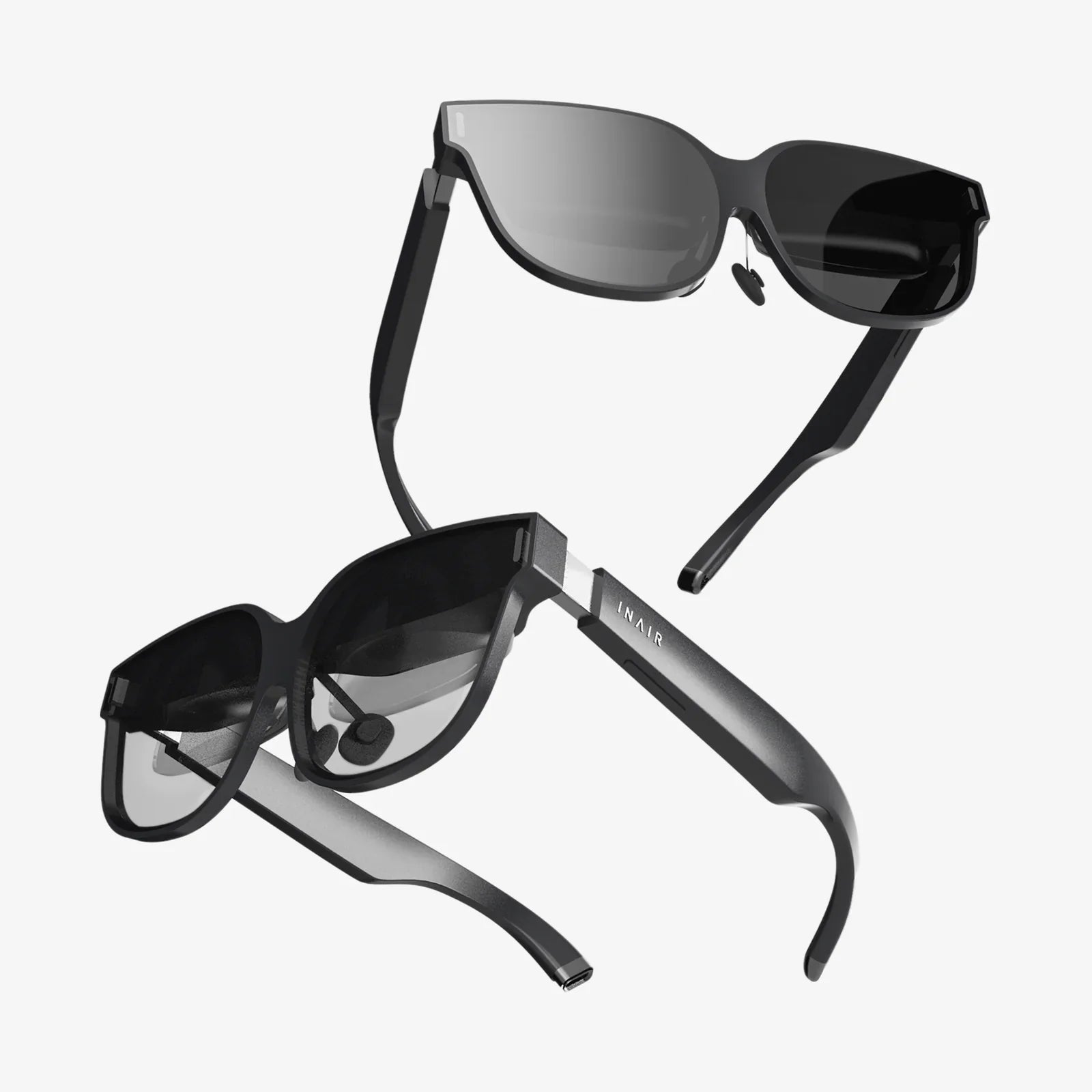
Imagine stepping through your screen, leaving the flat, two-dimensional world behind and plunging into a universe of depth, scale, and breathtaking presence. This is no longer the stuff of science fiction; it's the palpable reality offered by a modern 3D VR headset for PC, the most powerful gateway to virtual worlds ever created. The journey from curious onlooker to active participant in digital realms begins here, at the precipice of a technological revolution that is redefining entertainment, creativity, and human connection.
The Engine Room: Why a PC is the Powerhouse of VR
While standalone VR devices have carved out a significant market, the true apex of virtual reality fidelity is achieved when tethered to a personal computer. The reason is simple: raw, unadulterated processing power. A high-end PC functions as the external brain for the headset, handling the immense computational load required to render two separate, high-resolution images at a blistering 90 frames per second or higher. This split-second rendering for each eye is what creates the convincing, depth-perceiving stereoscopic 3D effect that is the very foundation of immersion.
This symbiotic relationship allows the headset itself to focus on what it does best: tracking your precise movements in real-time and displaying the crystal-clear imagery generated by the computer's graphics card. The result is an experience devoid of the graphical compromises often found in mobile solutions, offering richer textures, more complex environments, highly detailed character models, and vastly superior physics simulations. For those seeking the absolute zenith of visual quality and the most expansive library of cutting-edge content, the PC-tethered path is unequivocally the way to go.
Demystifying the Technology: What's Inside the Visor?
To appreciate the magic, it helps to understand the core components that make these devices work. At its heart, a PC VR headset is a sophisticated assembly of displays, optics, and sensors.
The Displays and Lenses
Each headset contains one or two high-resolution OLED or LCD screens. These displays are positioned behind a pair of specialized lenses that sit between your eyes and the screen. These lenses are the key to the 3D effect; they warp the image from the screen to fill your entire field of view and focus your eyes on a virtual plane that appears meters away, preventing eye strain. The combination of the dual-screen images and the lenses tricks your brain into perceiving a single, coherent, and deep three-dimensional world.
Precision Tracking: Inside-Out vs. External Sensors
For the virtual world to react to your movements, the headset must know exactly where you are and how you're oriented. This is achieved through tracking technology, which primarily comes in two forms:
External Sensor Tracking: This traditional method uses laser-emitting base stations or external cameras placed around your play area. These devices blanket the room with invisible lasers or use cameras to track the precise position of the headset and controllers. This method is renowned for its millimeter-accurate tracking, which is crucial for competitive gaming and professional applications.
Inside-Out Tracking: A more modern approach embeds several wide-angle cameras directly onto the headset itself. These cameras continuously observe the physical environment, using the shifting positions of objects and features in the room to triangulate the headset's location in space without any external hardware. This system offers fantastic ease of setup and portability, making VR more accessible than ever.
The Critical Specs: Resolution, Refresh Rate, and Field of View
When evaluating a headset, three specifications are paramount:
- Resolution: Measured in pixels per eye, higher resolution directly reduces the "screen door effect" (the visible gap between pixels) and dramatically increases clarity. Modern headsets offer 2K per eye or higher, making text legible and worlds stunningly real.
- Refresh Rate: Measured in Hertz (Hz), this indicates how many times the image refreshes per second. A higher refresh rate (90Hz, 120Hz, or even 144Hz) leads to smoother motion, which is essential for comfort and immersion. Low refresh rates can cause nausea and break the sense of presence.
- Field of View (FoV): This is the extent of the observable world seen at any given moment, measured diagonally in degrees. A wider FoV (110 degrees or more) feels more natural and immersive, as it more closely mimics human vision, reducing the sensation of looking through binoculars.
Preparing for Takeoff: The PC Hardware Requirements
Embracing high-end VR requires a capable computer. It's not about having just any PC; it's about having a VR-Ready PC. The most important component is the Graphics Processing Unit (GPU). This is the workhorse that renders the complex 3D environments. A powerful modern GPU is non-negotiable for a smooth, high-fidelity experience.
Equally important is the Central Processing Unit (CPU), which handles the game's logic, physics, and AI. A modern multi-core processor ensures the world reacts intelligently to your actions. Don't underestimate RAM, either; 16GB is the comfortable sweet spot for most titles, ensuring assets load quickly and without hiccups.
Finally, check your connectivity. Most PC VR headsets connect via a high-speed HDMI or DisplayPort cable and a USB port. Some newer models utilize a single USB-C cable that handles both video and data, simplifying the connection process. Ensuring your PC has the correct, high-speed ports is a crucial step before purchase.
A Universe of Experiences: What Can You Actually Do?
The hardware is merely the key; the software is the vast kingdom it unlocks. The library of PC VR content is deep and incredibly diverse, catering to every conceivable interest.
Gaming: The Main Attraction
VR gaming is an entirely new paradigm. It's not just about playing a game; it's about inhabiting it. You aim your weapon by physically raising your arm, you duck behind cover by actually crouching, and you peer around corners by leaning your body. From the heart-pounding intensity of physics-based shooters and the awe-inspiring scale of space simulators to the intricate puzzles of room-scale adventures and the serene tranquility of fishing on a virtual lake, the emotional range and engagement are unparalleled.
Social and Collaborative Spaces
VR has evolved into a powerful social platform. Persistent virtual worlds allow you to meet friends, attend live concerts, watch movies together in a virtual cinema, or simply hang out as stylized avatars. The sense of shared presence—seeing someone's avatar gesture and move in real-time—fosters a connection that video calls cannot match. It's the next evolutionary step in online social interaction.
Creative and Productivity Applications
Beyond entertainment, VR is a transformative tool for creativity and work. Artists can sculpt 3D models in mid-air with intuitive motion controls, architects can walk clients through full-scale building designs before a single brick is laid, and medical students can practice complex procedures in a risk-free simulation. The ability to visualize and manipulate data or creations in three dimensions unlocks new levels of understanding and innovation.
Setting Up Your Play Space
To enjoy room-scale VR, you need a dedicated area free of obstacles. This is your "play space" or "guardian boundary." You define this area during setup, and a virtual wall will appear in your headset if you get too close to the real-world boundaries, preventing accidents. Good cable management, adequate lighting (that doesn't interfere with tracking), and a comfortable rug that lets you feel the center of your space can significantly enhance the experience.
The Future is Already Here: Where is PC VR Heading?
The trajectory of PC VR technology is steep and exciting. We are rapidly moving towards headsets with varifocal lenses that dynamically adjust to where your eyes are focused, mimicking natural depth of field and further reducing eye strain. Eye-tracking technology is becoming more common, enabling foveated rendering—a technique where only the area you are directly looking at is rendered in full detail, massively improving performance. This same technology also allows for more expressive social interactions, as avatars can make realistic eye contact.
Wireless adapter kits are already available, cutting the tether to the PC and offering unparalleled freedom of movement without sacrificing the graphical power of a desktop. As Wi-Fi technology continues to advance, high-fidelity wireless VR will become the standard. Furthermore, developments in haptic feedback, from advanced controllers to full-body suits, promise to engage our sense of touch, making virtual worlds not just something we see, but something we can feel.
The potential is limitless. We are standing at the dawn of a new computing platform, one where we are no longer external observers but active inhabitants of digital space. The 3D VR headset for PC is your ticket to this frontier, a sophisticated piece of technology that serves as a window, a playground, a canvas, and a meeting place. It challenges our definitions of reality and offers a glimpse into a future where the digital and physical seamlessly coexist. The only question that remains is: what will you create, explore, and become once you put it on?
Share:
Is a VR Headset the Ultimate Portal to New Realities?
Best VR Headset Out: The Ultimate 2024 Buyer's Guide to Immersive Technology