


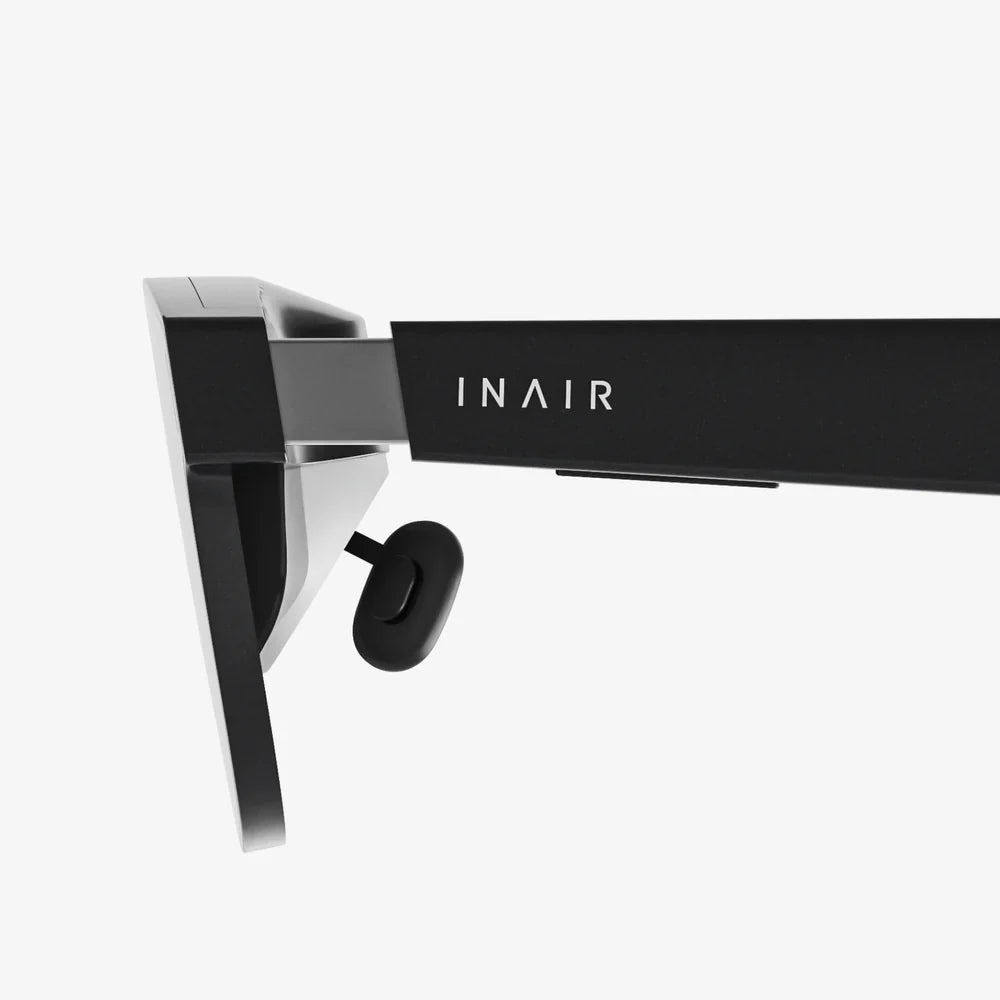
Imagine a screen so sharp, so vibrant, and so perfectly black that the digital world bleeds into your reality, erasing the boundaries between the virtual and the tangible. This is not a glimpse into a distant future; it is the promise held within a component smaller than your fingernail. The relentless pursuit of visual perfection has led us to a technological marvel that is quietly poised to revolutionize everything from how we work to how we escape: the 4K OLED microdisplay.
Deconstructing the Marvel: What Exactly Is a 4K OLED Microdisplay?
To appreciate its significance, we must first break down its name. The term is a triumvirate of cutting-edge concepts, each a breakthrough in its own right, now combined into a single, powerful engine for vision.
Let's start with 4K. In the world of displays, resolution is king. 4K, specifically referring to a resolution of approximately 3840 x 2160 pixels, has become the gold standard for high-end televisions and monitors, offering a level of detail that makes images appear incredibly lifelike. However, achieving this resolution on a massive 65-inch panel is one feat; cramming over 8 million individual pixels onto a display that measures mere millimeters diagonally is an entirely different, and far more complex, challenge. This immense pixel density, often measured in pixels per inch (PPI) reaching astronomical numbers, is what eliminates the "screen door effect"—the visible grid between pixels—that plagued earlier generations of immersive technology. It is the foundation of a seamless visual experience.
Next, we have OLED, or Organic Light-Emitting Diode. This is where the magic of contrast and color comes alive. Unlike traditional LCDs that require a separate backlight, each pixel in an OLED panel is its own microscopic light source. This means when a pixel needs to be black, it can turn off completely, achieving a state of true, absolute black. This capability is the cornerstone of an infinite contrast ratio, where the brightest whites and the most vibrant colors can exist right next to the deepest blacks without any light bleed or halo effects. Furthermore, OLED technology offers superior color gamut coverage, faster response times (eliminating motion blur), and wider viewing angles. For a microdisplay, this translates to visuals that are not just sharp, but profoundly rich, dynamic, and realistic.
Finally, the term microdisplay defines the form factor. These are not displays you look at from a distance; they are displays you look through or into. Typically measuring between 0.2 inches and 1 inch diagonally, these miniature screens are engineered for near-to-eye (NTE) applications. They are the core component in devices like electronic viewfinders (EVFs) in high-end cameras, augmented reality (AR) smart glasses, virtual reality (VR) headsets, and military head-mounted displays (HMDs). Their small size is their greatest asset, enabling compact and lightweight wearable form factors that would be impossible with conventional display technology.
A 4K OLED microdisplay, therefore, is the ultimate fusion of ultra-high resolution, self-emissive pixel perfection, and miniaturized engineering. It is a device designed to create a window into a digital universe that is indistinguishable from our own.
The Architectural Brilliance: How a 4K OLED Microdisplay Works
The creation of such a device is a masterpiece of semiconductor and display technology. The process typically begins with a silicon wafer, not unlike those used to manufacture computer processors. This wafer forms the active-matrix backplane, a complex grid of transistors that acts as the brain, controlling each of the millions of individual pixels with precision. Using advanced photolithography techniques, engineers pattern the wafer to create this pixel array at an incredibly fine scale.
On top of this silicon backplane, the organic OLED layers are deposited. This is often done through a sophisticated process called vapor deposition in a vacuum chamber. The organic compounds are heated until they vaporize, then they condense and form thin, uniform films on the cooled silicon substrate. These layers include the emissive layer, where light is generated when an electric current from the backplane passes through it. The specific organic materials used determine the color of the light emitted—red, green, or blue. Advanced manufacturing techniques allow for these RGB subpixels to be placed with nanometer precision to form a full-color pixel.
This marriage of silicon CMOS (Complementary Metal-Oxide-Semiconductor) technology and OLED materials is often referred to as OLED-on-Silicon (OLEDoS). This synergy is crucial. It leverages the high maturity, precision, and miniaturization capabilities of the semiconductor industry to overcome the limitations of traditional display manufacturing. The result is a microdisplay that is not only incredibly dense but also highly power-efficient and robust.
A Universe of Applications: Where This Technology Comes to Life
The implications of 4K OLED microdisplay technology extend far beyond mere speculation, actively shaping the future of numerous fields.
Virtual and Augmented Reality
This is the most profound and transformative application. For VR, a 4K OLED microdisplay placed mere centimeters from the user's eyes is the gateway to complete immersion. The combination of 4K resolution per eye and perfect OLED blacks eliminates the visual artifacts that remind users they are in a simulation. Exploring a virtual cave feels truly dark and mysterious; the vastness of space feels infinite and awe-inspiring. It is the key to achieving "retinal resolution," where the detail exceeds the human eye's ability to perceive individual pixels, making the experience genuinely believable.
For AR, the technology is perhaps even more critical. AR overlays digital information onto the real world. For this to feel natural and intuitive, the virtual elements must be bright, vibrant, and possess deep blacks to remain visible against bright real-world backgrounds. A microdisplay with poor contrast would make virtual text and objects appear washed out and ghostly. A 4K OLED microdisplay, however, can render crisp, solid, and vivid holograms that appear to coexist naturally with physical reality. This is essential for everything from navigation cues floating over a street to complex engineering schematics overlaid on machinery.
Professional and Medical Imaging
In the professional realm, digital camera viewfinders have been revolutionized. Photographers and videographers can now compose their shots with a live preview that shows exact exposure, color, and depth of field with breathtaking accuracy. This "what you see is what you get" capability is powered by high-resolution OLED microdisplays, allowing for greater creative control and precision.
The medical field presents some of the most demanding use cases. During minimally invasive surgery, such as laparoscopy, surgeons rely on images displayed on monitors. Integrating a 4K OLED microdisplay into surgical head-mounted displays or the eyepieces of medical scopes can provide surgeons with a pristine, high-contrast, and hands-free view of the operative field. The ability to clearly distinguish between subtle tissue shades and see true blacks can be the difference between a successful procedure and a complication. Similarly, these displays are finding use in dental scanners and other diagnostic equipment.
Military and Aerospace
For pilots and soldiers, access to critical information without diverting their attention is a matter of life and death. Helmet-mounted displays using this technology can project flight data, targeting reticles, and night-vision imagery directly onto the wearer's visor. The high resolution ensures readability of complex data, while the OLED's ability to show bright symbols against a true black background ensures clarity even in the blinding glare of a sunny day or the pitch black of night.
The Challenges on the Horizon: Overcoming Technical Hurdles
Despite its immense potential, the path to perfecting and proliferating 4K OLED microdisplays is fraught with significant engineering challenges.
Power Consumption and Heat Dissipation: Packing millions of bright, self-powered pixels into a tiny area generates a considerable amount of heat. Managing this thermal output is critical, as excessive heat can degrade the organic materials in the OLED, reducing its lifespan and color accuracy. Furthermore, for battery-powered wearable devices, power efficiency is paramount. Engineers are constantly battling to improve the luminous efficacy of the OLED materials—getting more light output for less electrical input.
Manufacturing Complexity and Yield: The processes involved in creating OLED-on-Silicon displays are extremely complex and require pristine, contamination-free environments. A single microscopic defect on the wafer can ruin thousands of pixels. Achieving high yields—the percentage of working displays per wafer—is a major challenge that directly impacts cost. Currently, this technology is expensive, limiting its use to high-end applications.
Lifespan and Burn-in: OLED materials, particularly the blue emitters, can degrade over time when subjected to high brightness levels. This can lead to a phenomenon known as burn-in, where a faint ghost of a static image remains permanently visible. For microdisplays that might show static UI elements for long periods, this is a critical issue that is being addressed through material science innovations, pixel shifting algorithms, and improved thermal management.
The Next Frontier: What Lies Beyond Today's Technology
The evolution of the 4K OLED microdisplay is far from over. Research and development are pushing the boundaries in several exciting directions. The next logical step is an move to 8K resolution, further increasing pixel density to levels that will make even today's best displays seem archaic. Integration with advanced optics like metasurfaces and light fields will solve current issues with focus and vergence-accommodation conflict in VR/AR, making long-term use more comfortable and natural.
Perhaps the most intriguing development is the move toward transparent OLED microdisplays. This would allow for even more compact and elegant AR glasses designs, where the display itself could be seamlessly integrated into a standard-looking lens. Furthermore, the pursuit of better, more stable, and more efficient organic emitting materials continues unabated, promising longer lifetimes, higher brightness, and even wider color gamuts that could surpass the capabilities of the human eye.
The 4K OLED microdisplay is more than just a component; it is an enabler. It is the key that unlocks a future where digital information enhances our perception of reality rather than distracting from it, where virtual worlds are built with the same depth and nuance as our own, and where the tools we use to see, create, and heal are limited only by our imagination. This tiny titan of technology is not just showing us a brighter screen; it is showing us a brighter future.
We stand on the precipice of a visual revolution, one where the very definition of a 'screen' is being rewritten. The journey into this hyper-realistic digital frontier begins not with a large television on your wall, but with a microscopic array of lights closer to your eye than your eyelashes. The gateway to unparalleled immersion, professional precision, and a new layer of reality is now open, waiting for you to take a closer look and see what was once invisible.
Share:
Wearable Service The Next Frontier in Personal Technology and Proactive Health
Advanced Reality: The Invisible Revolution Reshaping Our World