


- by wangfred
Advanced Reality: The Invisible Revolution Reshaping Our World
- by wangfred
Imagine a world where your morning run is guided by a digital coach who appears right beside you, where the history of the building you pass is narrated by its architect, and where your workspace is not a desk but an infinite, custom-built digital universe. This isn't a distant dream; it's the imminent future promised by the convergence of technologies we collectively term Advanced Reality. This revolution is not about putting on a headset to escape our world, but about using technology to enhance, inform, and enrich our perception of the reality we already inhabit. It’s a paradigm shift so profound it will redefine everything from how we work and learn to how we connect and create, blurring the lines between the physical and the digital until they become one seamless experience.
Advanced Reality is not a single technology but a spectrum of immersive experiences that blend the physical and digital worlds to varying degrees. At one end lies Augmented Reality (AR), which overlays digital information—images, text, animations—onto our view of the real world through devices like smartphones or smart glasses. It’s a subtle enhancement, like having a heads-up display for life. At the opposite end is Virtual Reality (VR), which fully immerses the user in a completely digital environment, effectively replacing reality for a period. Between these two poles exists Mixed Reality (MR), where digital objects not only coexist with the physical world but can interact with it in real-time—a digital ball bouncing off your real-world table, for instance.
The ultimate expression of this technological convergence is the concept of the Metaverse or the Spatial Web—a persistent, shared, and interconnected digital layer over the entire world, accessible through Advanced Reality interfaces. This isn't merely a new platform; it's a new frontier for human experience, a three-dimensional internet you don't browse but inhabit.
The magic of Advanced Reality is powered by a sophisticated symphony of hardware and software advancements. The journey begins with precise spatial mapping. Using a combination of cameras, LiDAR (Light Detection and Ranging), radar, and other sensors, devices must first understand the geometry of the environment around them. They create a detailed 3D mesh of the room, identifying floors, walls, tables, and other surfaces. This allows digital content to be placed and anchored with stunning accuracy, ensuring a virtual vase sits convincingly on a real table without drifting or jittering.
Next comes the critical challenge of tracking and persistence. For immersion to hold, the system must understand not only the environment but also the user’s position within it. This is achieved through inside-out tracking, where cameras on the headset or glasses track the user's movement relative to the room. Simultaneously, eye-tracking and hand-tracking technologies are evolving to allow for natural interaction. You can reach out and grab a digital object with your bare hands, or control an interface with a glance. Furthermore, persistence ensures that the digital objects you leave in your environment are still there when you return, even if you power your device off and on again.
Underpinning all of this is the colossal processing power required to render complex 3D graphics in real-time. While onboard chips are becoming incredibly powerful, the true enabler is edge cloud computing. By offloading the heavy computational lifting to powerful remote servers, Advanced Reality devices can become lighter, more affordable, and have longer battery life, all while delivering photorealistic visuals. Finally, the rise of AI and machine learning acts as the brain of the operation. AI algorithms are used for object recognition (understanding that a flat, raised surface is a 'table'), for generating realistic avatars that mirror our facial expressions, and for predicting user intent to create more intuitive interfaces.
While consumer applications like gaming and social media often grab headlines, the most profound immediate impact of Advanced Reality is happening within enterprise and industry.
In manufacturing, technicians wearing AR glasses can see schematics and instructions overlaid directly onto the machinery they are repairing, guiding them through complex procedures step-by-step and hands-free. This reduces errors, slashes training time, and improves safety. Designers and engineers use VR to prototype and interact with full-scale 3D models of cars or buildings long before any physical prototype is built, enabling collaboration across the globe within a shared virtual space and identifying potential design flaws early.
The field of medicine is being transformed. Surgeons use AR to visualize a patient’s anatomy, such as the precise location of tumors and blood vessels, directly on the patient during procedures, increasing precision and improving outcomes. Medical students can practice complex surgeries in risk-free VR simulations. Furthermore, AR is being used for physical therapy, guiding patients through exercises with perfect form, and for phobia treatment, allowing patients to confront their fears in controlled, virtual environments.
Advanced Reality is solving one of online shopping's biggest drawbacks: the inability to try before you buy. Consumers can use their smartphone cameras or AR glasses to see how a new sofa would look in their living room, how a pair of glasses fits their face, or how a shade of paint changes a room's ambiance. This bridges the gap between the digital and physical shopping experience, reducing return rates and increasing consumer confidence.
Education is shifting from passive learning to active experience. Instead of reading about ancient Rome, students can take a virtual field trip and walk its streets. Instead of watching a video about the solar system, they can stand amidst the planets, understanding their scale and motion intuitively. This experiential learning dramatically improves retention and engagement. Similarly, from firefighters to pilots, professionals in high-risk fields can train for dangerous scenarios in a completely safe, virtual environment.
Perhaps the most fascinating and complex implications of Advanced Reality are sociological and ethical. These technologies promise to revolutionize human connection. Spatial computing enables a sense of telepresence—the feeling of truly being in a room with someone else, even if they are on another continent. Their lifelike avatar can maintain eye contact, gesture, and convey body language, making remote collaboration and social interaction far more natural and effective than a flat video call ever could.
However, this power comes with significant questions. The concept of reality arbitration—who gets to decide what digital layer is overlaid on our world?—is a critical one. Will we be subjected to a future of digital spam and visual pollution? Could malicious actors create convincing but false realities? The potential for misinformation and manipulation is staggering. Furthermore, the collection of biometric data—our eye movements, our facial expressions, the detailed layout of our homes—raises monumental privacy concerns. This data is incredibly intimate and must be protected with robust ethical frameworks and regulations.
There is also the risk of a new digital divide. Will access to these enhanced experiences and the economic opportunities they create be available to all, or will they become a privilege for the wealthy, creating a class of reality-haves and have-nots? Finally, we must consider the psychological impact. If we can custom-build our realities to be perpetually pleasing, will we become less resilient to the un-augmented, and sometimes harsh, real world?
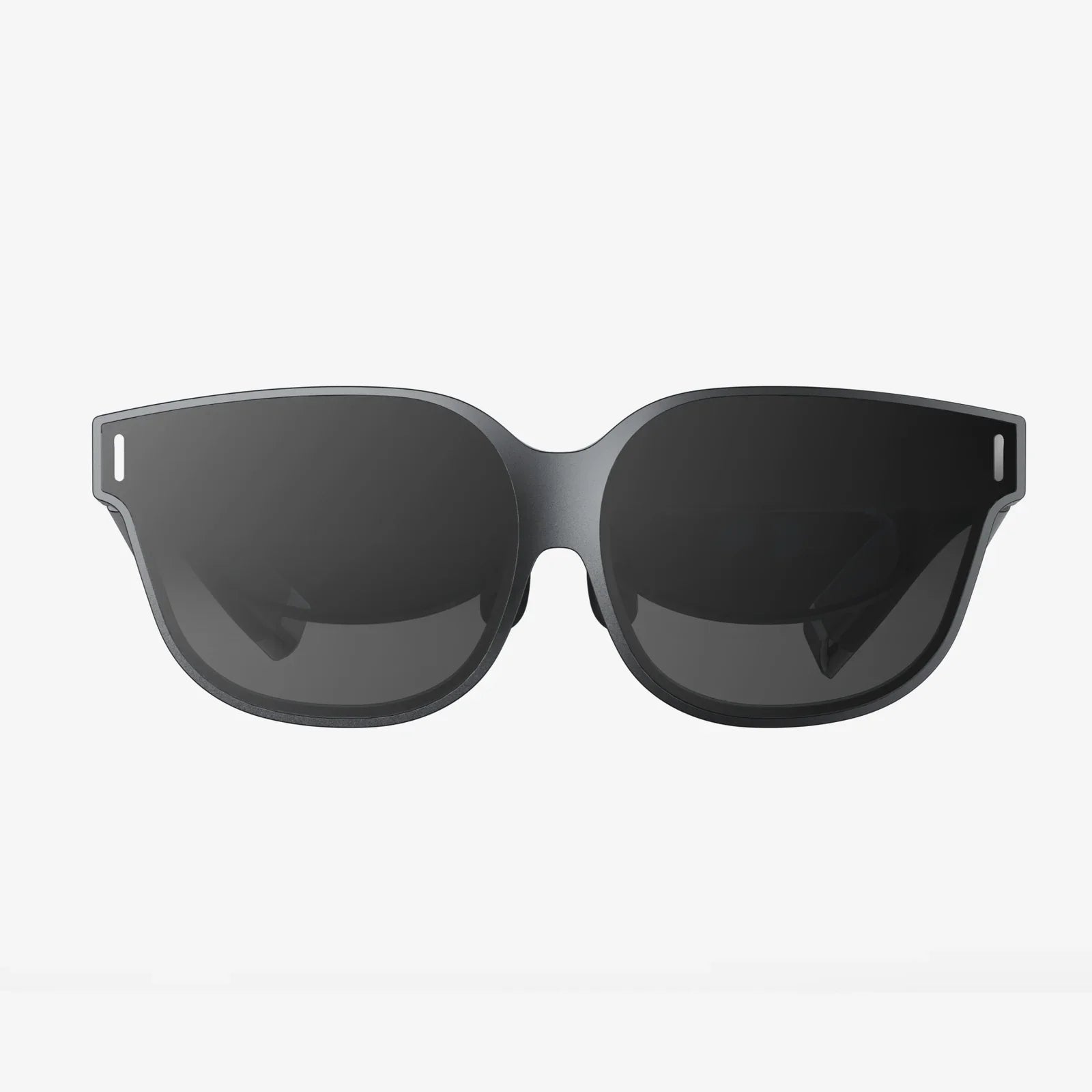
For Advanced Reality to move from a niche technology to a truly mainstream, pervasive platform, several hurdles must be cleared. The hardware needs to evolve towards the ultimate goal: stylish, socially acceptable glasses that are as lightweight and comfortable as a pair of everyday eyewear. They must offer all-day battery life, seamless connectivity (likely 6G and beyond), and stunning visual fidelity without causing eye strain or motion sickness.
Equally important is the development of a unified open standard—a foundational protocol for the Spatial Web. The internet we know today works because of common standards like HTTP and HTML. The immersive internet needs its own equivalent to ensure interoperability. A digital asset created in one application or world should be able to move freely to another, preventing the walled gardens and platform lock-in that plague today's digital ecosystems.
Finally, we need a new language of design. User experience (UX) and user interface (UI) designers are moving from designing for flat screens to designing for 3D space. This requires a completely new set of principles focused on spatial awareness, ergonomics, and intuitive, gesture-based interaction.
The path forward is one of collaboration between technologists, artists, ethicists, and policymakers. The choices we make today about privacy, security, and open access will fundamentally shape the reality of tomorrow. This isn't just about building better technology; it's about building a better future with that technology.
We stand at the precipice of the next great computing revolution, one that promises to weave the digital fabric of information directly into the tapestry of our physical lives. The devices are getting lighter, the graphics more real, and the AI smarter, quietly building an immersive layer atop our world that is poised to change everything. The question is no longer if Advanced Reality will become integral to our daily lives, but how quickly we will adapt to a world where the only limit is our imagination—and what breathtaking experiences await us just on the other side of the screen.