


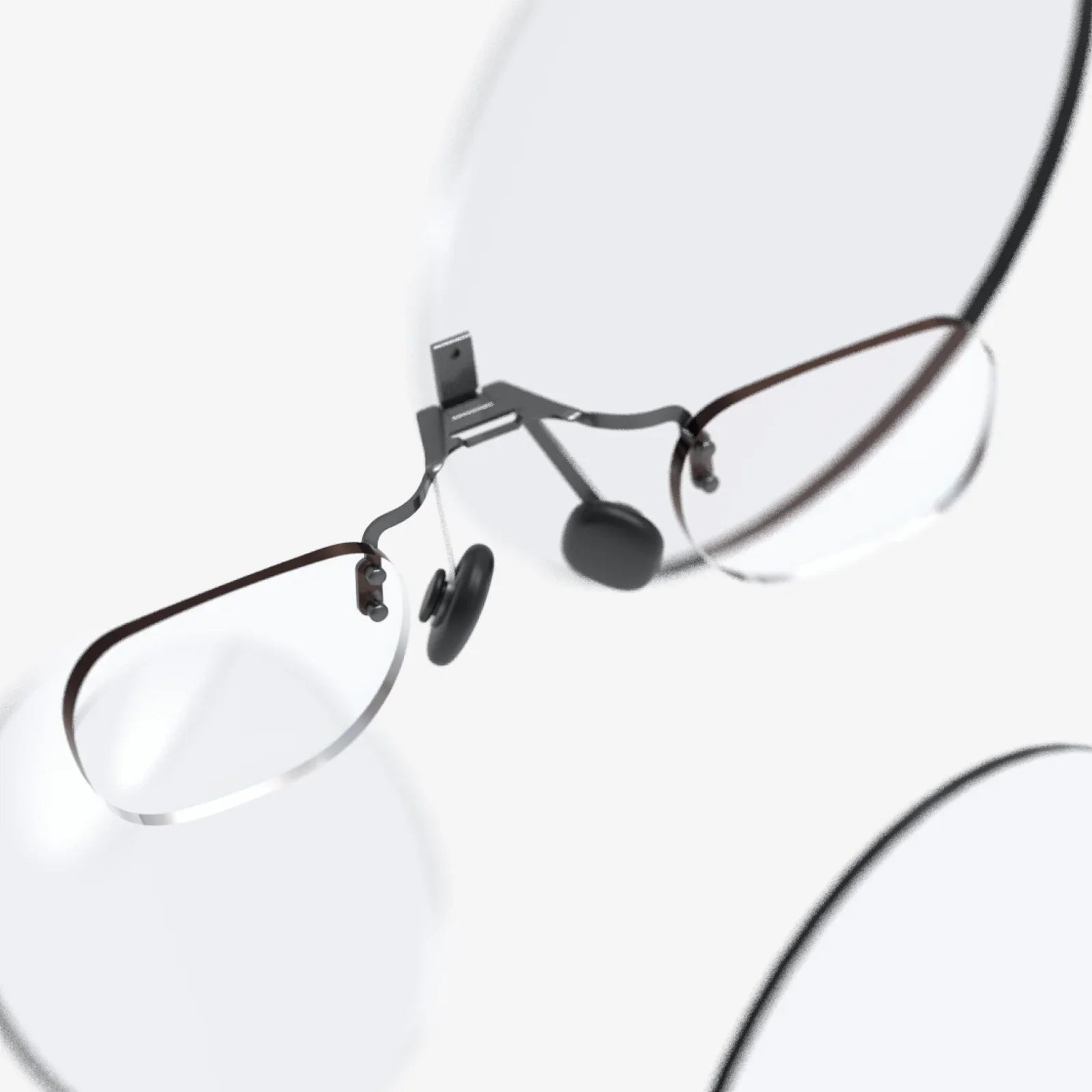
Imagine slipping on a pair of sleek, unassuming glasses and watching the world around you transform. Data floats effortlessly beside your morning coffee machine, a virtual pet plays on your living room floor, and a repair manual for your car engine overlays perfectly onto the real thing—all in stunning, photorealistic clarity. This is the promise of augmented reality, a future once reserved for billion-dollar industries and tech visionaries with deep pockets. But that future is no longer a distant dream. A seismic shift is underway, making the once impossible combination of affordable AR headsets with high resolution not just a possibility, but a tangible reality available to the masses. The barrier between our digital and physical worlds is crumbling, and it's doing so with unprecedented sharpness and accessibility.
The Resolution Revolution: Seeing is Believing
For years, the pursuit of high resolution in AR has been the primary technical hurdle. Early consumer AR experiences were often plagued by a problem known as the "screen-door effect," where users could see fine lines between pixels, making text hard to read and virtual objects look obviously artificial. Resolution, measured in pixels per degree (PPD), is the key metric. The human eye can resolve approximately 60 PPD. Early headsets struggled to reach even half of that, creating a frustrating and immersion-breaking experience.
The quest for high resolution is about more than just bragging rights; it's fundamental to usability and comfort. Low-resolution displays cause eye strain, make text unreadable, and prevent virtual objects from convincingly anchoring to the real world. High resolution eliminates these issues. It allows for:
- Seamless Digital Integration: Text, interfaces, and 3D models appear crisp and solid, not fuzzy or translucent.
- Enhanced Comfort: Reduced eye strain during prolonged use, as your eyes aren't constantly struggling to focus.
- True Immersion: The magic of AR relies on the illusion that digital content is part of your reality. High resolution is the primary factor in selling that illusion.
Traditionally, achieving this clarity required exotic, expensive components like custom micro-OLED displays and complex, precision-engineered waveguide optics, driving the cost of headsets into the thousands of dollars. This placed them firmly in the domain of enterprise and specialized fields.
The Driving Forces Behind the Price Plunge
So, how did we arrive at the tipping point of affordable AR headsets with high resolution? It wasn't a single breakthrough but a perfect storm of technological maturation and market forces converging.
1. Mass Production of Core Components
The smartphone industry is the unsung hero of affordable AR. The massive investment in developing high-density, small-form-factor displays for phones has created a supply chain that AR manufacturers can now leverage. Similarly, advancements in miniaturized sensors (gyroscopes, accelerometers, magnetometers) and cameras, all driven by mobile phone demand, have become incredibly cheap and powerful, providing the essential tracking and sensing capabilities for AR at a fraction of their former cost.
2. Software and Processing Efficiencies
Software has played an equally important role. Better computer vision algorithms, machine learning models for object recognition, and more efficient rendering techniques mean that developers can do more with less processing power. This allows newer headsets to use less expensive, off-the-shelf mobile processors or streamlined custom chips instead of requiring a tethered connection to a high-end computer. Cloud computing also offers a path to offload heavy processing tasks, further reducing the hardware requirements and cost inside the headset itself.
3. A Shift in Market Strategy
Tech companies have realized that for AR to become the next major computing platform, it must first achieve widespread adoption. This means moving beyond niche enterprise applications and into the consumer space. A strategy of selling hardware at a lower margin (or even at a loss) to build a massive user base and ecosystem of software and services has become a viable path forward. The goal is no longer to make the most advanced headset for a few, but a good enough headset for everyone.
What to Look For: Beyond the Spec Sheet
While "high resolution" is the headline feature, it's only one part of the equation for a great AR experience. When evaluating affordable AR headsets with high resolution, consider these other critical factors that contribute to overall value and performance.
- Field of View (FoV): This is the extent of the observable world you can see through the headset where digital content can appear. A high-resolution display is less impressive if it's only projected onto a small, postage stamp-sized area in the center of your vision. A wider FoV is more immersive but technically challenging and expensive.
- Tracking and Latency: How well does the headset understand its environment and your movements? Precise inside-out tracking (where the headset uses its own cameras to map the world) is essential for placing objects stably. Low latency—the delay between your movement and the display updating—is critical for preventing motion sickness and maintaining the illusion of reality.
- Form Factor and Comfort: Is the device a bulky helmet or a pair of glasses you can wear for hours? Affordability often comes with compromises in size and weight, but the best designs prioritize comfort for everyday use.
- Battery Life: Truly untethered AR requires good battery life. Nothing breaks immersion faster than a device dying in the middle of an experience.
- Content Ecosystem: A headset is useless without compelling apps, games, and tools. The value of the device is directly tied to the software available for it.
The Impact: Changing How We Work, Learn, and Play
The availability of clear and affordable AR technology is set to democratize its applications far beyond what we've seen so far.
Revolutionizing Education and Training
Imagine medical students practicing complex surgical procedures on detailed, high-resolution holograms before ever touching a cadaver. Mechanics could see the internal components of an engine overlaid directly onto the physical machine, with step-by-step instructions highlighting exactly which bolt to turn next. This hands-on, visual learning is profoundly more effective than reading a manual or watching a video.
Transforming the Workplace
From logistics and manufacturing to field service and design, AR is a powerful tool. Warehouse workers can have order-picking information and optimal routes displayed in their vision, drastically improving efficiency. Remote experts can see what a field technician sees and annotate their real-world view with arrows and notes to guide them through a repair, eliminating travel time and costs.
Redefining Entertainment and Social Connection
Games will escape the confines of television screens and take over your living room with characters and environments that look and feel real. Social media will evolve into shared experiences where you and a friend on the other side of the world can play with the same virtual chess set on your respective coffee tables, all while seeing each other's avatars in high fidelity.
The Road Ahead: A Clearer Future
The journey toward perfect, ubiquitous AR is not over. Challenges remain in achieving human-eye-level field of view, all-day battery life in a glasses-like form factor, and creating truly intuitive user interfaces. However, the dam has broken. The combination of affordable AR headsets with high resolution is the foundational step that will ignite the creativity of developers and attract millions of new users. This critical mass will accelerate innovation faster than ever before, driving down costs further and pushing capabilities higher in a virtuous cycle.
We are standing at the precipice of a new era of computing. The devices that will merge our digital and physical realities are shedding their prohibitive cost and technical limitations, becoming tools for creators, students, workers, and everyday explorers. The world is about to get a major upgrade, and for the first time, everyone will have a front-row seat to a revolution that’s not just happening on a screen, but all around you. The only question left is: what will you create when you can see the impossible?
Share:
AI Wearable Devices: The Silent Revolution Reshaping Our Daily Lives
Best Virtual Headset: Your Ultimate Portal to Immersive Digital Realities