


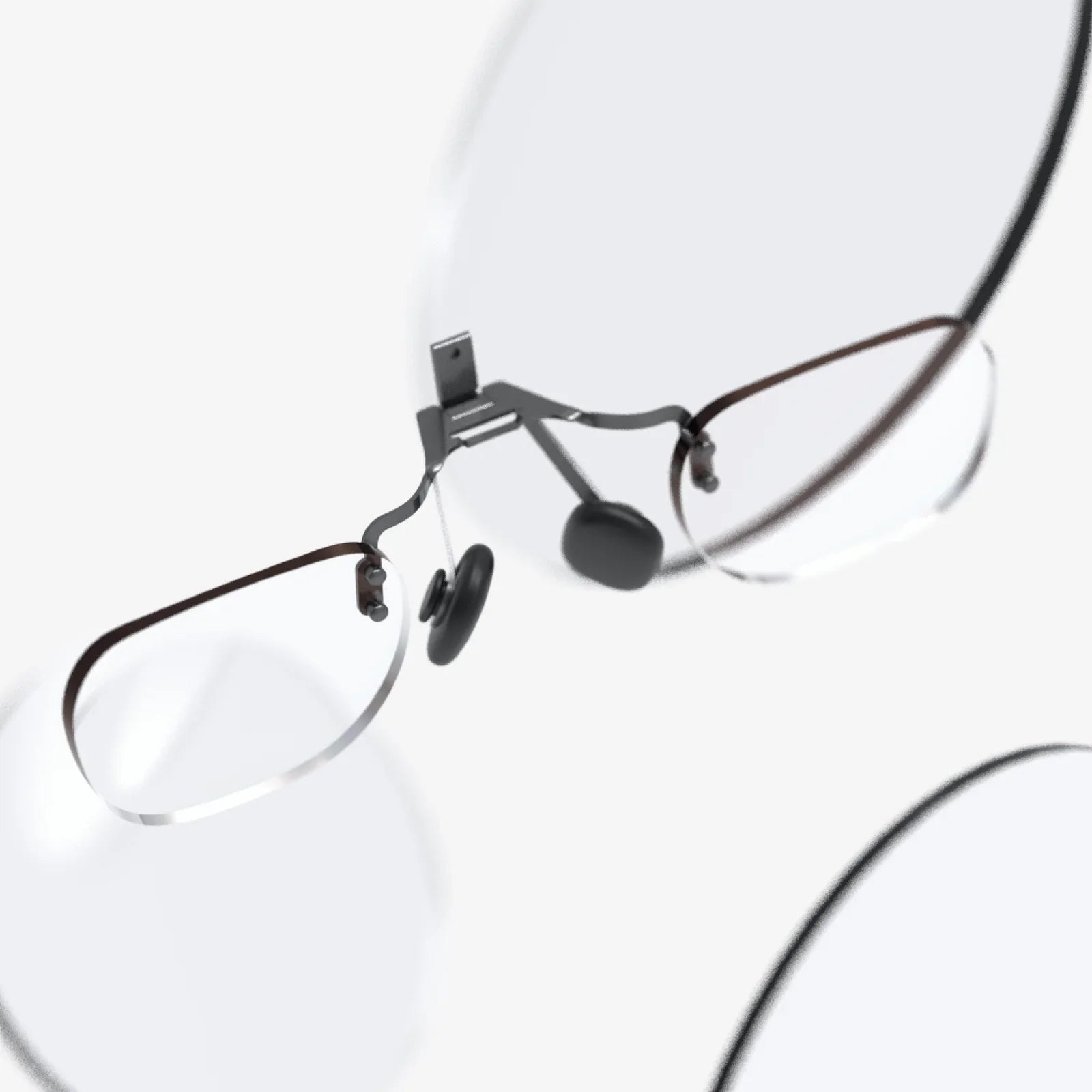
Imagine a world where digital information doesn't just live on a screen in your hand but is seamlessly woven into the fabric of your reality, accessible through a lightweight, affordable visor powered by the device you already own. This isn't a distant sci-fi fantasy; it's the imminent future being built today, and its name is the Android AR headset. This convergence of mature mobile technology and cutting-edge augmented reality is poised to democratize spatial computing, turning every Android smartphone into a potential gateway to an enriched world.
The Foundation: Why Android and AR Are a Perfect Match
The marriage of Android and augmented reality is a partnership built on foundational strengths. Android, as the world's most ubiquitous mobile operating system, offers an unparalleled ecosystem. Its open-source nature fosters innovation and customization, allowing hardware manufacturers to experiment with form factors and features without being constrained by a closed ecosystem. This is crucial for a nascent technology like AR, where the "perfect" design has yet to be standardized. One manufacturer might prioritize a sleek, glasses-like design for all-day wear, while another might focus on a more robust visor for immersive gaming and media consumption. Android's flexibility accommodates this diversity.
Furthermore, the vast installed base of powerful Android smartphones presents a unique advantage. Many modern Android devices are technological powerhouses, equipped with high-resolution displays, sophisticated inertial measurement units (IMUs), powerful processors, and advanced cameras—all the essential ingredients for compelling AR experiences. An Android AR headset can leverage this existing hardware, acting as a high-resolution stereoscopic display and sensor array, while the phone acts as the brain. This symbiotic relationship drastically reduces the cost and complexity of the headset itself, moving it from a standalone, expensive computing device to a more accessible peripheral.
Beyond the Phone: The Standalone Android AR Future
While phone-powered tethered headsets represent a critical first step, the true endgame for many in the industry is the standalone Android AR headset. These are all-in-one devices that integrate the display, sensors, battery, and computing hardware into the wearable itself, running a custom version of Android or a similar AOSP-derived operating system optimized for spatial computing. This approach untethers the user completely, offering ultimate freedom of movement.
Developing for such a platform requires a reimagining of the Android experience. The user interface must transition from a flat, touch-centric paradigm to a three-dimensional, voice- and gesture-controlled environment. Core tenets of Android development, like responsive design, take on a new meaning when the "screen" is the entire world around the user. Developers are creating new interaction models where digital objects can be pinned to physical spaces, information can be browsed using eye gaze and subtle hand motions, and apps are experienced as persistent layers atop reality. This shift is as significant as the move from desktop to mobile, and it's happening on a familiar foundation, lowering the barrier for developers already versed in the Android toolkit.
The Hardware Symphony: Sensors, Displays, and Processors
The magic of an Android AR headset is orchestrated by a symphony of advanced hardware components working in concert. At its heart are the optical systems, typically employing waveguides or other systems to project images from micro-displays onto transparent lenses, allowing the user to see the real world with digital overlays. The quality of this optical stack is paramount, determining the field of view, brightness, and clarity of the virtual elements.
Simultaneously, a suite of sensors is constantly mapping the environment. Cameras work to perform simultaneous localization and mapping (SLAM), understanding the geometry of the room, tracking surfaces like floors and tables, and recognizing objects. Depth sensors, such as time-of-flight sensors, add a crucial layer of understanding by precisely measuring distances. All this sensor data is processed in real-time by specialized chipsets, often including a dedicated AI processing unit (APU) or neural processing unit (NPU) to handle the immense computational load of understanding the world. This continuous loop of perception, processing, and projection is what makes a compelling and stable AR experience possible, preventing digital objects from jittering or drifting away from their physical anchors.
A World of Use Cases: From Practical to Fantastic
The potential applications for Android AR headsets stretch far beyond novelty filters and simple games. They promise to revolutionize numerous aspects of our daily lives:
Navigation and Exploration
Imagine walking through an unfamiliar city with directional arrows painted onto the sidewalk, historical information popping up about buildings as you glance at them, and reviews for restaurants appearing over their entrances. An Android AR headset turns the entire world into an interactive guidebook.
Remote Assistance and Collaboration
A technician repairing complex machinery could see animated instructions overlaid directly on the equipment, while a remote expert can see their view and draw virtual arrows to guide them. Colleagues in different locations could collaborate on a 3D model as if it were physically present in the room between them.
Education and Training
Students could dissect a virtual frog, watch historical events unfold on their desk, or explore the solar system in their classroom. Medical students can practice procedures on detailed holographic anatomy, reducing risk and improving learning outcomes.
Retail and Design
Visualize how a new sofa would look in your living room at full scale before you buy it. Try on virtual clothes or glasses without ever stepping into a changing room. Architects and interior designers can walk clients through immersive holographic mock-ups of unbuilt spaces.
Navigating the Challenges: The Path to Mainstream Adoption
Despite the exciting potential, the road to ubiquitous Android AR headset adoption is not without its obstacles. A significant hurdle is achieving a socially acceptable form factor. Current technology often requires compromises, resulting in devices that can be bulky, have limited battery life, or generate noticeable heat. The holy grail is a pair of AR glasses that are indistinguishable from regular eyewear, a goal that requires massive advancements in miniaturization of batteries and optics, as well as improved power efficiency.
Another critical challenge is creating intuitive and fatigue-free user interfaces. Interacting with 3D content using hand-tracking or voice commands is powerful but can be less precise and more mentally taxing than using a mouse or touchscreen for certain tasks. Refining these interaction models to feel as natural and effortless as using a smartphone is key. Furthermore, issues of privacy, data security, and digital etiquette in public spaces need to be addressed as this always-on, always-sensing technology becomes more prevalent.
The Developer's Playground: Building the Metaverse
The ultimate success of the Android AR headset platform hinges on its developers. The open and familiar nature of the Android ecosystem is its greatest asset here. By leveraging tools and game engines that support AR development, creators can build experiences that range from utility apps that help with daily tasks to immersive games that transform a local park into a fantasy battlefield. The concept of the metaverse—a persistent network of interconnected virtual spaces—is often cited as the killer app for AR and VR. Android AR headsets could be the primary vehicle for accessing a more open, interoperable version of this idea, where digital assets and identities are not locked into a single company's walled garden but can move freely across applications built by a diverse global community of developers.
The ripple effects of this technology are already beginning to touch our lives, often in subtle ways. The camera apps on our phones can measure distances, furniture stores let us preview products in our homes, and navigation apps overlay directions onto a live video feed. These are the precursors, the timid first steps of a technology preparing for its grand entrance. The Android AR headset is the vessel that will carry this capability from our palms and into our field of vision, fundamentally altering our relationship with information and with each other. It promises not to replace reality, but to augment it, making us more informed, more efficient, and more connected to the digital layer that is increasingly inseparable from our physical existence. The revolution won't be confined to a screen; it will be painted onto the world itself, waiting for you to put on the lens and see it.
Share:
What's the Cheapest VR Headset for PC? A Budget Buyer's Deep Dive
VR Headset Latest Models: A Deep Dive into the Next Generation of Immersive Technology