


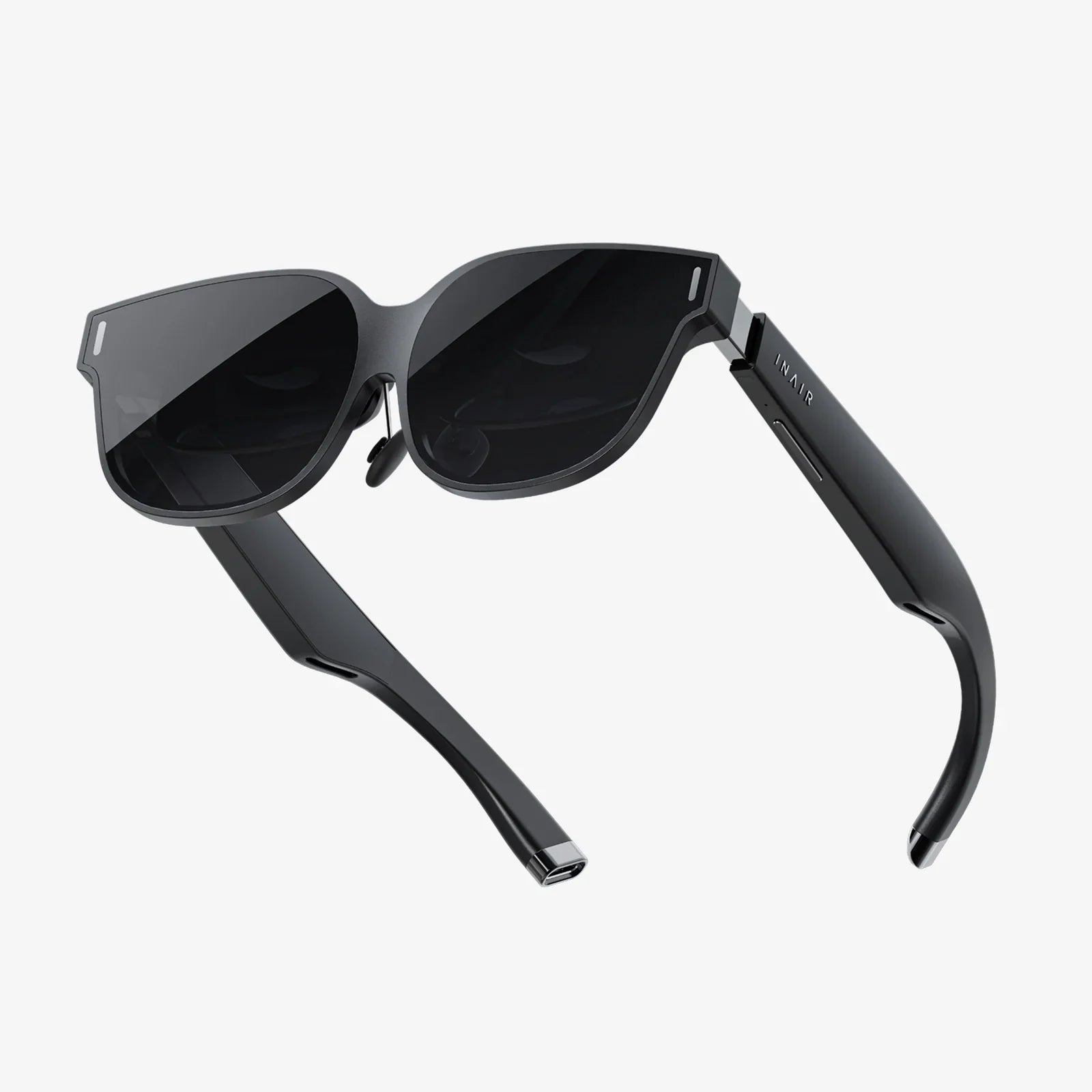
Imagine a world where digital information doesn't just live on a screen in your hand but is seamlessly woven into the fabric of your reality. This is the promise of Augmented Reality (AR) glasses, a technology poised to revolutionise how we work, learn, play, and connect. For tech enthusiasts, professionals, and everyday consumers across the UK, the question is no longer if this future will arrive, but when and how to be a part of it. The journey into this blended world is beginning right now, and it’s more accessible than you might think.
The Evolution of Wearable Tech: From Sci-Fi to High Street
The concept of augmenting our vision with computer-generated imagery has been a staple of science fiction for decades. However, the path from fantasy to tangible consumer product has been a complex one, marked by rapid innovation and occasional setbacks. Early attempts were often bulky, expensive, and limited in functionality, confining them to research labs and industrial applications.
The landscape began to shift with the proliferation of powerful smartphones, which effectively put a sophisticated AR computer in everyone's pocket. This mobile AR phase, popularised by games and social media filters, primed the public for a more immersive experience. It demonstrated the utility and entertainment value of overlaying digital content onto the real world, creating a fertile ground for dedicated AR wearables to grow.
Today, we stand at a pivotal moment. Advancements in micro-optics, waveguide technology, battery efficiency, and spatial computing have converged to make AR glasses that are increasingly stylish, affordable, and practical. The UK market, with its strong tech sector and high consumer adoption rates, is at the forefront of this revolution, serving as a key testing ground and launchpad for new devices aimed at a global audience.
Beyond the Hype: Tangible Applications of AR Glasses
While the potential for immersive gaming and futuristic navigation is often highlighted, the true power of AR glasses lies in their practical, problem-solving capabilities across numerous sectors.
Revolutionising Enterprise and Industry
In the UK's robust industrial and logistics sectors, AR glasses are already driving significant efficiencies. Warehouse operatives can use them for hands-free order picking, with visual cues and product information displayed directly in their line of sight, drastically reducing errors and training time. Field service engineers can receive remote expert guidance—an experienced technician can see what they see and annotate their real-world view with arrows and instructions to complete complex repairs. This not only saves on travel costs but also empowers less experienced staff to resolve issues faster.
Transforming Healthcare and Medicine
The National Health Service (NHS) and private healthcare providers are exploring AR's immense potential. Medical students can practice complex procedures on detailed, interactive holograms before ever touching a patient. Surgeons can have vital patient data, such as heart rate or a 3D model of a tumour, projected onto their eyewear during operations, keeping their focus entirely on the task at hand. Furthermore, AR can assist in physiotherapy by guiding patients through exercises with perfect form, overlaying movement patterns directly into their environment.
Enhancing Education and Training
From primary schools to corporate training rooms, AR glasses offer an unparalleled interactive learning experience. Imagine history students walking through a virtual Roman fort superimposed on their local park, or engineering students dismantling and reassembling a complex engine model that hovers above their desk. This kinaesthetic, visual learning style can improve information retention and engagement, making complex subjects more accessible and compelling.
Redefining Retail and Design
The retail experience is being reimagined. Customers can virtually "try on" glasses, watches, or makeup from the comfort of their home, seeing a realistic overlay on their own reflection. For interior design, AR glasses allow users to place true-to-scale virtual furniture in their living room, experimenting with different layouts and styles before making a purchase. This reduces uncertainty and returns, creating a more confident and satisfying consumer journey.
Navigating the UK Market for AR Glasses
For a UK-based consumer or business looking to invest, understanding the market landscape is crucial. The ecosystem is diverse, featuring devices that range from simple "smart glasses" that display notifications to full-fledged "spatial computers" capable of running powerful AR applications.
Key Considerations Before You Buy
- Purpose: Are you looking for enterprise solutions, developer kits, or consumer entertainment? Your primary use case will dramatically narrow your options.
- Display Technology: Research the difference between technologies like BirdBath optics and waveguides. Key factors include Field of View (FOV), brightness, and overall visual clarity.
- Form Factor and Design: Comfort and style are paramount for all-day wear. Some models resemble standard eyeglasses, while others are bulkier to accommodate more advanced tech.
- Battery Life and Processing: Does the device have an onboard processor, or does it need to be tethered to a phone or computer? Battery life is a major differentiator, especially for mobile use.
- Software Ecosystem: The hardware is only as good as its software. Investigate the available apps and platforms (e.g., ARKit, ARCore) that the device supports.
- UK Support and Warranty: Ensure the manufacturer or retailer has strong customer support channels based in or readily accessible from the UK to handle any issues promptly.
Where to Shop and Research
Prospective buyers in the UK have several avenues. Major online retailers often carry a selection of the more popular consumer-focused models. Specialist tech retailers may offer a wider range, including enterprise-grade equipment. Crucially, many leading manufacturers sell directly through their own websites, often providing the most comprehensive product information and support. Attending tech expos and trade shows in London or other major cities can also provide a valuable opportunity to try devices firsthand before making a decision.
The Future is Augmented: What's Next for the UK?
The trajectory of AR glasses points towards a future where they become as ubiquitous as smartphones. We can expect continued miniaturisation, with devices becoming indistinguishable from regular fashion eyewear. Advances in battery technology and processing power will untether them completely, allowing for truly free movement. The development of more intuitive user interfaces—think gesture control and advanced eye-tracking—will make interactions feel natural and effortless.
For the UK specifically, this technology aligns perfectly with the nation's ambitions in fields like creative media, fintech, and engineering. British universities are already hubs for AR research, and UK-based developers are creating world-leading applications. As 5G and eventual 6G networks roll out, they will provide the high-bandwidth, low-latency connectivity needed for cloud-based AR, where complex rendering is handled remotely, further reducing the hardware demands on the glasses themselves.
Of course, this future is not without its challenges. Questions around data privacy, digital addiction, and the creation of a new digital divide must be addressed thoughtfully by policymakers, industry leaders, and society as a whole. Establishing clear ethical guidelines and robust regulatory frameworks will be essential to ensure this powerful technology benefits everyone.
The convergence of the physical and digital worlds is no longer a distant dream. AR glasses are the key that unlocks this blended reality, offering a new lens through which to see and interact with everything around us. For those in the UK ready to peer into the future, the next great technological shift is waiting to be worn.
Share:
Addicted to Virtual Reality: The Allure and Peril of a Digital Existence
Virtual Reality Headset iPhone App: Unlocking a New Dimension of Mobile Experience