


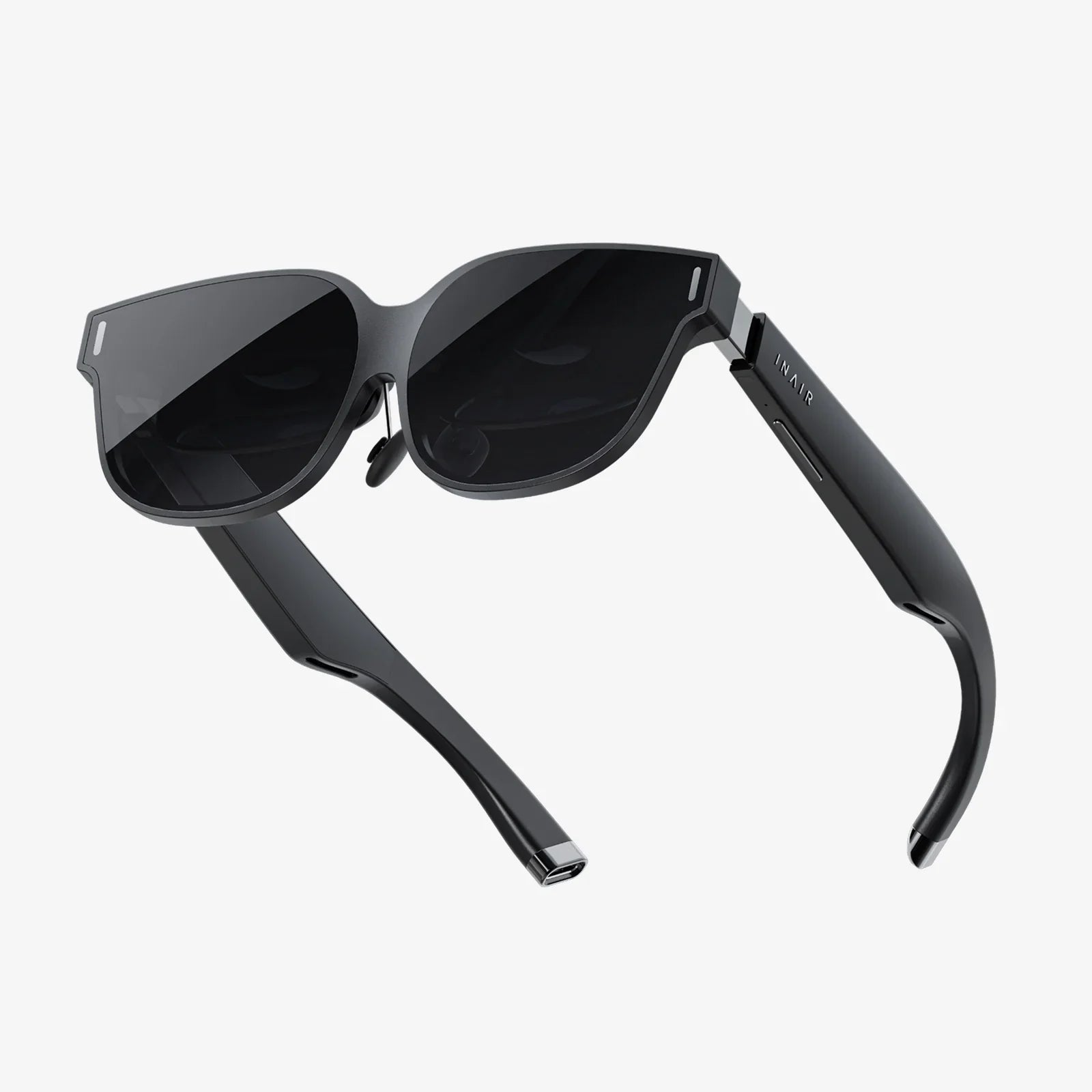
Imagine a world where the line between your digital screen and physical reality doesn't just blur—it disappears entirely. You’re not just watching a concert; you’re standing on the stage, with the performer reaching out to you. You’re not just reading about ancient Rome; you’re walking through a digitally reconstructed Forum, your guide a live historian interacting with your surroundings. This is no longer the stuff of science fiction. This is the powerful, palpable promise of AR live interactive technology, a convergence that is fundamentally rewiring our expectations of experience itself.
The Confluence of Two Revolutions
To understand the seismic shift of AR live interactive, one must first appreciate its two constituent parts. Augmented Reality, or AR, is the art and science of superimposing digital information—images, sounds, text—onto our view of the real world. Unlike its cousin, Virtual Reality (VR), which seeks to replace reality entirely, AR aims to augment and enhance it. It layers a valuable digital skin over our physical environment.
Live interactivity, on the other hand, is the domain of real-time connection. It’s the heartbeat of a live stream, the immediacy of a video call, the collective gasp of an audience reacting to an unscripted moment. It’s the magic of knowing that what you are experiencing is happening now, and that your presence and actions can influence the outcome.
AR live interactive is the potent fusion of these two forces. It’s not merely watching a pre-rendered AR filter on a social media platform. It’s about a live, human-led experience that is dynamically responsive to its environment and to the participants within it, all viewed through an AR lens. This combination creates a sense of shared presence and agency that passive content can never replicate.
Beyond the Filter: The Core Mechanics of Engagement
The power of this medium lies in a few core technological and experiential pillars that work in concert to create its unique magic.
Spatial Computing and Environmental Understanding
At its heart, AR live interactive is built on spatial computing. Advanced sensors, cameras, and algorithms allow a device to understand the physical world in real-time: the dimensions of a room, the location of a table, the plane of the floor. This environmental understanding is the canvas upon which the interactive experience is painted. Without it, digital objects would float aimlessly rather than appearing to rest convincingly on real surfaces.
Real-Time Data Synchronization
For an experience to be both live and interactive, data must flow instantaneously between the host or central server and every participant. Low-latency networking is the unsung hero here. When a host moves a digital object in their space, that action must be reflected in the view of thousands of participants with near-zero delay. This seamless synchronization is what creates the illusion of a shared, persistent digital layer over reality.
Bidirectional Interactivity
This is the critical ingredient that separates a broadcast from an experience. True AR live interactive platforms enable participants to not just observe but to do. This can range from simple emotive reactions (e.g., sending digital applause that manifests as floating hearts in the shared AR space) to complex collaborative tasks (e.g., a group of users manipulating a 3D model of a molecule simultaneously from different physical locations). This agency transforms the audience from spectators into active co-creators of the event.
Transforming Industries, One Experience at a Time
The applications for this technology are as vast as human imagination, and we are only beginning to scratch the surface of its potential.
The Future of Live Events and Entertainment
The pandemic accelerated the adoption of virtual events, but many were lackluster translations of physical experiences to a flat screen. AR live interactive offers a third way. Imagine a music festival where, from your living room, you can point your device at a cleared space and see the stage materialize, with life-sized performers. Other attendees appear as digital avatars around you, dancing and socializing. The artist could step "off" the stage and walk through the virtual crowd, making eye contact with individual fans. Merchandise stalls could appear as pop-up AR stores, allowing you to preview and purchase a t-shirt that you can see superimposed on your own body before buying. This doesn't replace the raw energy of a physical crowd; it creates an entirely new, globally accessible, and deeply personal type of event.
Revolutionizing Education and Training
Textbooks and 2D videos have long been the standard for remote learning, but they struggle to convey complex, spatial subjects. AR live interactive shatters these limitations. A medical student across the globe can join a live surgery, not as a passive viewer on a stream, but with a detailed, annotated 3D model of the patient's anatomy hovering over their own desk, controlled and explained in real-time by the leading surgeon. A mechanic-in-training could be guided through repairing a complex engine; digital arrows and instructions appear over the actual physical components they are holding, with a remote expert watching their progress and providing feedback. This creates a scalable, hands-on learning environment that was previously impossible.
Redefining Retail and Commerce
Shopping online is convenient, but it lacks the confidence of seeing how a product fits in your life. AR live interactive combines the best of both worlds. Instead of a pre-recorded video demo, you could join a live session with a design consultant. They could see your room through your camera feed and then virtually "place" different pieces of furniture within your space, adjusting colors and configurations in real-time based on your feedback. You're not just looking at a static image; you are co-designing your room with an expert, seeing the results instantly and immersively, all from your home.
Enhancing Remote Collaboration and Workspaces
The future of work is hybrid, and AR live interactive is poised to be its operating system. Instead of a grid of faces on a video call, imagine putting on lightweight AR glasses and seeing your colleagues' life-sized holograms sitting around your actual conference table. You could all interact with a shared 3D architectural model, peeling back layers, making annotations that persist in space, and feeling a sense of co-presence that makes "remote" feel anything but. This technology has the potential to dissolve geographical barriers to collaboration, making it more natural, intuitive, and effective.
Navigating the Inevitable Challenges
For all its promise, the path to widespread adoption of AR live interactive is not without significant hurdles.
The technological barrier is the most immediate. Creating high-fidelity, low-latency, shared AR experiences requires immense processing power and incredibly stable, high-bandwidth internet connections. While consumer hardware is rapidly advancing, achieving a seamless, glasses-free experience for the masses is still a few years away.
Furthermore, designing for this new medium requires a全新的技能组合. It’s a unique blend of game design, UX/UI principles, broadcast television, and event production. How does one direct attention in an unbounded 3D space? How do you create intuitive interfaces that don’t break immersion? These are questions the industry is still answering.
Finally, and most critically, are the questions of privacy and ethics. These experiences often require deep access to a user's camera feed and physical environment. Establishing clear, transparent, and ironclad data governance policies will be paramount to building the trust necessary for users to invite this technology into their homes and lives.
The Horizon of a More Connected Reality
We are standing at the precipice of a new era of human-computer interaction. AR live interactive is more than a new gadget or a flashy app; it is a foundational shift in how we connect with information, stories, and each other. It promises a world where expertise is no longer locked away by geography, where learning is visceral and immersive, and where entertainment can be both globally massive and intimately personal.
The screen, as we know it, is destined to fade away. In its place will be a dynamic layer of intelligence and experience, seamlessly woven into the fabric of our everyday world. It will be a world where we don’t go to look at content, but where content comes to life around us, inviting us to play, learn, and connect in ways we are only beginning to imagine. The call to explore this new frontier is not just being broadcast; it’s being projected onto the world around you, waiting for your response.
Share:
Smart Devices and Meetings: The Future of Collaboration is Now
Immersive AR Content: Redefining Reality and Revolutionizing Human Experience