


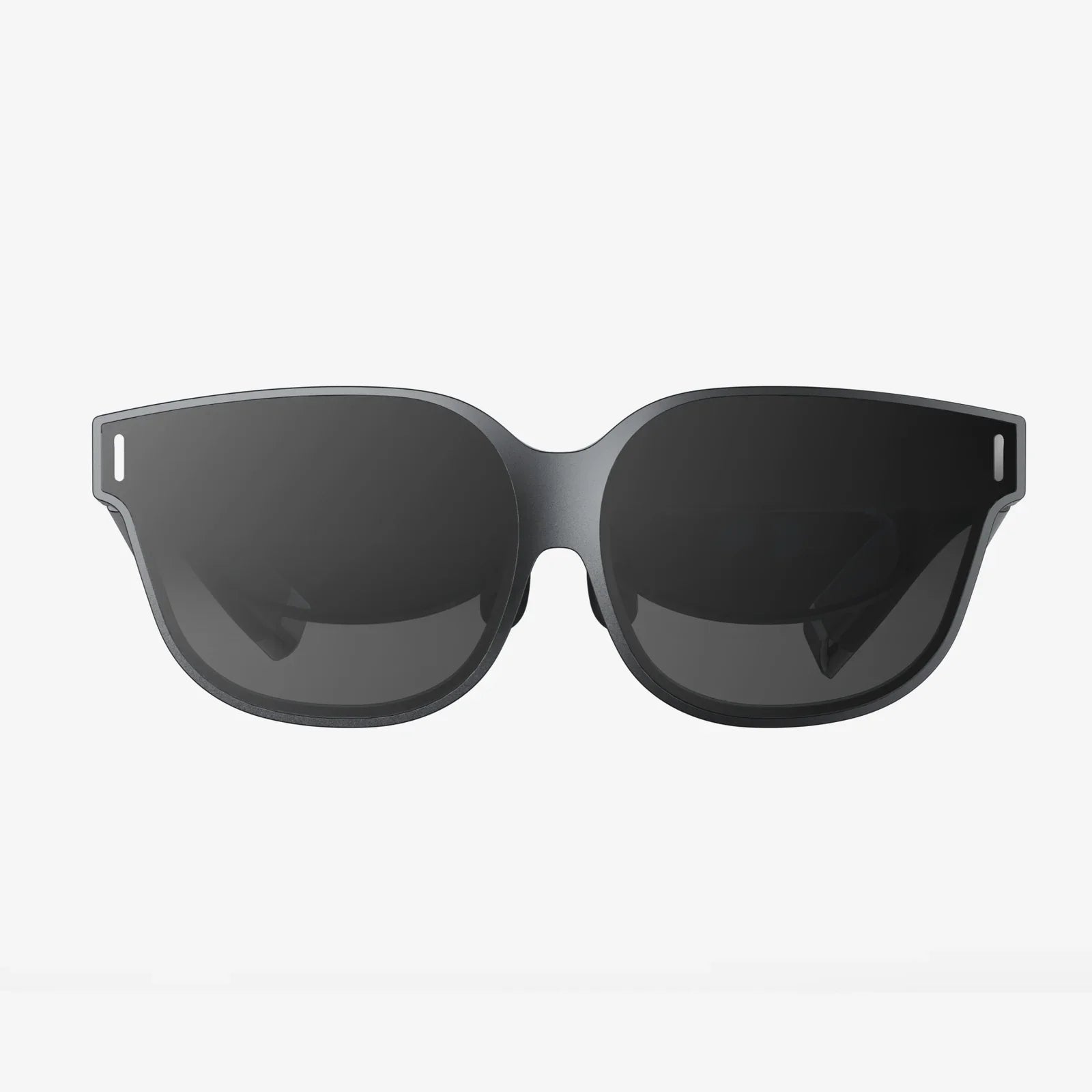
Imagine pointing your device at a unfamiliar tree in a park and instantly seeing its name, origin, and care tips floating beside its leaves. Envision walking through a foreign city where directional arrows and restaurant reviews are painted onto the sidewalk in front of you, or troubleshooting a complex appliance by having animated instructions overlay the very components you need to adjust. This is not a distant science fiction fantasy; it is the imminent future promised by AR search, a technological evolution that is set to dismantle the barrier between the digital information we seek and the physical world we inhabit. It represents a fundamental shift from searching for the world to searching within the world, and its implications are nothing short of revolutionary.
Beyond the Screen: Defining the AR Search Paradigm
To understand AR search, one must first move beyond the traditional concept of search as a text-based query entered into a blank box. AR search, or Augmented Reality Search, is an interactive experience where digitally generated information is seamlessly overlaid and anchored onto the user's real-world environment in real-time, triggered by contextual cues from that environment. It is the convergence of several powerful technologies:
- Computer Vision: The eyes of the operation. This technology allows a device's camera to see, identify, and understand objects, surfaces, and scenes. It can recognize a product, a landmark, a face, or even text.
- Machine Learning and AI: The brain. These systems process the visual data captured by computer vision, cross-reference it with vast databases, and determine the most relevant information to display. They learn from user interactions to improve accuracy and relevance over time.
- Geolocation and Spatial Mapping: The sense of place. GPS, Wi-Fi, and Bluetooth provide macro-location data, while advanced sensors like LiDAR (Light Detection and Ranging) create a detailed depth map of the immediate surroundings, understanding the geometry of a space to place digital objects convincingly.
- Display Technology: The window. This can range from the smartphone screen in your hand to smart glasses and eventually contact lenses, projecting the digital layer onto the user's field of view.
The core differentiator is context. A traditional search requires you to describe what you're looking for. AR search understands what you are looking at and provides information based on that immediate, visceral context.
The Engine Room: How AR Search Actually Works
The process of executing an AR search is a complex ballet of data processing happening in milliseconds. It can be broken down into a series of steps:
- Capture: The user initiates the search, typically by pointing their device's camera at an object or scene. The camera feed is continuously captured.
- Recognition and Analysis: Computer vision algorithms analyze the video feed frame-by-frame. They detect features, identify objects using pre-trained models, and may also extract text via Optical Character Recognition (OCR). Simultaneously, sensors gather spatial and location data.
- Query Generation and Data Retrieval: The analyzed visual and spatial data is packaged into a rich, contextual query. This query is sent to a cloud-based service, which scours databases—from product catalogs and geographic information systems to business reviews and historical archives—to find the most pertinent information.
- Overlay and Rendering: The retrieved data is formatted and sent back to the user's device. The AR software then uses spatial mapping to precisely anchor this information to the recognized object or location in the real world, rendering it on the screen as if it exists there physically.
- Interaction: The user can often interact with this digital overlay—tapping for more details, following a link, or viewing a 3D model from different angles.
This entire pipeline, from capture to rendering, must occur with incredibly low latency to maintain the user's illusion that the digital and physical are one.
Transforming Industries: The Practical Applications of AR Search
The potential use cases for AR search span virtually every sector, promising to enhance efficiency, deepen understanding, and create entirely new experiences.
Retail and E-Commerce
This is one of the most fertile grounds for AR search. Consumers can point their phone at a piece of furniture to see if it would fit and look right in their living room, complete with accurate scale and lighting. They can point at a friend's outfit to find similar items for sale instantly. For home improvement, searching for a specific tool or part becomes as simple as scanning the broken component to order an exact match.
Education and Training
AR search can bring textbooks and museums to life. Students studying anatomy can scan an image of a heart to see a beating, interactive 3D model emerge from the page. History classes can point their devices at a historical site's ruins to see a digital reconstruction of how it once stood. For complex manual tasks, from surgery to engine repair, AR search can overlay step-by-step instructions directly onto the equipment, reducing errors and accelerating learning.
Navigation and Travel
Turn-by-turn navigation will evolve from a 2D map to arrows and pathways painted onto the street. Tourists can simply point their device at a monument to get its history, or pan across a city skyline to see labels and information for every major building. Menus in foreign countries can be translated and overlaid in real-time, and user reviews for a restaurant can appear floating above its door.
Industrial and Manufacturing
Field technicians can scan a complex machine to instantly pull up its service manual, schematics, and history, with arrows highlighting the components they need to inspect. Warehouse workers can be guided to exact inventory locations with digital markers, drastically improving picking efficiency. This "digital twin" concept, where physical assets are linked to their data-rich digital counterparts, is supercharged by AR search.
The Flip Side: Navigating the Challenges and Ethical Implications
Despite its immense promise, the path to widespread AR search adoption is fraught with significant hurdles and profound ethical questions that society must address.
- Privacy in the Physical World: This is the paramount concern. Continuous visual data capture is inherently invasive. If a device is always looking, what does it see and record? The potential for mass surveillance, facial recognition in public spaces, and the erosion of personal anonymity is staggering. Robust, transparent data policies and perhaps new legal frameworks will be essential.
- Information Overload and Visual Pollution: The concept of "spam" could leap from our inboxes into our reality. Will our cities become a cluttered mess of digital advertisements, labels, and notifications vying for our attention? Managing digital litter and creating elegant, context-aware information displays will be a critical design challenge.
- Digital Divide and Accessibility: The technology requires advanced hardware and reliable, high-speed data connections. There is a real risk of creating a new societal split between those who can afford to access this augmented layer of reality and those who cannot, potentially exacerbating existing inequalities.
- Accuracy and Misinformation: What happens when the system misidentifies an object or pulls information from an unreliable source? The consequences could range from minor embarrassment to serious real-world harm if, for example, medical or technical information is incorrect. Ensuring veracity and building trust will be an ongoing battle.
- Physical Safety: Walking through the world with a screen mediating your experience poses obvious dangers. Users absorbed in an AR experience may become unaware of physical obstacles, traffic, or other hazards, leading to accidents.
The Future Lens: What Lies Ahead for AR Search
The current smartphone-based implementation of AR search is merely a stepping stone. The true revolution will arrive with the maturation of wearable technology, particularly smart glasses that are socially acceptable, aesthetically pleasing, and powerful. This will untether the experience from our hands, making the augmentation a persistent and seamless part of our perception.
We are moving towards a world where the very concept of a "search" may fade away, replaced by a constant, ambient flow of contextual information. The goal is predictive and proactive assistance—your device understanding not just what you are looking at, but what you might need to know next based on your location, schedule, and past behavior. Furthermore, the development of the spatial web or WebXR will create a standardized, browsable layer of information anchored to the physical world, much like the HTML standard allowed the traditional web to flourish.
This will eventually give rise to the AR cloud, a persistent, shared digital copy of the real world that remembers digital interactions and content placed within a space. This means that one person's digital annotation of a world—a review of a restaurant, a historical note on a building—could be seen by anyone else who looks through their AR lens, creating a collaborative, constantly evolving tapestry of information over our reality.
The line between searching for information and simply perceiving it is blurring into obsolescence. AR search is not just a new tool; it is the foundation for a new way of seeing, learning, and interacting with the entirety of human knowledge, all layered seamlessly atop the reality we've always known. The world is about to become your database, and your lens to view it is being crafted now.
Share:
Ear Wearables: The Unseen Revolution Reshaping Our Daily Lives
Wearable Computing Device The Next Evolution in Personal Technology