


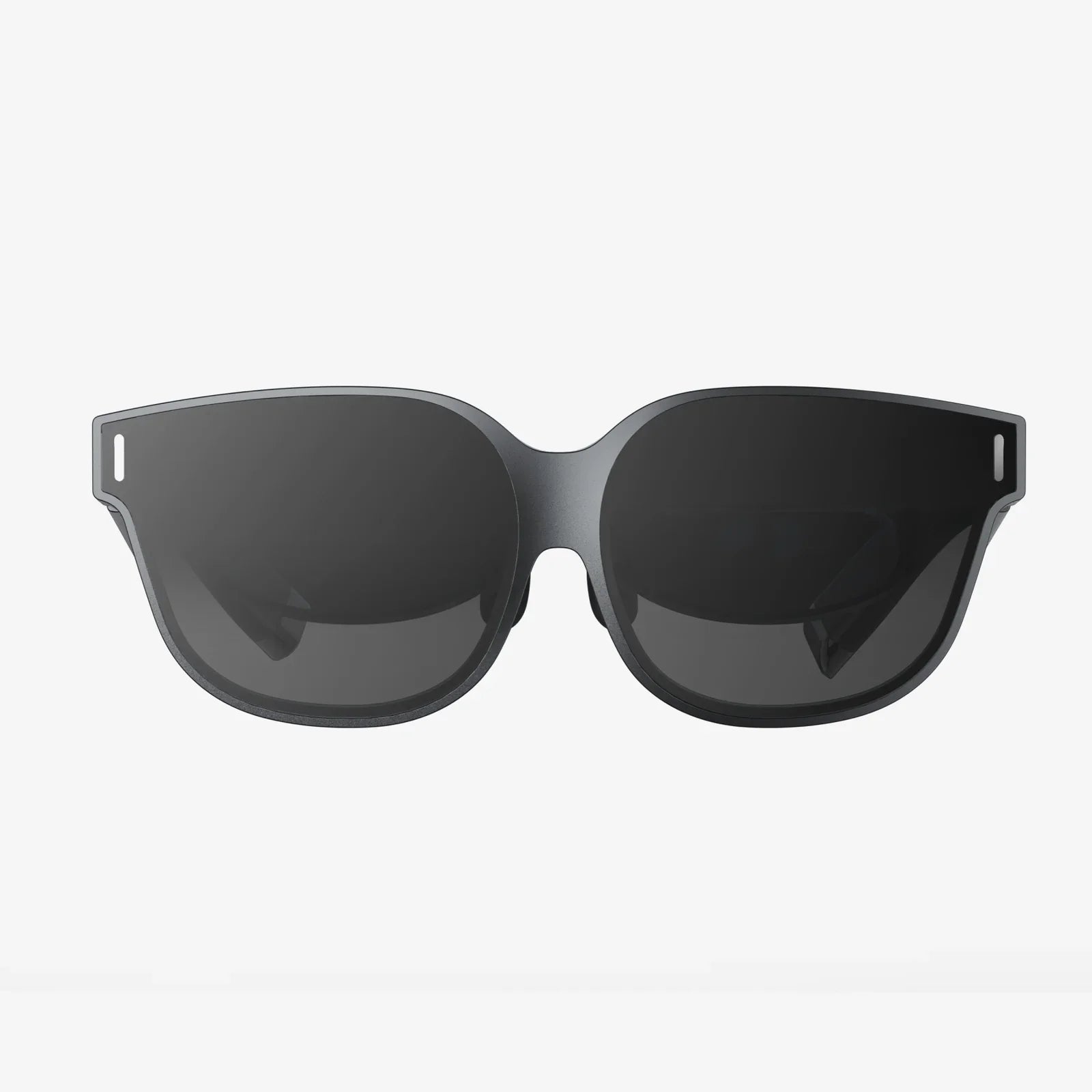
Imagine a world where the line between the digital and the physical doesn't just blur—it disappears. Where your living room can transform into a strategic command center for an intergalactic battle, your morning workout is guided by a holographic personal trainer, and historical figures can walk you through the ruins of their era. This isn't a distant sci-fi fantasy; it's the imminent future being built today through the powerful convergence of augmented reality apps for VR headsets. This fusion is not merely an upgrade to existing technology; it's a fundamental shift in how we perceive, interact with, and understand the world around us, promising to revolutionize everything from entertainment to enterprise.
The Convergence of Realities: Understanding AR on VR Hardware
To appreciate the significance of augmented reality apps on VR headsets, we must first demystify the core technologies involved. Virtual Reality (VR) is an immersive, fully digital experience. By wearing a headset, users are transported into a computer-generated environment, completely occluding the physical world. Its primary goal is isolation and substitution. In contrast, Augmented Reality (AR) overlays digital information—images, data, 3D models—onto the user's view of their real-world environment. Think of smartphone filters or navigation arrows superimposed on a live street view. Its goal is enhancement and annotation.
The emergence of high-end, untethered VR headsets equipped with advanced outward-facing cameras and sensors has created a unique hybrid space. These devices were built to understand their environment for safety (to create guardian boundaries), but developers quickly realized this same technology could be used for a different purpose: to serve as a portal for augmented reality. This capability is often referred to as Mixed Reality (MR) or Passthrough AR. It allows the headset to use its cameras to display a real-time video feed of your surroundings inside the headset, and then seamlessly place persistent, interactive digital objects within that space. This technological marriage gives AR apps on VR platforms a significant advantage: a deeply immersive, stereoscopic, and hands-free experience that mobile AR cannot match.
Beyond the Hype: Core Technologies Powering the Experience
The magic of these applications is not just software-deep; it's built on a foundation of sophisticated hardware and algorithms working in concert.
- High-Fidelity Passthrough Cameras: Early VR headsets had low-resolution, grayscale passthrough. Modern devices feature high-resolution, color cameras that provide a clear and comfortable view of the real world, making digital overlays feel more natural and less jarring.
- Inside-Out Tracking and Spatial Mapping: Using a combination of cameras, infrared sensors, and LiDAR, the headset continuously scans its environment. It creates a detailed 3D mesh map of the room, understanding the geometry of walls, floors, furniture, and other objects. This spatial awareness is crucial for digital objects to interact realistically with the physical world—allowing a virtual robot to hide behind your real sofa or a digital painting to stay fixed on your wall.
- Six Degrees of Freedom (6DoF): Unlike mobile AR, which often relies on 3DoF (rotation only), VR headsets with 6DoF track both the rotation and the precise translation of your head and controllers in space. This means you can physically walk around, lean in, and crouch to examine a digital object from every angle, creating an unparalleled sense of presence and stability.
- Powerful Onboard Compute: Processing high-resolution video feeds, running complex environment recognition algorithms, and rendering detailed 3D graphics in real-time requires immense processing power. The advanced chipsets in these headsets handle this workload, enabling smooth and responsive AR experiences without being tethered to a separate computer.
A Universe of Applications: From Play to Productivity
The potential use cases for this technology are as vast as human imagination itself. They extend far beyond novelty and into tangible value across numerous sectors.
Revolutionizing Training and Education
Imagine a medical student practicing a complex surgical procedure on a hyper-realistic, interactive holographic patient superimposed on an operating table. They can make incisions, see layered anatomical structures, and receive real-time feedback—all without risk. Mechanics can learn to repair a jet engine with digital instructions and part labels overlaid directly onto the physical machinery. History lessons can become immersive journeys, with students witnessing historical events unfold in their classroom. This technology provides a safe, scalable, and incredibly effective platform for experiential learning.
Transforming the Workplace and Remote Collaboration
The concept of the office is being redefined. With AR apps on VR headsets, remote collaboration becomes truly spatial. Colleagues from across the globe can appear as lifelike avatars in your physical workspace. You can collaboratively design a 3D model of a new product, manipulate it with your hands, and place it on your real desk to judge its scale. Architects and interior designers can walk clients through a full-scale, interactive hologram of a building plan within the empty physical lot. This erases the barriers of distance and screen-sharing, fostering a new level of teamwork and prototyping.
Unleashing Creativity and Design
Artists and designers are embracing this medium as the ultimate canvas. Apps allow users to sculpt 3D statues in the center of their room, paint with light in the air, or design furniture and instantly see how it looks and fits in their actual living space. This is a paradigm shift from designing on a 2D screen to creating within the 3D context of the final destination.
Next-Level Fitness and Wellness
Fitness applications are leveraging MR to create engaging and dynamic workouts. Instead of following a video on a TV, a holographic coach can demonstrate exercises right in front of you, with your own form reflected in a virtual mirror. Workouts can transform your environment into a scenic mountain trail or a motivating neon-lit gym, making exercise more enjoyable and effective. Mindfulness apps can create serene, guided meditation spaces filled with calming visuals and audio, helping users find peace in their own homes.
Reimagining Entertainment and Social Connection
Entertainment is perhaps the most obvious and immediately engaging application. Board games can come to life on your table with animated characters and effects. You can watch a movie on a massive virtual screen that feels like a private cinema, or play a strategy game where the battlefield is mapped across your entire home. Social platforms allow friends to gather in each other's spaces as avatars, watching videos, playing games, and interacting as if they were physically together, creating a profound sense of shared presence.
Navigating the Challenges: The Path to Mainstream Adoption
Despite the incredible promise, the path forward is not without its obstacles. For this technology to move from early adopter curiosity to mainstream utility, several key challenges must be addressed.
- Visual Fidelity and Comfort: While passthrough video has improved dramatically, it is still not a perfect 1:1 representation of human vision. Latency, limited field of view, and lower light performance can sometimes cause discomfort or break immersion. Achieving a visual experience that is indistinguishable from seeing with the naked eye remains the holy grail.
- Form Factor and Social Acceptance: Current headsets, while advanced, are still relatively bulky. For all-day use in professional or social settings, they need to become as lightweight, comfortable, and socially unobtrusive as a pair of eyeglasses. This is a significant hardware engineering challenge.
- Intuitive Interaction: Moving beyond controllers to natural, gesture-based and eye-tracking controls is essential. The ideal interface would be effortless and intuitive, allowing users to manipulate digital content as naturally as they would a physical object.
- Content Ecosystem and Developer Support: A platform is only as valuable as its software. A robust and diverse library of high-quality AR applications is crucial for attracting and retaining users. Encouraging and supporting developers to build for this new medium is a primary focus for platform holders.
- Privacy and Security: These devices are constantly scanning and digitizing our most personal spaces—our homes and offices. Robust data handling policies, on-device processing where possible, and clear user consent are non-negotiable to build trust and ensure this powerful technology is not misused.
The Future is a Blend: What Lies on the Horizon
The evolution of augmented reality on VR hardware is accelerating at a breathtaking pace. In the near future, we can expect even more seamless integration. Advancements in photorealistic rendering will make digital objects virtually indistinguishable from real ones. Haptic feedback technology will evolve to let us feel these digital creations. Artificial Intelligence will play a larger role, with context-aware apps that understand our intentions and automatically surface relevant information. We are moving towards a world of ambient computing, where information is available contextually in our environment without the need for a separate screen, fundamentally changing our relationship with technology from something we use to something we inhabit.
The journey of augmented reality apps for VR headsets is just beginning. It's a frontier where developers, creators, and visionaries are literally building new layers of reality. This isn't about escaping our world, but about enriching it; not about replacing human connection, but deepening it across any distance. The device that once offered a complete escape into fantasy is now becoming the ultimate lens to enhance our reality, promising a future where our digital and physical lives are not separate realms, but a single, enhanced, and infinitely more magical existence. The door to this blended world is now open, and stepping through it will change everything.
Share:
VR Glasses Headset Stereo: A Deep Dive into Immersive Audio-Visual Technology
Augmented Reality Glasses: The Invisible Revolution Reshaping Our World