


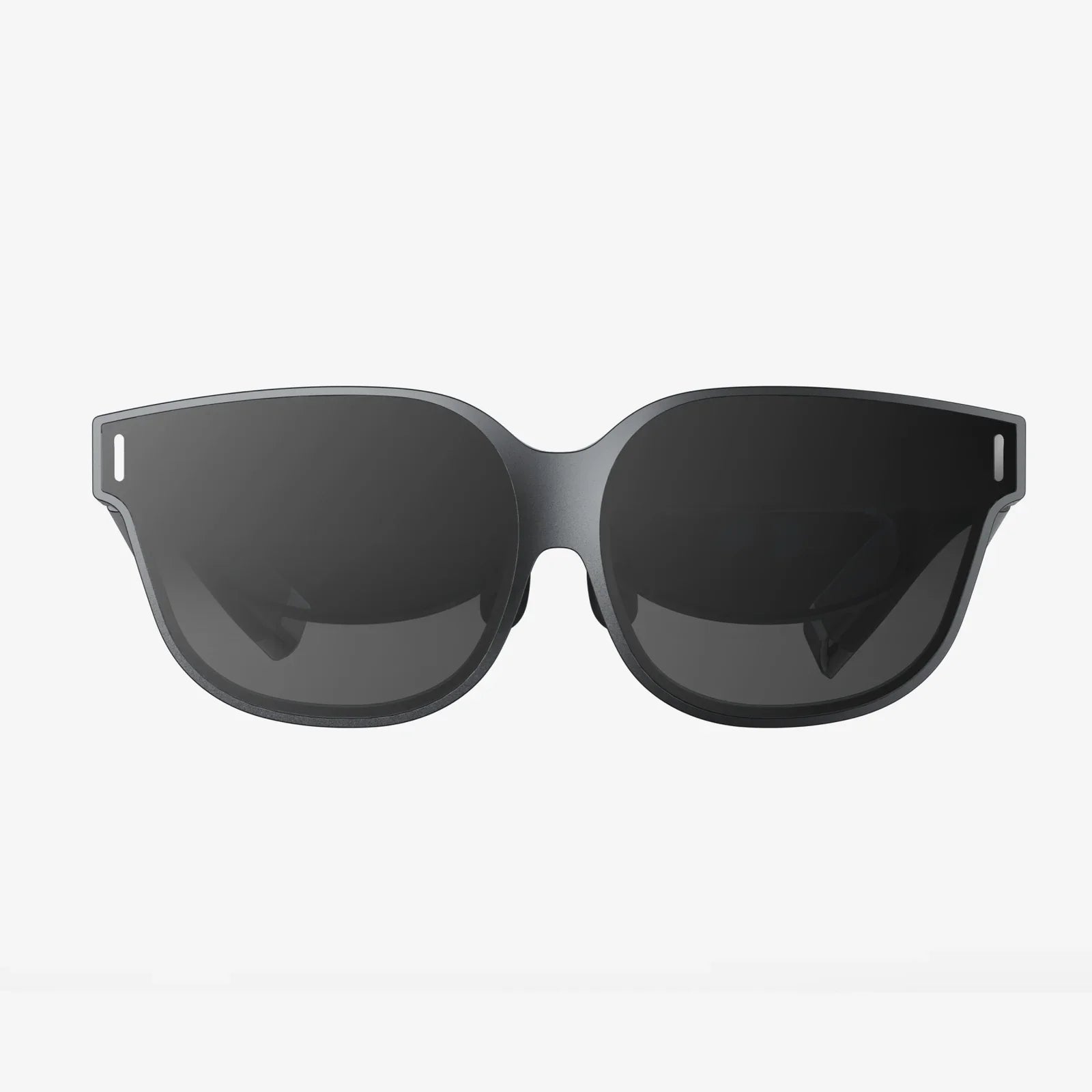
Imagine slipping on a device and being instantly transported to another world, a digital realm where sound doesn't just come from beside you, but from above, below, and all around, creating a tapestry of audio so real it tricks your brain into believing the unbelievable. This is the promise and power of modern VR glasses headset stereo technology, a symphony of visual and auditory engineering designed to create the ultimate illusion of presence. The journey into virtual reality is a multi-sensory one, and while stunning visuals capture the eyes, it is the sophisticated stereo audio delivered through a VR headset that truly captures the soul, anchoring you firmly within the experience. For anyone curious about the magic behind the immersion, the technology that makes your heart race during a horror game or lets you pinpoint a whispered conversation in a crowded virtual space, understanding the role of stereo sound is not just important—it's essential to appreciating the full scope of this revolutionary medium.
The Foundation of Virtual Reality: More Than Just Sight
When we discuss VR glasses headset stereo systems, we are really talking about the convergence of two critical sensory inputs: sight and sound. The visual component, rendered on high-resolution displays mere centimeters from the user's eyes, creates a convincing image of a three-dimensional world. However, without an equally convincing auditory landscape, the experience feels hollow, flat, and undeniably artificial. The human brain relies on auditory cues just as much as visual ones to understand its environment. We use sound to gauge distance, identify threats, locate objects, and feel connected to a space. In virtual reality, replicating this natural auditory perception is the paramount goal of integrated stereo audio systems. This isn't about simply playing music or sound effects; it's about constructing a complete sonic environment that moves and changes with the user, responding to their head movements, their location in the virtual space, and their interactions within it. This holistic approach is what separates a simple visual novelty from a truly transformative immersive experience.
Deconstructing Stereo: The Basics of Binaural Audio
At its core, the stereo sound in a VR glasses headset is built upon the principle of binaural recording and playback. The term "binaural" literally means "having two ears." This technology is designed to replicate the way humans naturally hear the world. Our two ears receive slightly different versions of the same sound wave. A sound originating from the right will reach the right ear a fraction of a second sooner and with a slightly higher intensity than it reaches the left ear. Furthermore, the shape of our outer ears (the pinnae) and the structure of our head and torso subtly alter the sound waves before they reach our eardrums. These minute differences, known as interaural time differences (ITD) and interaural level differences (ILD), provide our brains with the necessary data to triangulate the location of a sound source in three-dimensional space.
Standard stereo audio, like that from headphones listening to music, creates a left-right soundscape. Binaural audio for VR glasses headset stereo systems goes infinitely further. It uses sophisticated Head-Related Transfer Functions (HRTFs)—essentially acoustic filters that model how sound behaves around a human head—to process audio. When a sound is generated in a virtual environment, the audio engine calculates its position relative to the user's head orientation (tracked by the headset's sensors) and applies the appropriate HRTF filters. The result is a sound that feels like it is coming from a specific point in the virtual space, whether that's a bird chirping forty feet behind and above you, or a raindrop hitting a puddle six inches to your left. This is the fundamental magic trick that makes VR audio so compelling and believable.
The Hardware: Speakers, Drivers, and Haptic Feedback
The execution of this complex audio processing relies on the hardware embedded within the VR glasses headset itself. There are generally two approaches to delivering sound: integrated headphones and spatial audio drivers. Many headsets feature built-in, high-quality headphones that are precisely positioned over the ears. These are often on-ear or over-ear designs that provide passive noise isolation, helping to block out the real world and further cement the user in the virtual one. The drivers inside these headphones are specifically tuned for clarity across a wide frequency range, ensuring that both the subtle rustle of leaves and the powerful roar of an engine are reproduced with fidelity.
An alternative and increasingly popular design is the use of directional speakers or "off-ear" audio solutions. Instead of sealing against the ear, these speakers are positioned slightly away from the ear canal, projecting sound towards it. This design offers greater comfort for extended use and allows users to remain more aware of their physical surroundings—a valuable feature for mixed reality applications. Furthermore, the latest advancements in VR glasses headset stereo technology incorporate haptic feedback directly into the headstrap or audio system. This low-frequency vibration can simulate the rumble of an explosion or the deep thrum of a spacecraft's engine, adding a tactile layer to the auditory experience and engaging the sense of touch to deepen immersion.
Software and Processing: The Brain Behind the Sound
Sophisticated hardware is useless without equally advanced software to drive it. The audio engine within a VR platform or application is responsible for the real-time processing that makes spatial audio possible. This engine is constantly receiving a stream of data from the headset's inertial measurement units (IMUs), which track the rotation and orientation of the user's head. When the user turns their head, the audio engine instantly recalculates the position of every sound source in relation to this new orientation and adjusts the HRTF processing accordingly. This ensures that a sound source that was in front of you remains "in front" even as you turn your head; it becomes anchored in the virtual world, not tied to your headphones.
This processing also handles advanced acoustic modeling. Modern VR audio engines can simulate the acoustic properties of the virtual environment. They calculate how sound waves would reflect off walls, be absorbed by carpets, or be muffled by obstacles, adding layers of reverb, occlusion, and obstruction to the audio signal. If you are in a virtual cathedral, your footsteps will echo. If someone speaks to you from behind a thick virtual wall, their voice will sound dampened and distant. This level of detail is computationally intensive but is critical for selling the illusion of a real, physically consistent world. The software works in tandem with the VR glasses headset stereo hardware to create a dynamic, responsive, and deeply convincing soundscape.
The Impact on Immersion and Presence
The ultimate goal of all this technological effort is to achieve a state of "presence"—the uncanny and powerful sensation of actually being in the virtual environment. Studies have consistently shown that high-quality, spatialized audio is one of the most significant contributors to this feeling. Visuals can be tricked by simple illusions, but our auditory system is a primal, hardwired tool for navigation and survival. When it is properly engaged, the effect on the brain is profound.
Consider a horror experience in VR. You might see a dark, empty hallway, which is visually unsettling. But when you hear a faint, dragging sound that seems to originate from a specific, dark room to your right, the fear becomes visceral. Your heart rate increases, and you might instinctively turn away from the door. The sound has created a tangible threat in a way a visual cue alone could not. In social VR applications, being able to hear the spatialized voices of other avatars standing around you in a circle makes a conversation feel natural and intuitive, fostering genuine connection. This ability for VR glasses headset stereo sound to direct attention, evoke emotion, and guide behavior is what makes it an indispensable tool for storytellers, trainers, and developers.
Challenges and Considerations in Audio Design
Despite the incredible advances, perfecting VR audio is not without its challenges. One significant hurdle is the personalized nature of hearing. HRTFs are based on averages of human anatomy, but everyone's head and ears are shaped slightly differently. A sound spatialized using a generic HRTF might be perfectly located for one user but feel slightly "off" for another, appearing too high, too low, or inside their head. Research is ongoing into personalized HRTFs, which could be created by scanning a user's ears with a camera or through a brief audio calibration process. This would provide a tailor-made audio experience that could significantly improve localization accuracy for every individual.
Another challenge is accessibility. Developers must consider users who are deaf or hard of hearing. Providing visual subtitles is a start, but truly accessible design might involve translating crucial directional audio cues into haptic feedback or distinct visual indicators. Furthermore, processing high-fidelity spatial audio for complex environments with dozens of simultaneous sound sources requires substantial computing power. As VR experiences become more detailed and populated, optimizing this audio processing without sacrificing quality or performance remains a key focus for engineers.
The Future of VR Audio: Next-Generation Experiences
The evolution of VR glasses headset stereo technology is far from over. We are moving towards even more immersive and interactive soundscapes. The concept of "audio passthrough" is gaining traction, where external microphones on the headset capture real-world sounds and spatialize them into the headset's headphones. This allows a user wearing a VR headset to still hear and interact with their physical environment naturally, a crucial step for blending virtual and real worlds in augmented and mixed reality.
We are also on the cusp of adopting higher-fidelity audio standards like Ambisonics and object-based audio. Instead of modeling a fixed number of audio channels, these systems treat individual sounds as discrete objects placed in a 3D space, allowing for infinitely more complex and dynamic soundscapes. Combined with machine learning, future audio engines could dynamically generate realistic environmental sounds in real-time, creating ever-changing and believable worlds. The integration of biometric sensors could allow the audio experience to adapt to the user's emotional state, increasing tension during moments of fear or providing calming sounds during stress.
Stepping into a virtual world is no longer a silent, solitary movie. It is a rich, dynamic, and sonically breathtaking concert of the senses, all orchestrated by the tiny, powerful computer strapped to your face. The relentless innovation in VR glasses headset stereo technology ensures that the barrier between our reality and digital ones will continue to dissolve, not just through what we see, but profoundly through what we hear. The next time you don a headset, close your eyes for a moment and just listen; you'll discover that the true magic of VR is happening all around you.
Share:
Smart Sunglasses 2025: The Dawn of a Seamless Augmented Reality Lifestyle
Augmented Reality Apps for VR Headset: Blending Worlds and Redefining Reality