


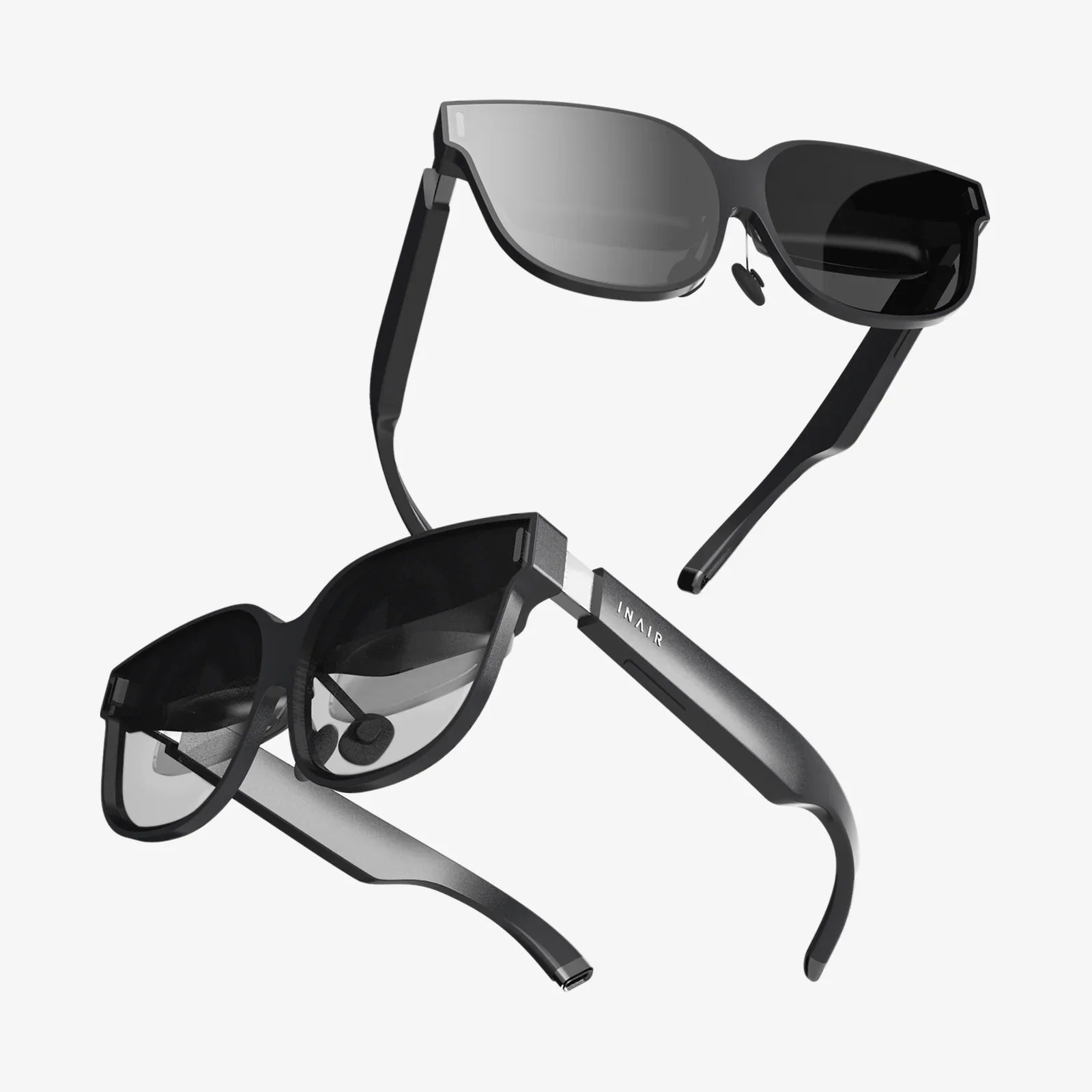
Imagine stepping out into the world where your view is not just of the physical environment around you, but is dynamically layered with a digital consciousness that understands your needs, anticipates your questions, and enhances your reality—all through a pair of sleek, unassuming sunglasses. This is not a distant sci-fi fantasy; it is the rapidly approaching reality of smart sunglasses in 2025. The convergence of monumental leaps in micro-optics, artificial intelligence, and material science is poised to make next year the definitive tipping point, transforming this once-novelty category into an indispensable personal companion that will redefine how we interact with information and each other.
The Architectural Leap: From Clunky Prototypes to Elegant Essentials
The most immediate and striking evolution in smart sunglasses for 2025 is their form factor. The cumbersome, tech-heavy designs that defined earlier iterations have been rendered obsolete. The driving principle for 2025 is seamless integration. Advances in waveguide optics and holographic lens technology have miniaturized the projection systems to the point of near-invisibility. Instead of a distracting, faintly glowing square in the corner of one's vision, users now experience a full-color, high-resolution display that appears to float effortlessly in the middle and far distance, seamlessly overlaying the real world without obstructing it.
Battery technology, a historical bottleneck, has seen revolutionary progress. The adoption of solid-state battery cells, coupled with incredibly efficient system-on-chip (SoC) designs, has extended usable life to a full waking day on a single charge. Furthermore, the frames themselves have become the conduit for power. Solar-harvesting pigments are integrated directly into the lenses, capable of generating meaningful trickle-charge from both direct sunlight and ambient indoor light. For 2025, the anxiety of a dying device is being designed out of existence, fostering a new era of always-available, frictionless computing.
The Invisible Conductor: The AI That Sees What You See
Hardware is only the vessel; the true soul of the 2025 smart sunglasses is the artificial intelligence that powers it. This is not a simple voice assistant transplanted from a smartphone. It is a contextual, ambient, and predictive AI that operates as an intelligent partner.
Equipped with a suite of subtle sensors—including high-resolution cameras, LiDAR, and always-on microphones—the sunglasses continuously interpret the user's environment. This is not about recording everything, but about understanding context in real-time. The AI can identify faces (with permission), translate foreign language signage instantly as you look at it, provide historical facts about a monument you're viewing, or highlight the best route through a crowded airport terminal, all without a single spoken command. The user interface evolves from touch and swipe to glance and gesture. A subtle eyebrow raise might confirm a selection, while a tiny finger gesture against the temple can scroll through menus. Voice commands remain an option but are often unnecessary, creating a private and discreet interaction model that feels less like using a computer and more like extending one's own cognition.
Redefining Social Connection: Presence Over Proximity
One of the most profound impacts of this technology will be on human communication. Video calls, as we know them today, will feel archaic. Instead, 2025's smart sunglasses enable augmented presence. Through shared AR environments, users can feel as if they are sitting across a virtual table from a colleague on another continent, examining 3D models of a project together as if they were physical objects between them. For personal connections, the technology allows for shared experiences; watching a movie with a loved one can be accompanied by seeing their avatar react in real-time, or a guided tour from a friend in another city can be overlaid onto your own walk through a local park.
This always-ready connectivity, however, brings to the forefront the paramount issue of privacy and social etiquette. How do we know when we are being recorded? 2025's devices are addressing this with clear, external visual indicators—like a subtle LED light—that signal when recording or significant data processing is active. Furthermore, robust privacy frameworks are built into the core OS, giving users granular control over what data is captured, processed, and stored, ensuring that the technology enhances social bonds without eroding trust.
The Quantified Self, Amplified: Health and Wellness at a Glance
Beyond information and communication, smart sunglasses are emerging as a powerful health monitoring platform. Their unique position on the face provides unprecedented access to key biometric data. Advanced photoplethysmography (PPG) sensors, embedded invisibly within the nose pads, can continuously monitor heart rate, heart rate variability, and blood oxygen levels. Tiny microphones can analyze voice patterns for signs of fatigue or stress, while inertial measurement units (IMUs) track posture and activity levels.
The AI synthesizes this data stream to provide proactive, real-time wellness insights. It might suggest a moment of mindful breathing if it detects rising stress, remind you to hydrate after an extended period of activity, or alert you to potential fatigue while driving. For athletes, it can provide performance metrics overlayed directly onto their field of vision without breaking stride. This transforms the sunglasses from a communication device into a guardian of personal well-being, offering a continuous, hands-free health dashboard for the real world.
Navigating the New Reality: Challenges and Ethical Considerations
The path to widespread adoption is not without significant hurdles. The potential for distraction is immense; layering digital information onto a user's vision while they are navigating busy streets or operating vehicles presents a serious safety challenge that manufacturers are tackling with context-aware UI that minimizes information during critical tasks. The digital divide is another concern, as this technology risks creating a new class of information haves and have-nots.
Furthermore, the ethical implications are vast. The ability to constantly record and analyze one's surroundings raises profound questions about surveillance, data ownership, and consent. The industry in 2025 is grappling with establishing strong norms and regulations to prevent misuse and ensure that this powerful technology is developed and deployed responsibly, prioritizing user agency and societal benefit over unfettered data collection.
The Seamless Integration Into Daily Life
By the end of 2025, the question will shift from "What are smart sunglasses?" to "How did I ever live without them?" Their utility will span every facet of daily life. Shopping will be transformed by seeing reviews and price comparisons overlaid on products on a shelf. Navigation will become intuitive, with directional arrows and points of interest painted onto the street itself. Learning a new skill, like cooking or repairing an appliance, will be guided by step-by-step instructions visually anchored to the relevant tools and ingredients.
They will become the ultimate travel companion, the indispensable professional tool, and the personal health coach, all condensed into a form that is socially acceptable and aesthetically pleasing. The smartphone will not disappear, but it will be demoted. It will become a hub for deeper tasks, while the smart sunglasses handle the instantaneous, ambient interactions with our digital world.
The true legacy of the 2025 smart sunglasses won't be found in any single feature, but in the collective feeling they create: a sense of effortless control and enhanced perception. They promise a future where technology doesn't demand our attention but quietly amplifies our abilities, allowing us to be more present, more informed, and more connected to the world—both digital and physical—around us. The barrier between human and machine is dissolving, not through invasive implants, but through an elegant accessory that empowers us to see the world, quite literally, in a new light.
Share:
Glasses for Screen Time: The Essential Guide to Protecting Your Eyes in the Digital Age
VR Glasses Headset Stereo: A Deep Dive into Immersive Audio-Visual Technology