


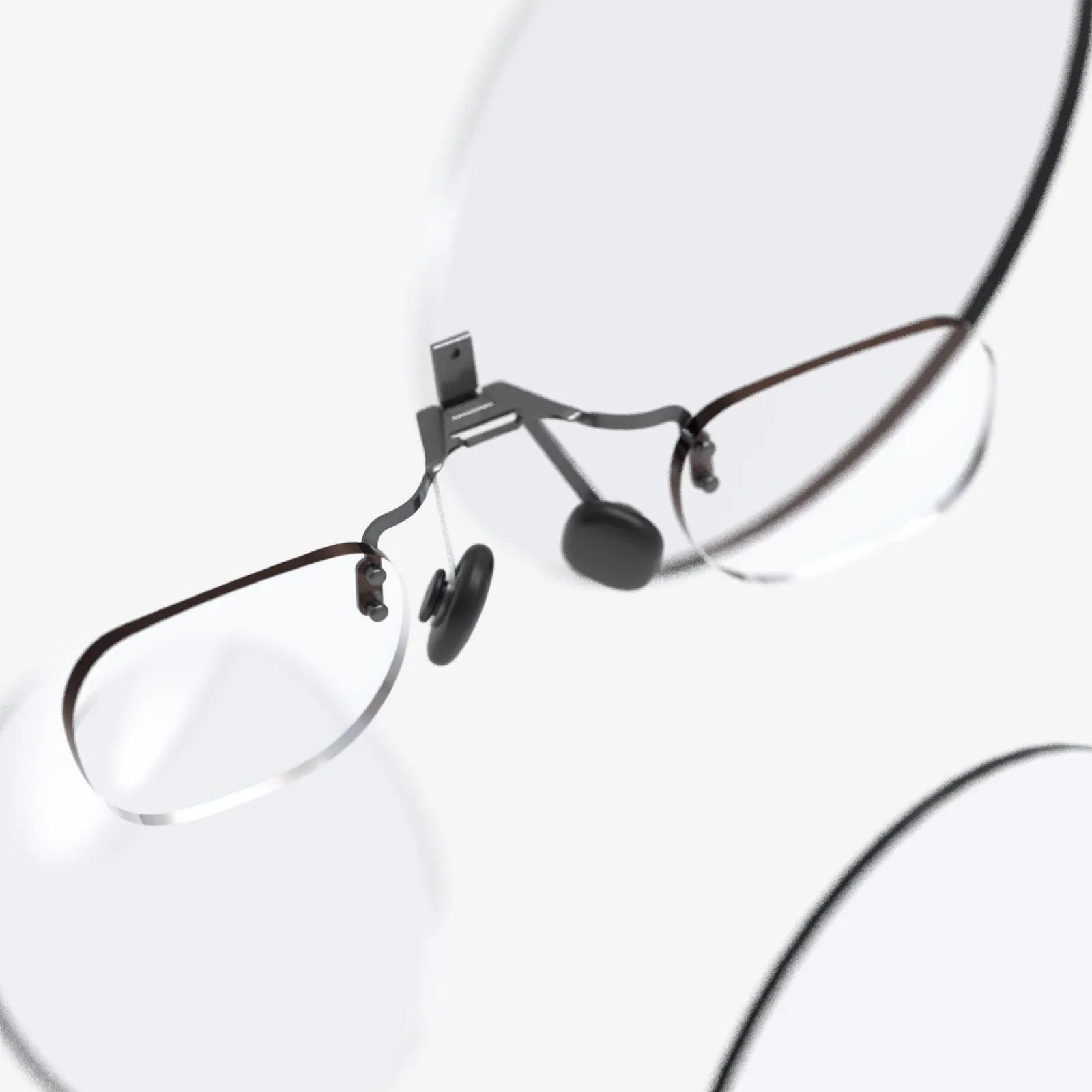
- by wangfred
Augmented Reality Devices Are Redefining Our Perception of Reality
- by wangfred
Imagine a world where digital information doesn't just live on a screen in your hand but is painted onto the very fabric of reality around you. Directions float on the pavement in front of you, historical figures reenact battles on the very ground they were fought, and complex engine schematics hover over the machinery you're repairing. This is the promise of augmented reality devices, a technological leap that is quietly moving from niche novelty to mainstream utility, forever altering the way we work, learn, play, and connect. The future is not just coming; it's being layered over our present, and it's a sight you have to see to believe.
At its core, augmented reality (AR) is an interactive experience that enhances the real world by superimposing computer-generated perceptual information onto it. Unlike virtual reality (VR), which creates a completely artificial digital environment, AR uses the existing environment and simply adds new layers of information to it. This crucial distinction means AR is designed for mobility and context, making the physical world your canvas.
Augmented reality devices are the hardware that makes this possible. They come in several form factors, each with its own strengths and target applications:
The magic of overlaying digital content onto the real world is a complex dance of hardware and software. Several key technologies work in concert to create a convincing and useful AR experience.
Advanced augmented reality devices are packed with a suite of sensors that constantly scan and interpret the environment. These typically include:
The raw data from the sensors is meaningless without immense computational power. This is handled by specialized processors (SoCs) that run simultaneous localization and mapping (SLAM) algorithms. SLAM is the true genius behind AR. It allows the device to both map an unknown environment and track its own location within that map in real-time. It's how the device understands where the floor, walls, and furniture are, and can pin a digital object to a specific physical spot that doesn't move when you do.
This is how the digital light is projected into your eyes. Different technologies are employed:
While consumer applications capture the imagination, the most significant and immediate impact of augmented reality devices is happening in the workplace. They are solving real-world problems, boosting efficiency, reducing errors, and saving companies millions.
Technicians wearing AR devices can see superimposed step-by-step repair instructions and animated schematics directly over the equipment they are servicing. They can receive remote expert guidance, where a specialist miles away can see what they see and draw annotations into their field of view to guide them through a complex procedure. This drastically reduces downtime, minimizes training costs, and empowers less experienced workers to perform at an expert level.
Surgeons can use AR to visualize a patient's anatomy, such as CT or MRI scans, projected directly onto the patient's body during a procedure, improving precision and outcomes. Medical students can practice complex procedures on detailed, interactive holograms. AR can also assist in vein visualization for nurses, making it easier to find veins for injections, and provide guided physical therapy exercises for patients at home.
Architects and interior designers can walk clients through full-scale, photorealistic holographic models of unbuilt structures. They can change materials, move walls, and adjust lighting in real-time, all within the context of the actual physical space. This enables better decision-making and client communication long before the first brick is laid.
In massive distribution centers, AR glasses can display optimal pick-and-pack routes for workers, directly highlighting the correct items and bins on the shelf. This streamlines operations, reduces walking time, and cuts down on shipping errors, creating a faster and more efficient supply chain.
Beyond the factory floor, augmented reality devices are beginning to weave their way into the fabric of daily life, offering new forms of entertainment, communication, and personal enhancement.
Imagine walking through a foreign city and having directional arrows painted onto the street, with floating historical facts popping up next to landmarks, and restaurant reviews and ratings visible as you look at their storefronts. AR promises to make us more connected to our immediate environment, providing a constant, contextual stream of useful information.
The future of video calls may not be a flat screen but a life-sized, holographic representation of a person sitting in your living room, able to gesture and interact with the space as if they were truly there. This could revolutionize remote work collaboration and bring families and friends separated by distance closer together.
The success of mobile AR games proved the mass appeal of blending gameplay with the real world. Dedicated AR devices will take this to another level, turning your entire home or local park into an immersive game board where characters and objects interact with your physical surroundings in believable ways.
For all its potential, the widespread adoption of augmented reality devices faces significant hurdles that must be overcome.
The trajectory of AR is pointing towards a more seamless and integrated future. We are moving towards contact lens displays and even neural interfaces that could bypass the eyes entirely, projecting information directly into the brain's visual cortex. The line between what is real and what is digital will become increasingly blurred, giving rise to a new medium of expression and experience.
The concept of the "metaverse," a persistent network of shared 3D virtual spaces, is intrinsically linked to AR. Rather than being a purely virtual world accessed through a VR headset, the true metaverse will likely be an AR-first experience—a digital layer over our physical reality that we can interact with and share with others. It won't be a place we go to escape, but a tool we use to enhance.
This technological evolution will force us to re-examine fundamental aspects of society, from how we design laws governing digital property overlaying physical land to how we manage attention in a world of infinite information overlays. It will challenge our very definitions of reality, presence, and human connection.
The journey of augmented reality devices is just beginning. From clunky prototypes to sleek, powerful wearables, they are evolving at a breathtaking pace. They hold the key to unlocking human potential in ways we are only starting to imagine, offering a bridge between our analog past and a digitally-enhanced future. The world is about to get a major software update, and putting on a pair of glasses will be the first step into a larger, richer, and more astonishing universe. The real world is ready for its upgrade—are you?
Share:
Advantages of Virtual Reality Headset: A Deep Dive Into the Digital Frontier
How Good Is Virtual Reality Now: A Deep Dive Into The Modern VR Landscape