


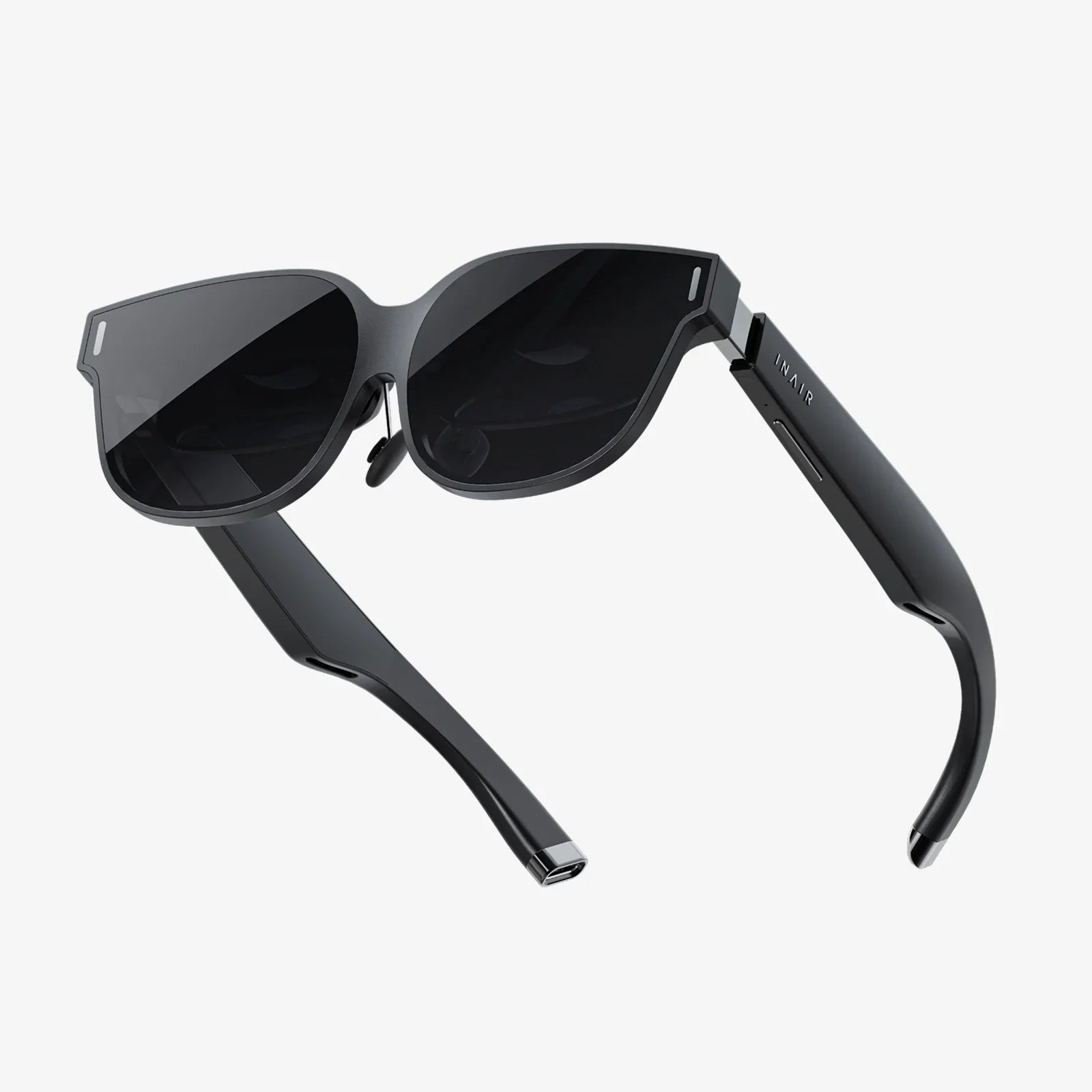
Imagine a world where digital information doesn't live trapped behind a screen but flows seamlessly into your perception of reality, enhancing everything you see, do, and experience. This is the promise of augmented reality glasses, a technology poised to revolutionize how we work, learn, and play. The decision to make an augmented reality glasses purchase is no longer a futuristic fantasy reserved for developers and tech enthusiasts; it's a tangible choice for early adopters ready to step into the next dimension of computing. But with great potential comes a complex landscape of options and considerations. This definitive guide is designed to be your trusted companion, cutting through the hype to provide the clarity and insight you need to make a confident and successful investment in the future, today.
Understanding the Core Technology: How AR Glasses Work
Before embarking on your purchase journey, it's crucial to understand the fundamental technology that brings augmented reality to life. At its heart, AR overlays computer-generated imagery (CGI), data, and interfaces onto your view of the real world. Unlike virtual reality, which replaces your environment entirely, AR aims to supplement and enhance it.
The Magic of Waveguides and Projectors
Most consumer-grade AR glasses utilize a combination of micro-displays and optical waveguides. Tiny projectors, often using technologies like LCoS (Liquid Crystal on Silicon) or microLEDs, generate the digital image. This light is then directed into a transparent piece of glass or plastic—the waveguide—which uses a process of internal reflection to pipe the image directly to your retina. The result is a bright, digital overlay that appears to float in space within your field of view. The quality and efficiency of this optical engine are paramount, directly impacting the brightness, clarity, and field of view of the virtual content.
Spatial Awareness: Cameras and Sensors
For digital content to interact convincingly with the physical world, the glasses must understand their surroundings. This is achieved through a suite of sensors, typically including:
- Cameras: Used for simultaneous localization and mapping (SLAM), these cameras scan the environment to create a 3D depth map, allowing virtual objects to be placed on real surfaces.
- Inertial Measurement Units (IMUs): These accelerometers and gyroscopes track the precise movement and rotation of your head, ensuring the digital overlay remains stable and locked in place.
- Depth Sensors: Some higher-end models include dedicated time-of-flight or structured light sensors to generate even more accurate 3D maps of the environment.
Defining Your "Why": Primary Use Cases for AR Glasses
Your intended use is the single most important factor guiding your purchase. AR glasses are not a one-size-fits-all product, and different models are optimized for vastly different experiences. Carefully consider which category best aligns with your needs.
Productivity and Remote Assistance
For professionals, AR glasses can be a transformative tool. Imagine a field technician seeing a schematic overlaid on the machinery they are repairing, with a remote expert able to draw annotations directly into their field of view. Architects could walk through a full-scale 3D model of a building before a single brick is laid. This use case demands robust software ecosystems, high-resolution displays for reading text, and excellent connectivity for collaboration.
Media Consumption and Entertainment
This is one of the most popular entry points for consumers. Glasses in this category function as a personal, portable cinema screen, projecting a massive virtual display for watching movies, playing games from a console, or browsing the web. Key considerations here are display quality (resolution, color accuracy), audio performance (built-in speakers), and comfort for extended viewing sessions.
Gaming and Interactive Experiences
Moving beyond a virtual screen, true AR gaming involves digital characters and objects interacting with your living room, backyard, or city street. This requires powerful processing, precise and low-latency tracking to avoid motion sickness, and a wide field of view to create an immersive experience. The computational demands often mean these glasses are either tethered to a powerful computer or feature a more advanced onboard processor.
Fitness and Navigation
For runners, cyclists, and hikers, AR glasses can overlay performance metrics, heart rate data, and turn-by-turn directions directly onto the path ahead, allowing them to keep their head up and stay focused on their surroundings. For this, lightweight, secure-fitting designs and long battery life are non-negotiable features.
Key Specifications Decoded: What to Look For
Navigating the spec sheet is critical. Here’s a breakdown of the most important technical aspects and what they mean for your experience.
Field of View (FoV)
Often measured diagonally in degrees, the FoV is the window through which you see the digital world. A narrow FoV can feel like looking through a small letterbox, while a wider FoV is more immersive. For context, the human eye has a horizontal FoV of nearly 180 degrees. Current consumer glasses range from about 20 degrees to over 50 degrees. A larger FoV is generally better but often comes with trade-offs in size, weight, and cost.
Resolution and Brightness
Just like a TV, a higher resolution (e.g., 1920x1080 per eye) means a sharper, more detailed image that is easier to read. Brightness, measured in nits, is equally critical. To be visible in brightly lit environments like outdoors, the displays need to be extremely bright to overcome ambient light. A dim display will appear washed out and useless in sunlight.
Optical See-Through vs. Video See-Through
This is a fundamental architectural choice. Optical See-Through (used by most glasses) uses semi-transparent mirrors or waveguides, so you see the real world directly with your eyes, with light from the projectors adding the digital layer. It feels more natural and has no latency on the real-world view. Video See-Through uses outward-facing cameras to capture the real world and then blends the digital content with that video feed before displaying it on opaque displays. This can allow for more dramatic visual effects (like dimming the real world) but can introduce latency and a potential "looking through a camera" feeling that some find disconcerting.
Battery Life and Form Factor
AR processing is power-intensive. Battery life can vary wildly from 2-3 hours for sleek, standalone models to all-day life for devices that offload processing to a companion device or battery pack. Consider where the battery is housed—on the arms of the glasses, in a separate pack that goes in your pocket, or reliant on a connected phone. This decision drastically impacts weight, comfort, and practicality.
Tracking and Connectivity
Precise inside-out tracking (the ability of the glasses to map the world without external sensors) is essential for stable AR. Check for features like hand-tracking, which allows you to interact with menus using natural gestures. For connectivity, understand if the glasses are a standalone computer (Wi-Fi, cellular), a tethered peripheral (USB-C), or a companion device that relies on a constant connection to a smartphone.
The Software Ecosystem: The Brain Behind the Beauty
The hardware is only half the story. The operating system and available applications determine what you can actually do with your glasses.
Operating Systems and App Stores
Some glasses run a customized version of a mobile operating system, giving access to a vast library of existing 2D apps displayed on a virtual screen. Others are built on dedicated AR platforms designed from the ground up to support 3D, spatially-aware applications. Investigate the health of the specific app store for the device. Are major developers creating content for it? Are the apps you want to use available and well-reviewed?
Content is King
Your experience is defined by the content. Before buying, explore what experiences are available. Is there a robust selection of 3D games, productivity tools, and creative applications? Or is the library sparse? A device with slightly inferior specs but a thriving developer community will offer a far better long-term experience than a powerful device with no software support.
Comfort, Fit, and Style: The Human Factor
You can have the most technologically advanced device in the world, but if it's uncomfortable to wear, it will gather dust on a shelf.
Weight Distribution and Adjustability
Look for glasses that distribute weight evenly across your nose and ears to avoid pressure points. Adjustable nose pads and flexible, customizable arms are essential for a secure and comfortable fit for different head shapes and sizes. If possible, try them on before you buy.
Prescription Lens Solutions
If you wear prescription glasses, this is a critical consideration. Some AR glasses are designed to be worn over your existing frames, which can be bulky and awkward. Others offer magnetic inserts where you can snap in custom prescription lenses, providing a sleek, integrated solution. A few high-end models are even exploring dynamic electronic lenses that can adjust their focus automatically.
Aesthetic Design
While function precedes form, you are still wearing this device on your face in public. Designs are evolving from bulky, geeky prototypes to more fashionable forms that resemble premium sunglasses or standard eyeglasses. Consider how you feel about wearing them and whether the design suits your personal style.
Navigating the Purchase: A Practical Checklist
When you're ready to buy, use this checklist to ensure you've covered all your bases.
- Define Your Primary Use: Productivity, entertainment, gaming, or fitness?
- Set a Realistic Budget: Prices range from a few hundred to several thousand dollars.
- Research the Ecosystem: Are the apps you want available and well-supported?
- Prioritize Key Specs: Based on your use case, decide what's most important: FoV, resolution, battery life, or comfort.
- Check for Prescription Support: If needed, investigate the available solutions and their cost.
- Read User Reviews: Look for long-term reviews that discuss comfort, software updates, and real-world usability, not just unboxing impressions.
- Understand the Return Policy: AR is a personal experience. Ensure you have a window to return them if they don't meet your expectations.
Gazing into the Future: The Long-Term View
The AR glasses market is evolving at a breakneck pace. Today's devices are the pioneering first steps, akin to the brick-sized mobile phones of the 1980s. The future promises glasses that are indistinguishable from regular eyewear, with all-day battery life, photorealistic graphics, and ubiquitous connectivity that will seamlessly blend our digital and physical lives. Making a purchase now is about getting a front-row seat to this revolution, understanding the technology's potential, and shaping how it will integrate into our daily routines. It's an investment in being an active participant in the next computing paradigm, not just a passive observer.
The journey to finding the perfect pair of augmented reality glasses is an exciting exploration at the frontier of personal technology. It requires balancing cutting-edge capabilities with practical everyday needs, a process that empowers you to choose a device that doesn't just show you a new world but actively improves your own. By asking the right questions and focusing on the experience over the hype, your augmented reality glasses purchase can unlock new dimensions of creativity, connection, and productivity, transforming the world around you into a dynamic canvas of infinite possibilities. The future is not something we enter; it's something we create, and it's waiting for you to put it on.
Share:
Wearable Device Security: The Unseen Vulnerabilities on Your Wrist
Virtual Head Set: The Ultimate Portal to New Realities and Experiences