


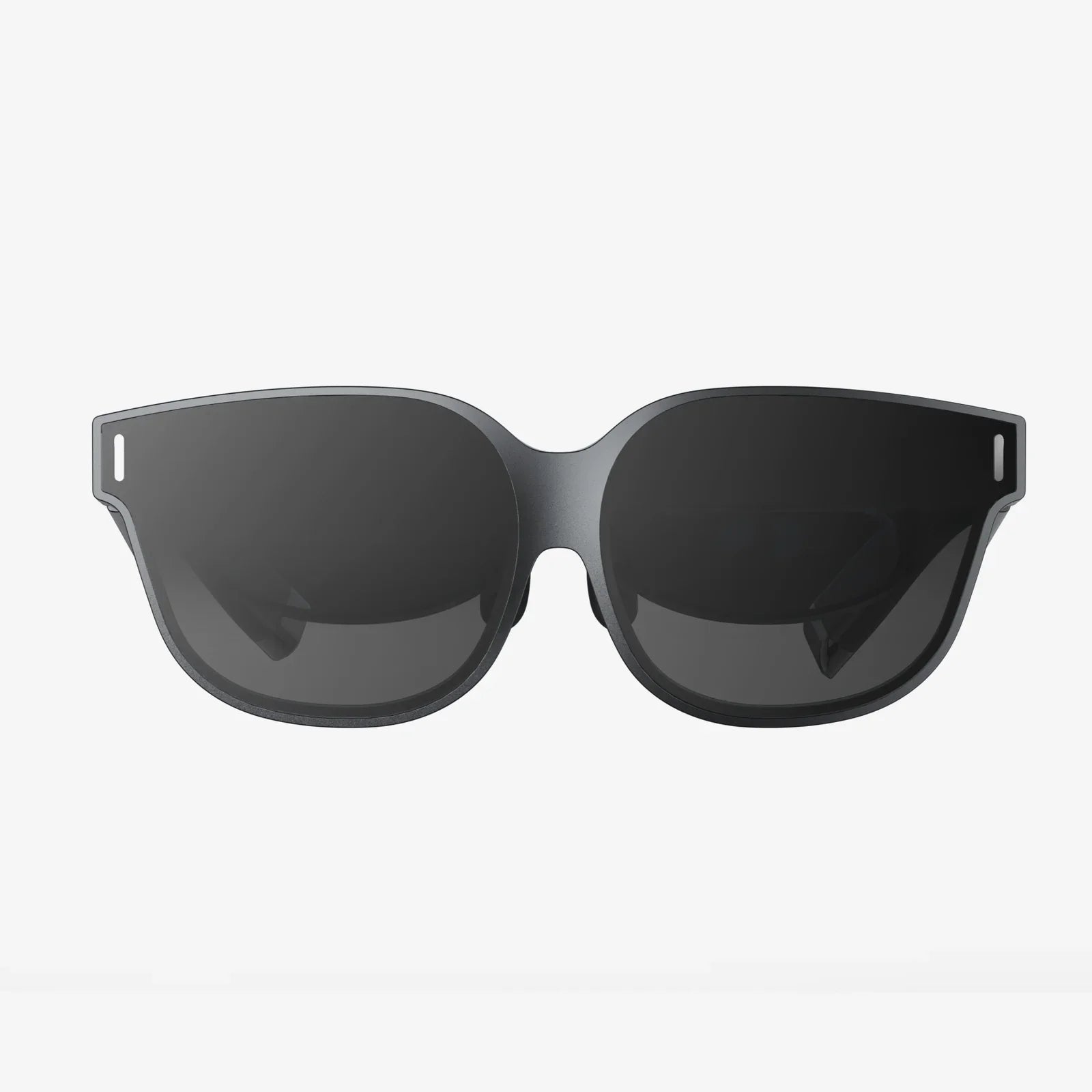
Remember gazing through a View-Master as a child, marveling at the static, three-dimensional worlds it revealed? Now, imagine that childhood wonder unleashed onto the very fabric of your reality, transforming how you work, learn, connect, and play. This is no longer the stuff of science fiction; this is the palpable, thrilling, and sometimes disorienting reality of 2025, a year that will be remembered as the tipping point when augmented reality headsets finally, truly, arrived. The news today isn't about a single device; it's about an entire ecosystem snapping into focus, promising to redefine human-computer interaction forever.
The Hardware Revolution: Invisible Tech with Visible Impact
If the headsets of the early 2020s were often compared to cumbersome ski goggles, the 2025 cohort is more akin to a stylish pair of eyeglasses. The driving force behind this dramatic miniaturization is a series of breakthroughs in core technologies. Waveguide displays have become astonishingly efficient, allowing for bright, high-resolution visuals without the bulk of previous projection systems. The adoption of novel micro-OLED panels, manufactured at a scale previously thought impossible, delivers stunning clarity and deep blacks, making digital objects seamlessly blend with the physical world.
Perhaps the most significant leap is in the realm of processing. The mantra for 2025 is on-device intelligence.
Thanks to custom-built neural processing units (NPUs) and spatial co-processors, the heavy lifting of simultaneous localization and mapping (SLAM), object recognition, and gesture tracking now happens instantaneously on the headset itself. This eliminates the latency that previously caused digital overlays to jitter or drift, a flaw that instantly shattered the illusion of immersion. The result is a buttery-smooth, responsive experience that feels less like using a computer and more like possessing a new layer of perception.
The Software Symphony: A New OS for a New Reality
Powerful hardware is nothing without elegant software to give it purpose. This year, we've witnessed the maturation of the first true spatial operating systems. These are not mere adaptations of phone OSes blown up onto a larger canvas; they are built from the ground up to understand and interact with the geometry of our world.
These operating systems feature persistent digital anchors, allowing users to pin
applications, screens, and virtual artifacts to specific locations in their home or office. Walk into your kitchen and your recipe, timer, and nutrition guide are waiting for you on the countertop. Enter your workshop, and your instructional manual and blueprint hover faithfully over your workbench. This persistence creates a deeply personal computing environment that is uniquely yours.
Furthermore, application interoperability has become a key focus. Developers are now building apps that are context-aware,
meaning they can communicate with each other and with the environment. Your virtual meeting attendees can now see and interact with the 3D model you've pulled up from your design app, all within the shared AR space. This marks a move away from isolated apps towards a cohesive, contextual, and collaborative digital workflow.
The Enterprise Arena: Where ROI is Crystal Clear
While consumer applications generate buzz, the most profound and immediate impact of AR in 2025 continues to be in the enterprise and industrial sectors. The return on investment here is so tangible that it has fueled massive adoption.
- Manufacturing & Logistics: Warehouse pickers equipped with modern AR headsets see digital pathways illuminated on the floor, leading them directly to items with 99.9% accuracy. Assembly line workers have complex wiring diagrams overlaid onto physical components, reducing errors and cutting training time by over 50%. Remote experts can see what a field technician sees and annotate their reality in real-time, drawing arrows and circles to guide repairs, drastically reducing downtime and travel costs.
- Healthcare & Medicine: The medical field is experiencing a revolution. Surgeons use AR for X-ray vision, visualizing critical vasculature or tumor margins through tissue during procedures. Medical students practice complex surgeries on hyper-realistic virtual cadavers, and patients use AR to better understand their own conditions through interactive 3D models of their anatomy.
- Architecture & Design: The days of trying to interpret 2D blueprints are fading. Architects and clients can now walk through a full-scale, photorealistic holographic rendering of a building before the foundation is even poured. They can change materials, move walls, and test lighting conditions in real-time, making collaboration and decision-making infinitely more efficient.
The Social Fabric: Redefining Connection and Creation
On the consumer front, 2025 is the year AR social platforms broke into the mainstream. These are not closed-wall metaverses but layers of shared experience placed atop our existing world. Friends can leave virtual sticky notes on your fridge, watch a movie together on a virtual big screen that feels like it's hanging on your living room wall, or collaborate on a virtual sculpture in your backyard.
The creator economy has exploded around this new medium. Digital artists are no longer confined to screens; they are selling virtual sculptures, interactive murals, and dynamic furniture that people can place in their homes. Fashion designers are creating digital-only clothing and accessories for users' avatars and even for their real-world appearance through the lens of AR. This has spawned a new economic model where the virtual and physical economies are inextricably linked.
The Inevitable Challenges: Navigating the New Reality
This rapid ascent is not without its growing pains. The news today in 2025 is also filled with crucial debates that society must grapple with:
- Privacy & Data Sovereignty: These devices are, by their very nature, data collection machines. They have multiple cameras, microphones, and sensors constantly scanning your environment. Who owns the detailed 3D map of your home? How is information about your daily habits and gaze-tracking data being used? Robust new regulations are being fiercely debated in governments worldwide to establish digital boundaries and prevent a dystopian future of perpetual surveillance.
-
The Digital Divide: As these devices become powerful tools for productivity and social connection, a new socio-economic chasm threatens to emerge. Will access to this enhanced reality become a prerequisite for success, creating a class of
augmented haves
andunaugmented have-nots
? Policymakers and tech companies are under pressure to ensure the technology is accessible and does not exacerbate existing inequalities. - Social Etiquette & Mental Health: The sight of people gesticulating in the air and talking to seemingly no one is becoming commonplace, but social norms are still catching up. When is it appropriate to use an AR headset? Furthermore, psychologists are studying the long-term effects of perpetually mediating reality through a digital filter. Could it lead to further dissociation or an inability to appreciate the un-augmented world?
Gazing into the Crystal Ball: What's Beyond 2025?
The progress we see today is merely the foundation for an even more transformative future. The trajectory points towards a few key developments:
- True Consumer Readiness: The journey towards socially acceptable, all-day wearable glasses will continue, likely culminating in designs that are indistinguishable from standard eyewear within the next few years.
- The AI Symbiosis: The next evolution will be the deep integration of advanced artificial intelligence. Instead of just displaying information, your AR headset will act as a proactive, contextual assistant. It will recognize faces and whisper a name you've forgotten, translate a foreign menu in real-time, and warn you of potential hazards you might not have seen.
- The Retinal Projection Frontier: Further out on the horizon are technologies that bypass screens altogether, projecting images directly onto the retina. This could lead to impossibly small form factors and visual fidelity that is indistinguishable from real sight.
The headlines of 2025 will be remembered not for announcing a single product, but for chronicling the moment augmented reality shed its novelty skin and emerged as a serious, powerful, and ubiquitous platform. It's the year the digital ghost finally learned to live comfortably, and usefully, within the machine of our physical world. The boundary between what is real and what is digital is not being erased—it's being elegantly, and permanently, woven together. The device on your face is no longer just a screen you look at; it's becoming the lens through which you will see, and shape, everything.
Share:
AI Spectacles: The Invisible Revolution on the Bridge of Your Nose
Walking Tablet The Ultimate Guide to Portable Computing on the Go