


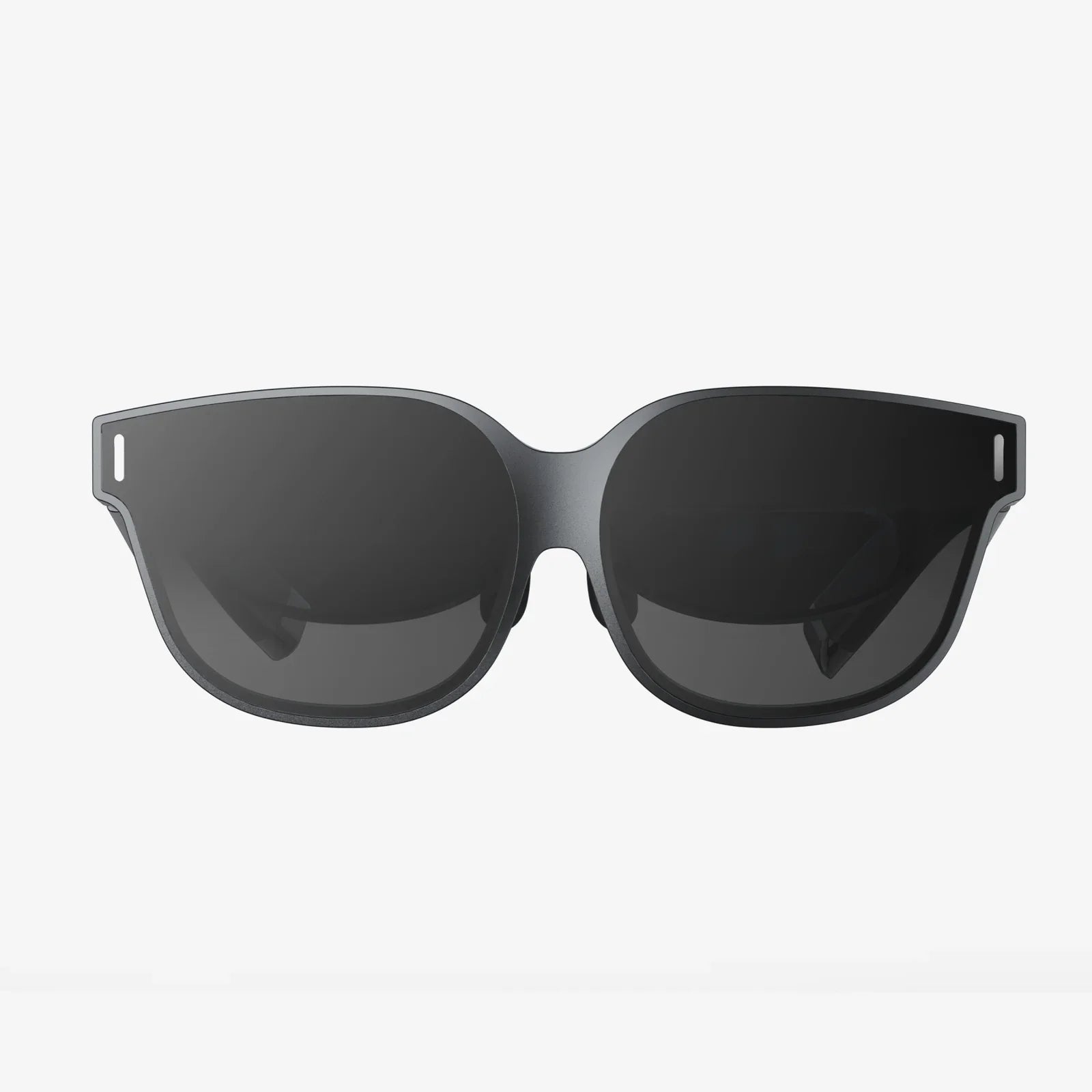
Imagine a world where the line between the digital and the physical doesn't just blur—it disappears. Where information, entertainment, and connection are not confined to rectangular screens but are woven seamlessly into the very fabric of your perception. This is the profound promise of augmented reality seeing glasses, a technology not merely knocking on our future's door but already beginning to step through it, ready to redefine the human experience in ways we are only starting to comprehend.
Beyond the Hype: Defining the True Nature of AR Glasses
To understand the potential of augmented reality seeing glasses, we must first move beyond the simplistic view of them as just another wearable screen. At their core, these devices are sophisticated spatial computers. They are a symphony of advanced components working in concert: high-resolution micro-displays that project images directly onto the user's retina, a suite of sensors including cameras, accelerometers, gyroscopes, and depth sensors to map the physical environment, and powerful onboard processors that understand the world in real-time.
The magic lies in their ability to achieve precise spatial mapping and persistent occlusion. This means the glasses don't just superimpose a digital dinosaur on your living room rug; they understand the geometry of the room. The dinosaur can walk behind your sofa, knowing the sofa is a solid object, creating a convincing illusion that it truly shares your physical space. This contextual awareness is what separates true AR from gimmicky filters, creating a genuine sense of mixed reality.
The Architectural Marvel: How AR Glasses Perceive and Project
The technological architecture of these devices is a marvel of modern engineering. It begins with perception. outward-facing cameras continuously scan the environment, building a three-dimensional point cloud of the space. Simultaneously, Simultaneous Localization and Mapping (SLAM) algorithms allow the glasses to understand both the environment and their precise position within it, all without relying on external markers like QR codes.
This processed environmental data is then fused with the digital content. This is where the display technology takes center stage. Several competing paradigms exist:
- Waveguide Optics: Thin, transparent glass plates that use diffraction gratings to "pipe" light from a micro-projector at the temple into the user's eye. This allows for a sleek, eyeglasses-like form factor.
- Birdbath Optics: A compact arrangement of prisms and mirrors that reflect the image from a micro-display into the eye, often offering brighter colors and a wider field of view but in a slightly bulkier package.
- Retinal Projection: A more futuristic approach that uses lasers to scan images directly onto the retina, potentially offering infinite focus and incredible clarity, though it remains in earlier stages of consumer development.
This intricate dance of sensors, processors, and optics happens in milliseconds, creating a stable, interactive, and believable augmented layer atop our reality.
Transforming the Professional Landscape: From Surgery to Construction
The most immediate and impactful applications of augmented reality seeing glasses are emerging in enterprise and professional fields. Here, they are not entertainment devices but indispensable tools enhancing precision, safety, and efficiency.
In complex manufacturing and repair, a technician wearing AR glasses can see schematics, torque specifications, and animated assembly instructions overlaid directly onto the engine or machine they are working on. Their hands remain free, and the information is contextually relevant, drastically reducing errors and training time. Surgeons can visualize a patient's anatomy from MRI scans projected onto their body during procedures, acting as a GPS for the human body. Architects and interior designers can walk through full-scale 3D models of their creations long before a single foundation is poured, making real-time changes to structures and finishes with a gesture.
These applications move beyond convenience; they represent a fundamental shift in how we interface with complex information, making the intangible tangible and the invisible visible.
Rewiring Social Interaction and Personal Connectivity
If the smartphone changed who we could talk to, augmented reality glasses will change how we talk to them. The future of social connection is spatial. Imagine a video call where the person you're speaking with appears as a photorealistic hologram sitting on your couch, making eye contact and gesturing naturally, as if they were truly present. Distance becomes less of a barrier to meaningful interaction.
This extends to shared experiences. Friends across the globe could join you in your living room to watch a virtual big-screen movie together, avatars reacting in real-time. Multiplayer games could transform your local park into an epic fantasy battlefield or a collaborative puzzle-solving arena, blending physical exercise with digital narrative. This technology promises to create a new layer of shared reality, a digital public space that exists wherever we are.
The Ultimate Personal Assistant: Contextual Computing at Your Eyeline
Augmented reality seeing glasses represent the ultimate expression of ambient computing. Instead of pulling a device from your pocket, information and assistance appear exactly when and where you need it. Navigation arrows are painted onto the street in front of you, guiding you to your destination. Glancing at a restaurant could reveal its rating and today's specials floating discreetly by its sign. In a meeting, a quick glance at a colleague could display their name and role if you've forgotten it, pulled from your professional network.
This constant, contextual stream of data could make us more efficient and informed, but it also raises critical questions about data privacy, notification overload, and the very nature of attention. The goal must be to design systems that empower rather than overwhelm, that provide value without creating dependency.
Navigating the Ethical Labyrinth: Privacy, Safety, and the Future of Attention
The path to an augmented world is fraught with profound ethical and societal challenges that我们必须 proactively address. The most pressing is privacy. Devices with always-on cameras and microphones, capable of facial recognition and object identification, represent a potential surveillance nightmare. Robust, transparent data policies, on-device processing, and clear user controls over what is recorded and shared are not optional features; they are the absolute bedrock upon which consumer trust must be built.
Safety is another paramount concern. Can we ensure that users immersed in an AR experience remain aware of their physical surroundings, especially near roads or hazards? Digital addiction, a problem exacerbated by smartphones, could reach new heights with interfaces that are always in our field of view. There is a real risk of a new digital divide emerging between those who can afford this enhanced reality and those who cannot. Furthermore, the potential for reality distortion, misinformation, and hyper-targeted augmented advertising could have significant psychological and social consequences.
The Long Road to Ubiquity: Overcoming Technical and Social Hurdles
For augmented reality seeing glasses to become as ubiquitous as smartphones, several significant hurdles must be cleared. The first is form factor. Current prototypes are often bulky, heavy, and have limited battery life. The holy grail is a device that is indistinguishable from a regular pair of stylish eyeglasses—lightweight, all-day comfortable, and socially acceptable to wear. This requires monumental advances in miniaturization, battery technology, and thermal management.
Secondly, the user interface paradigm is still being invented. Voice commands, hand gestures, subtle eye movements, and neural interfaces are all vying to become the primary way we interact with this new medium. The winning solution will be intuitive, discreet, and powerful. Finally, a rich and compelling ecosystem of applications and content must be cultivated to provide genuine utility and delight, moving beyond novelty to necessity.
A Glimpse into the Next Decade: The Invisible Revolution
Looking ahead, the evolution of this technology is breathtaking to consider. We are moving towards a future where AR glasses could correct for visual impairments dynamically, offering perfect vision to all. They could serve as real-time translation devices, not just of speech but of written text in the environment, effectively breaking down language barriers as we move through the world. They could augment our memory, gently reminding us of names, dates, and tasks contextually.
Eventually, the technology may become so integrated that it shifts from glasses to even more seamless form factors like smart contact lenses or direct neural interfaces. The goal is not to escape reality but to enhance it, to amplify human intelligence and creativity, and to connect us more deeply with both the physical world and each other.
The journey of augmented reality seeing glasses is just beginning. It is a path that will be paved with both breathtaking innovation and difficult philosophical questions. It will challenge our concepts of privacy, reality, and human connection. But one thing is certain: this is not a technology we will look at. It is a technology we will look through, and in doing so, we will forever change our view of everything.
Share:
Standalone AR Glasses: The Unchained Future of Computing is Here
Cheap Head Mounted Display: Your Portal to Affordable Virtual Worlds