


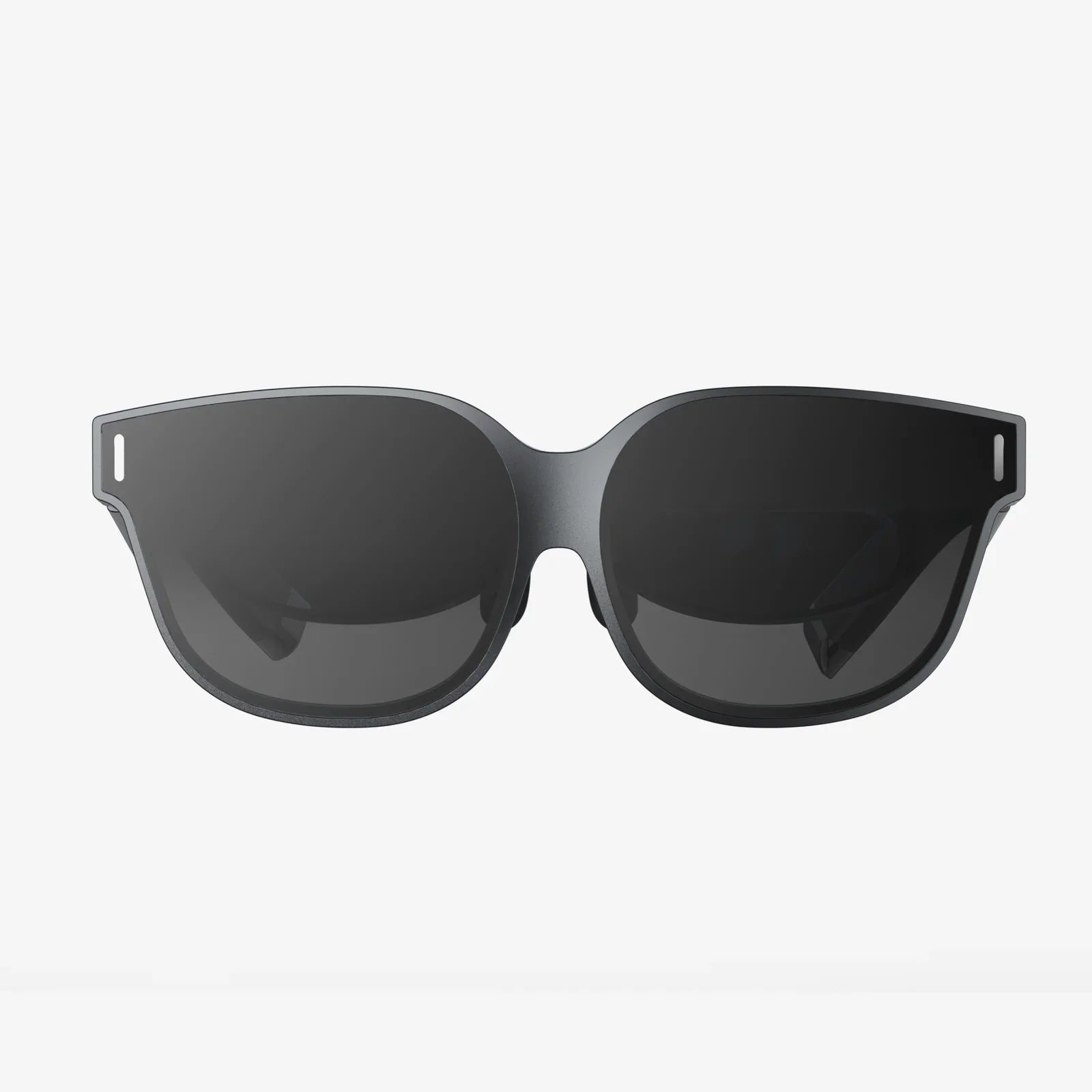
Imagine a world where information flows as naturally as sight, where the digital and physical realms don't just coexist but harmonize, and where your most powerful tool isn't in your pocket but perched comfortably on your face. This is no longer the stuff of science fiction; it is the promise of the best AI glasses of 2025. We are standing at the precipice of a sensory revolution, where these sophisticated wearables are poised to redefine how we work, connect, and perceive the world around us. The next generation of AI eyewear is not about isolated features; it's about crafting a seamless, intuitive, and profoundly personal layer of intelligence over our reality.
The Evolutionary Leap: From Prototype to Paradigm
The journey to the best AI glasses of 2025 has been one of relentless refinement. Early iterations were often clunky, socially awkward, and offered limited functionality that struggled to justify their presence. The pivotal shift happening now is a move away from being a smartphone for your face
and towards becoming an ambient intelligence partner.
The core differentiator is the sophistication of the onboard artificial intelligence. We're witnessing a transition from simple command-based assistants to proactive, context-aware companions.
The hardware has undergone a metamorphosis. The tell-tale, bulky design that screamed tech enthusiast
has given way to sleek, stylish frames that are indistinguishable from high-end traditional eyewear. This is achieved through monumental advancements in micro-optics, allowing for powerful projectors to be hidden within the frame, and the integration of nano-scale processors that deliver immense computational power without generating excess heat or draining the battery in minutes. Battery technology, often the Achilles' heel of wearables, has seen significant innovation. Many of 2025's leading models employ a combination of high-density cells within the frames themselves and a sleek, pocketable charging case that offers multiple full charges, effectively enabling all-day use.
Defining the Elite: Key Features of 2025's Top Models
So, what truly separates the best from the rest in this burgeoning category? It's a confluence of several critical technologies working in concert.
The Visual Cortex: Advanced Display Systems
The window to your augmented world is the display. The best AI glasses of 2025 have largely moved past the dim, limited field-of-view projections of the past. The new gold standard is a full-color, high-brightness, high-resolution display that can be clearly seen in direct sunlight. Technologies like holographic waveguides and diffractive optics are key, piping light directly into the eye to overlay rich digital graphics, text, and videos onto the real world. The field of view is now expansive enough to feel immersive rather than like a small, floating screen in the corner of your vision. Furthermore, these displays are dynamic, automatically adjusting their brightness and contrast based on ambient lighting conditions to ensure perfect readability at all times.
The Intelligent Brain: Next-Generation On-Device AI
This is the heart of the experience. While cloud connectivity remains important, the most impressive processing now happens directly on the device. This edge AI
is what enables real-time responsiveness and protects user privacy. A dedicated Neural Processing Unit (NPU) within the glasses handles the immense computational load of tasks like:
- Real-Time Translation: Look at a menu, a sign, or a person speaking, and subtitles or translations appear instantly in your field of view, with near-zero latency. The AI doesn't just translate words; it captures and conveys nuance and idiom.
- Object and Scene Recognition: The glasses can identify objects, landmarks, and even plant and animal species, overlaying relevant information. For a professional, this could mean highlighting a specific component in a complex machine and pulling up its schematic.
- Contextual Awareness: The AI learns from your habits and environment. It can proactively surface your boarding pass as you approach the airport gate, remind you of a meeting attendee's name as they walk towards you, or suggest pulling up your shopping list upon entering a grocery store.
The Perceptive Senses: A Suite of Sophisticated Sensors
To understand the world, the glasses must perceive it. An array of discreet sensors feeds data to the AI brain. This includes high-resolution cameras for computer vision, depth sensors for mapping the environment in 3D, inertial measurement units (IMUs) for tracking head movement, and advanced microphones. The audio experience is also transformative. Spatial audio technology uses beamforming mics to isolate voices in a noisy room, while bone conduction or微型 speakers deliver sound directly to your ears without blocking ambient noise, keeping you connected to your environment.
Privacy and Control: The Ethical Foundation
With great power comes great responsibility. The best AI glasses of 2025 are built with privacy at their core. Physical hardware switches to disable cameras and microphones provide tangible peace of mind. LED indicators clearly show when recording is active. Data is encrypted end-to-end, and most personal processing is done on-device, never needing to touch a remote server. Users have granular control over what data is collected and how it is used, establishing a necessary trust for such an intimate technology.
A Day in the Life: The Transformative Applications
The power of these glasses is realized in their daily application, seamlessly integrating into every facet of modern life.
- The Professional: An architect walks through a construction site. Her glasses overlay the digital building plans onto the physical structure, allowing her to identify discrepancies in real-time. During a video call with her team, she shares her first-person perspective, and colleagues can annotate the world she sees, circling areas of concern. She dictates notes and measurements hands-free, which are instantly transcribed and filed to the correct project folder.
- The Traveler: Navigating a foreign city becomes effortless. Directions are arrowed onto the pavement in front of him. Historical facts about a monument pop up as he looks at it. He orders a coffee by reading the translated menu and confirming with a glance, and the cost is automatically converted to his home currency. He feels more connected to the culture and less like an outsider.
- The Student: A medical student practices anatomy by studying a full-scale, interactive 3D hologram of the human body hovering over her textbook. She can rotate, zoom, and dissect the model with simple hand gestures, gaining a spatial understanding impossible from 2D images.
- The Everyday User: Someone loses their keys. A simple voice command triggers a search, and the glasses highlight the keys under a pile of mail on the counter. Later, while cooking a new recipe, ingredient measurements and timer alerts are displayed right above the mixing bowl, keeping their screen hands-free and clean.
Navigating the Choice: What to Consider Before You Buy
Selecting the right model is a deeply personal decision, hinging on your lifestyle and priorities.
- Battery Life vs. Features: Consider your typical day. Do you need all-day battery, or will you have opportunities for quick top-ups? More powerful features often demand more energy.
- Design and Fit: They must be comfortable for extended wear. Look for lightweight materials, adjustable nose pads, and a style you'd be happy to be seen in. This is both a technology and an accessory.
- Display Quality: This is paramount. Read reviews that detail brightness, resolution, and field of view. A dim or narrow display will hamper the entire experience.
- App Ecosystem: The hardware is useless without powerful software. Investigate the platform. Is there a robust ecosystem of apps designed specifically for an augmented reality interface?
- Privacy Policy: Scrutinize it. Understand exactly what data the company collects, how it is processed, and who, if anyone, it is shared with. Your visual and auditory data is the most personal data there is.
The Road Ahead: Beyond 2025
The technology will not stand still. The trajectory points towards even deeper integration. We can anticipate developments like direct neural interfaces for more intuitive control, holographic displays that can be shared with others, and AI that evolves from a contextual tool to a true cognitive partner, capable of brainstorming, creating, and problem-solving alongside you. The distinction between assisted reality
and true augmented reality
will blur, creating experiences we can scarcely imagine today.
The best AI glasses of 2025 represent a fundamental shift in human-computer interaction. They are dismantling the screen-based paradigm that has dominated for decades, offering a future where technology enhances our humanity instead of distracting from it. They promise to make us more knowledgeable, more capable, and more connected to the world, not by immersing us in a virtual escape, but by enriching the reality we already inhabit. The future is not in your hand; it's right before your eyes.
Share:
What Is Augmented Reality: A Comprehensive Guide to the Digital Overlay
Augmented Virtual Reality Eyeglass Market: A New Vision for the Future