


Imagine a world where the digital and the physical are no longer separate realms, but a single, intertwined experience. Information doesn't live behind a screen; it lives on your kitchen counter, on the street you're walking down, and in the machinery you're repairing. This is the promise of augmented reality, a technology not of distant science fiction, but of our immediate present, poised to fundamentally reshape how we work, learn, play, and connect. It’s a portal to a new layer of existence, and it’s already here.
Defining the Digital Overlay
At its simplest, augmented reality is a technology that superimposes a computer-generated image, video, or 3D model onto a user's view of the real world. Unlike Virtual Reality (VR), which creates a completely artificial digital environment that replaces the real one, AR enhances the real world by adding digital elements to it. The key differentiator is that AR requires a connection to and an understanding of the real-world environment; it uses the existing world as a canvas and places information upon it.
This creates a composite view that is part real, part digital. Think of it as a heads-up display for life. The "augmentation" can be as simple as a piece of text floating next to a landmark you're looking at through your phone, or as complex as a full-scale, interactive engine model appearing in the middle of a classroom, which students can walk around and disassemble with a gesture.
How Does It Work? The Technology Behind the Magic
The seamless magic of AR is powered by a sophisticated combination of hardware and software working in concert. The process can be broken down into a few critical steps:
1. Capture: Sensors and Cameras
It all begins with perception. An AR device, whether a smartphone, a set of smart glasses, or a headset, uses cameras and a suite of sensors to capture the real world. These sensors typically include:
- Cameras: To feed a live video stream of the environment to the processor.
- Accelerometers and Gyroscopes: To precisely track the orientation, tilt, and movement of the device in 3D space.
- LiDAR (Light Detection and Ranging) or Depth Sensors: These emit invisible light pulses to measure the exact distance to surrounding surfaces, creating a detailed depth map of the environment. This is crucial for understanding where the floor, walls, and objects are, so digital content can be placed realistically and occluded by real-world objects.
- GPS and Compass: For outdoor, location-based AR experiences, providing broad geolocation data.
2. Process: Simultaneous Localization and Mapping (SLAM)
This is the brain of the operation. The raw sensor data is processed using complex algorithms, most notably SLAM. SLAM does two things at once: it localizes the device (figures out its precise position and orientation relative to the environment) and it maps the environment (builds a 3D model of the space around it). This allows the system to understand the geometry of the room and track its own movement through it in real-time, creating a stable anchor for digital content.
3. Project: Rendering and Display
Once the environment is understood, the AR software renders the appropriate digital content and composites it onto the user's view. This can happen on several types of displays:
- Smartphone and Tablet Screens: The most common and accessible form, using the device's screen as a viewport into the augmented world.
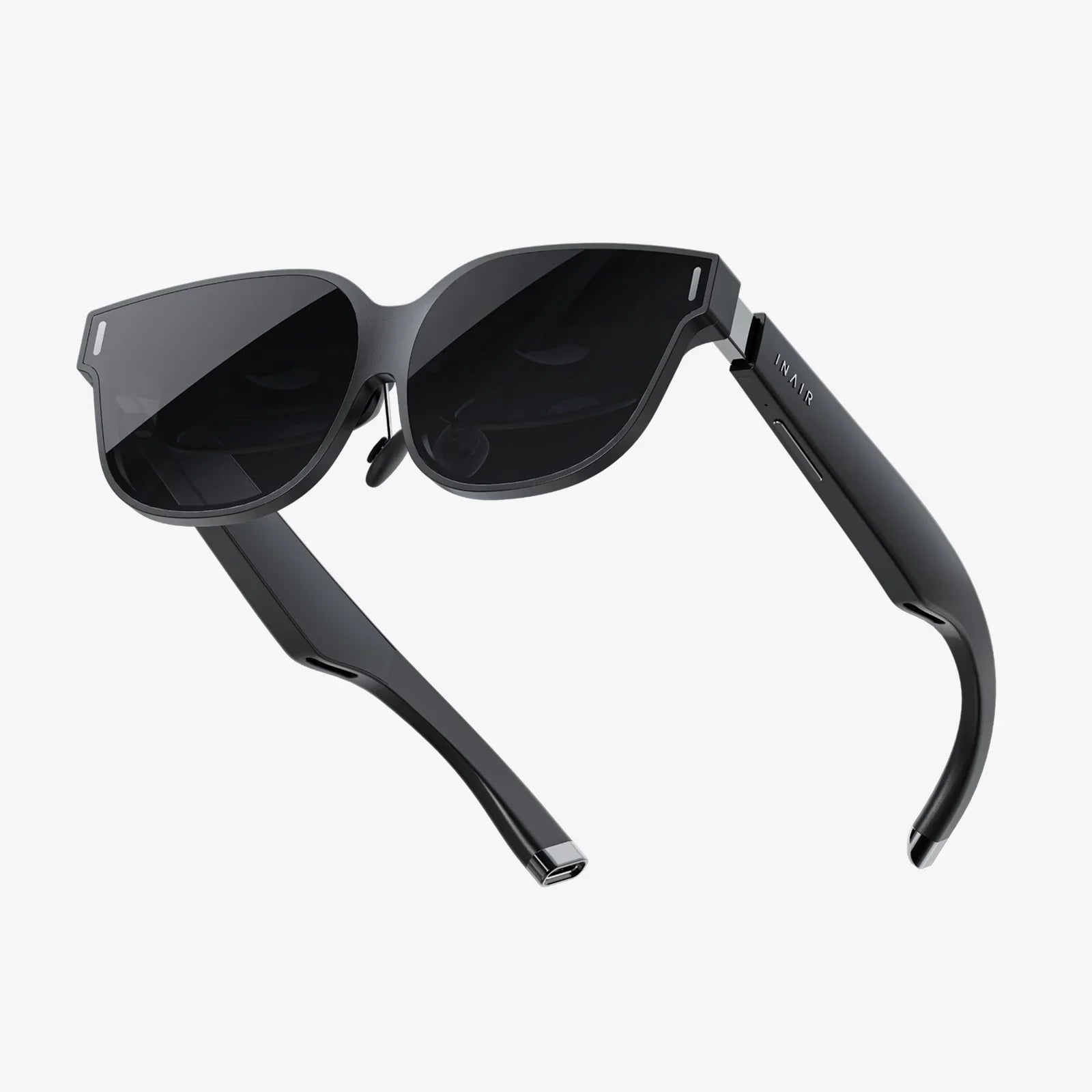
- Smart Glasses and Headsets: These use optical projection systems or transparent OLED waveguides to project images directly onto the user's retina or a clear lens, allowing them to see the digital overlay while maintaining a full, unobstructed view of the real world.
- Heads-Up Displays (HUDs): Projecting information onto windshields, helmets, or other transparent surfaces, commonly used in aviation and automotive applications.
4. Interact: User Input
The final piece is interaction. Users can interact with the AR content through touchscreens, voice commands, hand gestures (tracked by cameras), or dedicated controllers. Advanced systems are working towards eye-tracking and even brain-computer interfaces for more intuitive control.
Augmented Reality vs. Virtual Reality vs. Mixed Reality
It's essential to distinguish between these often-confused terms. They exist on a spectrum known as the reality-virtuality continuum.
Augmented Reality (AR) overlays digital content onto the real world. The primary environment remains real. You are still present in your room; you're just seeing a digital dinosaur walking through it.
Virtual Reality (VR) is fully immersive. It blocks out the physical world entirely and transports the user to a completely computer-generated simulation. You put on a headset and are now on the surface of Mars or inside a video game.
Mixed Reality (MR) is often considered a more advanced subset of AR. While basic AR places digital content in the world, MR allows that digital content to interact with the real world in a physically believable way. A virtual ball in MR can bounce off a real table and roll behind a real couch, with its trajectory and occlusion perfectly simulated. It requires a deep understanding of the environment, typically provided by depth sensors.
The Vast Applications of AR: Beyond Fun and Games
While popularized by mobile games, the true power of AR lies in its practical, transformative applications across nearly every sector.
Revolutionizing Retail and E-Commerce
AR is solving the fundamental problem of online shopping: the inability to try before you buy. Applications now allow users to:
- See how a new sofa would look and fit in their living room at true-to-life scale.
- "Try on" glasses, makeup, watches, and even clothes virtually.
- Visualize complex products like cars, allowing them to change colors and explore features in their own driveway.
This drastically reduces purchase hesitation and product return rates, enhancing consumer confidence.
Transforming Education and Training
AR turns abstract concepts into tangible, interactive experiences. Instead of reading about the solar system, students can watch planets orbit the sun around them. Medical students can practice complex surgical procedures on detailed, interactive holograms of human anatomy without risk. Field technicians can receive remote expert guidance, with instructions and arrows overlaid directly onto the equipment they are fixing, improving accuracy and reducing downtime.
Enhancing Industrial and Manufacturing Processes
This is one of the most mature and valuable use cases. AR is used for:
- Assembly and Maintenance: Providing workers with hands-free, step-by-step digital instructions overlaid on assembly lines or complex machinery.
- Design and Prototyping: Engineers and designers can visualize and interact with 3D prototypes at full scale, making collaborative design reviews more efficient.
- Logistics and Warehousing: AR can display optimal picking routes and highlight items on shelves, dramatically speeding up order fulfillment in massive warehouses.
Reimagining Healthcare
From diagnosis to surgery, AR is providing new tools for medical professionals. It can project a patient's veins onto their skin to assist with difficult IV placements, overlay CT scans and MRI data directly onto a patient's body during surgery to guide incisions, and help in physical therapy by providing real-time visual feedback on a patient's movements.
Enriching Navigation and Tourism
Instead of looking down at a map on a phone, AR navigation apps can overlay directional arrows and street names onto the live view of the street. In museums, pointing a device at an artifact can bring up information, reconstructions, or related stories. Tourists can look at a historic ruin and see a digital reconstruction of what it looked like centuries ago, bringing history to life.
The Challenges and Considerations
Despite its potential, AR faces significant hurdles before achieving ubiquitous adoption.
Technical Limitations
Battery life, processing power, and display technology remain challenges. For glasses to be worn all day, they need to be lightweight, have all-day battery life, and offer high-resolution, bright displays that work well in all lighting conditions—a tall order with current technology.
Social Acceptance and Privacy
The concept of wearing cameras on your face raises legitimate privacy concerns for both the wearer and those around them. Social norms around when and where it is appropriate to use such devices are yet to be established. The "glasshole" stigma from early devices is a barrier that new, more socially designed products will need to overcome.
Digital Divide and Accessibility
There is a risk that advanced AR technology could become a luxury, creating a divide between those who have access to this enhanced layer of information and those who do not. Furthermore, designing intuitive and accessible interfaces for a diverse population, including those with disabilities, is a critical challenge.
Content Creation
Creating meaningful, high-quality, and contextually relevant 3D content is expensive and requires specialized skills. For AR to reach its full potential, tools for content creation need to become as ubiquitous and easy to use as those for creating 2D content today.
The Future is Augmented
The trajectory of AR points towards a future where digital information is seamlessly integrated into our perception of reality. We are moving towards always-available, context-aware computing. The ultimate goal is a pair of stylish, normal-looking glasses that can replace your smartphone, your monitor, and your wallet, providing information and interaction exactly when and where you need it. This concept, often called the "spatial web" or "pervasive computing," will see the internet escape the confines of the screen and spill out into the world around us, transforming every flat surface into a potential interface and every object into a source of information.
From transforming how we shop and learn to revolutionizing entire industries, augmented reality is far more than a technological gimmick. It is a fundamental shift in the human-computer interface, a new lens through which we will perceive and interact with our world. The boundary between the digital and the physical is dissolving, and we are stepping into the space in between.
The screen that has dominated our digital lives for decades is beginning to fade, making way for a world where information is no longer confined to a rectangle in your pocket but is woven into the very fabric of your reality. The next time you raise your phone to see directions on the street or visualize a new piece of furniture in your home, remember—you're not just using an app; you're getting a glimpse of a future where the digital and physical worlds are one, and the possibilities are as limitless as our imagination.
Share:
What Are the Harmful Effects of Virtual Reality: Navigating the Unseen Risks of Immersive Tech
Best AI Glasses 2025: The Dawn of Seamless Augmented Living